
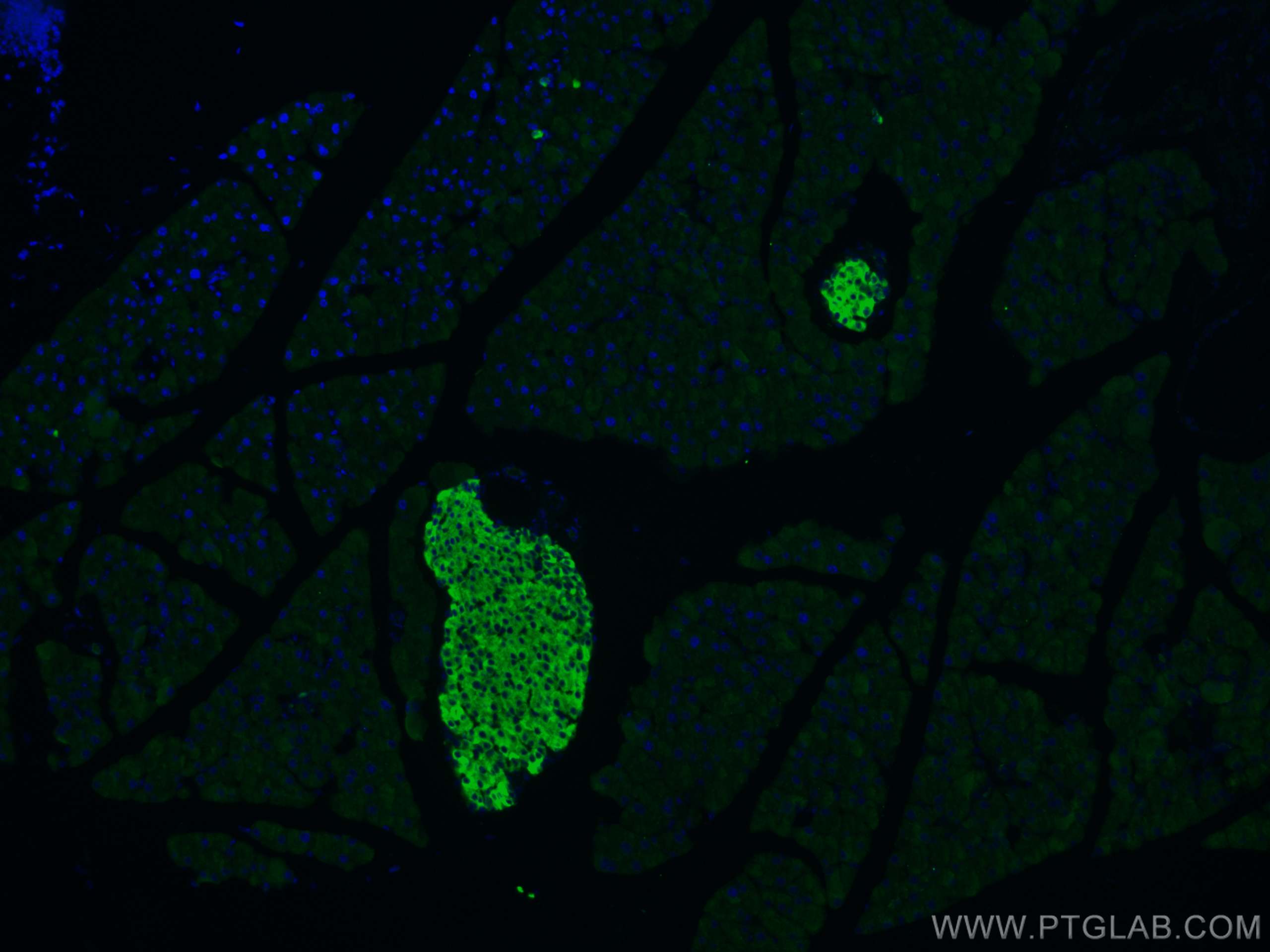
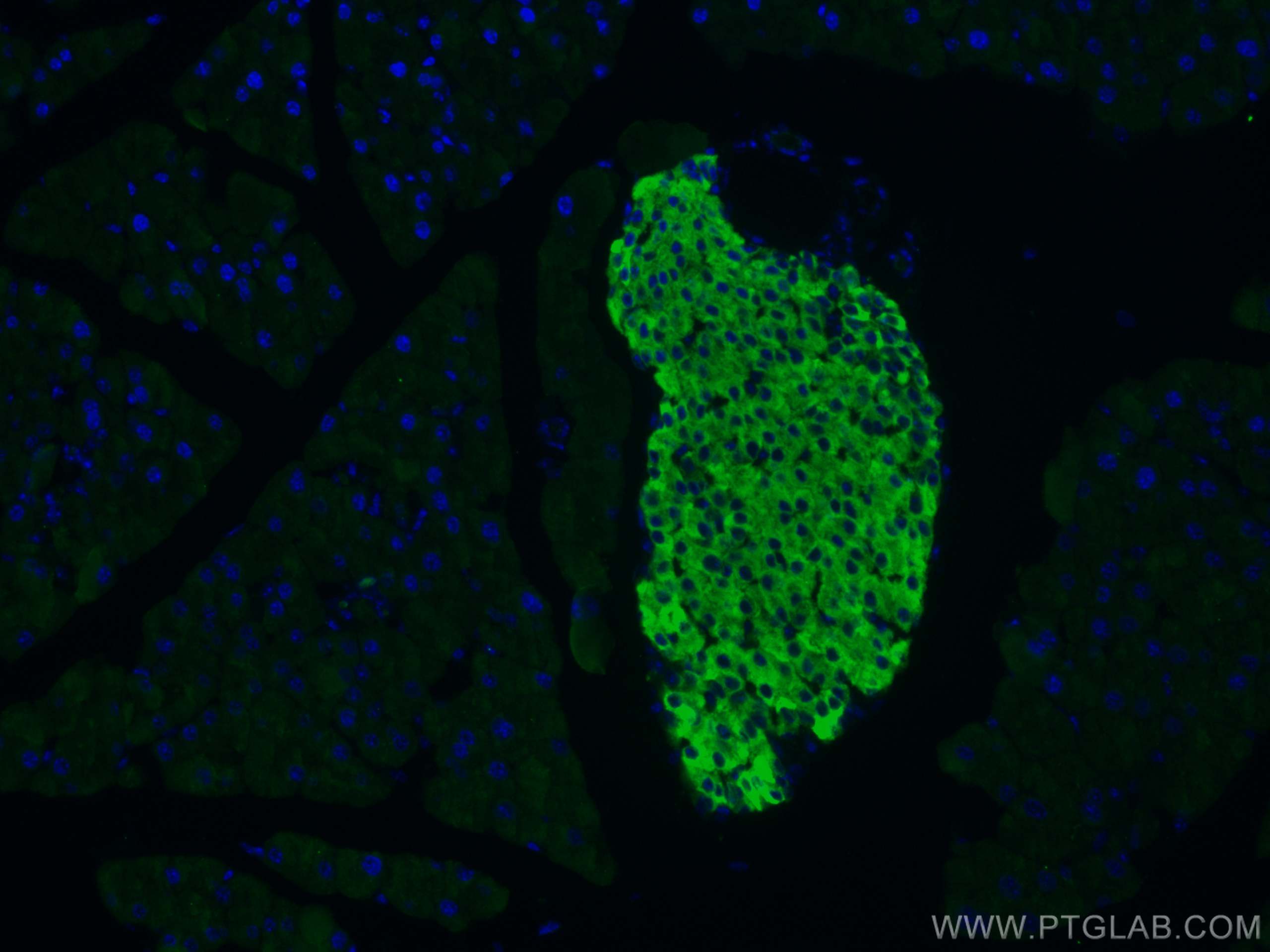

Tested Applications
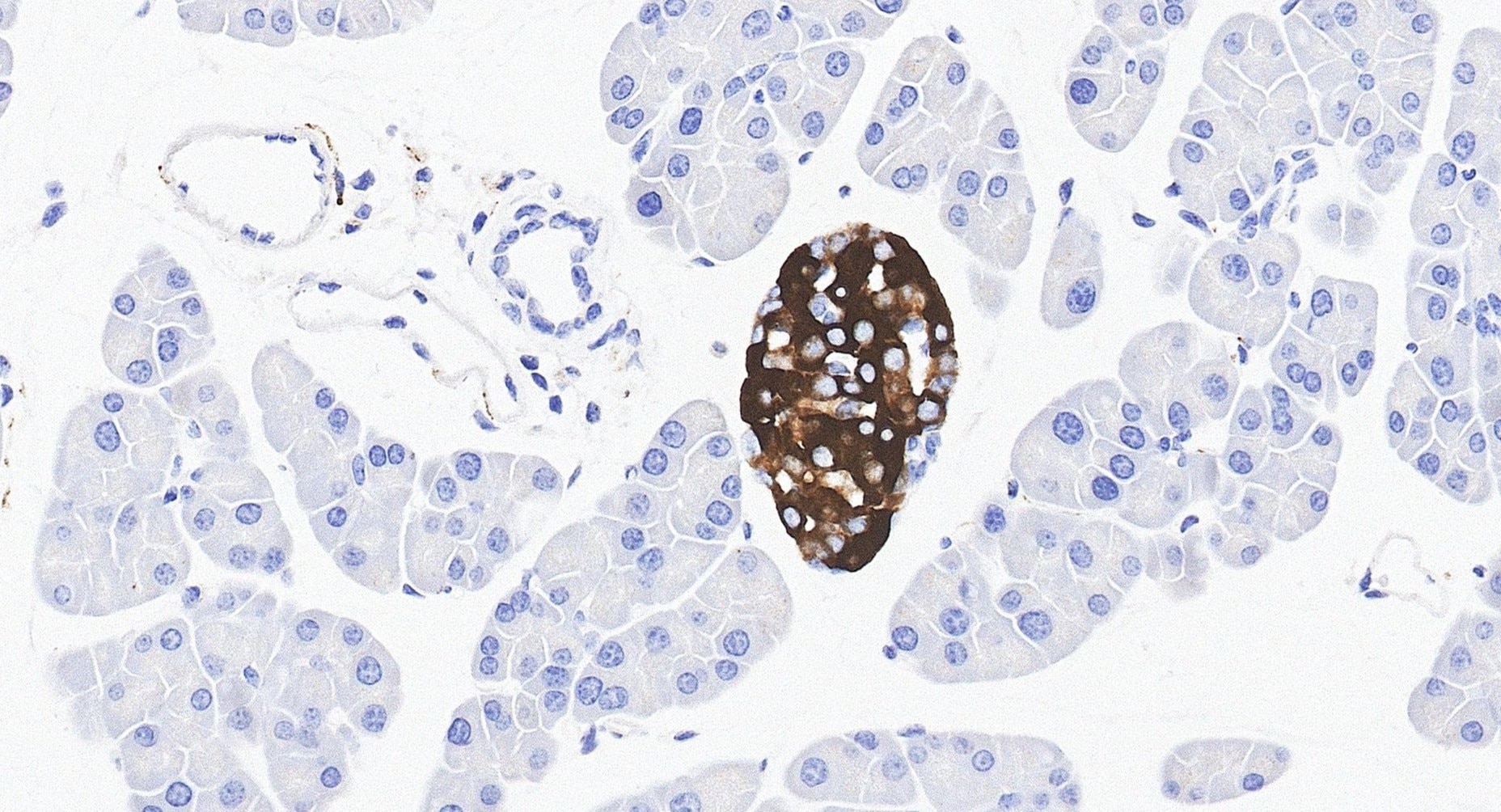
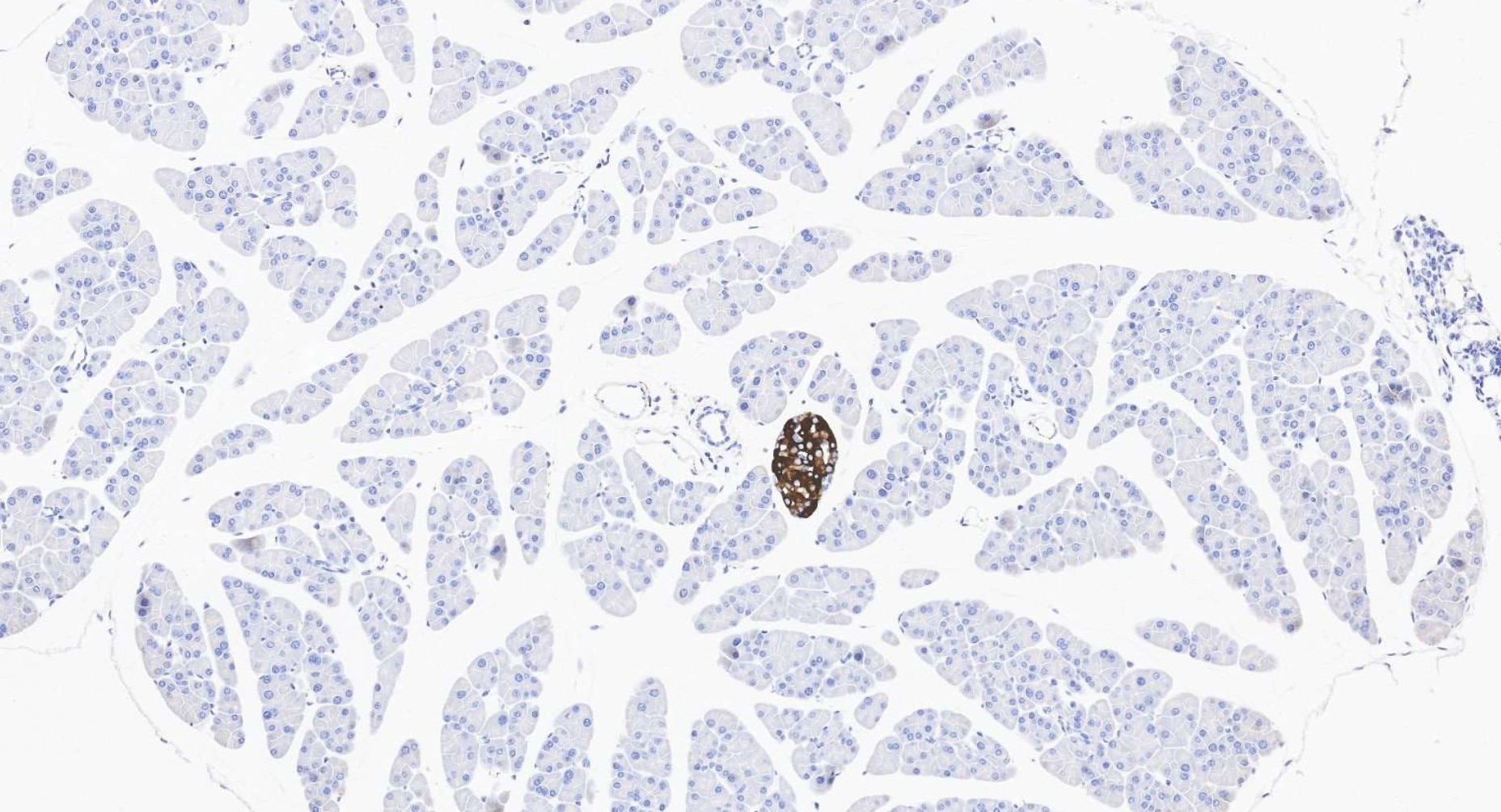
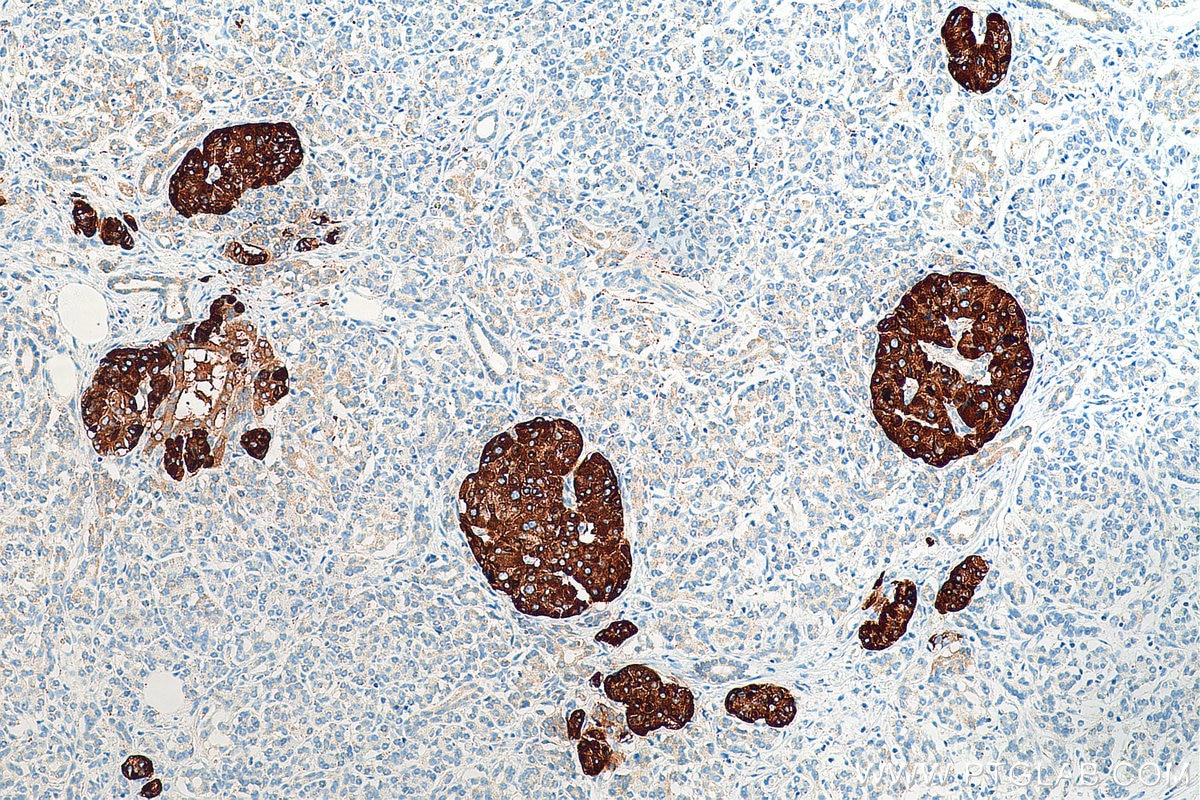
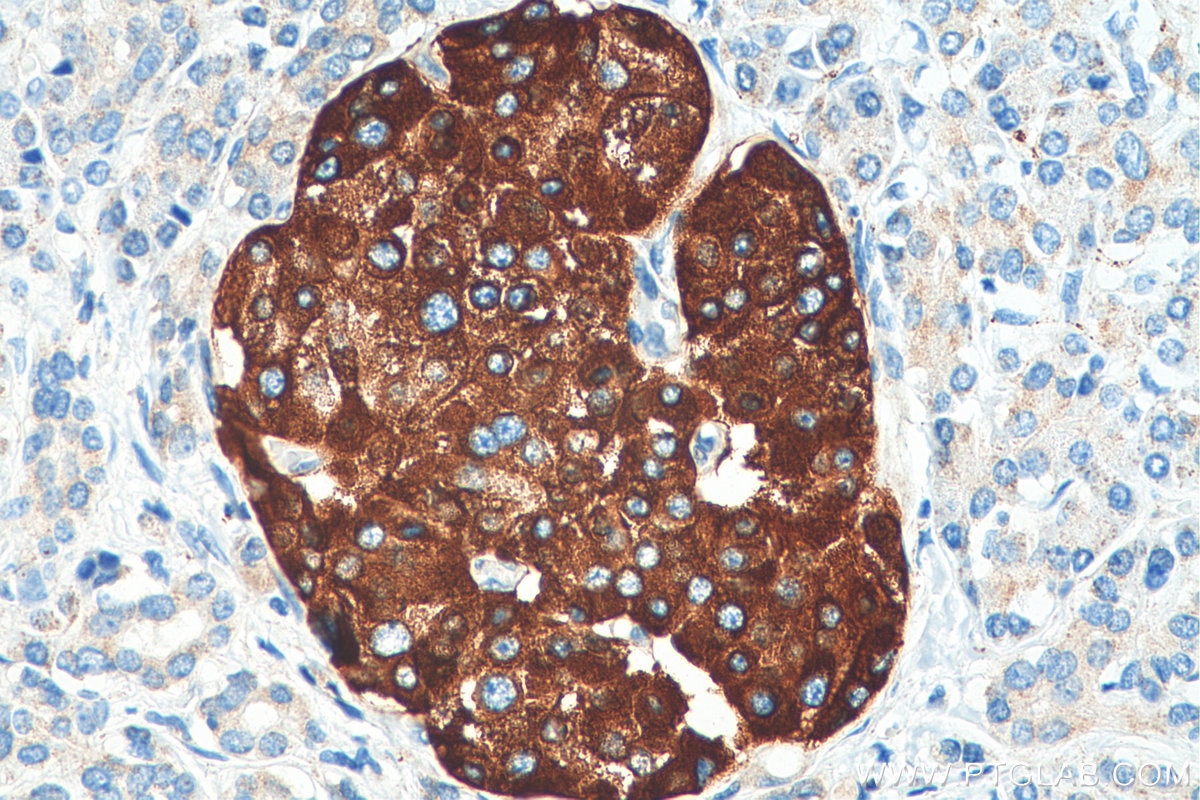
| Positive IHC detected in | mouse pancreas tissue, human pancreas cancer tissue Note: suggested antigen retrieval with TE buffer pH 9.0; (*) Alternatively, antigen retrieval may be performed with citrate buffer pH 6.0 |
| Positive IF-P detected in | mouse pancreas tissue |
Recommended dilution
| Application | Dilution |
|---|---|
| Immunohistochemistry (IHC) | IHC : 1:400-1:1600 |
| Immunofluorescence (IF)-P | IF-P : 1:50-1:500 |
| It is recommended that this reagent should be titrated in each testing system to obtain optimal results. | |
| Sample-dependent, Check data in validation data gallery. | |
Product Information
10954-1-AP targets Secretogranin III in WB, IHC, IF-P, ELISA applications and shows reactivity with human, mouse samples.
| Tested Reactivity | human, mouse |
| Cited Reactivity | human, mouse, rat |
| Host / Isotype | Rabbit / IgG |
| Class | Polyclonal |
| Type | Antibody |
| Immunogen |
CatNo: Ag1397 Product name: Recombinant human SCG3 protein Source: e coli.-derived, PGEX-4T Tag: GST Domain: 1-468 aa of BC014539 Sequence: MGFLGTGTWILVLVLPIQAFPKPGGSQDKSLHNRELSAERPLNEQIAEAEEDKIKKTYPPENKPGQSNYSFVDNLNLLKAITEKEKIEKERQSIRSSPLDNKLNVEDVDSTKNRKLIDDYDSTKSGLDHKFQDDPDGLHQLDGTPLTAEDIVHKIAARIYEENDRAAFDKIVSKLLNLGLITESQAHTLEDEVAEVLQKLISKEANNYEEDPNKPTSWTENQAGKIPEKVTPMAAIQDGLAKGENDETVSNTLTLTNGLERRTKTYSEDNFEELQYFPNFYALLKSIDSEKEAKEKETLITIMKTLIDFVKMMVKYGTISPEEGVSYLENLDEMIALQTKNKLEKNATDNISKLFPAPSEKSHEETDSTKEEAAKMEKEYGSLKDSTKDDNSNPGGKTDEPKGKTEAYLEAIRKNIEWLKKHDKKGNKEDYDLSKMRDFINKQADAYVEKGILDKEEAEAIKRIYSSL Predict reactive species |
| Full Name | secretogranin III |
| Calculated Molecular Weight | 53 kDa |
| GenBank Accession Number | BC014539 |
| Gene Symbol | Secretogranin 3 |
| Gene ID (NCBI) | 29106 |
| RRID | AB_2190449 |
| Conjugate | Unconjugated |
| Form | Liquid |
| Purification Method | Antigen affinity purification |
| UNIPROT ID | Q8WXD2 |
| Storage Buffer | PBS with 0.02% sodium azide and 50% glycerol, pH 7.3. |
| Storage Conditions | Store at -20°C. Stable for one year after shipment. Aliquoting is unnecessary for -20oC storage. 20ul sizes contain 0.1% BSA. |
Background Information
Secretogranin III (SCG3), a member of the granin protein family, is expressed specifically in neuronal and endocrine cells. SCG3 was synthesized as a 61- or 63-kDa protein and processed to a 48-kDa form which, in turn, was partially cleaved to fragments of 28 and 20 kDa.
Protocols
| Product Specific Protocols | |
|---|---|
| IF protocol for Secretogranin III antibody 10954-1-AP | Download protocol |
| IHC protocol for Secretogranin III antibody 10954-1-AP | Download protocol |
| Standard Protocols | |
|---|---|
| Click here to view our Standard Protocols |
Publications
What published studies show
Anti-Secretogranin III (SCG3) monoclonal antibody, catalog number 10954-1-AP, has 13 total citations. Citations appear in journals including Translational Neurodegeneration, Advanced Science, Cancer Letters, Journal of Experimental Medicine, Cellular and Molecular Life Sciences, Journal of Cell Biology, Journal of Endocrinology, Brain Pathology, Epigenetics & Chromatin, FEBS Journal, Experimental Eye Research, and Cerebral Cortex. Research fields span Alzheimer's disease, secretory granule biogenesis, liquid-liquid phase separation, angiogenesis, diabetic retinopathy, choroidal neovascularization, hepatoma, and epigenetics.
| Species | Application | Title |
|---|---|---|
Transl Neurodegener Agomirs upregulating carboxypeptidase E expression rescue hippocampal neurogenesis and memory deficits in Alzheimer's disease | ||
Adv Sci (Weinh) Tuning the Size of Large Dense-Core Vesicles and Quantal Neurotransmitter Release via Secretogranin II Liquid-Liquid Phase Separation.
| ||
Cancer Lett The oncoprotein HBXIP up-regulates SCG3 through modulating E2F1 and miR-509-3p in hepatoma cells.
| ||
J Exp Med Secretogranin III as a disease-associated ligand for antiangiogenic therapy of diabetic retinopathy. | ||
Cell Mol Life Sci Secretogranin III stringently regulates pathological but not physiological angiogenesis in oxygen-induced retinopathy | ||
J Cell Biol Liquid-liquid phase separation facilitates the biogenesis of secretory storage granules |







