
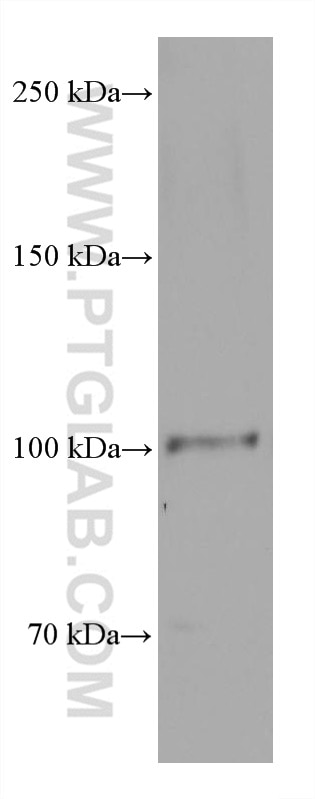
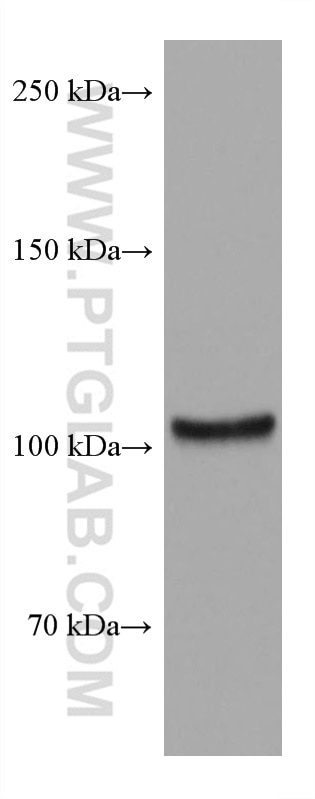

Tested Applications
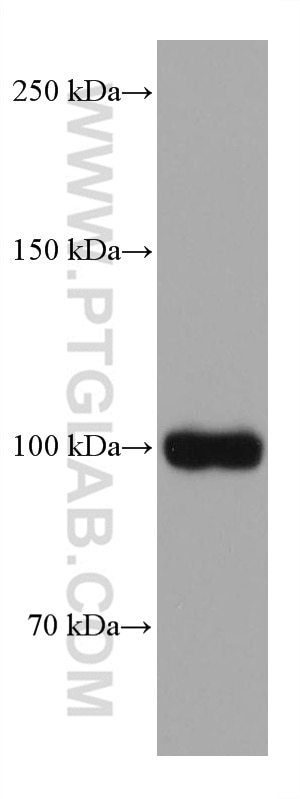
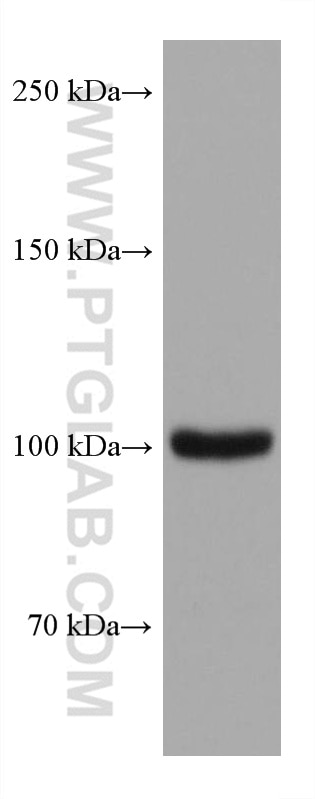
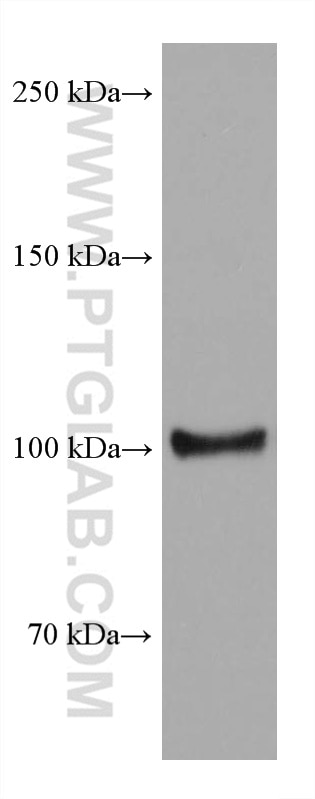
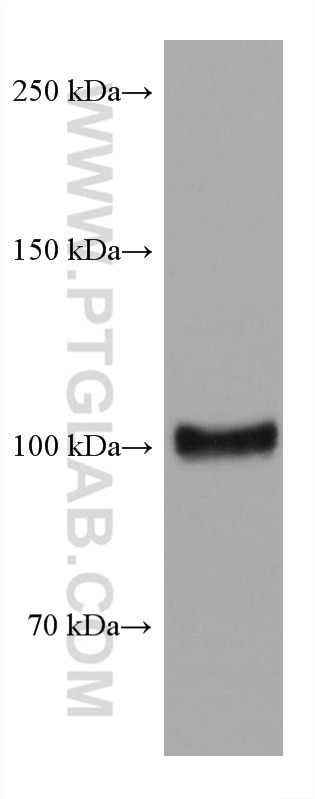
| Positive WB detected in | HepG2 cells, MDA-MB-468 cells, T-47D cells, HEK-293 cells, Y79 cells, HUVEC cells |
Recommended dilution
| Application | Dilution |
|---|---|
| Western Blot (WB) | WB : 1:1000-1:6000 |
| It is recommended that this reagent should be titrated in each testing system to obtain optimal results. | |
| Sample-dependent, Check data in validation data gallery. | |
Product Information
66983-1-Ig targets TRPV1 in WB, CoIP, ELISA applications and shows reactivity with human samples.
| Tested Reactivity | human |
| Cited Reactivity | human, sheep |
| Host / Isotype | Mouse / IgG1 |
| Class | Monoclonal |
| Type | Antibody |
| Immunogen |
CatNo: Ag18683 Product name: Recombinant human TRPV1 protein Source: e coli.-derived, PET28a Tag: 6*His Domain: 1-203 aa of BC132820 Sequence: MKKWSSTDLGAAADPLQKDTCPDPLDGDPNSRPPPAKPQLSTAKSRTRLFGKGDSEEAFPVDCPHEEGELDSCPTITVSPVITIQRPGDGPTGARLLSQDSVAASTEKTLRLYDRRSIFEAVAQNNCQDLESLLLFLQKSKKHLTDNEFKDPETGKTCLLKAMLNLHDGQNTTIPLLLEIARQTDSLKELVNASYTDSYYKGQ Predict reactive species |
| Full Name | transient receptor potential cation channel, subfamily V, member 1 |
| Calculated Molecular Weight | 839 aa, 95 kDa |
| Observed Molecular Weight | 105 kDa |
| GenBank Accession Number | BC132820 |
| Gene Symbol | TRPV1 |
| Gene ID (NCBI) | 7442 |
| RRID | AB_2882302 |
| Conjugate | Unconjugated |
| Form | Liquid |
| Purification Method | Protein G purification |
| UNIPROT ID | Q8NER1 |
| Storage Buffer | PBS with 0.02% sodium azide and 50% glycerol, pH 7.3. |
| Storage Conditions | Store at -20°C. Stable for one year after shipment. Aliquoting is unnecessary for -20oC storage. 20ul sizes contain 0.1% BSA. |
Background Information
TRPV1, also named as VR1 or OTRPC1, belongs to the transient receptor potential (TRP) family and TRPV subfamily (PMID: 17579562). TRPV1 is a ligand-activated non-selective calcium permeant cation channel expressed predominantly by sensory neurons (PMID: 10821274). It is involved in detection of noxious chemical and thermal stimuli. TRPV1 plays an important role in inflammatory thermal hyperalgesia (PMID: 10764638; 10821274).
Protocols
| Product Specific Protocols | |
|---|---|
| WB protocol for TRPV1 antibody 66983-1-Ig | Download protocol |
| Standard Protocols | |
|---|---|
| Click here to view our Standard Protocols |
Publications
What published studies show
The anti-TRPV1 antibody (Cat# 66983-1-Ig) has accumulated 71 citations across journals including Nature Communications, PNAS, Cell Death & Disease, Advanced Science, Journal of Controlled Release, Phytomedicine, International Journal of Molecular Sciences, and Frontiers in Pharmacology. Research fields span pain neuroscience, inflammation, cancer, osteoarthritis, ferroptosis, respiratory disease, cardiovascular protection, liver fibrosis, obesity, and pharmacological drug development, with applications primarily in Western blot and immunofluorescence.
| Species | Application | Title |
|---|---|---|
Bioact Mater Manganese oxide nanozyme-loaded CO-releasing halloysite nanotubes for remodeling colonic immune, microbiota, and intestinal barrier homeostasis with concurrent pain relief in ulcerative colitis. | ||
Nat Commun Nanoparticle-mediated TRPV1 channel blockade amplifies cancer thermo-immunotherapy via heat shock factor 1 modulation | ||
Adv Sci (Weinh) Near Infrared Responsive Gold Nanorods Attenuate Osteoarthritis Progression by Targeting TRPV1 | ||
Research (Wash D C) Bifunctional TRPV1 Targeted Magnetothermal Switch to Attenuate Osteoarthritis Progression | ||
J Control Release Ultrasound-responsive piezoelectric analgesic microspheres alleviate osteoarthritis pain. | ||
Cell Death Dis TRPV1 alleviates osteoarthritis by inhibiting M1 macrophage polarization via Ca2+/CaMKII/Nrf2 signaling pathway. |
Reviews
What customers say
The single review for this TRPV1 antibody (rated 1/5) was for Immunofluorescence. The reviewer reported no detectable signal in a cell type previously shown to express abundant TRPV1, even at a 1:100 dilution. However, the reviewer acknowledged that multiple TRPV1 antibodies have shown poor performance in that particular tissue type, so the failure may be tissue-specific rather than antibody-specific. They indicated plans to test the antibody in other cell or tissue types to further evaluate its staining capability.
The reviews below have been submitted by verified Proteintech customers who received an incentive for providing their feedback.
Shihab (Verified Customer) (09-17-2021) | This antibody was tried in a cell type (cannot disclose) which has previously been shown to express plenty of TRPV1 signal. However, this antibody was unable to give any signal in various attempts at staining, even at 1:100 dilution. This is not to say that this anybody is not good because I have had trouble with various TRPV1 antibodies in this tissue type but it will be used in other cell/tissue type to see its staining capabilities
|







