
Product Information
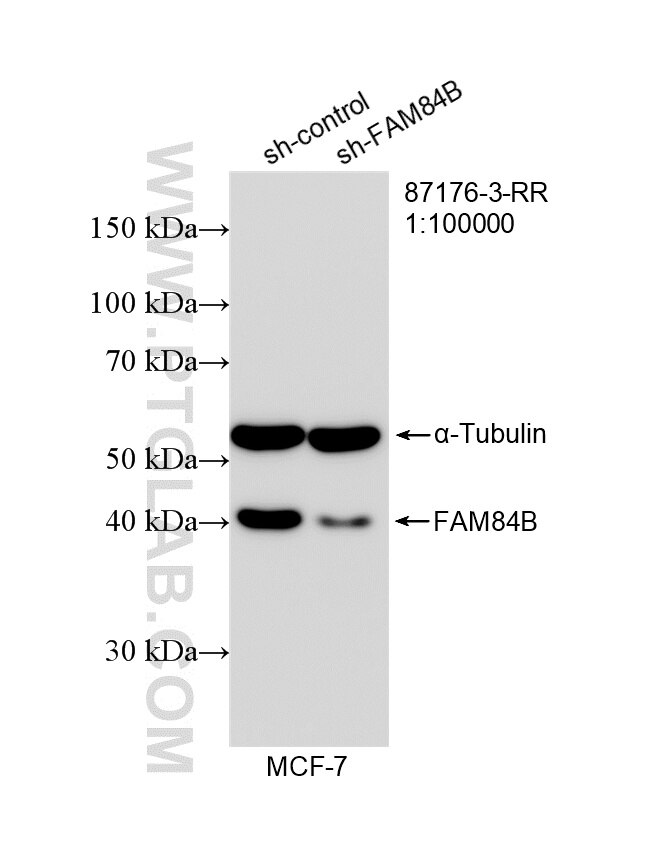
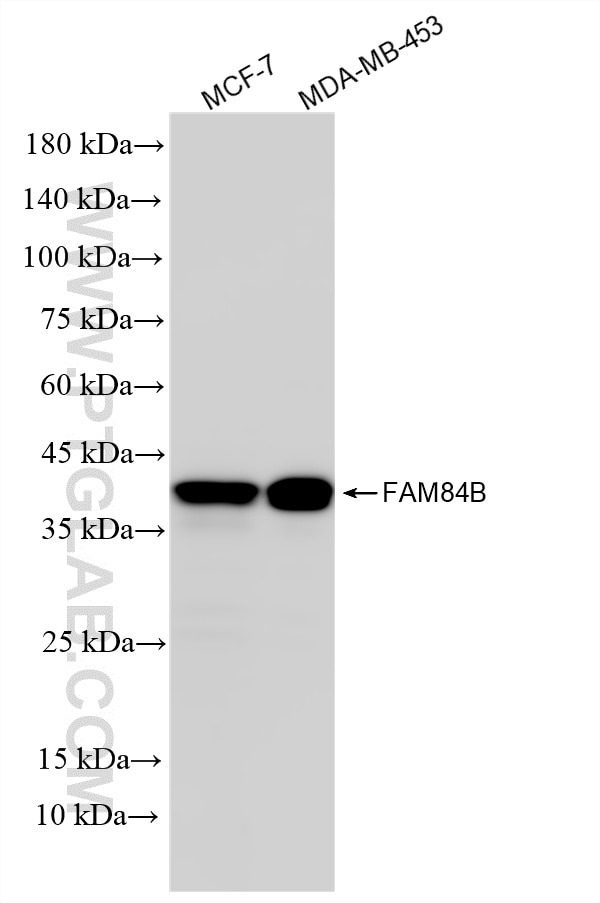
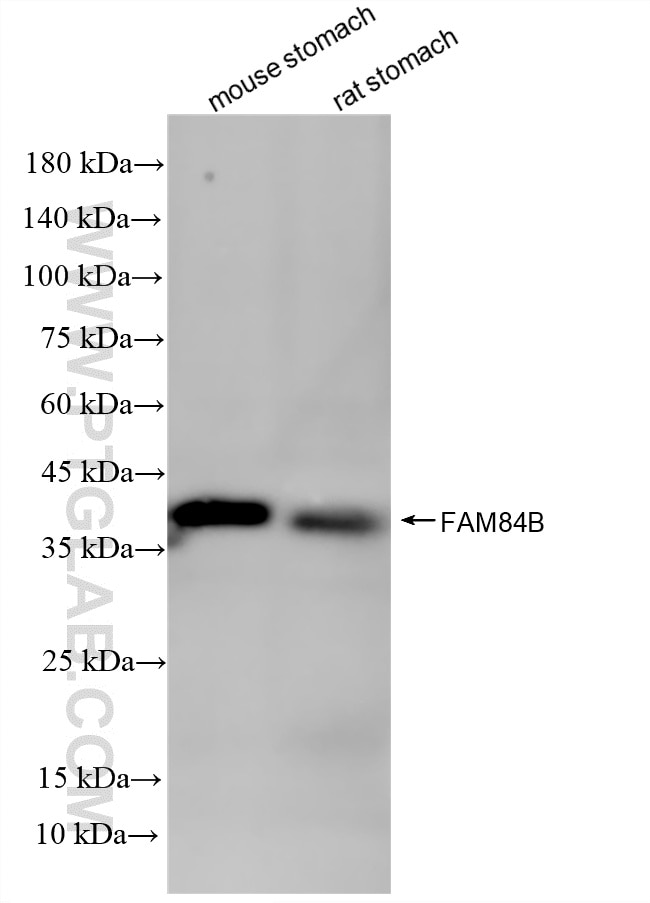
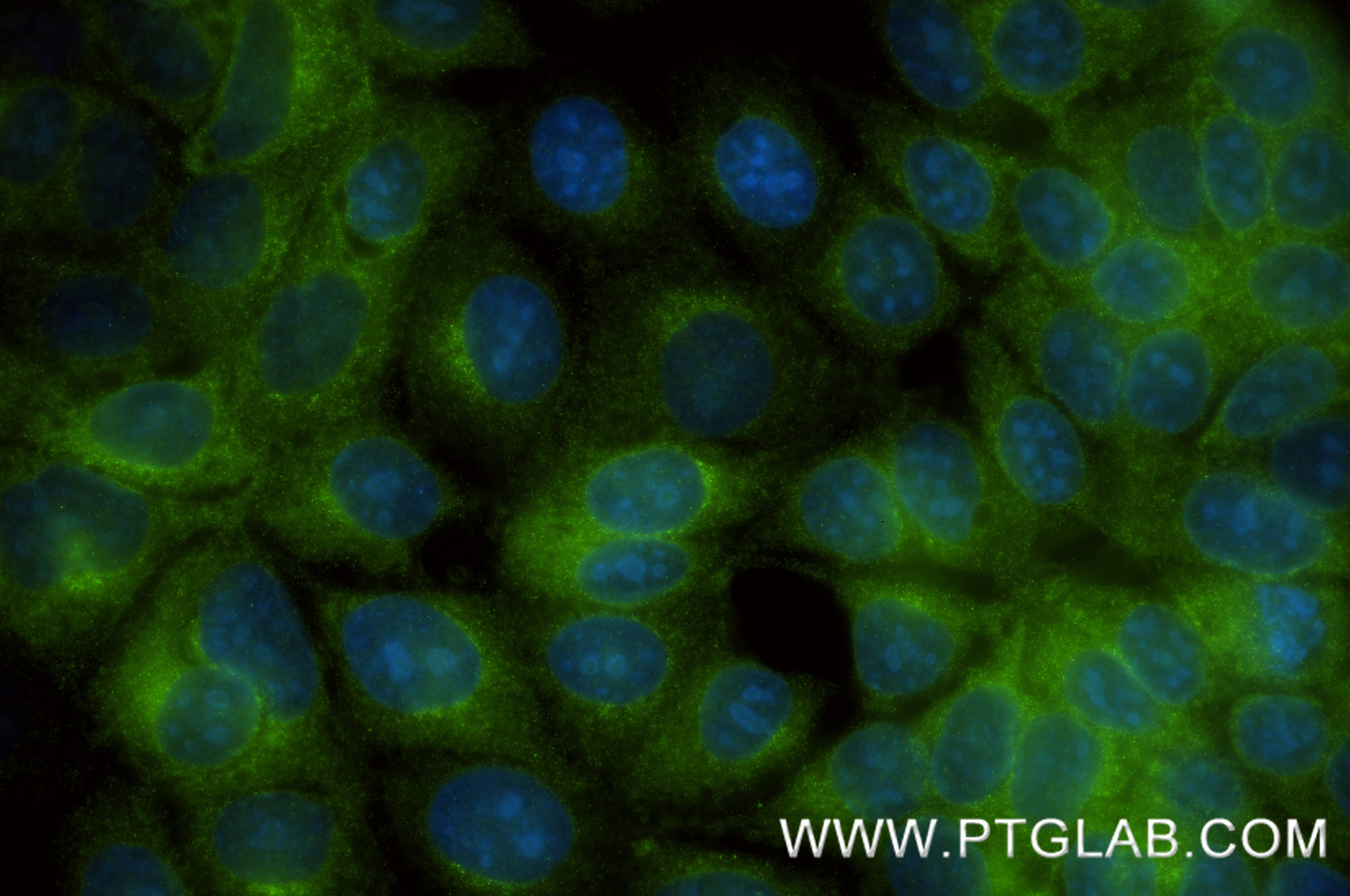
87176-3-PBS targets FAM84B in WB, IF/ICC, Indirect ELISA applications and shows reactivity with human, mouse, rat samples.
| Tested Reactivity | human, mouse, rat |
| Host / Isotype | Rabbit / IgG |
| Class | Recombinant |
| Type | Antibody |
| Immunogen |
CatNo: Ag13243 Product name: Recombinant human FAM84B protein Source: e coli.-derived, PGEX-4T Tag: GST Domain: 1-310 aa of BC052957 Sequence: MGNQVEKLTHLSYKEVPTADPTGVDRDDGPRIGVSYIFSNDDEDVEPQPPPQGPDGGGLPDGGDGPPPPQPQPYDPRLHEVECSVFYRDECIYQKSFAPGSAALSTYTPENLLNKCKPGDLVEFVSQAQYPHWAVYVGNFQVVHLHRLEVINSFLTDASQGRRGRVVNDLYRYKPLSSSAVVRNALAHVGAKERELSWRNSESFAAWCRYGKREFKIGGELRIGKQPYRLQIQLSAQRSHTLEFQSLEDLIMEKRRNDQIGRAAVLQELATHLHPAEPEEGDSNVARTTPPPGRPPAPSSEEEDGEAVAH Predict reactive species |
| Full Name | family with sequence similarity 84, member B |
| Calculated Molecular Weight | 34 kDa |
| Observed Molecular Weight | 40 kDa |
| GenBank Accession Number | BC052957 |
| Gene Symbol | FAM84B |
| Gene ID (NCBI) | 157638 |
| RRID | AB_3745391 |
| Conjugate | Unconjugated |
| Form | Liquid |
| Purification Method | Protein A purification |
| UNIPROT ID | Q96KN1 |
| Storage Buffer | PBS only, pH 7.3. |
| Storage Conditions | Store at -80°C. |
Background Information
FAM84B (Family with sequence similarity 84 member B) is a protein-coding gene located on human chromosome 8. Although its full physiological function remains under investigation, accumulating evidence links FAM84B to cell proliferation, cytoskeletal organization and cancer progression. In several tumor types-most notably prostate, esophageal squamous-cell, breast and glioma-FAM84B is frequently amplified or over-expressed, and high expression often correlates with advanced stage, higher Gleason score and poorer patient survival.






