
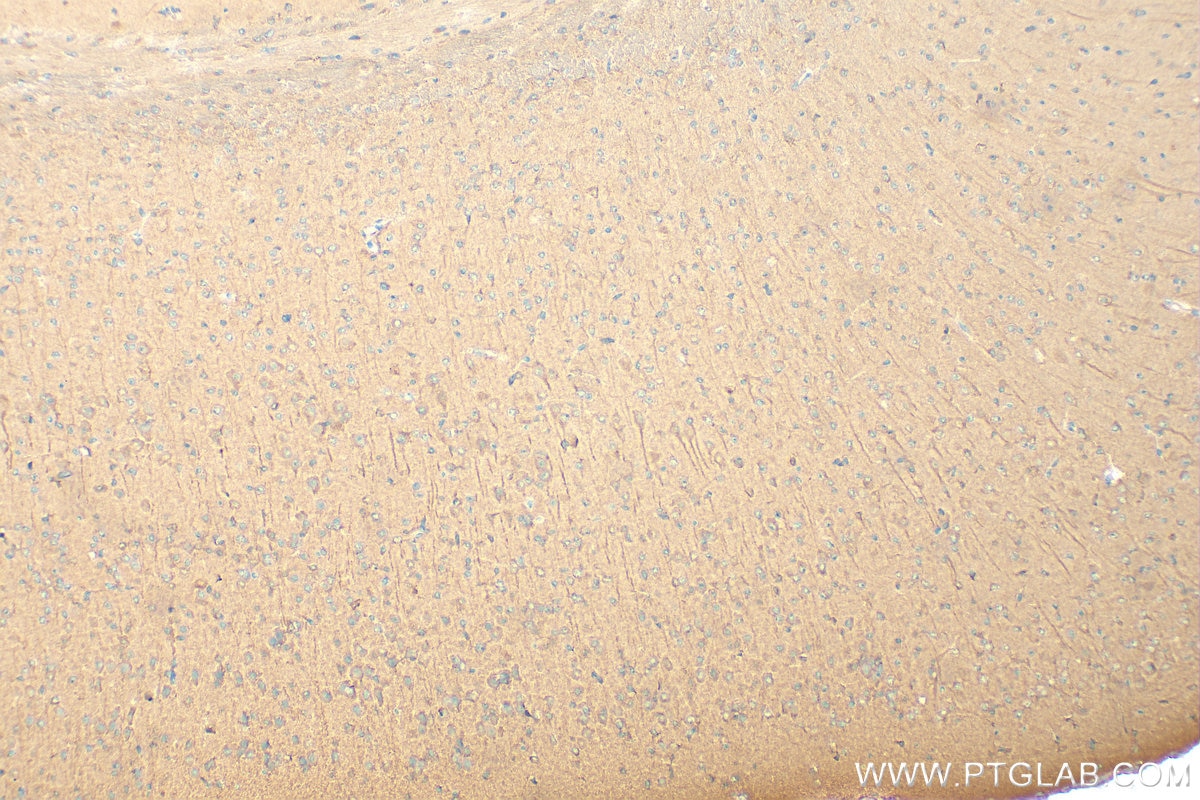
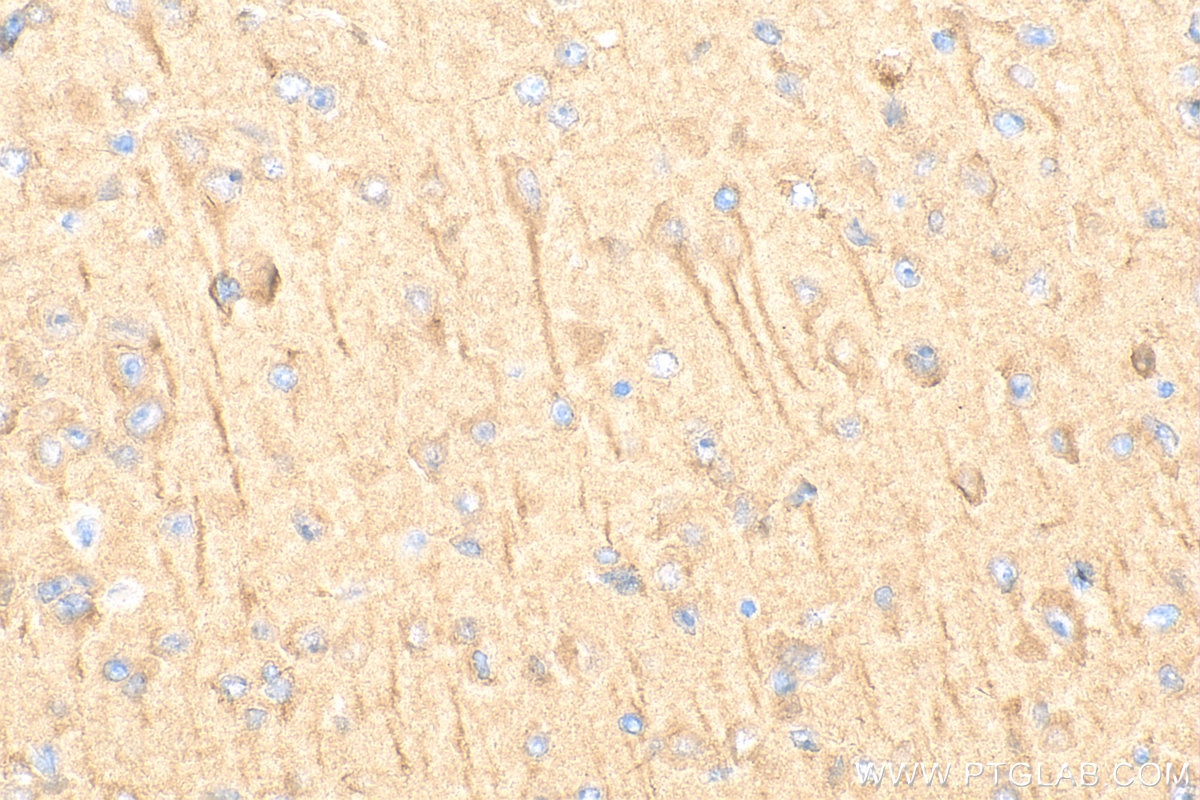

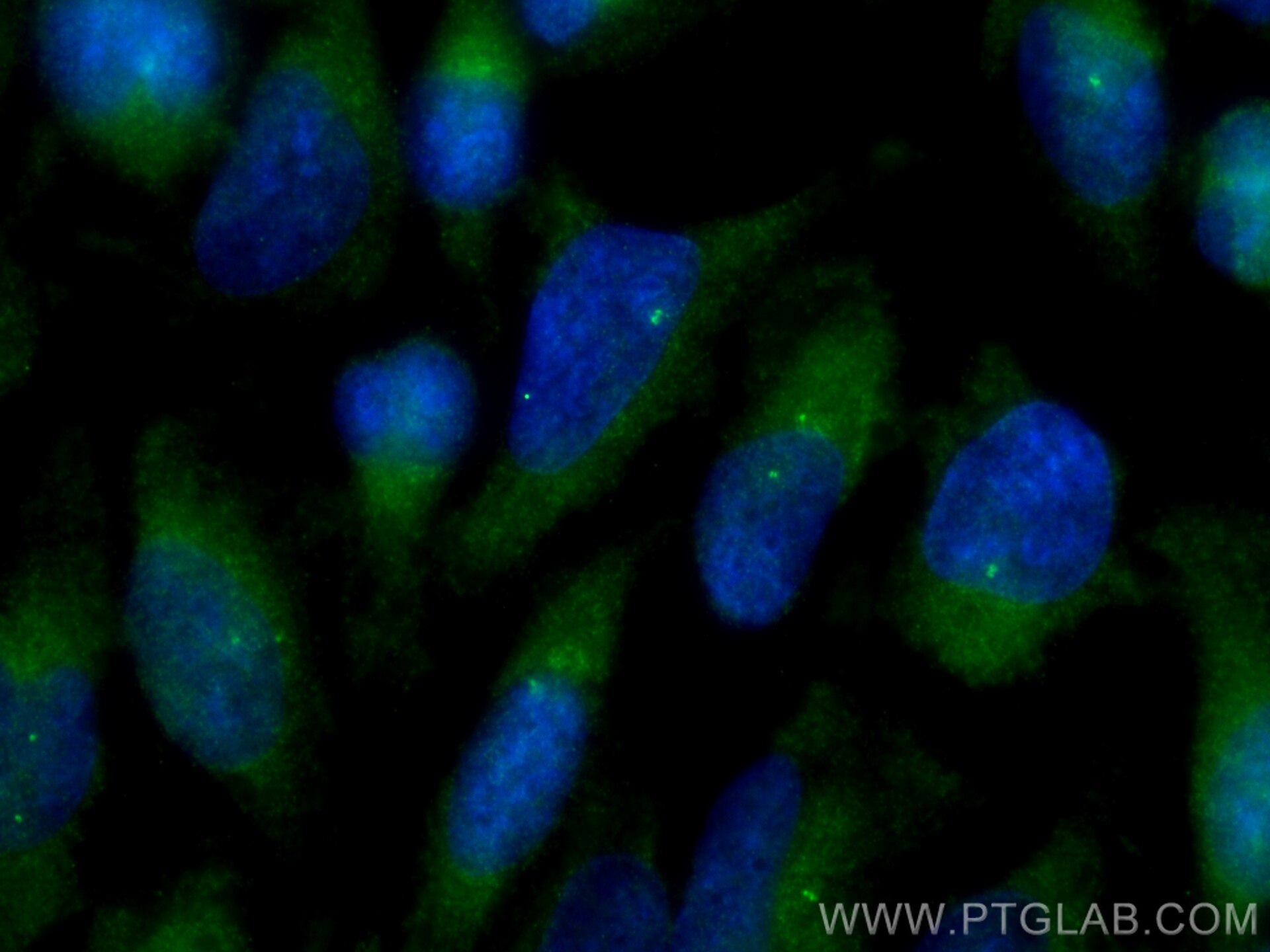

Tested Applications
| Positive IHC detected in | mouse brain tissue, human ovary cancer tissue Note: suggested antigen retrieval with TE buffer pH 9.0; (*) Alternatively, antigen retrieval may be performed with citrate buffer pH 6.0 |
| Positive IF/ICC detected in | HeLa cells |
Recommended dilution
| Application | Dilution |
|---|---|
| Immunohistochemistry (IHC) | IHC : 1:50-1:500 |
| Immunofluorescence (IF)/ICC | IF/ICC : 1:400-1:1600 |
| It is recommended that this reagent should be titrated in each testing system to obtain optimal results. | |
| Sample-dependent, Check data in validation data gallery. | |
Product Information
13471-1-AP targets SDCCAG8 in WB, IHC, IF/ICC, IP, ELISA applications and shows reactivity with human, mouse, rat, canine, zebrafish samples.
| Tested Reactivity | human, mouse, rat, canine, zebrafish |
| Cited Reactivity | human, mouse, rat, zebrafish |
| Host / Isotype | Rabbit / IgG |
| Class | Polyclonal |
| Type | Antibody |
| Immunogen |
CatNo: Ag4264 Product name: Recombinant human SDCCAG8 protein Source: e coli.-derived, PGEX-4T Tag: GST Domain: 1-360 aa of BC032454 Sequence: MAKSPENSTLEEILGQYQRSLREHASRSIHQLTCALKEGDVTIGEDAPNLSFSTSVGNEDARTAWPELQQSHAVNQLKDLLRQQADKESEVSPSRRRKMSPLRSLEHEETNMPTMHDLVHTINDQSQYIHHLEAEVKFCKEELSGMKNKIQVVVLENEGLQQQLKSQRQEETLREQTLLDASGNMHNSWITTGEDSGVGETSKRPFSHDNADFGKAASAGEQLELEKLKLTYEEKCEIEESQLKFLRNDLAEYQRTCEDLKEQLKHKEFLLAANTCNRVGGLCLKCAQHEAVLSQTHTNVHMQTIERLVKERDDLMSALVSVRSSLADTQQREASAYEQVKQVLQISEEANFEKTKHPSQ Predict reactive species |
| Full Name | serologically defined colon cancer antigen 8 |
| Calculated Molecular Weight | 713 aa, 83 kDa |
| Observed Molecular Weight | 83 kDa |
| GenBank Accession Number | BC032454 |
| Gene Symbol | SDCCAG8 |
| Gene ID (NCBI) | 10806 |
| RRID | AB_2183417 |
| Conjugate | Unconjugated |
| Form | Liquid |
| Purification Method | Antigen affinity purification |
| UNIPROT ID | Q86SQ7 |
| Storage Buffer | PBS with 0.02% sodium azide and 50% glycerol, pH 7.3. |
| Storage Conditions | Store at -20°C. Stable for one year after shipment. Aliquoting is unnecessary for -20oC storage. 20ul sizes contain 0.1% BSA. |
Background Information
SDCCAG8, also named as CCCAP and NY-CO-8, plays a role in the establishment of cell polarity and epithelial lumen formation. It may play a role in ciliogenesis. Loss of SDCCAG8 function as a cause of a retinal-renal ciliopathy and validates exome capture analysis for broadly heterogeneous single-gene disorders. SDCCAG8 is localized at both centrioles and interacts directly with OFD1 (oral-facial-digital syndrome 1), which is associated with NPHP-RC. SDCCAG8 has 4 isoforms with MW 83,78,73 and 41 kDa (refer to UniProt). Catalog#13471-1-AP can recognize all the four isoforms.
Protocols
| Product Specific Protocols | |
|---|---|
| IF protocol for SDCCAG8 antibody 13471-1-AP | Download protocol |
| IHC protocol for SDCCAG8 antibody 13471-1-AP | Download protocol |
| Standard Protocols | |
|---|---|
| Click here to view our Standard Protocols |
Publications
What published studies show
The antibody (anti-SDCCAG8, Cat# 13471-1-AP) has 12 total citations published in journals including Nature, Nature Genetics, Neuron, Cell Death & Disease, Journal of the American Society of Nephrology, Journal of Cell Biology, Cells, Zool Research, Journal of Neuroscience, Journal of Biological Chemistry, Human Molecular Genetics, and Molecular Biology of the Cell. Research fields span ciliopathy, cilia/centriole biology, neuronal migration, photoreceptor degeneration, DNA damage response, male fertility, and schizophrenia.
| Species | Application | Title |
|---|---|---|
Nat Genet Candidate exome capture identifies mutation of SDCCAG8 as the cause of a retinal-renal ciliopathy. | ||
Neuron SDCCAG8 Regulates Pericentriolar Material Recruitment and Neuronal Migration in the Developing Cortex. | ||
Cell Death Dis Selective loss of RPGRIP1-dependent ciliary targeting of NPHP4, RPGR and SDCCAG8 underlies the degeneration of photoreceptor neurons. | ||
J Am Soc Nephrol Renal-retinal ciliopathy gene sdccag8 regulates DNA damage response signaling.
| ||





