

Tested Applications
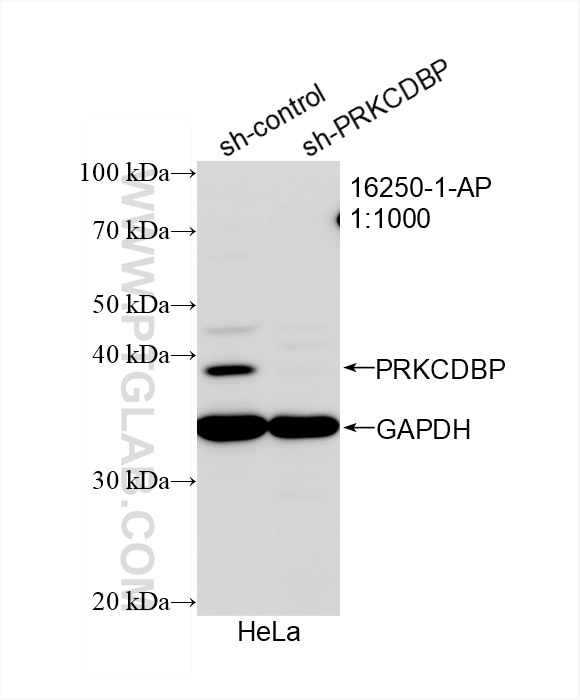
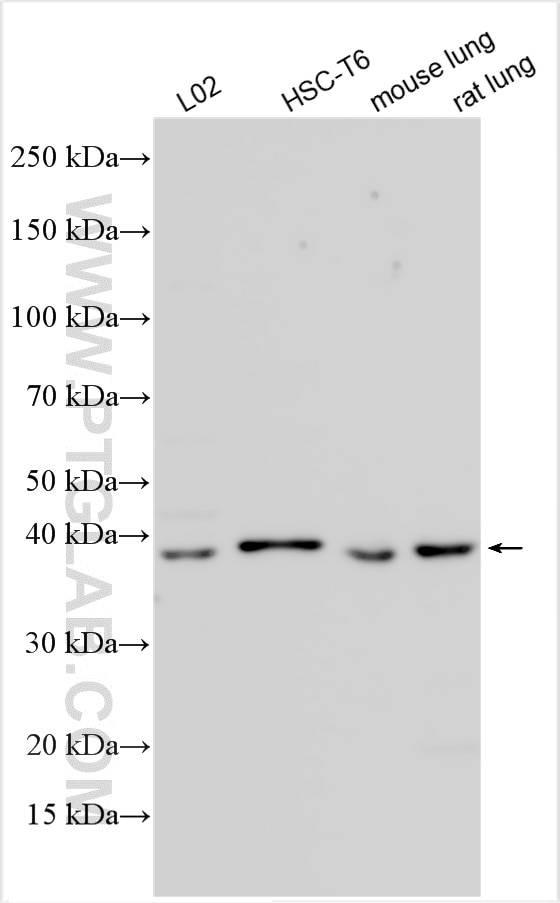
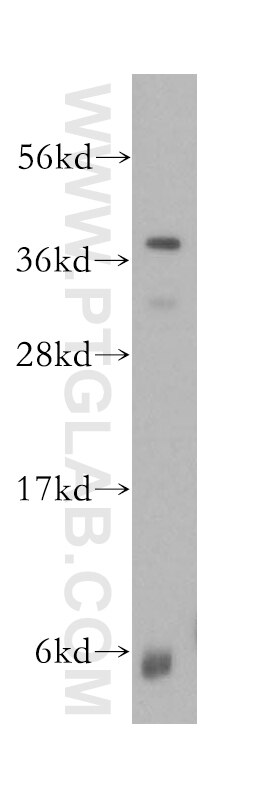
| Positive WB detected in | L02 cells, HeLa cells, MCF-7 cells, HSC-T6 cells, mouse lung tissue, rat lung tissue |
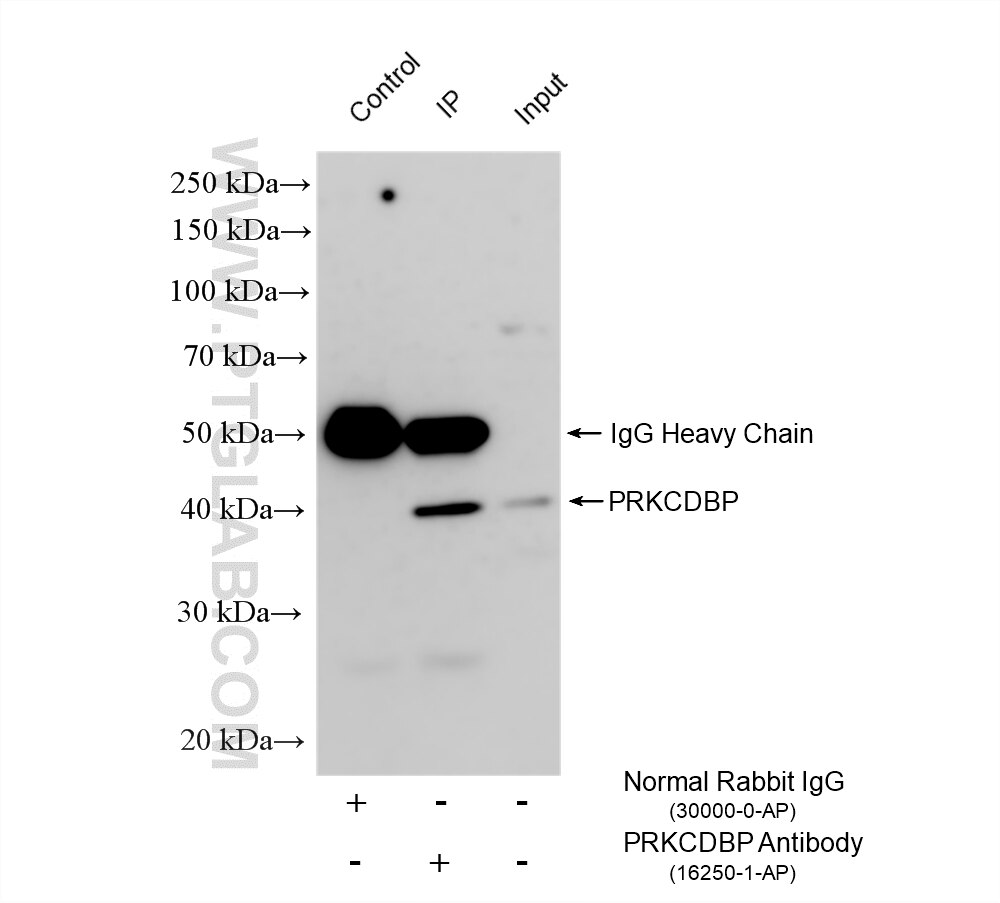
| Positive IP detected in | A549 cells |
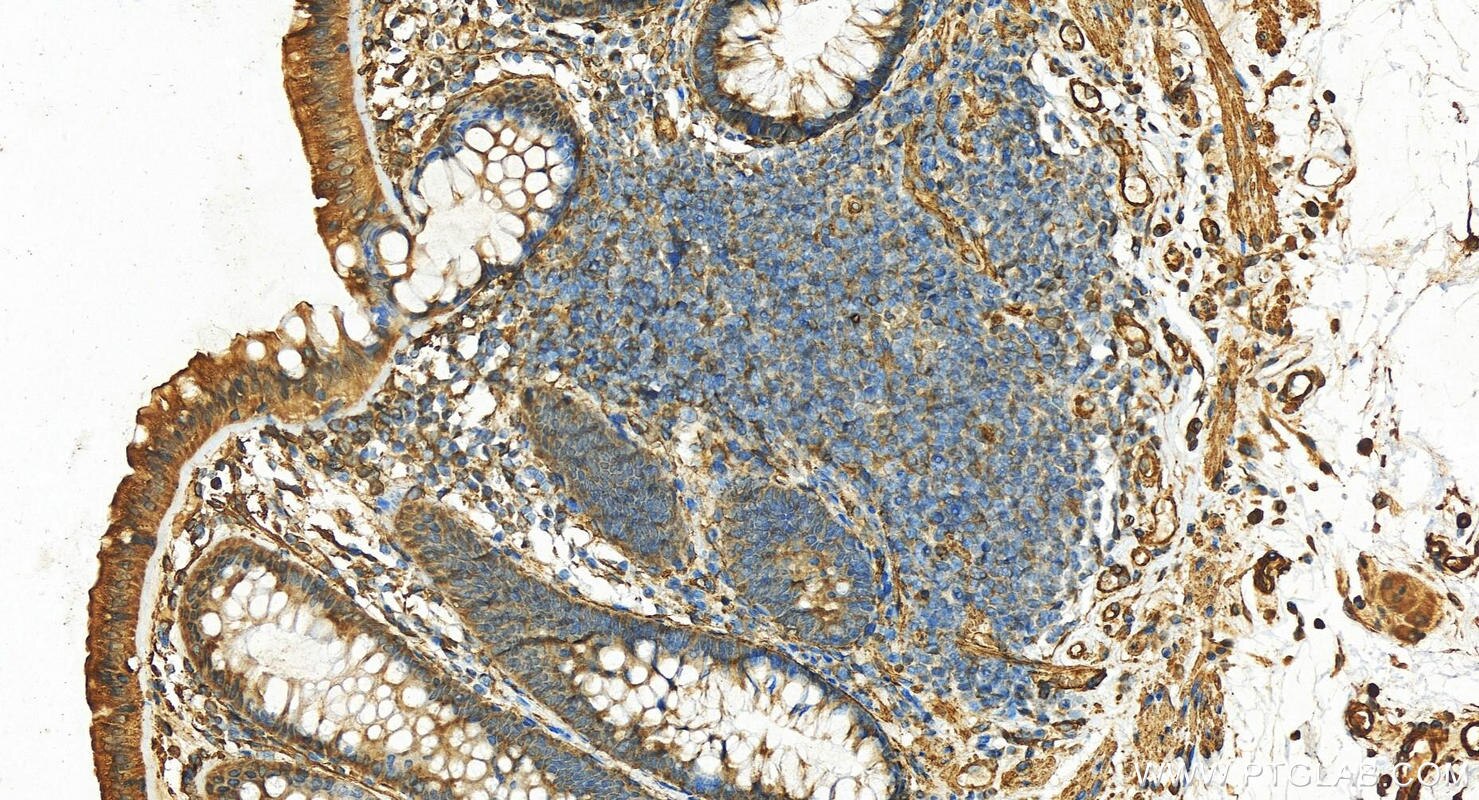
| Positive IHC detected in | human normal colon Note: suggested antigen retrieval with TE buffer pH 9.0; (*) Alternatively, antigen retrieval may be performed with citrate buffer pH 6.0 |
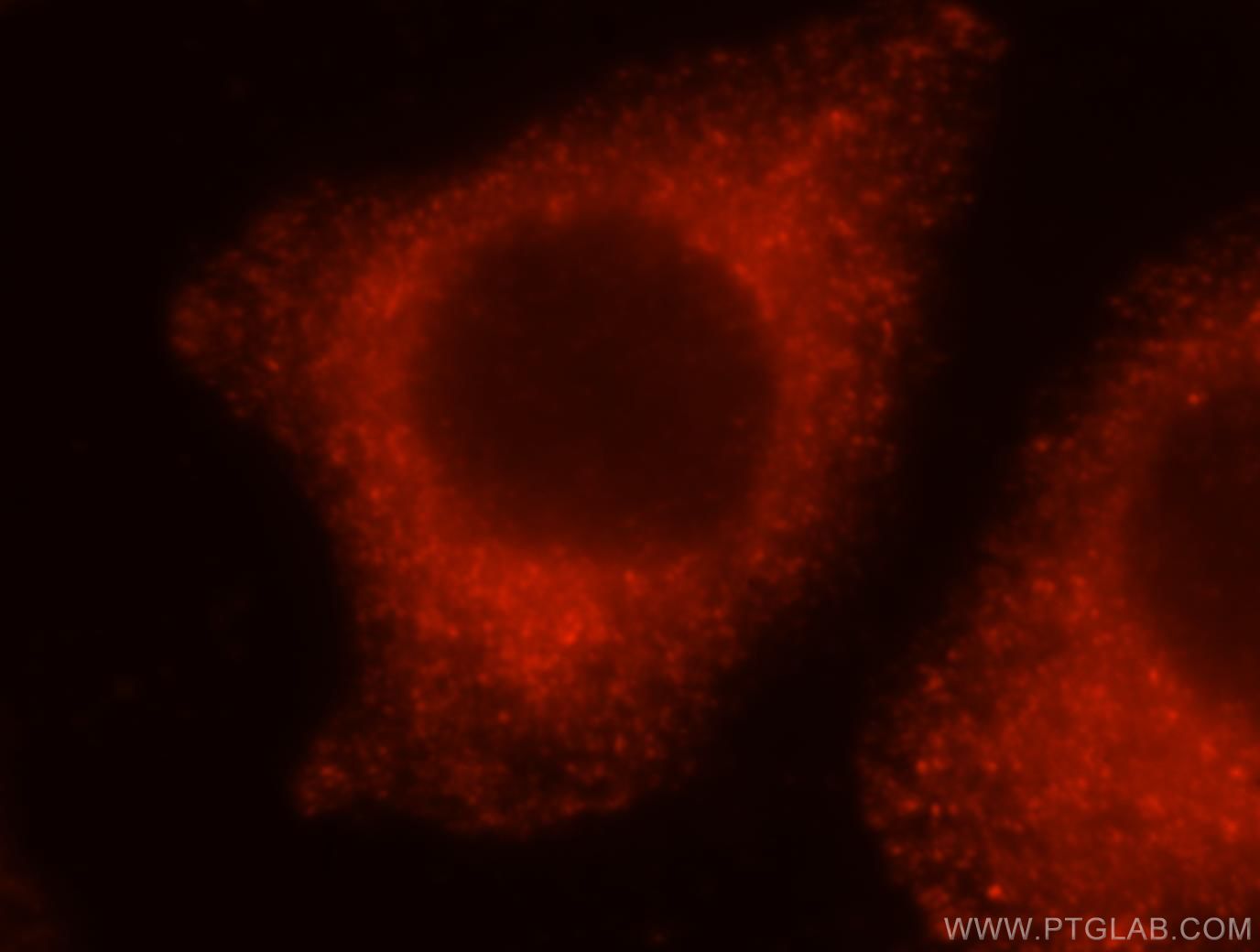
| Positive IF/ICC detected in | MCF-7 cells |
Recommended dilution
| Application | Dilution |
|---|---|
| Western Blot (WB) | WB : 1:1000-1:4000 |
| Immunoprecipitation (IP) | IP : 0.5-4.0 ug for 1.0-3.0 mg of total protein lysate |
| Immunohistochemistry (IHC) | IHC : 1:50-1:500 |
| Immunofluorescence (IF)/ICC | IF/ICC : 1:10-1:100 |
| It is recommended that this reagent should be titrated in each testing system to obtain optimal results. | |
| Sample-dependent, Check data in validation data gallery. | |
Product Information
16250-1-AP targets PRKCDBP in WB, IHC, IF/ICC, IP, ELISA applications and shows reactivity with human, mouse, rat samples.
| Tested Reactivity | human, mouse, rat |
| Cited Reactivity | human, mouse, rat, pig |
| Host / Isotype | Rabbit / IgG |
| Class | Polyclonal |
| Type | Antibody |
| Immunogen |
CatNo: Ag9209 Product name: Recombinant human PRKCDBP protein Source: e coli.-derived, PGEX-4T Tag: GST Domain: 1-261 aa of BC011585 Sequence: MRESALEPGPVPEAPAGGPVHAVTVVTLLEKLASMLETLRERQGGLARRQGGLAGSVRRIQSGLGALSRSHDTTSNTLAQLLAKAERVSSHANAAQERAVRRAAQVQRLEANHGLLVARGKLHVLLFKEEGEVPASAFQKAPEPLGPADQSELGPEQLEAEVGESSDEEPVESRAQRLRRTGLQKVQSLRRALSGRKGPAAPPPTPVKPPRLGPGRSAEAQPEAQPALEPTLEPEPPQDTEEDPGRPGAAEEALLQMESVA Predict reactive species |
| Full Name | protein kinase C, delta binding protein |
| Calculated Molecular Weight | 261 aa, 28 kDa |
| Observed Molecular Weight | 35-40 kDa |
| GenBank Accession Number | BC011585 |
| Gene Symbol | PRKCDBP |
| Gene ID (NCBI) | 112464 |
| RRID | AB_2171894 |
| Conjugate | Unconjugated |
| Form | Liquid |
| Purification Method | Antigen affinity purification |
| UNIPROT ID | Q969G5 |
| Storage Buffer | PBS with 0.02% sodium azide and 50% glycerol, pH 7.3. |
| Storage Conditions | Store at -20°C. Stable for one year after shipment. Aliquoting is unnecessary for -20oC storage. 20ul sizes contain 0.1% BSA. |
Background Information
Protein kinase C delta-binding protein (PRKCDBP) is a putative tumor suppressor in which alteration has been observed in several human cancers. It is a BRCA1-interacting protein, and may also be involved in DNA damage response and participate in BRCA1-mediated tumor suppression pathways. PKCdelta binds to the C-terminal half of PRKCDBP through the regulatory domain and phosphorylates it in vitro. In COS1 cells, the phosphorylation of over-expressed PRKCDBP is stimulated by 12-O-tetradecanoylphorbol-13-acetate and further enhanced by the over-expression of PKCdelta
Protocols
| Product Specific Protocols | |
|---|---|
| IF protocol for PRKCDBP antibody 16250-1-AP | Download protocol |
| IHC protocol for PRKCDBP antibody 16250-1-AP | Download protocol |
| IP protocol for PRKCDBP antibody 16250-1-AP | Download protocol |
| WB protocol for PRKCDBP antibody 16250-1-AP | Download protocol |
| Standard Protocols | |
|---|---|
| Click here to view our Standard Protocols |
Publications
What published studies show
The PRKCDBP (Cavin-3) Polyclonal antibody (Cat# 16250-1-AP) has 29 citations. These appear in journals including Nature, Nature Communications, ACS Nano, Developmental Cell, eLife, PLoS Biology, PLoS One, Journal of Biological Chemistry, Molecular Metabolism, Communications Biology, European Journal of Pharmacology, Frontiers in Immunology, Cell Proliferation, BMC Nephrology, Digestive Diseases and Sciences, and others. Research fields span caveolae/cavin biology, cancer (lung, colorectal, cervical), cardiovascular and pulmonary disease, metabolism, and inflammation, using WB, IF, IHC, and IP applications.
| Species | Application | Title |
|---|---|---|
Nat Commun Identification of intracellular cavin target proteins reveals cavin-PP1alpha interactions regulate apoptosis.
| ||
ACS Nano Engineering Extracellular Vesicles Restore the Impaired Cellular Uptake and Attenuate Intervertebral Disc Degeneration. | ||
Dev Cell Caveolae sense oxidative stress through membrane lipid peroxidation and cytosolic release of CAVIN1 to regulate NRF2 | ||
Cell Prolif The sodium new houttuyfonate suppresses NSCLC via activating pyroptosis through TCONS-14036/miR-1228-5p/PRKCDBP pathway | ||
Front Immunol Hypoxia reconstructed colorectal tumor microenvironment weakening anti-tumor immunity: construction of a new prognosis predicting model through transcriptome analysis |







