

Tested Applications
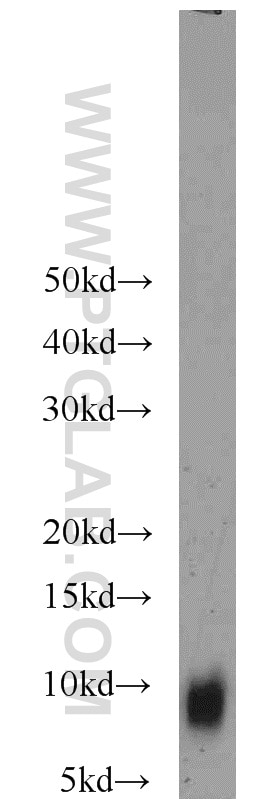
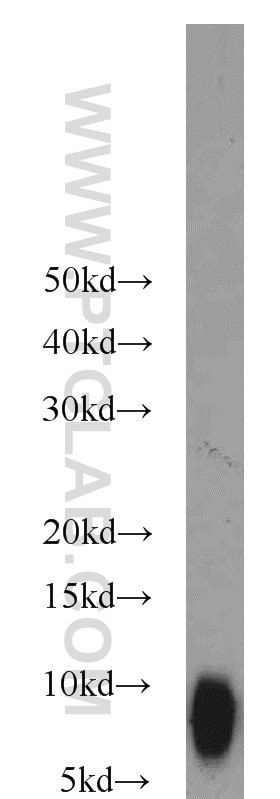
| Positive WB detected in | mouse testis tissue |
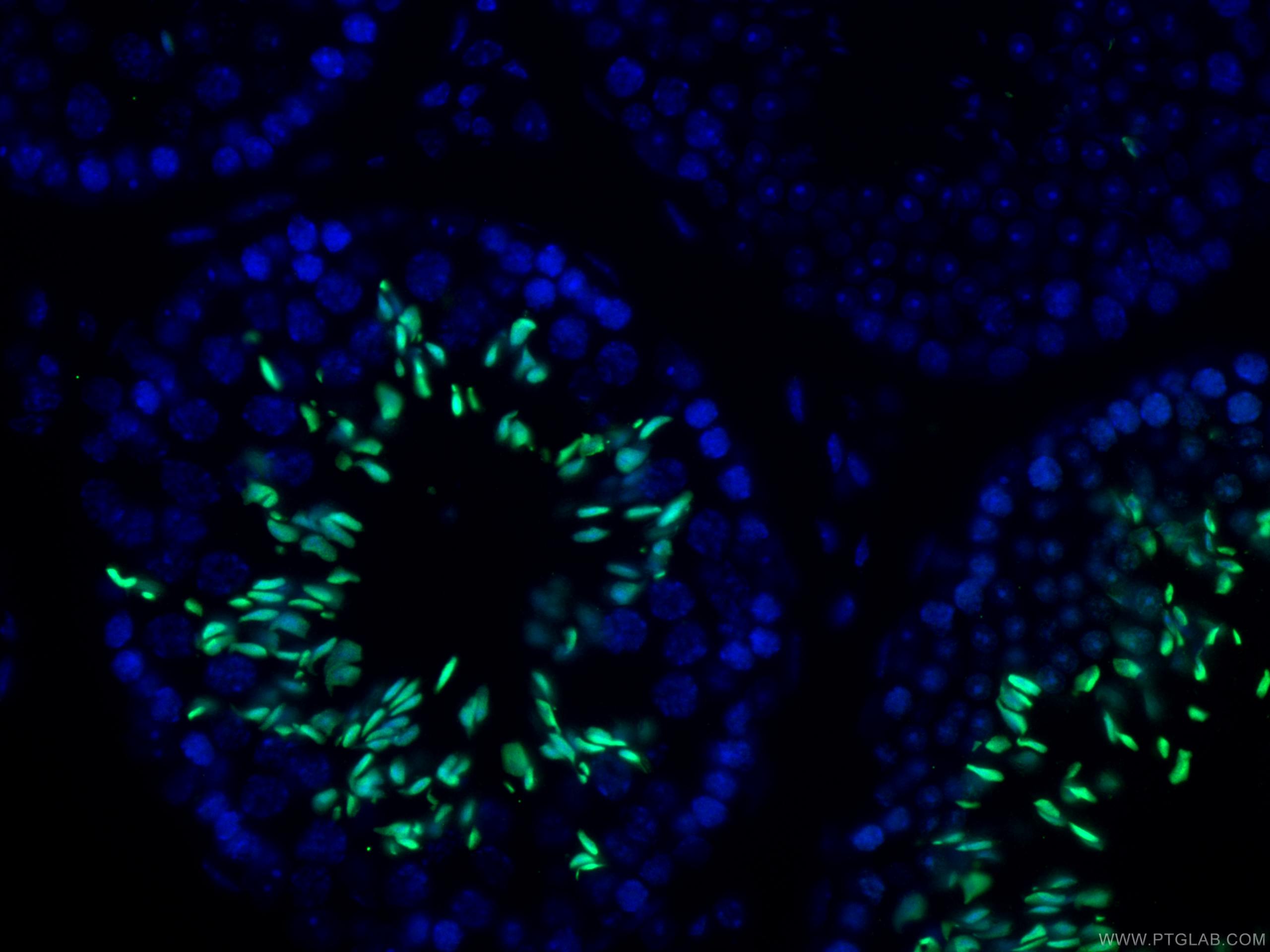
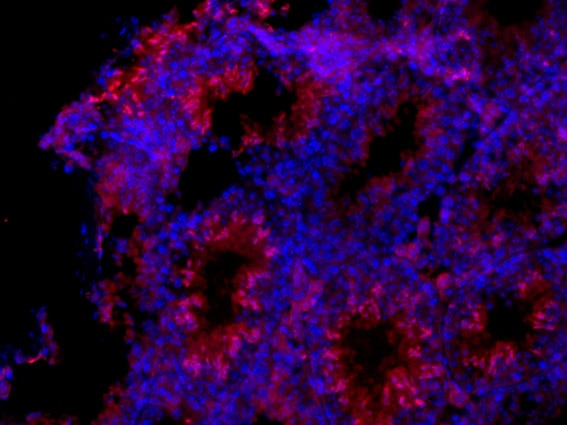
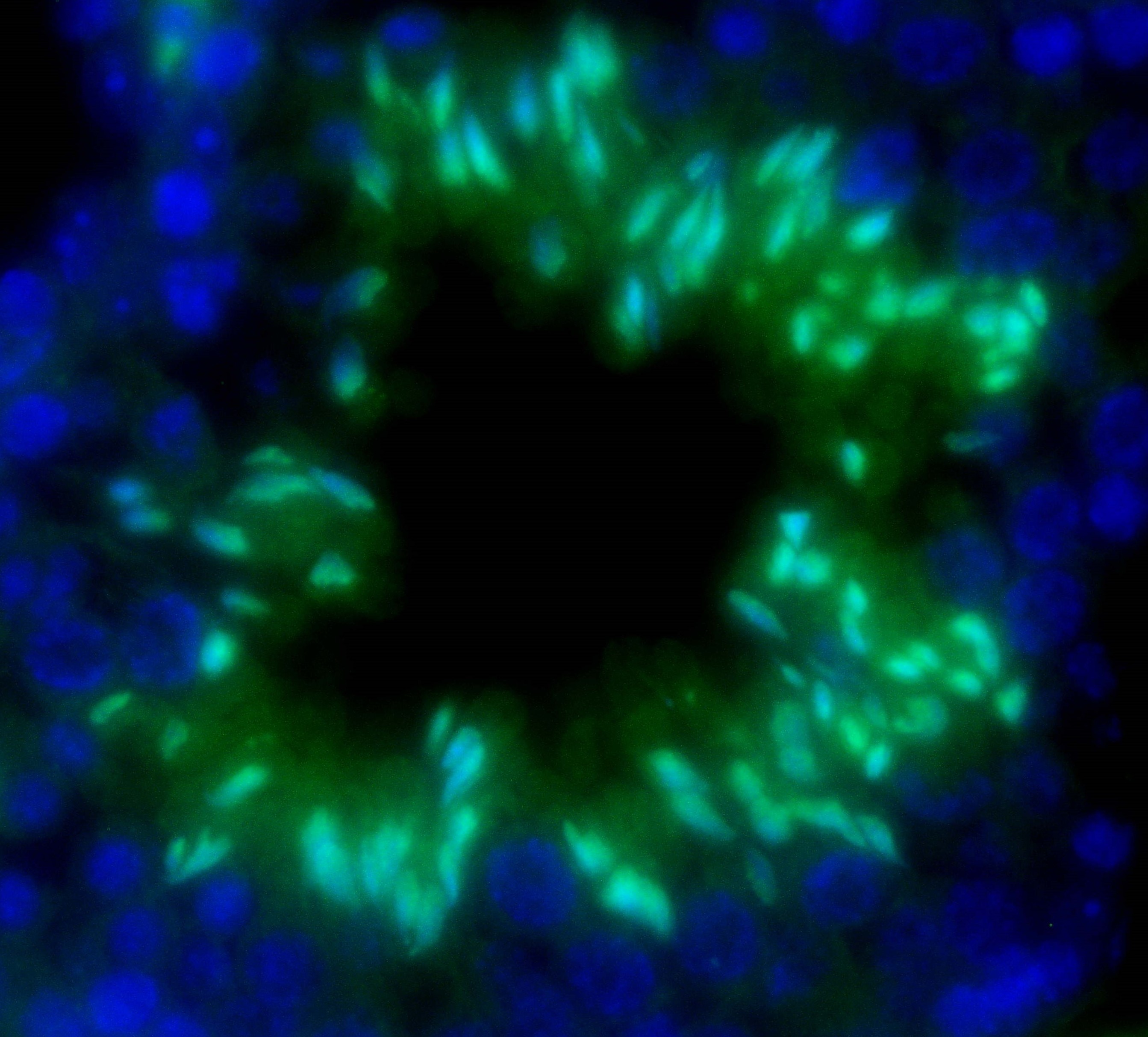
| Positive IF-P detected in | mouse testis tissue |
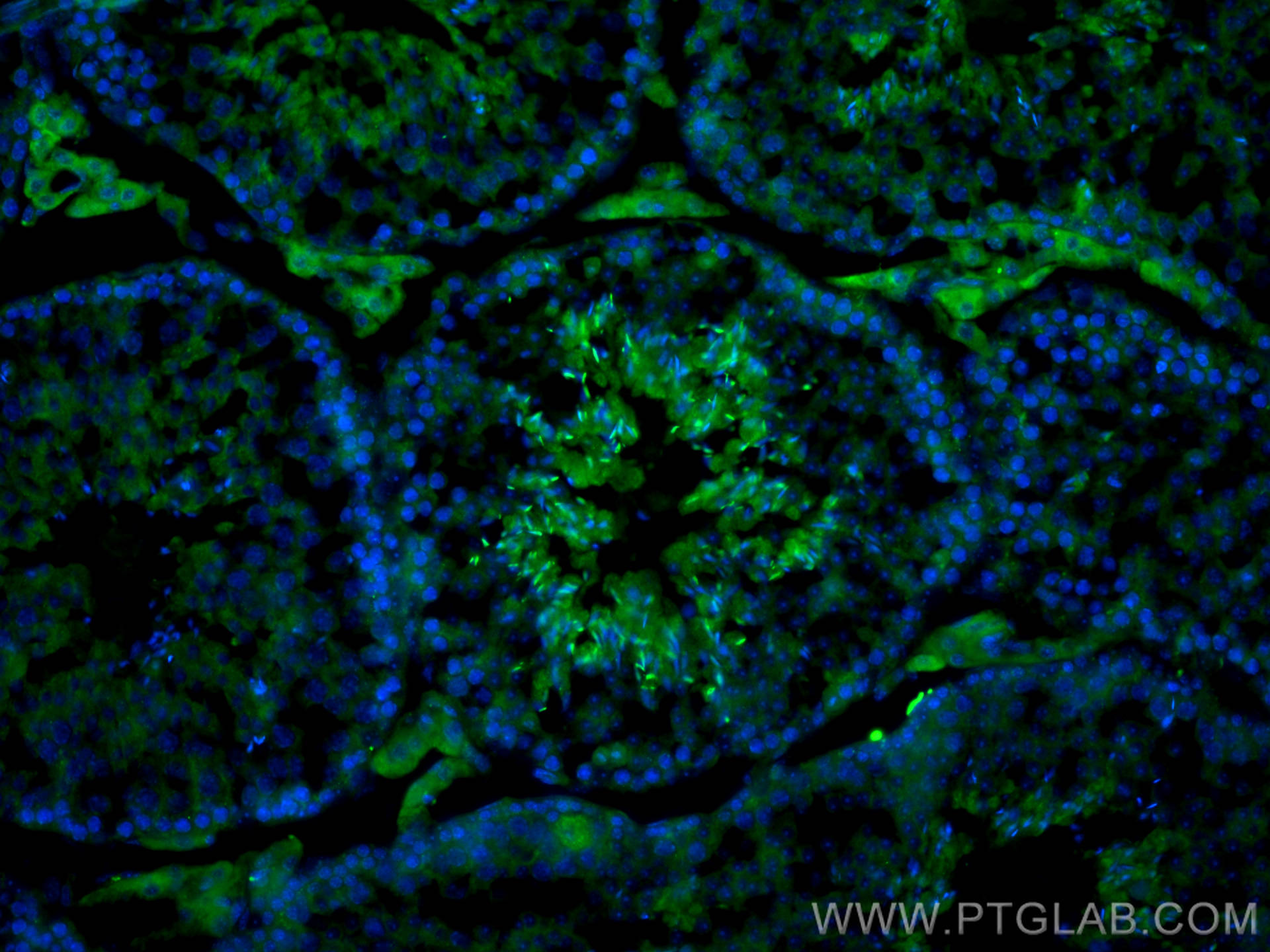
| Positive IF-Fro detected in | mouse testis tissue |
Recommended dilution
| Application | Dilution |
|---|---|
| Western Blot (WB) | WB : 1:500-1:2000 |
| Immunofluorescence (IF)-P | IF-P : 1:50-1:500 |
| Immunofluorescence (IF)-FRO | IF-FRO : 1:50-1:500 |
| It is recommended that this reagent should be titrated in each testing system to obtain optimal results. | |
| Sample-dependent, Check data in validation data gallery. | |
Product Information
17178-1-AP targets TNP1 in WB, IHC, IF-P, IF-Fro, ELISA applications and shows reactivity with human, mouse, rat samples.
| Tested Reactivity | human, mouse, rat |
| Cited Reactivity | human, mouse, bovine |
| Host / Isotype | Rabbit / IgG |
| Class | Polyclonal |
| Type | Antibody |
| Immunogen |
CatNo: Ag10890 Product name: Recombinant human TNP1 protein Source: e coli.-derived, PGEX-4T Tag: GST Domain: 1-55 aa of BC029516 Sequence: MSTSRKLKSHGMRRSKSRSPHKGVKRGGSKRKYRKGNLKSRKRGDDANRNYRSHL Predict reactive species |
| Full Name | transition protein 1 (during histone to protamine replacement) |
| Calculated Molecular Weight | 55 aa, 7 kDa |
| Observed Molecular Weight | 6-10 kDa |
| GenBank Accession Number | BC029516 |
| Gene Symbol | TNP1 |
| Gene ID (NCBI) | 7141 |
| RRID | AB_2206757 |
| Conjugate | Unconjugated |
| Form | Liquid |
| Purification Method | Antigen affinity purification |
| UNIPROT ID | P09430 |
| Storage Buffer | PBS with 0.02% sodium azide and 50% glycerol, pH 7.3. |
| Storage Conditions | Store at -20°C. Stable for one year after shipment. Aliquoting is unnecessary for -20oC storage. 20ul sizes contain 0.1% BSA. |
Background Information
Transition nuclear proteins (TNP1 and TNP2) are the major nuclear proteins that replace somatic histones during spermatogenesis. TNPs are required for normal chromatin condensation and functional sperm development, spermatogenesis was found to be compromised in both Tnp1 and Tnp2 null mice. TNP1, or TP1, localized in nucleus, is a spermatid-specific product of the haploid genome which replaces histone and is itself replaced in the mature sperm by the protamines. Recently, TNP-1 was used as a germ cell marker in condensing spermatids.
Protocols
| Product Specific Protocols | |
|---|---|
| IF protocol for TNP1 antibody 17178-1-AP | Download protocol |
| WB protocol for TNP1 antibody 17178-1-AP | Download protocol |
| Standard Protocols | |
|---|---|
| Click here to view our Standard Protocols |
Publications
What published studies show
The TNP1 Polyclonal antibody (catalog 17178-1-AP) has 34 citations. These appear in journals including Cell, Molecular Cell, Science Advances, Cell Reports, Development, FASEB Journal, eLife, iScience, Journal of Hazardous Materials, Environmental Pollution, Science of the Total Environment, Cell Molecular Life Sciences, Cell Bioscience, European Journal of Pharmacology, Andrology, Biology of Reproduction, Developmental Biology, Asian Journal of Andrology, and others. The research fields center on spermatogenesis, male infertility, reproductive biology, and reproductive toxicology, with applications mainly in WB, IF, and IHC.
| Species | Application | Title |
|---|---|---|
Cell Ubiquitination-Deficient Mutations in Human Piwi Cause Male Infertility by Impairing Histone-to-Protamine Exchange during Spermiogenesis. | ||
Mol Cell Chromodomain Protein CDYL Acts as a Crotonyl-CoA Hydratase to Regulate Histone Crotonylation and Spermatogenesis. | ||
Sci Adv Generation of functionally competent testicular somatic cells from pluripotent stem cells. | ||
J Hazard Mater Multi-omics analyses reveal the mechanisms of Arsenic-induced male reproductive toxicity in mice. | ||
Sci China Life Sci Docosahexaenoic acid alleviates Ornidazole toxicity related to spermatogenic dysfunction by modulating PPARγ-dependent ER-mitochondrial uncoupling. | ||
J Anim Sci Biotechnol Dissecting the development of bovine testicular tissue using spatial transcriptomics. |
Reviews
What customers say
All three reviews are 5-star ratings, consistently praising the antibody's performance on mouse testis tissue. Users report excellent specificity and strong signal in both immunohistochemistry and immunofluorescence, with one noting it works "beautifully" on FFPE sections. Recommended dilutions range from 1:400 to 1:1,000 depending on the application. Overall, reviewers highlight reliable staining of Tnp1 protein with minimal background, making it a well-regarded reagent for testis research.
The reviews below have been submitted by verified Proteintech customers who received an incentive for providing their feedback.
Baylea (Verified Customer) (10-23-2025) | Works beautifully on IF and IHC for mouse teste tissues
|
Chongil (Verified Customer) (08-19-2021) | This is a great IF antibody to detect Tnp1 protein.
 |
Zhenminm (Verified Customer) (07-08-2019) | This antibody is highly specific and works excellently for immunohistochemistry as well as immunofluorescence in formalin fixed and paraffin embedded tissue sections.
 |





