
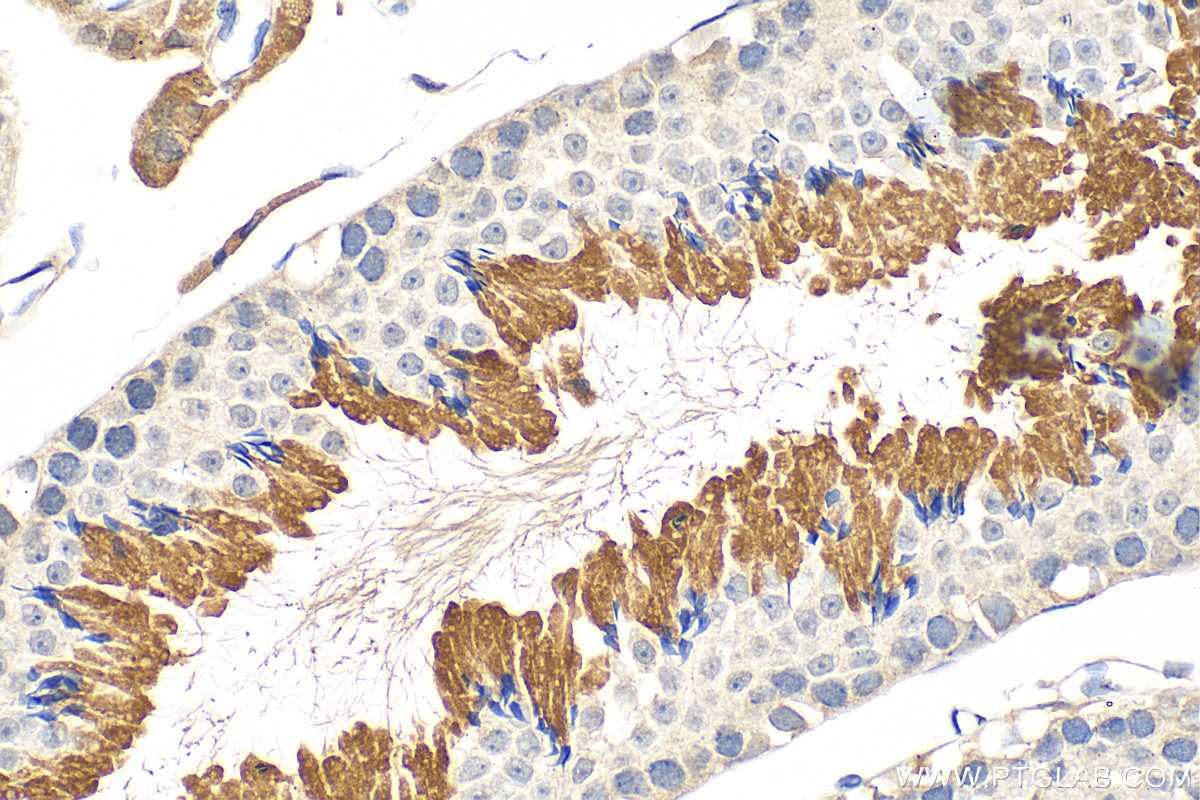

Tested Applications
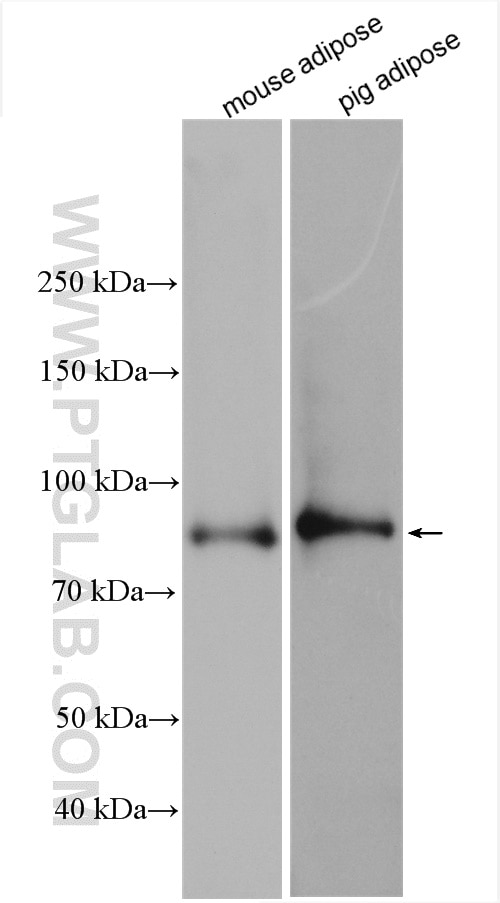
| Positive WB detected in | mouse adipose tissue, pig adipose tissue |
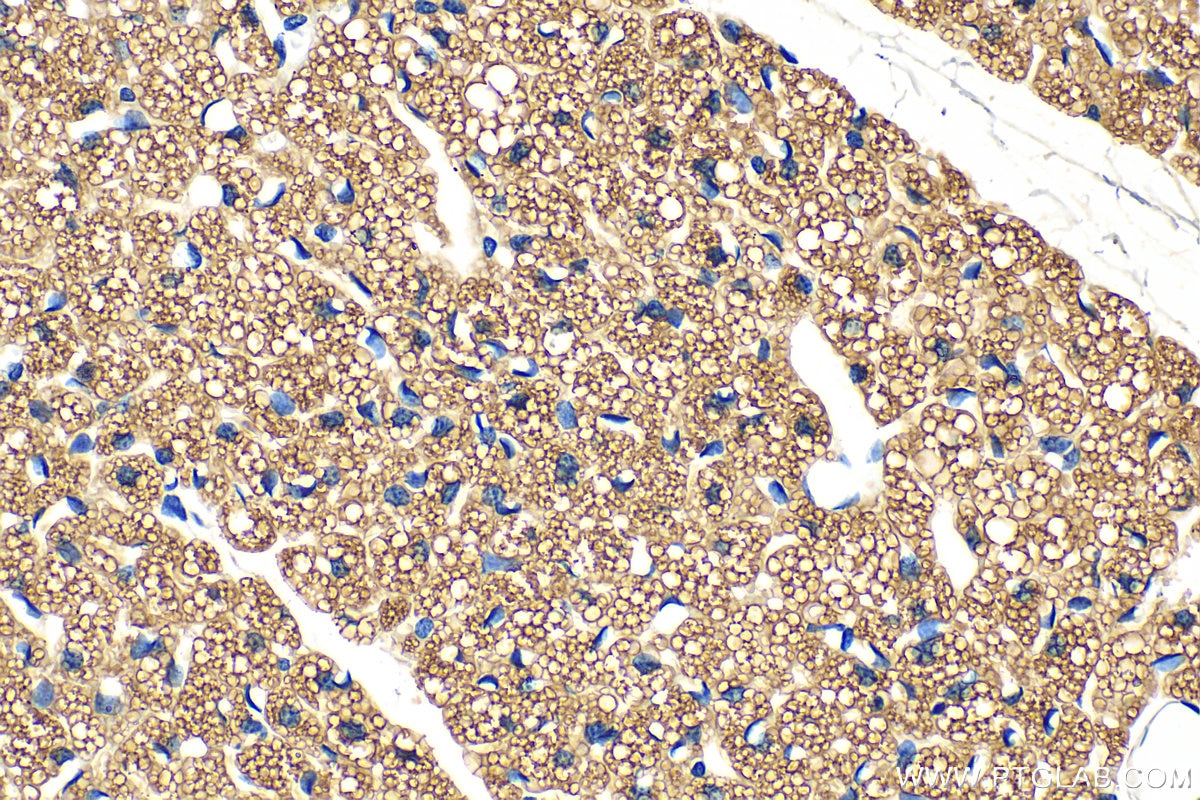
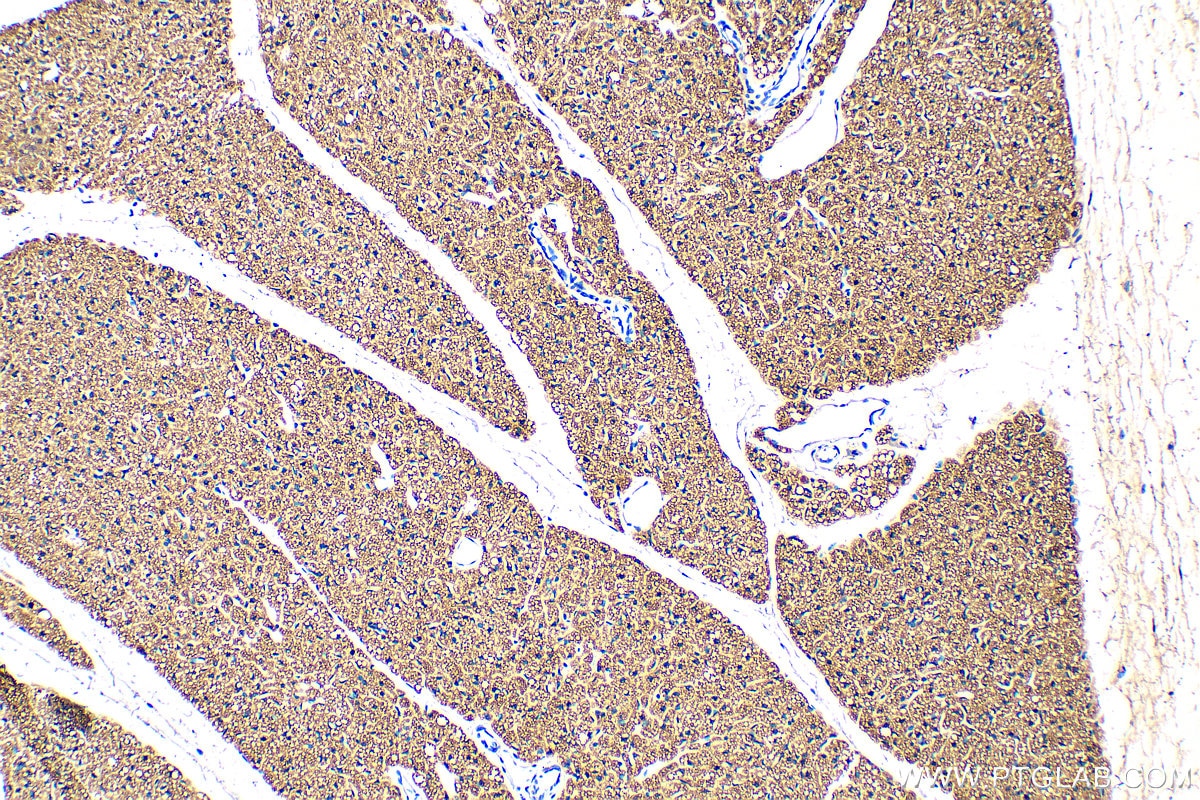
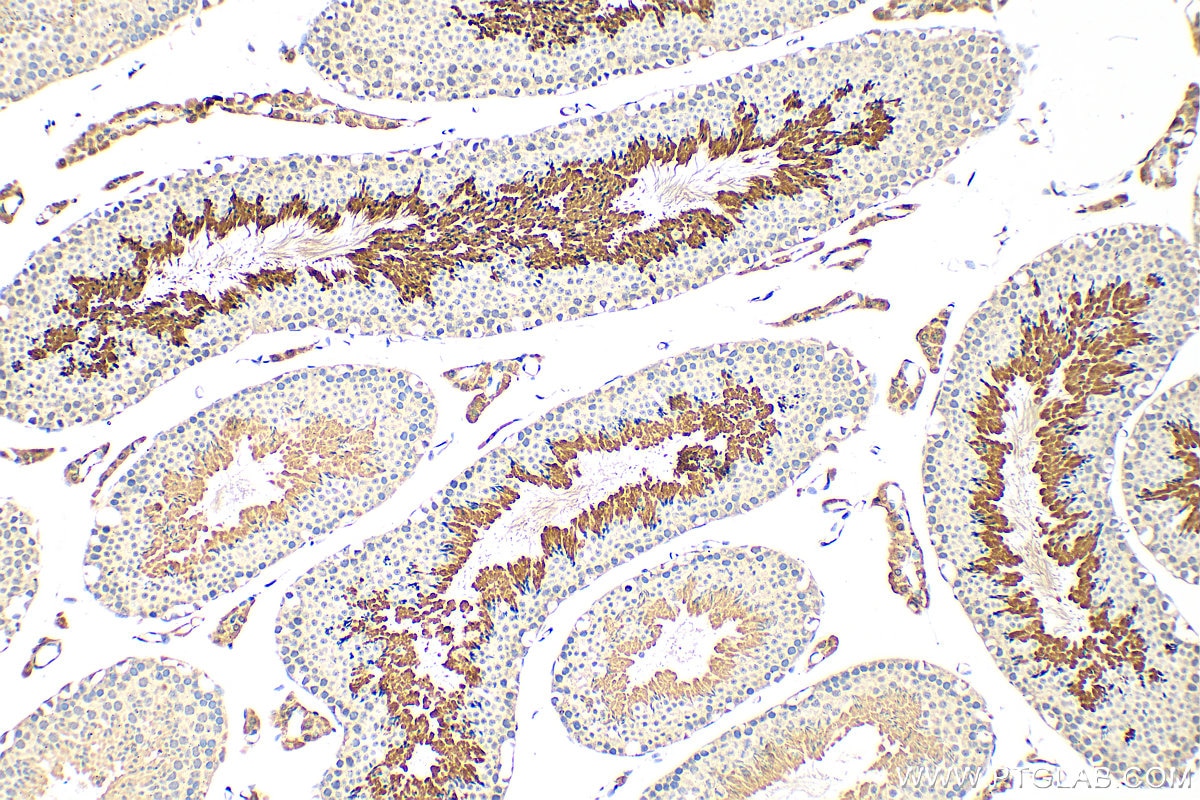
| Positive IHC detected in | mouse brown adipose tissue, mouse testis tissue Note: suggested antigen retrieval with TE buffer pH 9.0; (*) Alternatively, antigen retrieval may be performed with citrate buffer pH 6.0 |
Recommended dilution
| Application | Dilution |
|---|---|
| Western Blot (WB) | WB : 1:1000-1:8000 |
| Immunohistochemistry (IHC) | IHC : 1:200-1:800 |
| It is recommended that this reagent should be titrated in each testing system to obtain optimal results. | |
| Sample-dependent, Check data in validation data gallery. | |
Product Information
17333-1-AP targets HSL in WB, IHC, IF, IP, ELISA applications and shows reactivity with human, mouse, pig samples.
| Tested Reactivity | human, mouse, pig |
| Cited Reactivity | human, mouse, rat, pig, monkey, zebrafish, bovine |
| Host / Isotype | Rabbit / IgG |
| Class | Polyclonal |
| Type | Antibody |
| Immunogen |
CatNo: Ag11360 Product name: Recombinant human LIPE protein Source: e coli.-derived, PGEX-4T Tag: GST Domain: 728-1076 aa of BC070041 Sequence: GNLCFTVALRAAAYGVRVPDGIMAAYPATMLQPAASPSRLLSLMDPLLPLSVLSKCVSAYAGAKTEDHSNSDQKALGMMGLVRRDTALLLRDFRLGASSWLNSFLELSGRKSQKMSEPIAEPMRRSVSEAALAQPQGPLGTDSLKNLTLRDLSLRGNSETSSDTPEMSLSAETLSPSTPSDVNFLLPPEDAGEEAEAKNELSPMDRGLGVRAAFPEGFHPRRSSQGATQMPLYSSPIVKNPFMSPLLAPDSMLKSLPPVHIVACALDPMLDDSVMLARRLRNLGQPVTLRVVEDLPHGFLTLAALCRETRQAAELCVERIRLVLTPPAGAGPSGETGAAGVDGGCGGRH Predict reactive species |
| Full Name | lipase, hormone-sensitive |
| Calculated Molecular Weight | 117 kDa |
| Observed Molecular Weight | 84 kDa |
| GenBank Accession Number | BC070041 |
| Gene Symbol | HSL |
| Gene ID (NCBI) | 3991 |
| RRID | AB_2878386 |
| Conjugate | Unconjugated |
| Form | Liquid |
| Purification Method | Antigen affinity purification |
| UNIPROT ID | Q05469 |
| Storage Buffer | PBS with 0.02% sodium azide and 50% glycerol, pH 7.3. |
| Storage Conditions | Store at -20°C. Stable for one year after shipment. Aliquoting is unnecessary for -20oC storage. 20ul sizes contain 0.1% BSA. |
Background Information
Hormone sensitive lipase (HSL) belongs to the 'GDXG' lipolytic enzyme family. In adipose tissue and heart, it primarily hydrolyzes stored triglycerides to free fatty acids, while in steroidogenic tissues, it principally converts cholesteryl esters to free cholesterol for steroid hormone production. HSL has two isoforms with the molecular mass of 117 kDa and 84 kDa.
Protocols
| Product Specific Protocols | |
|---|---|
| IHC protocol for HSL antibody 17333-1-AP | Download protocol |
| WB protocol for HSL antibody 17333-1-AP | Download protocol |
| Standard Protocols | |
|---|---|
| Click here to view our Standard Protocols |
Publications
What published studies show
The HSL Polyclonal antibody (Cat# 17333-1-AP) has 52 citations spanning journals such as Nature Communications, Autophagy, Cell Reports, EMBO Molecular Medicine, iScience, mBio, Journal of Lipid Research, Environmental International, International Journal of Biological Macromolecules, and Life Sciences. Research fields include lipid metabolism, obesity, cardiovascular disease, cancer, inflammation, neuroscience, reproductive biology, veterinary science, nutrition, and toxicology. Primary applications are WB, IHC, IF, IP, and ELISA in human, mouse, pig, rat, monkey, zebrafish, and bovine.
| Species | Application | Title |
|---|---|---|
Autophagy PRRSV NSP2 hijacks host lipophagy via a LIPE-PNPLA2-AMPK-MTOR axis to promote viral replication.
| ||
Autophagy Cerebral FURIN deficiency impairs astrocytic lipophagy through ITGAV maturation. | ||
Nat Commun Lipopolysaccharide binding protein resists hepatic oxidative stress by regulating lipid droplet homeostasis | ||
Nat Commun PRMT3-mediated post-translational adaptation to fasting regulates metabolic flexibility. | ||
Nat Commun Exercise-induced anti-obesity effects in male mice generated by a FOXO1-KLF10 reinforcing loop promoting adipose lipolysis | ||
J Exp Clin Cancer Res TRIM21 attenuates renal carcinoma lipogenesis and malignancy by regulating SREBF1 protein stability |






