



Tested Applications
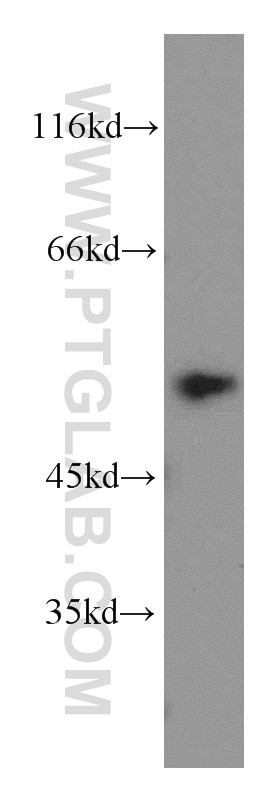
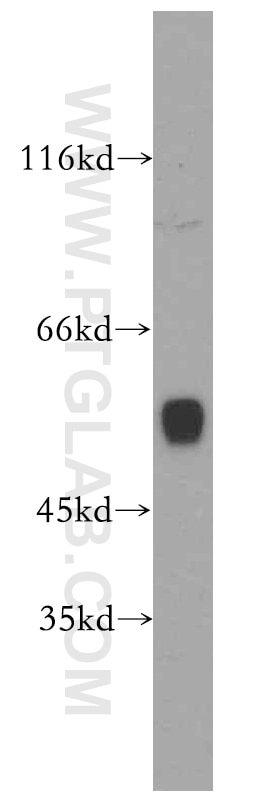
| Positive WB detected in | mouse liver tissue |
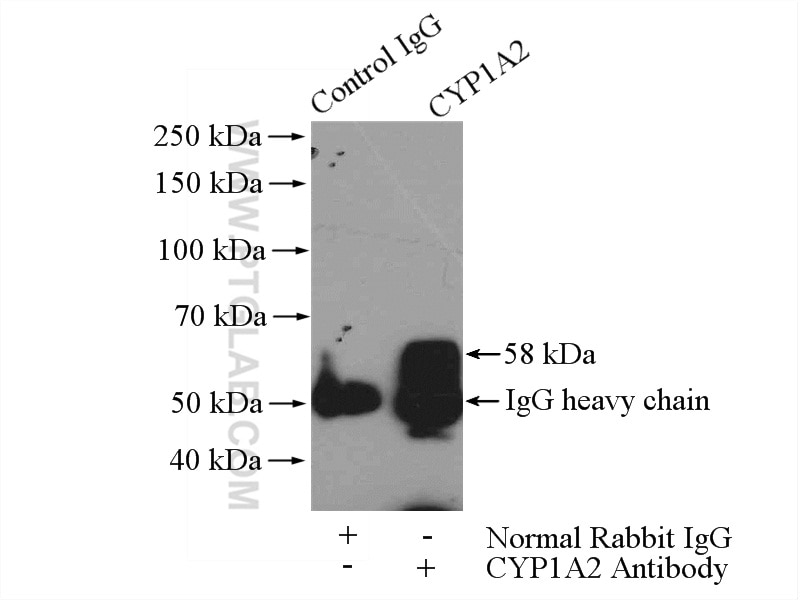
| Positive IP detected in | mouse liver tissue |
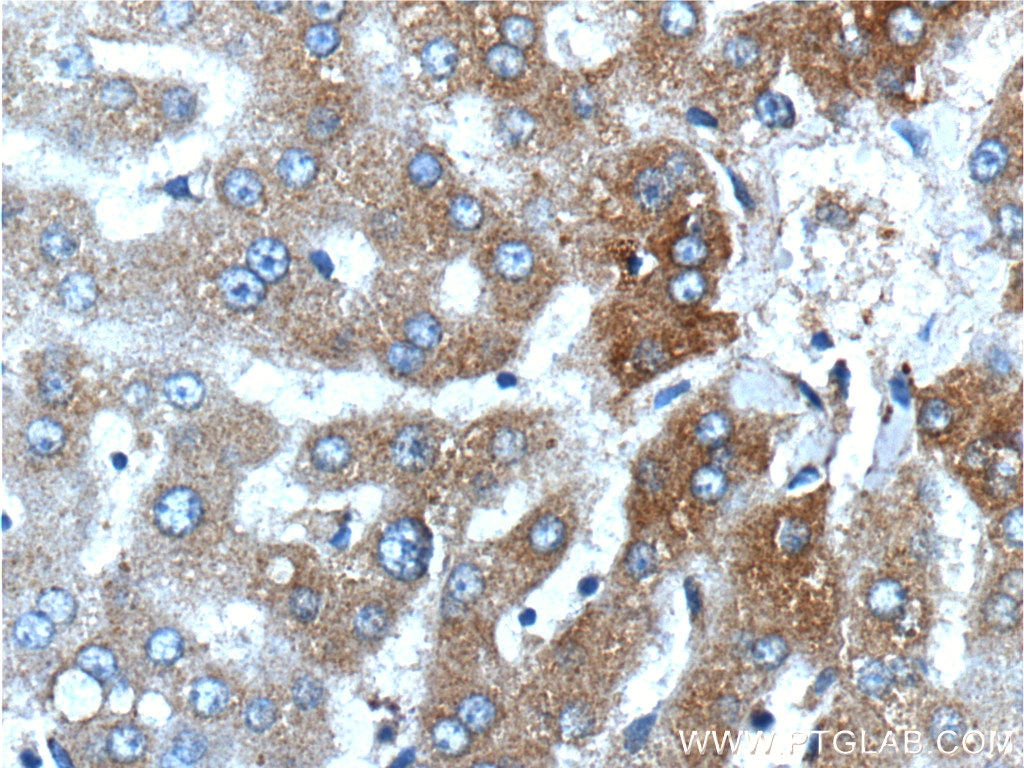
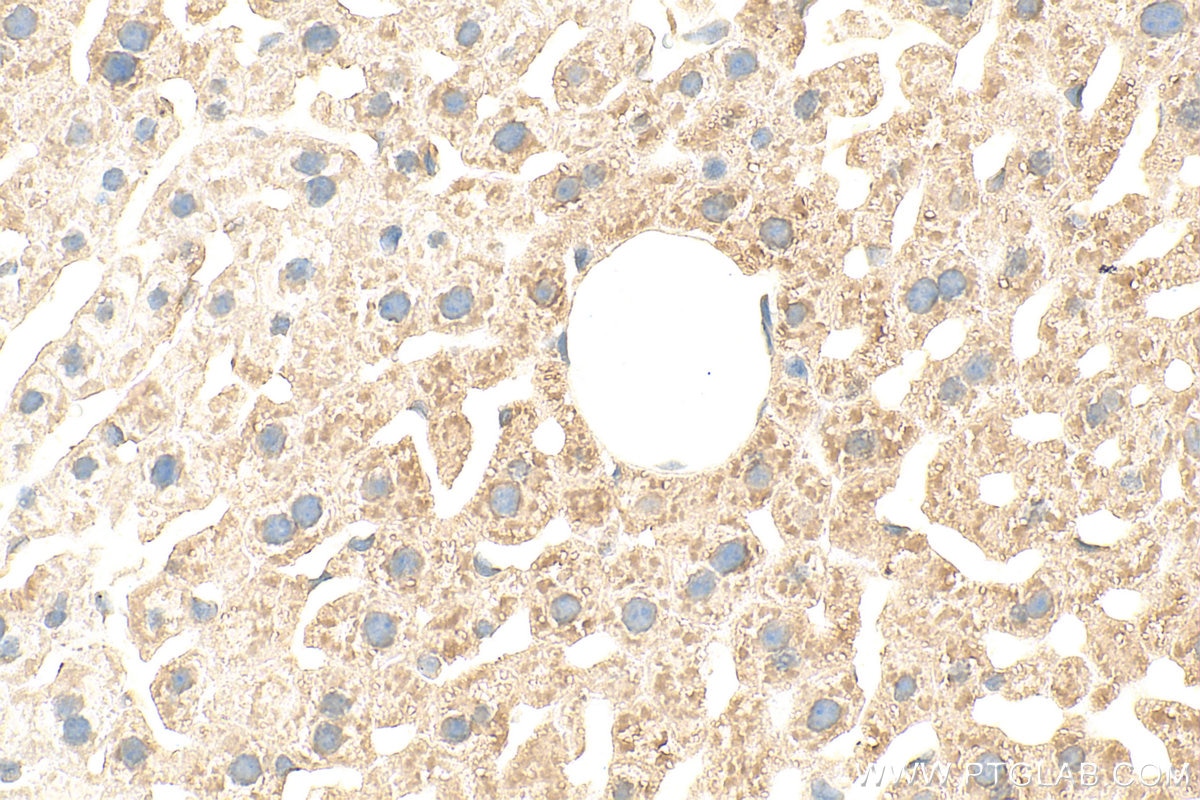
| Positive IHC detected in | human liver tissue, rat liver tissue, human kidney tissue, rat kidney tissue, mouse liver tissue Note: suggested antigen retrieval with TE buffer pH 9.0; (*) Alternatively, antigen retrieval may be performed with citrate buffer pH 6.0 |
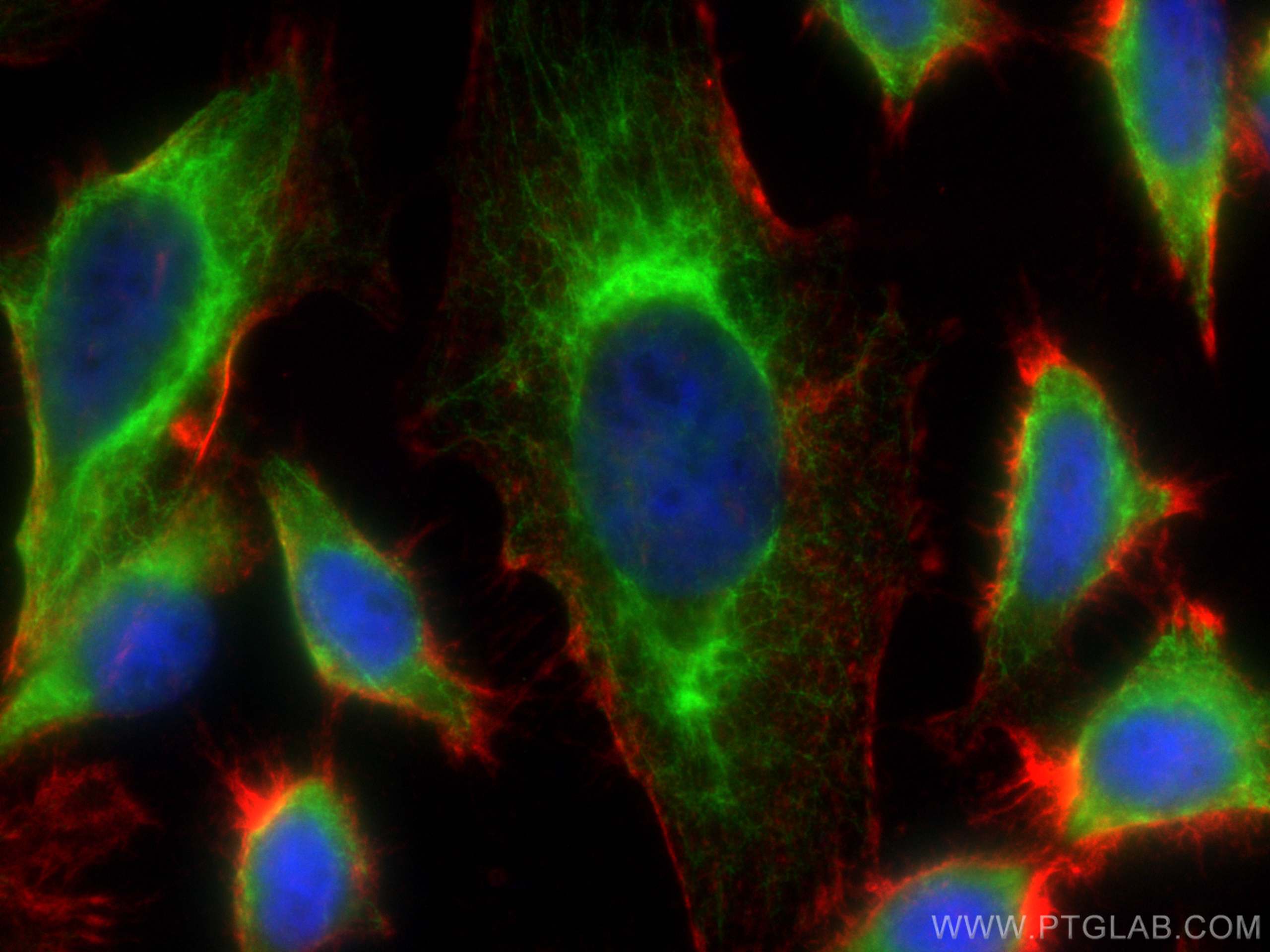
| Positive IF/ICC detected in | HeLa cells |
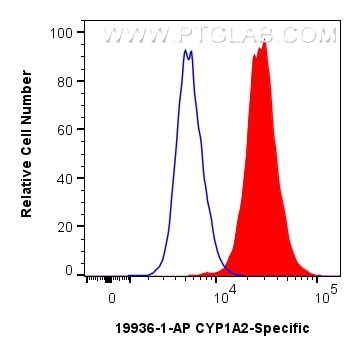
| Positive FC (Intra) detected in | HepG2 cells |
Recommended dilution
| Application | Dilution |
|---|---|
| Western Blot (WB) | WB : 1:500-1:1000 |
| Immunoprecipitation (IP) | IP : 0.5-4.0 ug for 1.0-3.0 mg of total protein lysate |
| Immunohistochemistry (IHC) | IHC : 1:100-1:400 |
| Immunofluorescence (IF)/ICC | IF/ICC : 1:200-1:800 |
| Flow Cytometry (FC) (INTRA) | FC (INTRA) : 0.25 ug per 10^6 cells in a 100 µl suspension |
| It is recommended that this reagent should be titrated in each testing system to obtain optimal results. | |
| Sample-dependent, Check data in validation data gallery. | |
Product Information
19936-1-AP targets CYP1A2-Specific in WB, IHC, IF/ICC, FC (Intra), IP, ELISA applications and shows reactivity with human, mouse, rat samples.
| Tested Reactivity | human, mouse, rat |
| Cited Reactivity | human, mouse, rat |
| Host / Isotype | Rabbit / IgG |
| Class | Polyclonal |
| Type | Antibody |
| Immunogen |
Peptide Predict reactive species |
| Full Name | cytochrome P450, family 1, subfamily A, polypeptide 2 |
| Calculated Molecular Weight | 58 kDa |
| Observed Molecular Weight | 58 kDa |
| GenBank Accession Number | NM_000761 |
| Gene Symbol | CYP1A2 |
| Gene ID (NCBI) | 1544 |
| RRID | AB_10638909 |
| Conjugate | Unconjugated |
| Form | Liquid |
| Purification Method | Antigen affinity purification |
| UNIPROT ID | P05177 |
| Storage Buffer | PBS with 0.02% sodium azide and 50% glycerol, pH 7.3. |
| Storage Conditions | Store at -20°C. Stable for one year after shipment. Aliquoting is unnecessary for -20oC storage. 20ul sizes contain 0.1% BSA. |
Background Information
CYP1A2, also named as CP12; P3-450 and P450(PA), belongs to the cytochrome P450 family. Cytochromes P450 are a group of heme-thiolate monooxygenases. In liver microsomes, CYP1A2 is involved in an NADPH-dependent electron transport pathway. It oxidizes a variety of structurally unrelated compounds, including steroids, fatty acids, and xenobiotics. Most active of CYP1A2 is in catalyzing 2-hydroxylation. Caffeine is metabolized primarily by cytochrome CYP1A2 in the liver through an initial N3-demethylation. It also acts in the metabolism of aflatoxin B1 and acetaminophen. CYP1A2 participates in the bioactivation of carcinogenic aromatic and heterocyclic amines. It catalizes the reaction: RH + reduced flavoprotein + O2 = ROH + oxidized flavoprotein + H2O. The antibody is specific to CYP1A2.
Protocols
| Product Specific Protocols | |
|---|---|
| FC protocol for CYP1A2-Specific antibody 19936-1-AP | Download protocol |
| IF protocol for CYP1A2-Specific antibody 19936-1-AP | Download protocol |
| IHC protocol for CYP1A2-Specific antibody 19936-1-AP | Download protocol |
| IP protocol for CYP1A2-Specific antibody 19936-1-AP | Download protocol |
| WB protocol for CYP1A2-Specific antibody 19936-1-AP | Download protocol |
| Standard Protocols | |
|---|---|
| Click here to view our Standard Protocols |
Publications
What published studies show
The CYP1A2 antibody (Cat# 19936-1-AP) has 63 citations. These appear across journals including Signal Transduction and Targeted Therapy, Cell Host & Microbe, Nature Communications, Hepatology, Redox Biology, Gut Microbes, Biomaterials, Acta Biomaterialia, FASEB Journal, and Xenobiotica, among others. The associated research fields center on cytochrome P450 enzyme function, drug metabolism and pharmacokinetics, acetaminophen-induced hepatotoxicity and liver injury, non-alcoholic fatty liver disease, and xenobiotic metabolism, with applications mainly in Western blot and immunofluorescence.
| Species | Application | Title |
|---|---|---|
Signal Transduct Target Ther AHR mediates the aflatoxin B1 toxicity associated with hepatocellular carcinoma. | ||
Cell Host Microbe Cohabitation facilitates microbiome shifts that promote isoflavone transformation to ameliorate liver injury | ||
Cell Host Microbe Liberation of daidzein by gut microbial β-galactosidase suppresses acetaminophen-induced hepatotoxicity in mice | ||
Nat Commun Hepatic SNHG9 links gut microbiota to liver protection in drug-induced liver injury. | ||
Hepatology Self-renewal of hepatoblasts under chemically defined conditions by reiterative growth factor and chemical screening. | ||
J Adv Res Gut microbiota and host Cyp450s co-contribute to pharmacokinetic variability in mice with non-alcoholic steatohepatitis: Effects vary from drug to drug |










