

Tested Applications
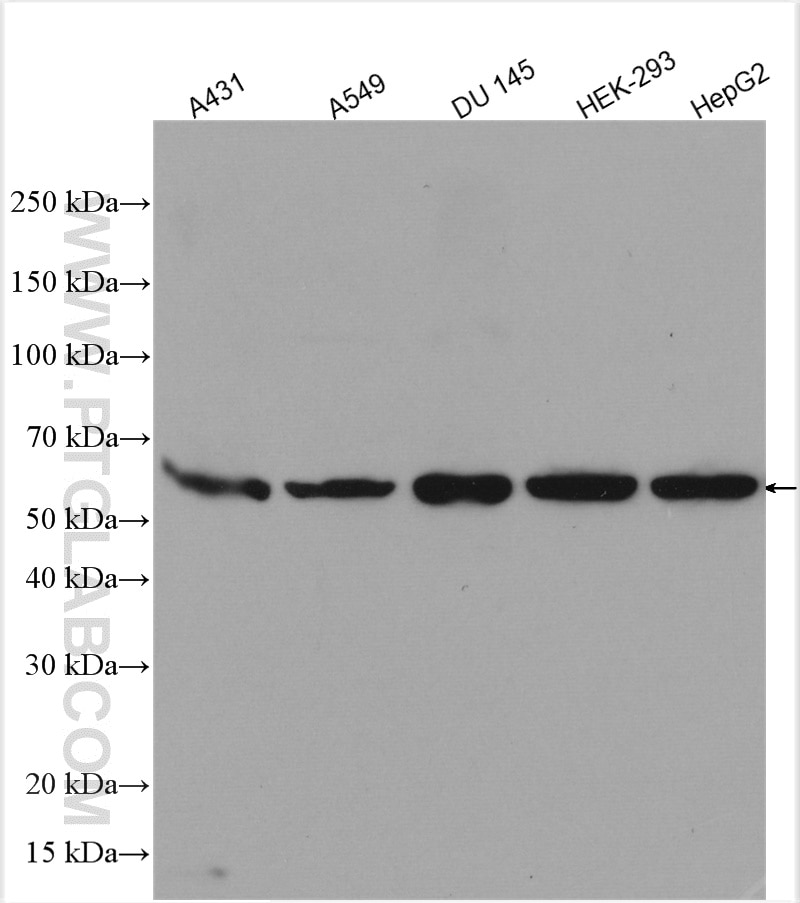
| Positive WB detected in | A431 cells, HepG2 cells, A549 cells, DU 145 cells, HEK-293 cells |
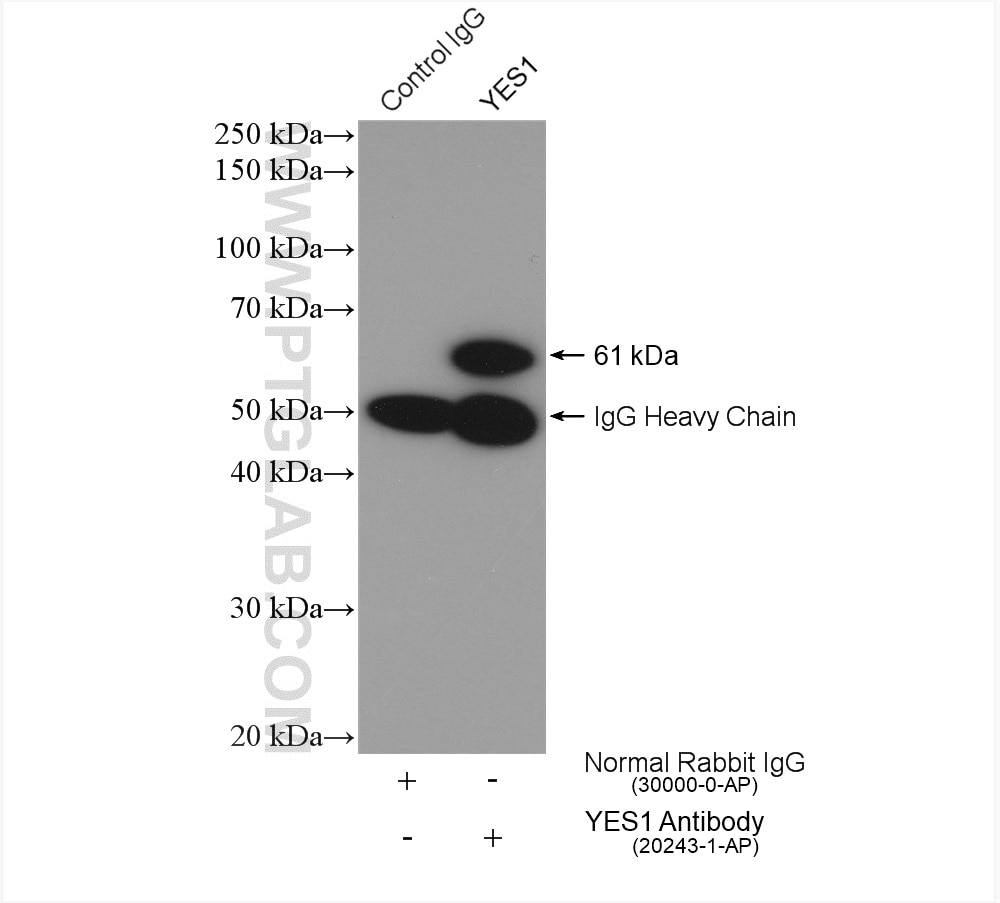
| Positive IP detected in | A549 cells |
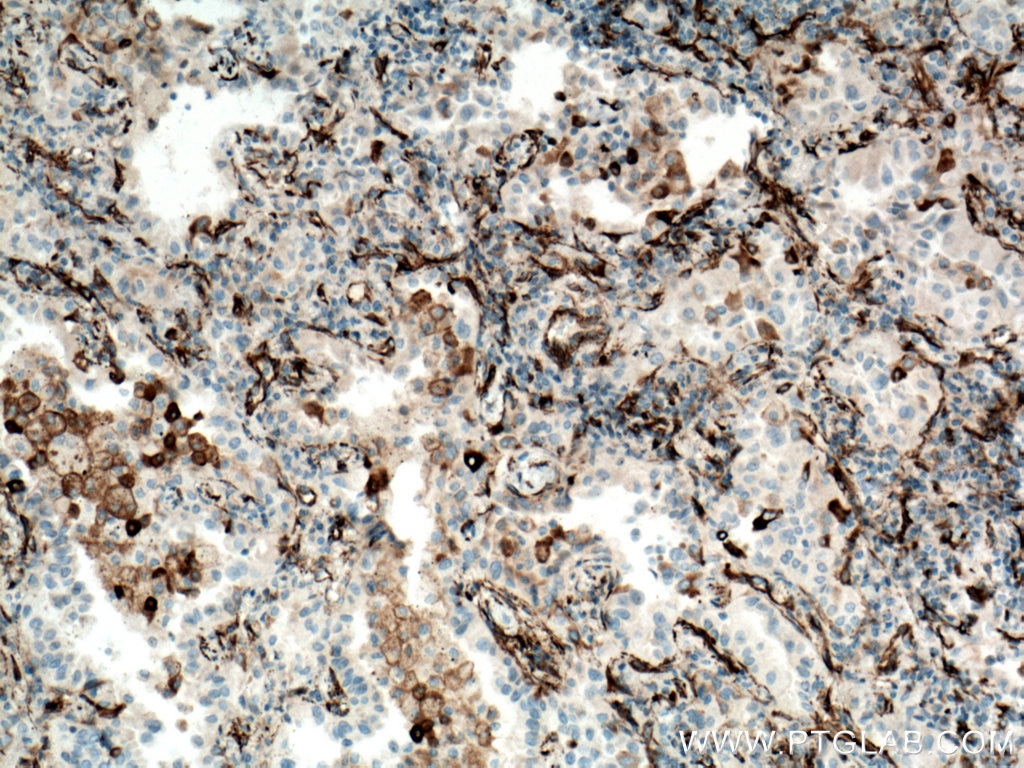
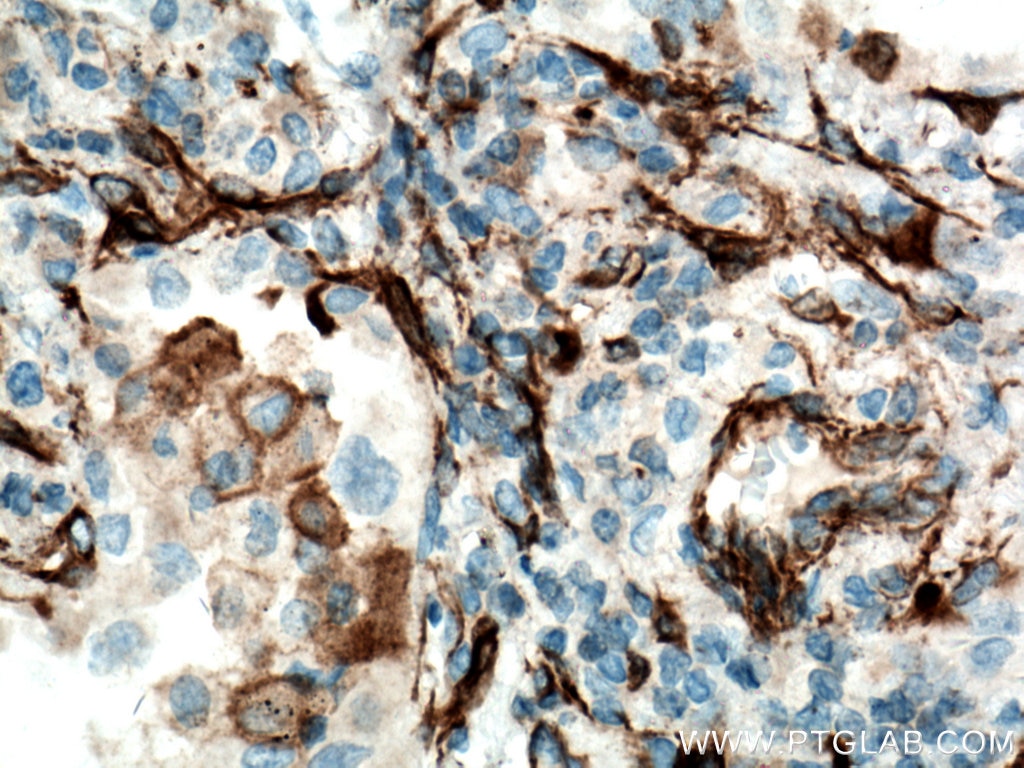
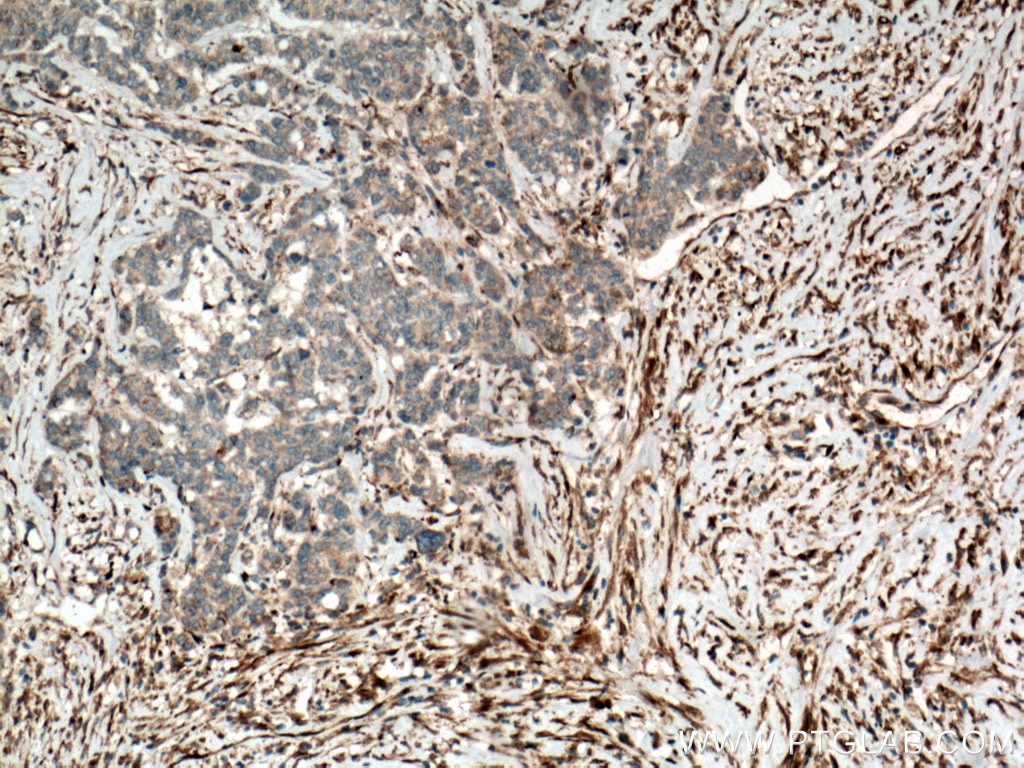
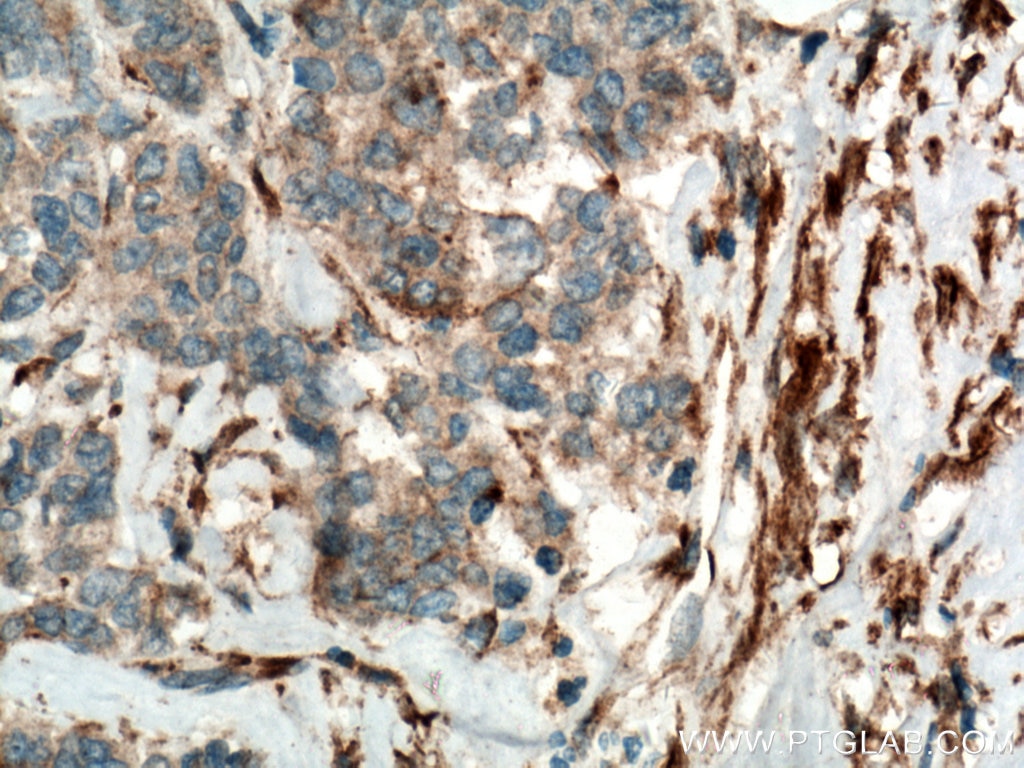
| Positive IHC detected in | human lung cancer tissue, human colon cancer tissue Note: suggested antigen retrieval with TE buffer pH 9.0; (*) Alternatively, antigen retrieval may be performed with citrate buffer pH 6.0 |
Recommended dilution
| Application | Dilution |
|---|---|
| Western Blot (WB) | WB : 1:500-1:1000 |
| Immunoprecipitation (IP) | IP : 0.5-4.0 ug for 1.0-3.0 mg of total protein lysate |
| Immunohistochemistry (IHC) | IHC : 1:50-1:500 |
| It is recommended that this reagent should be titrated in each testing system to obtain optimal results. | |
| Sample-dependent, Check data in validation data gallery. | |
Product Information
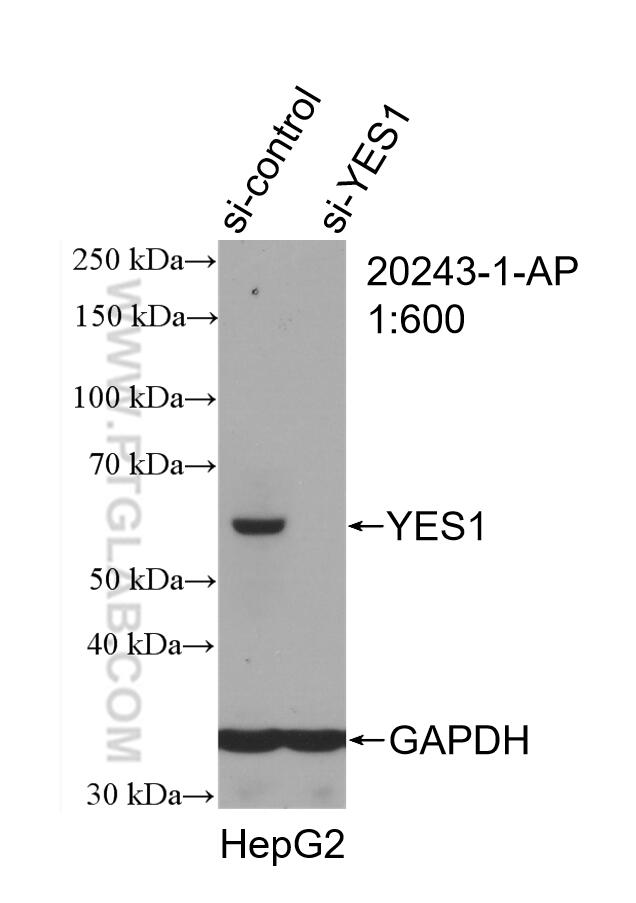
20243-1-AP targets YES1-Specific in WB, IHC, IP, ELISA applications and shows reactivity with human, mouse, rat samples.
| Tested Reactivity | human, mouse, rat |
| Cited Reactivity | human, mouse |
| Host / Isotype | Rabbit / IgG |
| Class | Polyclonal |
| Type | Antibody |
| Immunogen |
Peptide Predict reactive species |
| Full Name | v-yes-1 Yamaguchi sarcoma viral oncogene homolog 1 |
| Calculated Molecular Weight | 61 kDa |
| Observed Molecular Weight | 61 kDa |
| GenBank Accession Number | NM_005433 |
| Gene Symbol | YES1 |
| Gene ID (NCBI) | 7525 |
| RRID | AB_10697656 |
| Conjugate | Unconjugated |
| Form | Liquid |
| Purification Method | Antigen affinity purification |
| UNIPROT ID | P07947 |
| Storage Buffer | PBS with 0.02% sodium azide and 50% glycerol, pH 7.3. |
| Storage Conditions | Store at -20°C. Stable for one year after shipment. Aliquoting is unnecessary for -20oC storage. 20ul sizes contain 0.1% BSA. |
Background Information
YES1, also named as p61-Yes and YES, belongs to the protein kinase superfamily, Tyr protein kinase family and SRC subfamily. It promotes infectivity of Neisseria gonorrhoeae in epithelial cells by phosphorylating MCP/CD46. YES1 catalyzes the reaction: ATP + a [protein]-L-tyrosine = ADP + a [protein]-L-tyrosine phosphate. The antibody is specific to YES1.
Protocols
| Product Specific Protocols | |
|---|---|
| IHC protocol for YES1-Specific antibody 20243-1-AP | Download protocol |
| IP protocol for YES1-Specific antibody 20243-1-AP | Download protocol |
| WB protocol for YES1-Specific antibody 20243-1-AP | Download protocol |
| Standard Protocols | |
|---|---|
| Click here to view our Standard Protocols |
Publications
What published studies show
YES1 Antibody (Cat# 20243-1-AP) has 9 total citations appearing in Nature, American Journal of Respiratory and Critical Care Medicine, Science Advances, Cell Death & Disease, Journal for ImmunoTherapy of Cancer, Cell Reports, iScience, and Journal of Cellular Biochemistry. Associated research fields include ageing and metabolic signaling, lung cancer, Alzheimer's disease, gastric cancer, non-small cell lung cancer immunotherapy, glioblastoma, breast cancer, ovarian cancer, and RNA polymerase II CTD phosphorylation regulation.
| Species | Application | Title |
|---|---|---|
Am J Respir Crit Care Med YES1 Drives Lung Cancer Growth and Progression and Predicts Sensitivity to Dasatinib. | ||
Sci Adv FeaSion decodes the regulatory landscape and functional diversity of RNA polymerase II CTD phosphorylation.
| ||
Sci Adv A brain proteomic signature of incipient Alzheimer's disease in young APOE ε4 carriers identifies novel drug targets. | ||
Cell Death Dis Linc01133 contributes to gastric cancer growth by enhancing YES1-dependent YAP1 nuclear translocation via sponging miR-145-5p. | ||
J Immunother Cancer SRC family kinase (SFK) inhibitor dasatinib improves the antitumor activity of anti-PD-1 in NSCLC models by inhibiting Treg cell conversion and proliferation.
|








