

Tested Applications
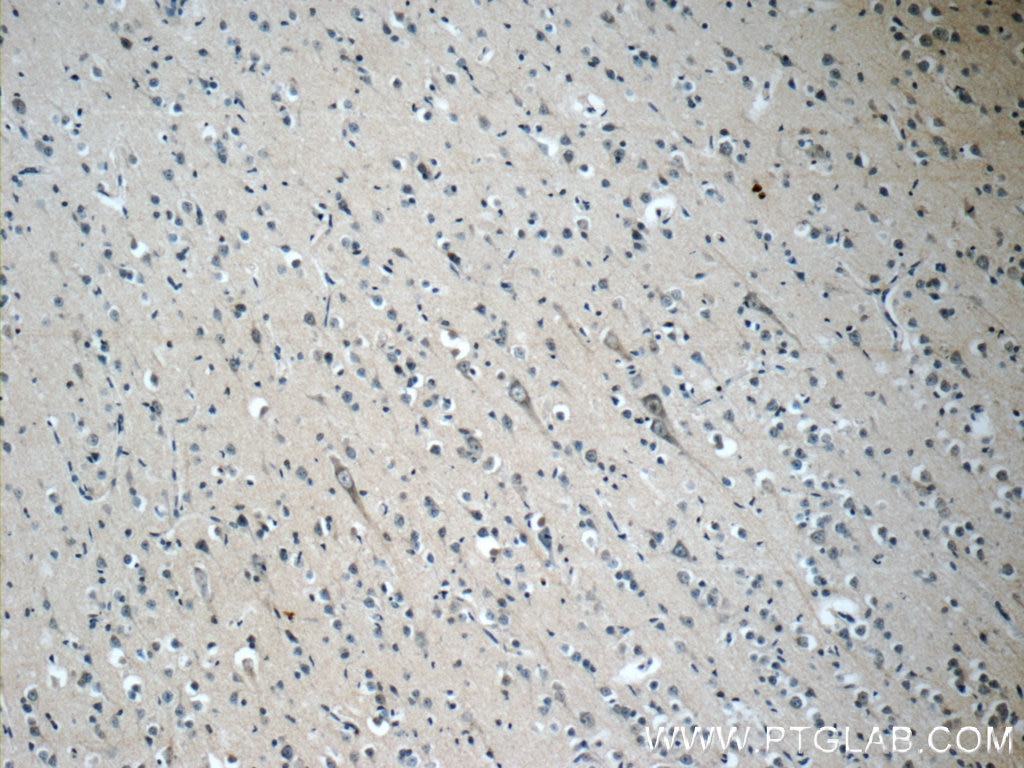
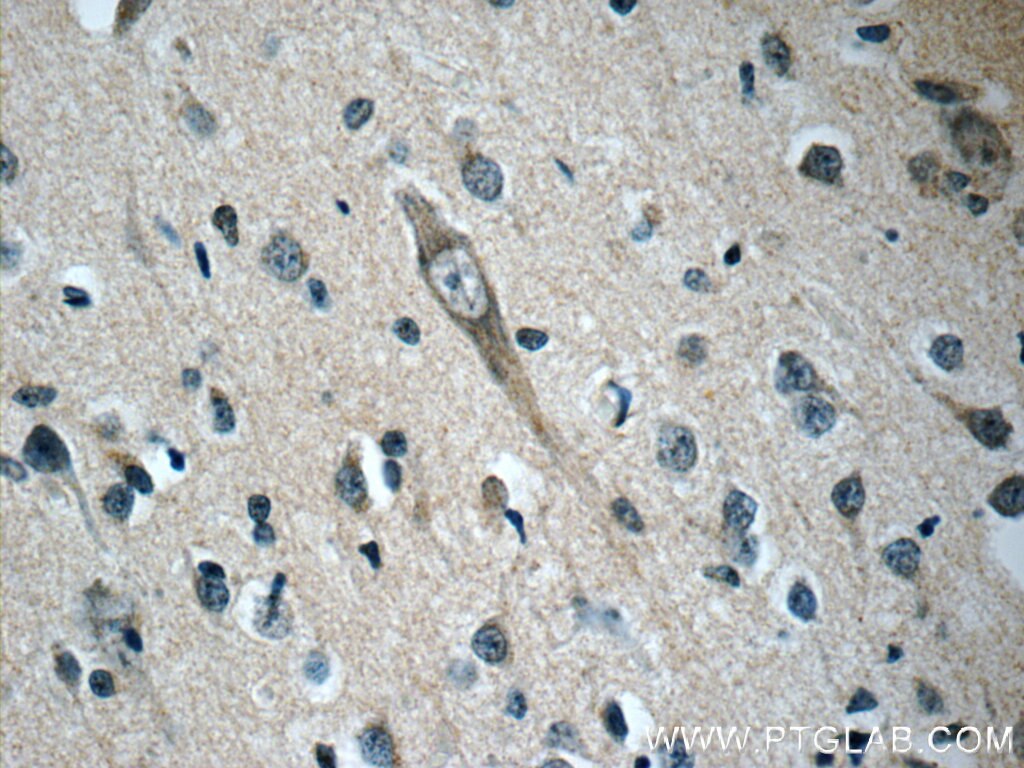
| Positive IHC detected in | human brain tissue Note: suggested antigen retrieval with TE buffer pH 9.0; (*) Alternatively, antigen retrieval may be performed with citrate buffer pH 6.0 |
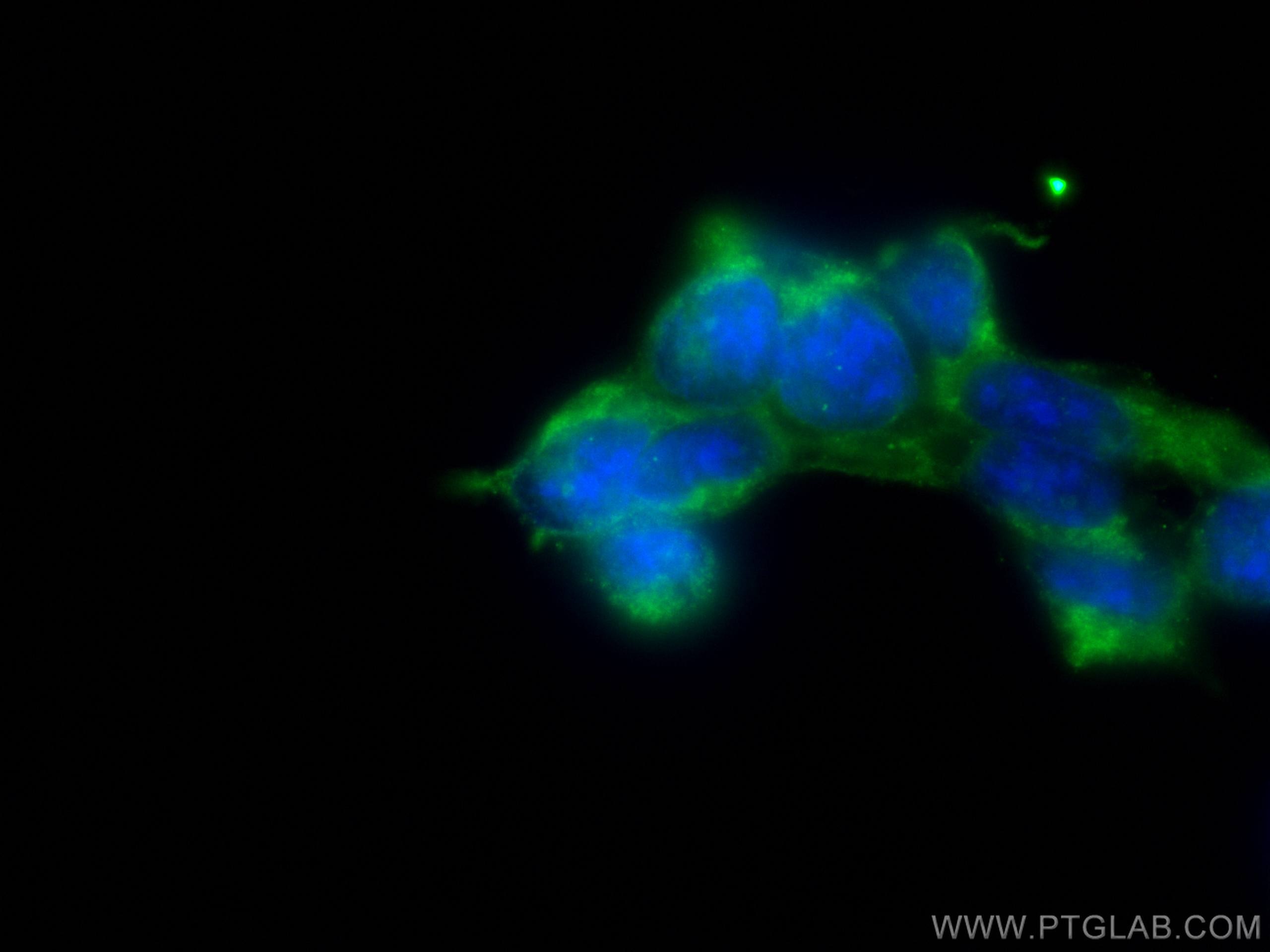
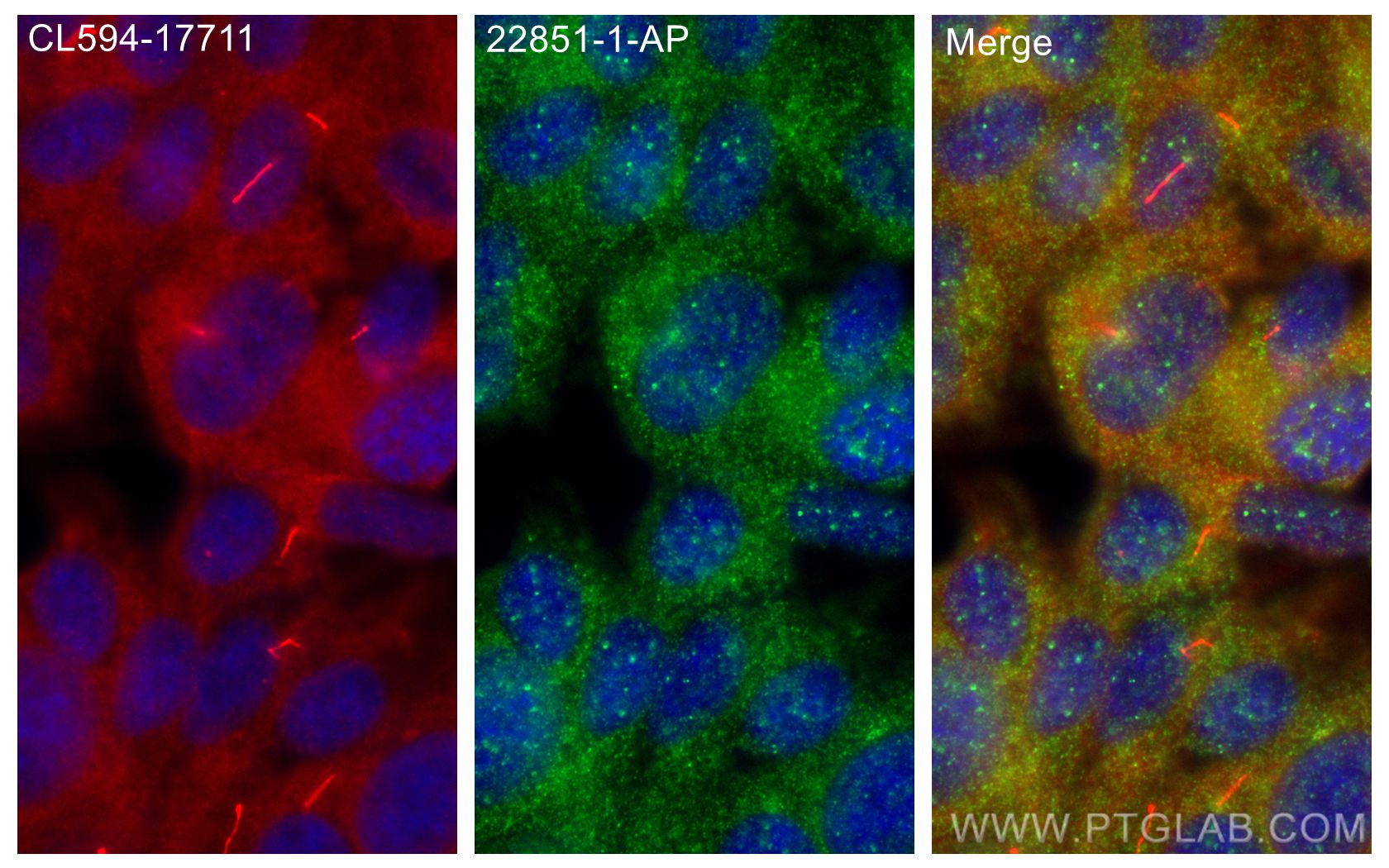
| Positive IF/ICC detected in | HEK-293 cells, hTERT-RPE1 cells |
Recommended dilution
| Application | Dilution |
|---|---|
| Immunohistochemistry (IHC) | IHC : 1:20-1:200 |
| Immunofluorescence (IF)/ICC | IF/ICC : 1:50-1:500 |
| It is recommended that this reagent should be titrated in each testing system to obtain optimal results. | |
| Sample-dependent, Check data in validation data gallery. | |
Product Information
22851-1-AP targets OFD1 in WB, IHC, IF/ICC, ELISA applications and shows reactivity with human samples.
| Tested Reactivity | human |
| Cited Reactivity | human, mouse, rat, zebrafish |
| Host / Isotype | Rabbit / IgG |
| Class | Polyclonal |
| Type | Antibody |
| Immunogen |
CatNo: Ag18898 Product name: Recombinant human OFD1 protein Source: e coli.-derived, PGEX-4T Tag: GST Domain: 1-305 aa of BC096344 Sequence: MMAQSNMFTVADVLSQDELRKKLYQTFKDRGILDTLKTQLRNQLIHELMHPVLSGELQPRSISVEGSSLLIGASNSLVADHLQRCGYEYSLSVFFPESGLAKEKVFTMQDLLQLIKINPTSSLYKSLVSGSDKENQKGFLMHFLKELAEYHQAKESCNMETQTSSTFNRDSLAEKLQLIDDQFADAYPQRIKFESLEIKLNEYKREIEEQLRAEMCQKLKFFKDTEIAKIKMEAKKKYEKELTMFQNDFEKACQAKSEALVLREKSTLERIHKHQEIETKEIYAQRQLLLKDMDLLRGREAELKQ Predict reactive species |
| Full Name | oral-facial-digital syndrome 1 |
| Calculated Molecular Weight | 1012 aa, 117 kDa |
| Observed Molecular Weight | 110-120 kDa |
| GenBank Accession Number | BC096344 |
| Gene Symbol | OFD1 |
| Gene ID (NCBI) | 8481 |
| RRID | AB_2879177 |
| Conjugate | Unconjugated |
| Form | Liquid |
| Purification Method | Antigen affinity purification |
| UNIPROT ID | O75665 |
| Storage Buffer | PBS with 0.02% sodium azide and 50% glycerol, pH 7.3. |
| Storage Conditions | Store at -20°C. Stable for one year after shipment. Aliquoting is unnecessary for -20oC storage. 20ul sizes contain 0.1% BSA. |
Background Information
OFD1, also named CXorf5 and 71-7A, belongs to the OFD1 family. It has been implicated in several developmental syndromes, including a male-lethal X-linked dominant condition, Oral-Facial-Digital type 1 (OFD1) syndrome, X-linked recessiveSimpson-Golabi-Behmel syndrome type 2 (SGBS2), and Joubert syndrome and related disorders (JSRDs). It is a component of the centrioles controlling mother and daughter centrioles' length. It recruits to the centriole IFT88 and centriole distal appendage-specific proteins including CEP164. Involved in the biogenesis of the cilium, a centriole-associated function. OFD1 plays an important role in development by regulating Wnt signaling and the specification of the left-right axis. This antibody recognizes all the isoforms of OFD1. The 43 kDa is isoform 2. The ~80 kDa band is unknown.
Protocols
| Product Specific Protocols | |
|---|---|
| IF protocol for OFD1 antibody 22851-1-AP | Download protocol |
| IHC protocol for OFD1 antibody 22851-1-AP | Download protocol |
| Standard Protocols | |
|---|---|
| Click here to view our Standard Protocols |
Publications
What published studies show
The OFD1 Polyclonal antibody (Cat# 22851-1-AP) has 7 citations published in Nature Communications, Cell Death & Disease, Developmental Cell, PLoS Biology, Cell Biosciences, Biochemical & Biophysical Research Communications, and Oncology Letters. Research fields span ciliogenesis and centriolar satellite biology, primary cilia function, mitochondrial stress in Parkinson's disease models, autophagy regulation, and endometrial cancer, with applications in WB and IF across human, mouse, rat, and zebrafish.
| Species | Application | Title |
|---|---|---|
Nat Commun Coupling bimolecular PARylation biosensors with genetic screens to identify PARylation targets. | ||
Dev Cell Proteomic profiling of centrosomes across multiple mammalian cell and tissue types by an affinity capture method | ||
PLoS Biol Acute inhibition of centriolar satellite function and positioning reveals their functions at the primary cilium. | ||
Cell Biosci IK is essentially involved in ciliogenesis as an upstream regulator of oral-facial-digital syndrome ciliopathy gene, ofd1 | ||
Biochem Biophys Res Commun BIX-01294-induced autophagy regulates elongation of primary cilia. |
Reviews
What customers say
Both reviews (5/5 stars) highlight successful use of this antibody for immunofluorescence detection of OFD1 in HEK293/HEK293T cells at a 1:300 dilution. One reviewer provided a detailed protocol involving cold methanol fixation, Triton/Tween/SDS permeabilization, and BSA blocking, noting clear localization of OFD1 at mother centriole distal appendages. The other simply confirmed it "works very well" for OFD1 detection. Overall, users report reliable specificity and performance for centriole-related IF applications.
The reviews below have been submitted by verified Proteintech customers who received an incentive for providing their feedback.
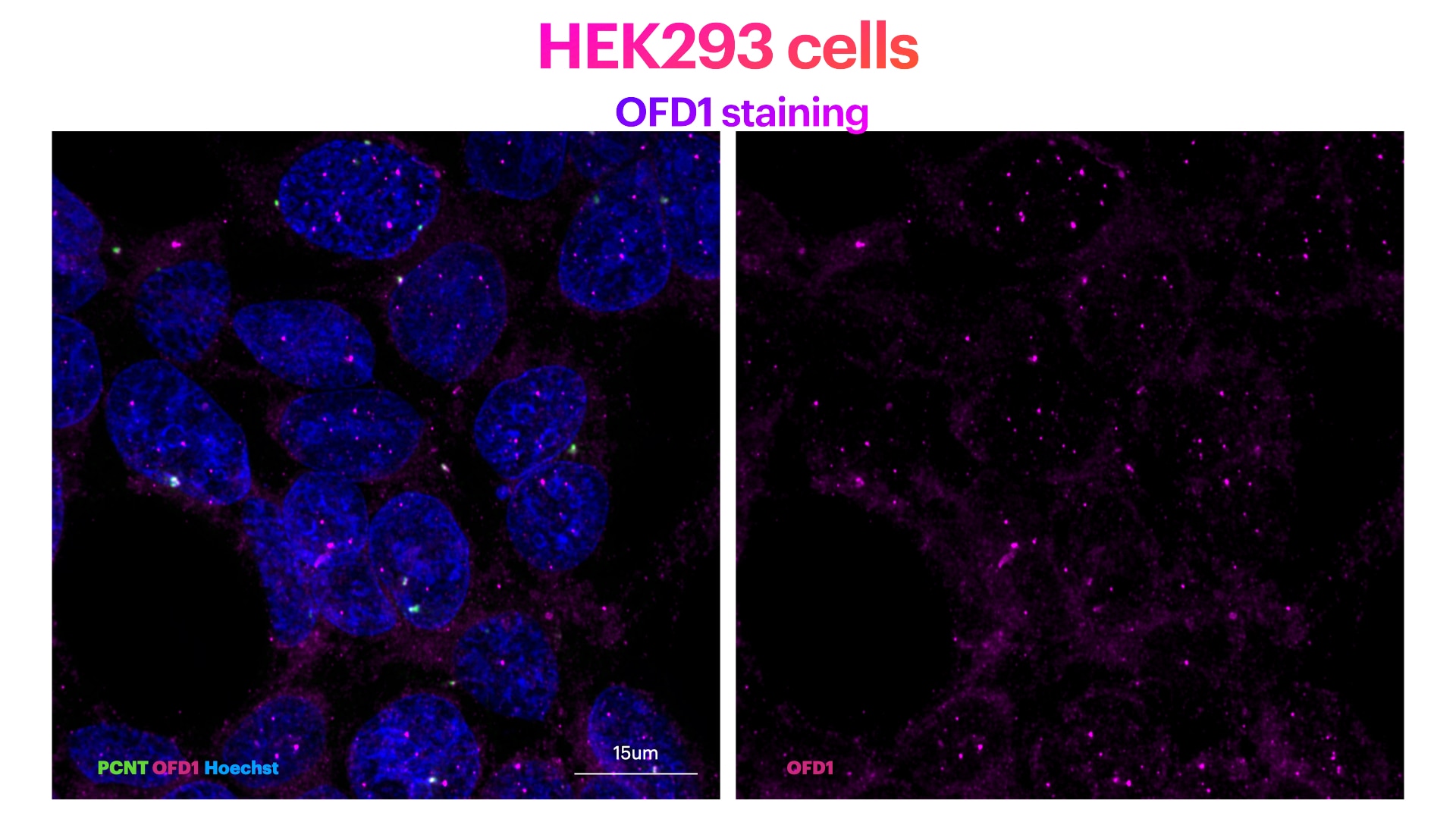
Elisa (Verified Customer) (06-15-2022) | HEK293 cells stained for Hoechst (DNA marker, in green), OFD1 (mother centriole distal appendage marker, in magenta) and PCNT (pericentriolar matrix marker, in green). HEK293 cells were plated on Poly-lysine coated coverslips and fixed in cold methanol for 2' at -20C. Cells were then rehydrated with PBS for 5'. Membrane permeabilization was then performed with 0.1% Triton + 0.1% Tween +0.01%SDS in PBS for 5'. Cells were finally incubated with blocking buffer (5% BSA+ 0.1% Tween in PBS) for 30' at RT. Primary antibody was diluted in blocking buffer 1:200 and incubated for 1h at room temperature. Alexa-555-Anti-rabbit was used as secondary antibody (1:600 dilution) (1h at room temperature). OFD1 recognises mother centriole.
 |
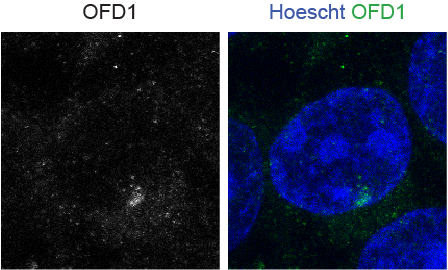
Sarah (Verified Customer) (02-16-2021) | Works very well for detection of OFD1 in HEK 293T cells
 |





