
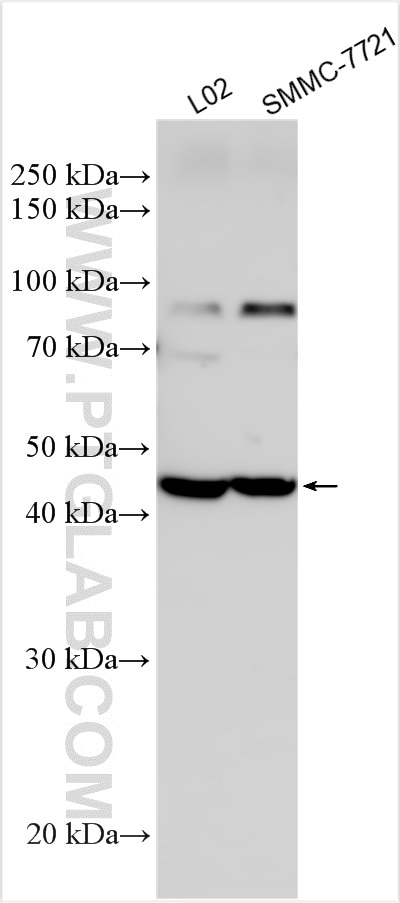
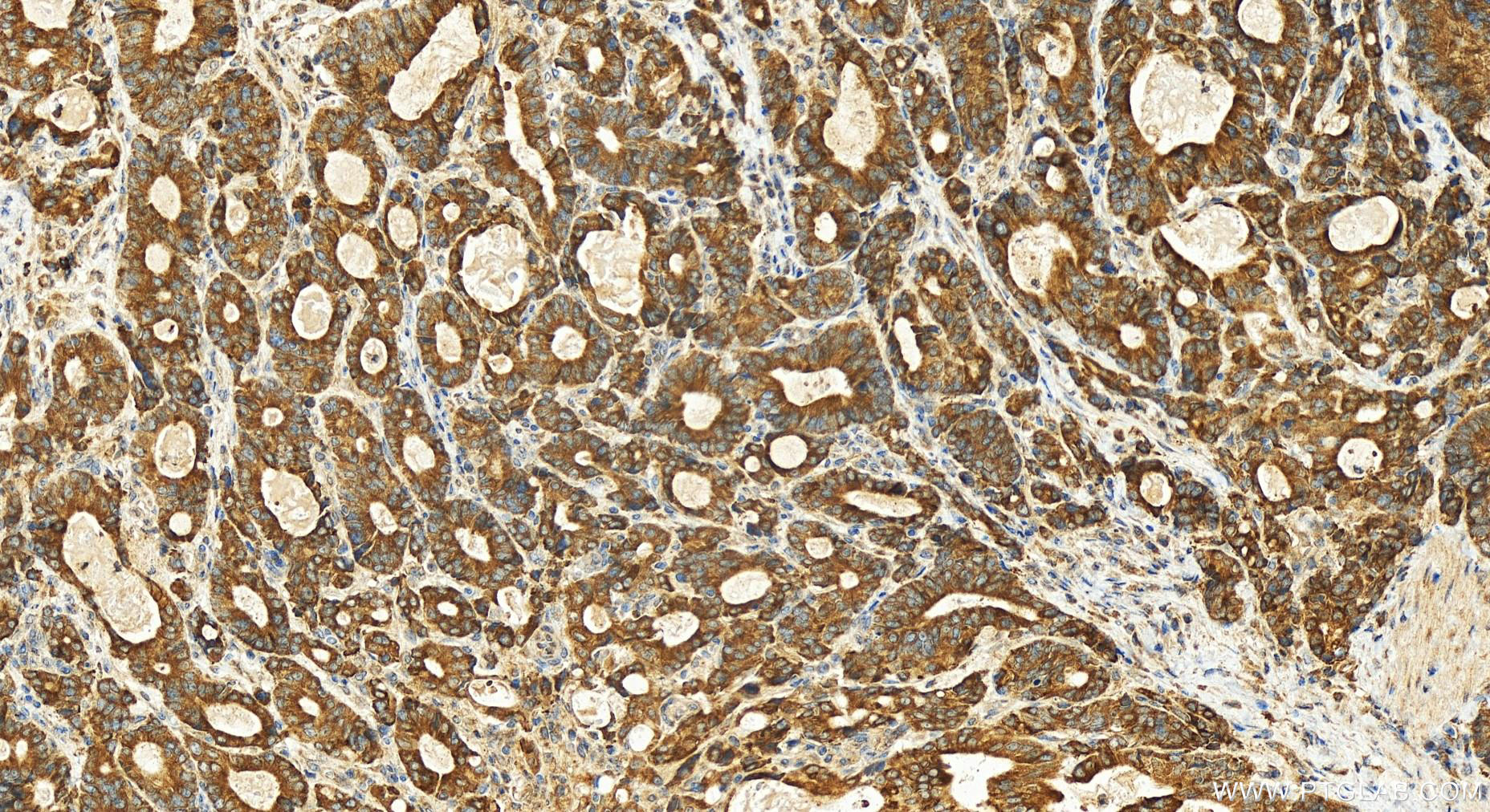
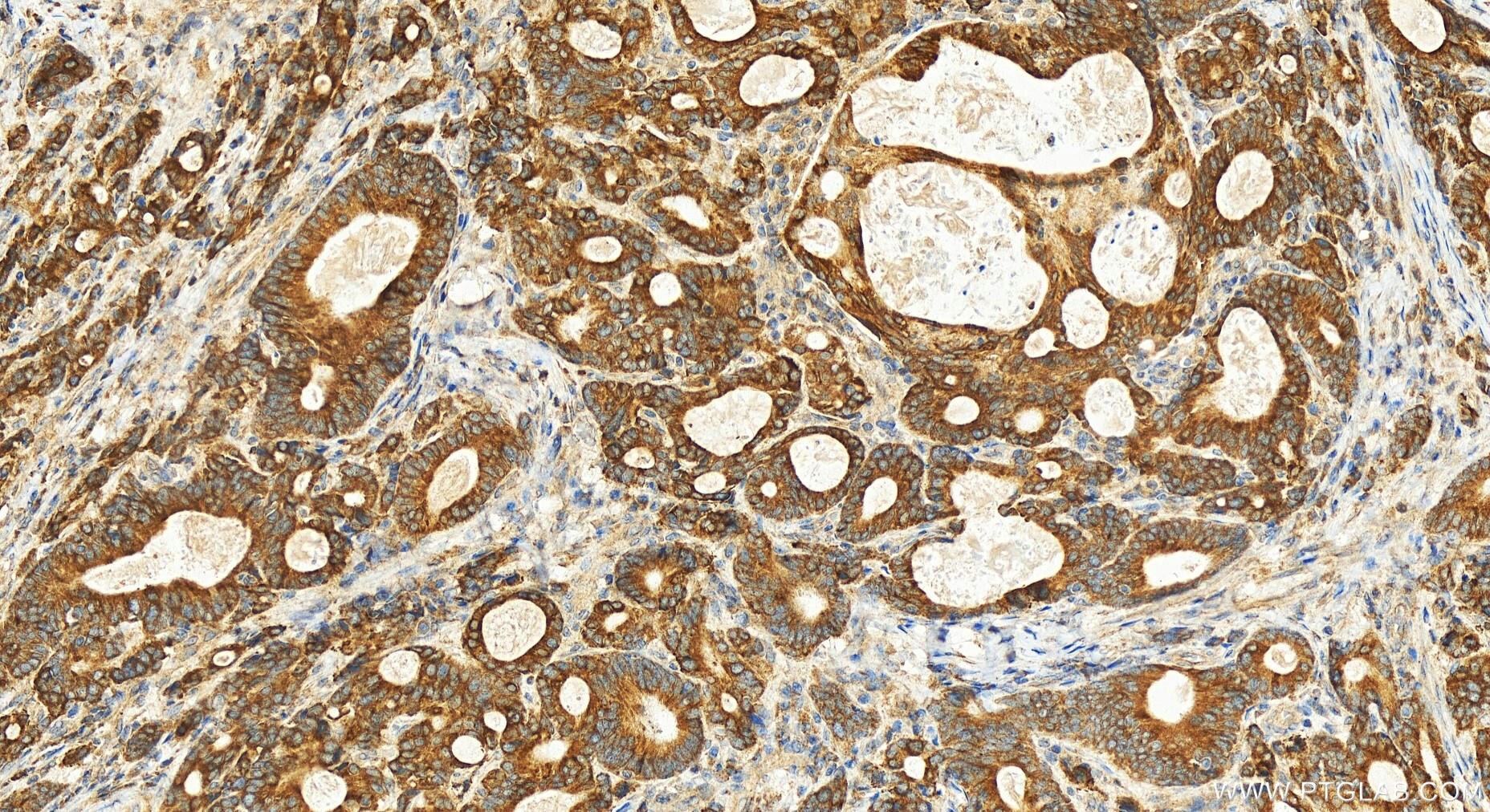
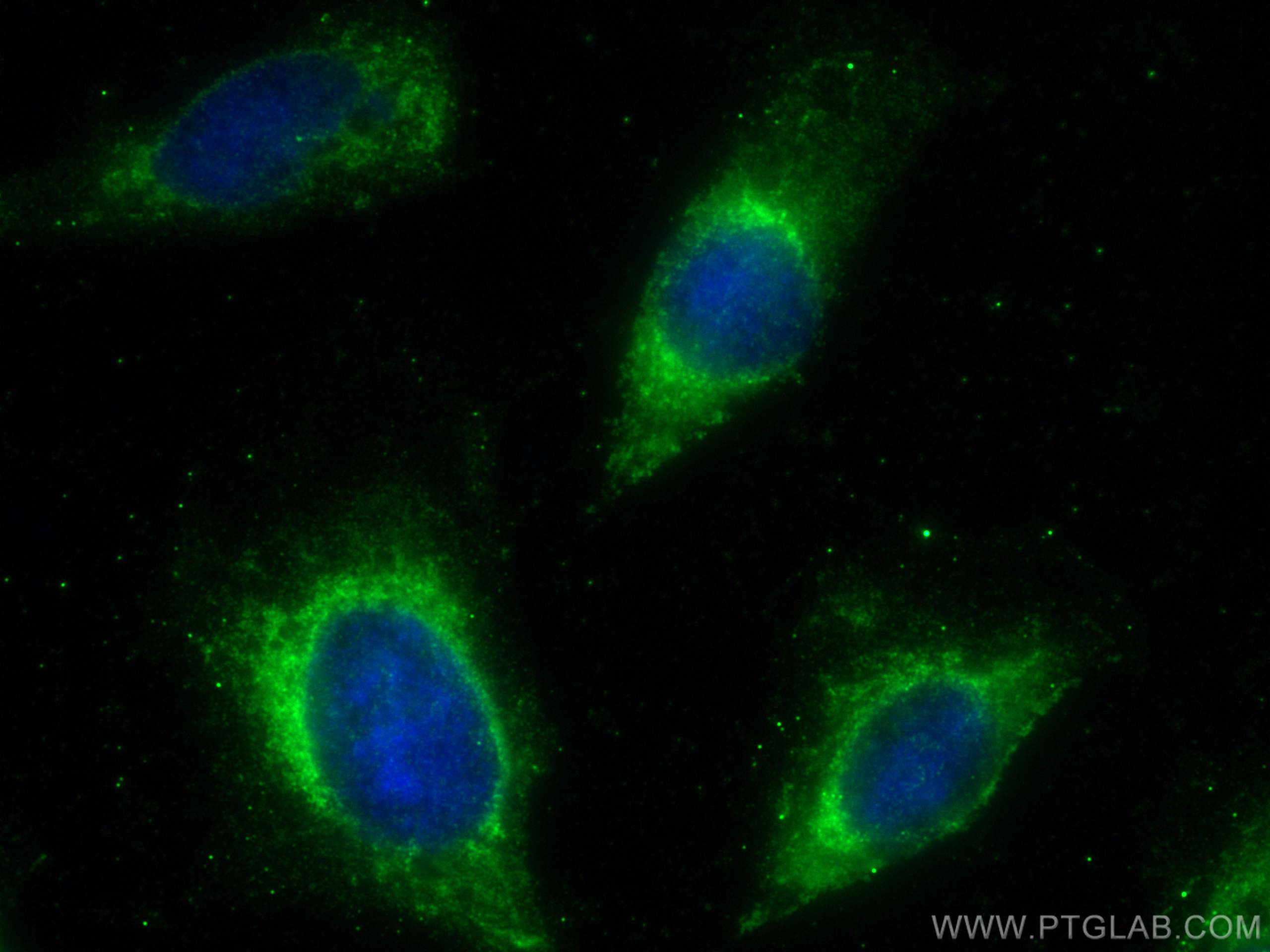

Tested Applications
| Positive WB detected in | L02 cells, SMMC-7721 cells |
| Positive IHC detected in | human stomach cancer tissue Note: suggested antigen retrieval with TE buffer pH 9.0; (*) Alternatively, antigen retrieval may be performed with citrate buffer pH 6.0 |
| Positive IF/ICC detected in | U2OS cells |
Recommended dilution
| Application | Dilution |
|---|---|
| Western Blot (WB) | WB : 1:500-1:2000 |
| Immunohistochemistry (IHC) | IHC : 1:50-1:500 |
| Immunofluorescence (IF)/ICC | IF/ICC : 1:50-1:500 |
| It is recommended that this reagent should be titrated in each testing system to obtain optimal results. | |
| Sample-dependent, Check data in validation data gallery. | |
Product Information
23783-1-AP targets PRELP in WB, IHC, IF/ICC, CoIP, ELISA applications and shows reactivity with human samples.
| Tested Reactivity | human |
| Cited Reactivity | human |
| Host / Isotype | Rabbit / IgG |
| Class | Polyclonal |
| Type | Antibody |
| Immunogen |
CatNo: Ag20656 Product name: Recombinant human PRELP protein Source: e coli.-derived, PET30a Tag: 6*His Domain: 20-361 aa of BC032498 Sequence: GQPTRRPRPGTGPGRRPRPRPRPTPSFPQPDEPAEPTDLPPPLPPGPPSIFPDCPRECYCPPDFPSALYCDSRNLRKVPVIPPRIHYLYLQNNFITELPVESFQNATGLRWINLDNNRIRKIDQRVLEKLPGLVFLYMEKNQLEEVPSALPRNLEQLRLSQNHISRIPPGVFSKLENLLLLDLQHNRLSDGVFKPDTFHGLKNLMQLNLAHNILRKMPPRVPTAIHQLYLDSNKIETIPNGYFKSFPNLAFIRLNYNKLTDRGLPKNSFNISNLLVLHLSHNRISSVPAINNRLEHLYLNNNSIEKINGTQICPNDLVAFHDFSSDLENVPHLRYLRLDGNY Predict reactive species |
| Full Name | proline/arginine-rich end leucine-rich repeat protein |
| Calculated Molecular Weight | 44 kDa |
| Observed Molecular Weight | 44 kDa |
| GenBank Accession Number | BC032498 |
| Gene Symbol | PRELP |
| Gene ID (NCBI) | 5549 |
| RRID | AB_3085714 |
| Conjugate | Unconjugated |
| Form | Liquid |
| Purification Method | Antigen affinity purification |
| UNIPROT ID | P51888 |
| Storage Buffer | PBS with 0.02% sodium azide and 50% glycerol, pH 7.3. |
| Storage Conditions | Store at -20°C. Stable for one year after shipment. Aliquoting is unnecessary for -20oC storage. 20ul sizes contain 0.1% BSA. |
Background Information
PRELP (proline/arginine-rich end leucine-rich repeat protein), also known as MST161, MSTP161, prolargin, or SLRR2A, belongs to the class II subfamily of the small leucine-rich proteoglycan (SLRP) family. PRELP is a small leucine-rich proteoglycan (SLRP), which binds collagen to basement membranes or cartilage as a matrix protein. PRELP has prognostic value and regulates cell proliferation and migration in hepatocellular carcinoma, may serve as a potential prognostic marker and a treatment target against HCC progression (PMID: 33033521).
Protocols
| Product Specific Protocols | |
|---|---|
| IF protocol for PRELP antibody 23783-1-AP | Download protocol |
| IHC protocol for PRELP antibody 23783-1-AP | Download protocol |
| WB protocol for PRELP antibody 23783-1-AP | Download protocol |
| Standard Protocols | |
|---|---|
| Click here to view our Standard Protocols |
Publications
What published studies show
The PRELP Polyclonal antibody (Cat# 23783-1-AP) has 3 total citations published in Apoptosis, Frontiers in Medicine, and BMC Pharmacology and Toxicology. The cited studies span colorectal cancer (EMT/angiogenesis), lung adenocarcinoma (radiotherapy resistance), and bladder cancer (network toxicology), all in human samples using WB, IF, IHC, or CoIP applications.
| Species | Application | Title |
|---|---|---|
Apoptosis PRELP inhibits colorectal cancer progression by suppressing epithelial-mesenchymal transition and angiogenesis via the inactivation of the FGF1/PI3K/AKT pathway
| ||
Front Med (Lausanne) Investigating the role of disulfidptosis related genes in radiotherapy resistance of lung adenocarcinoma | ||
BMC Pharmacol Toxicol Imidacloprid contributes to bladder cancer progression: preliminary evidence based on network toxicology, machine learning and molecular docking. |





