
Tested Applications
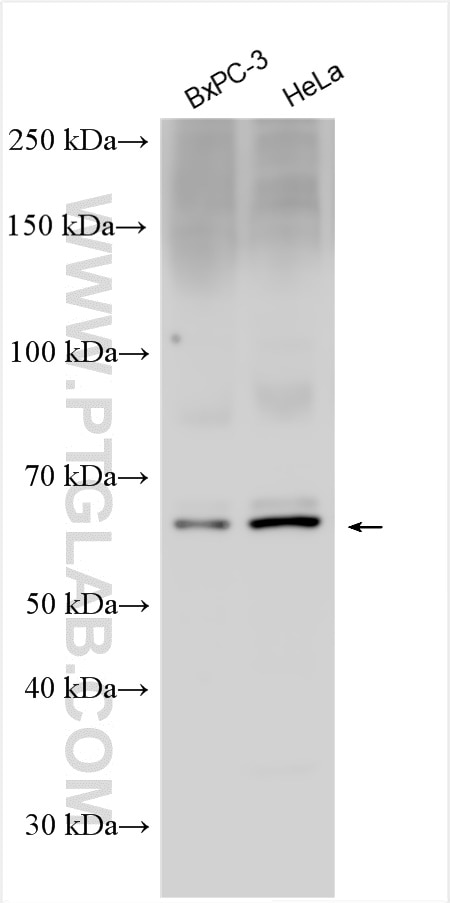
| Positive WB detected in | BxPC-3 cells, HeLa cells |
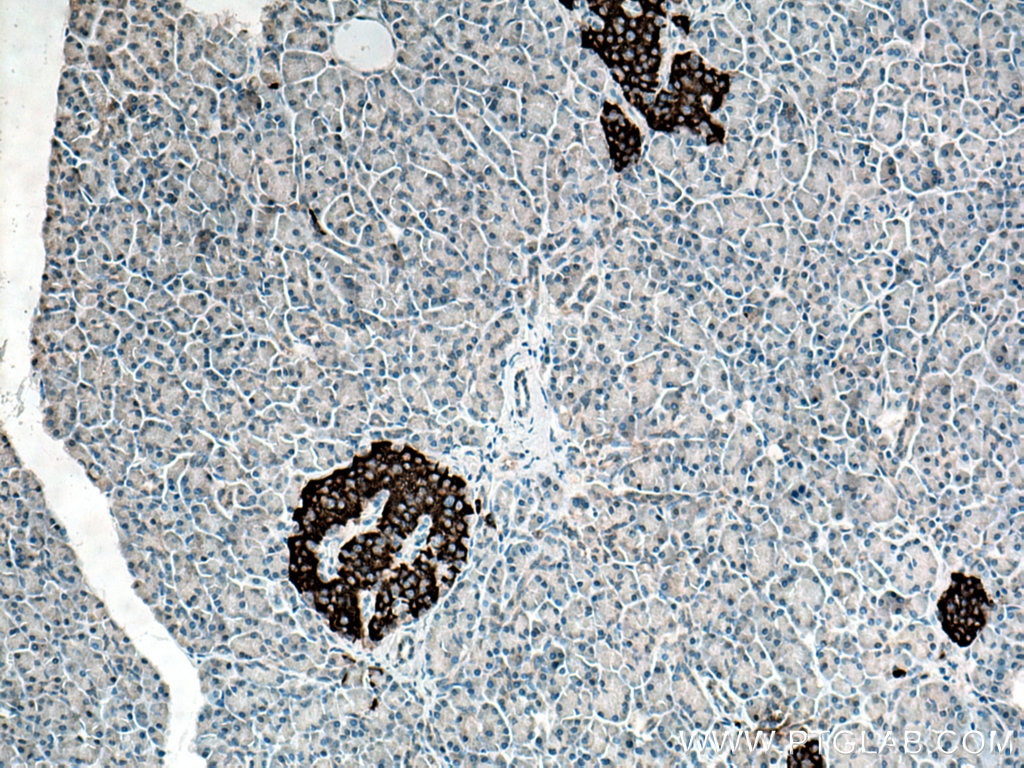
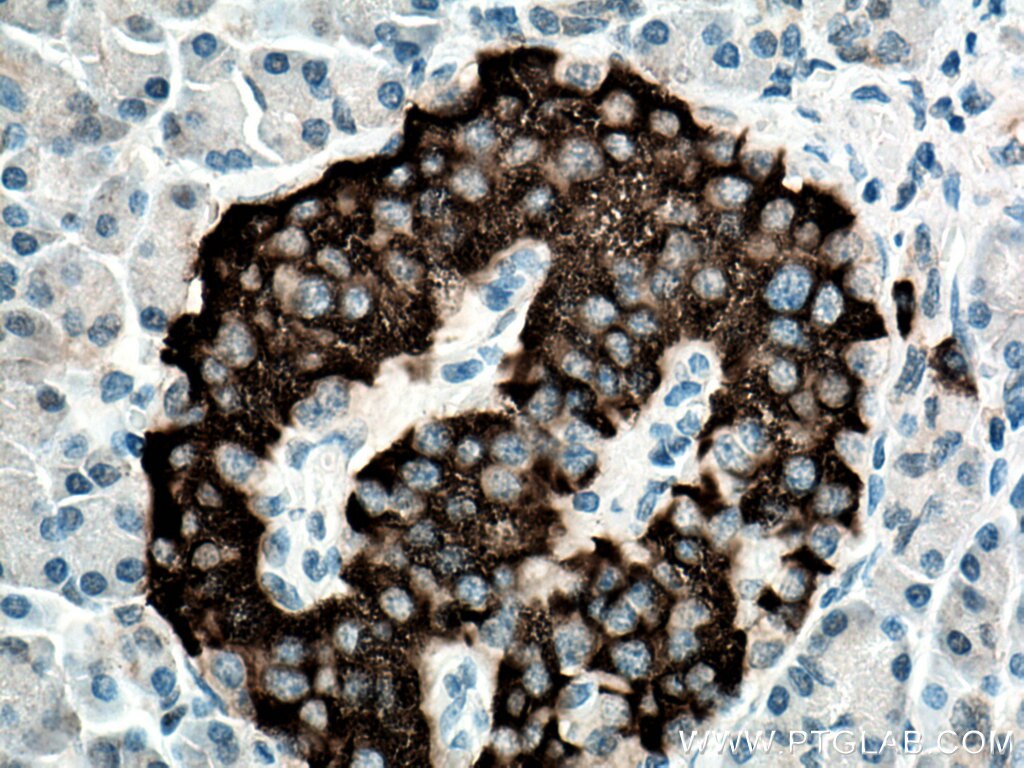
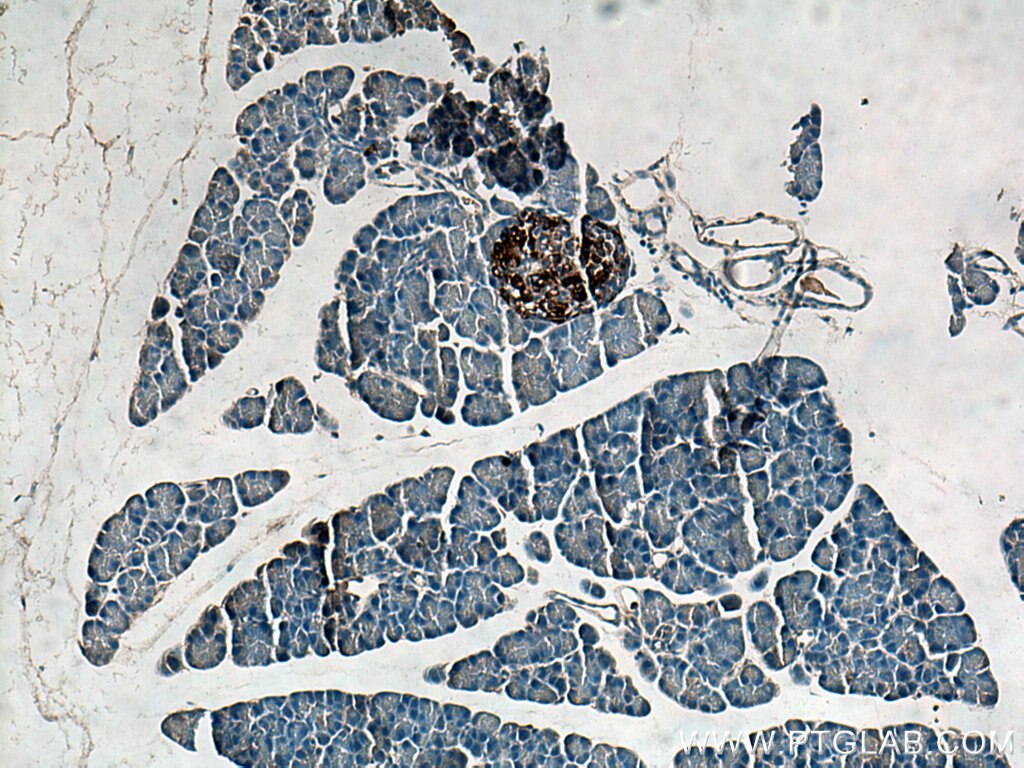
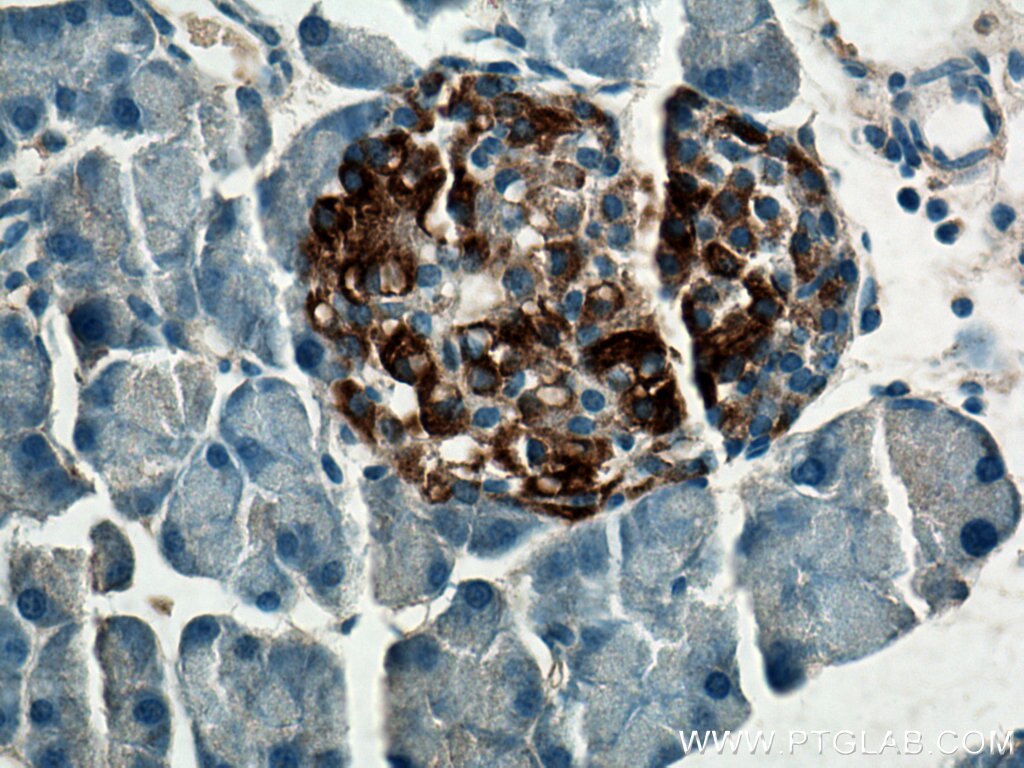
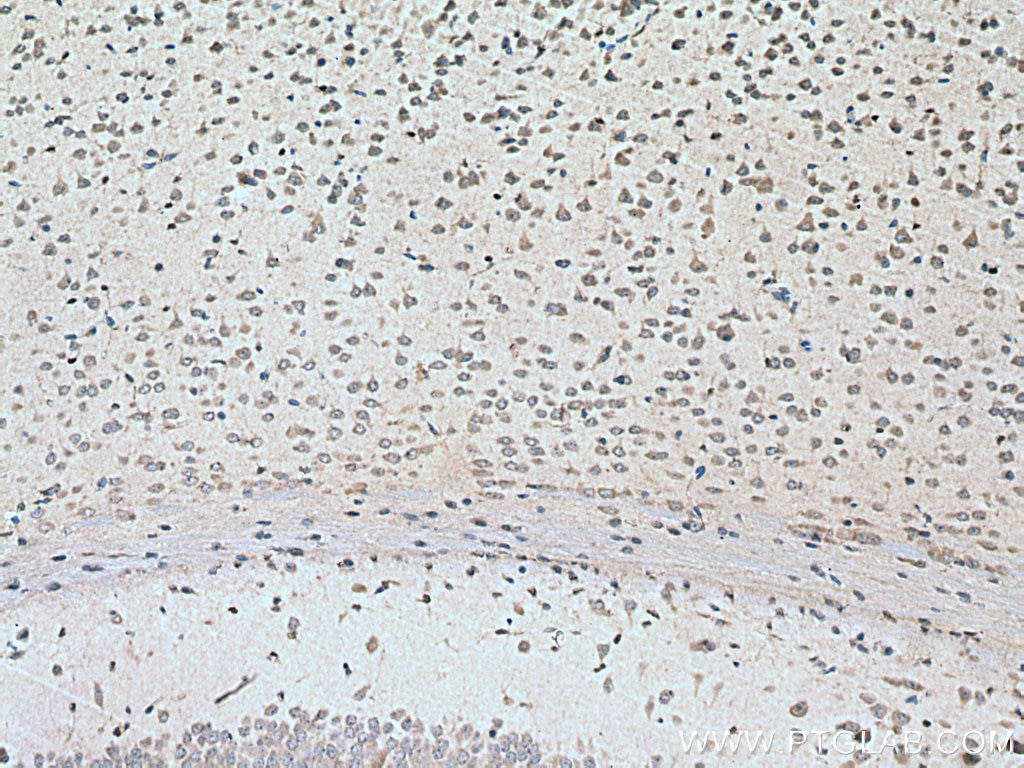
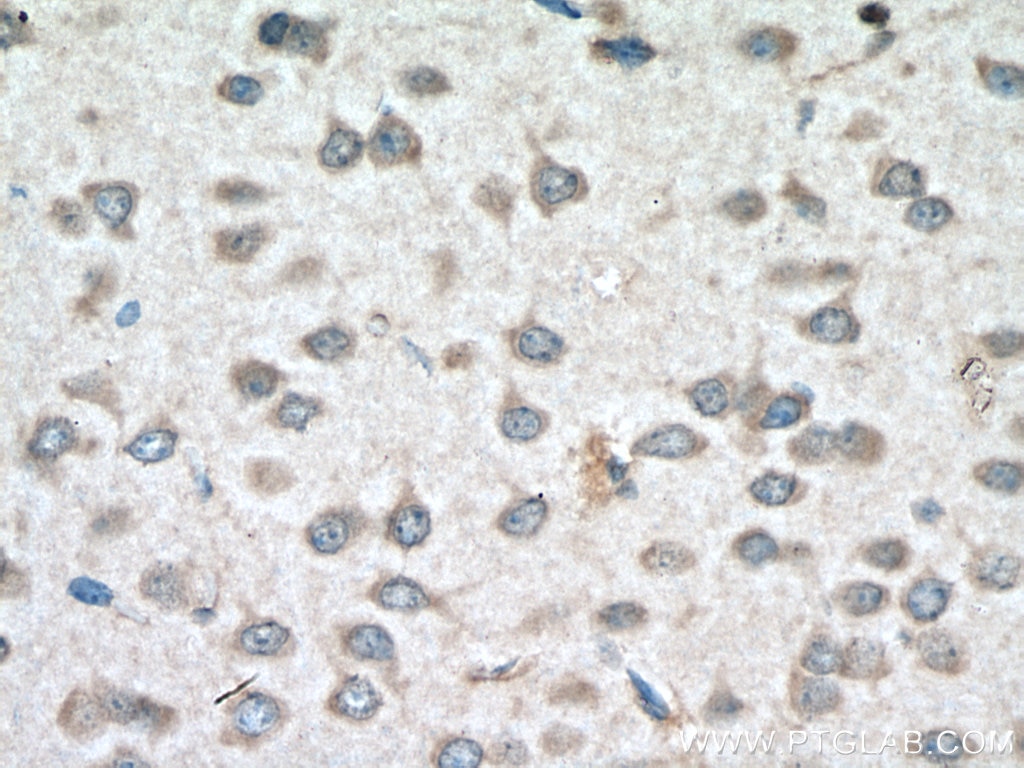
| Positive IHC detected in | human pancreas tissue, mouse pancreas tissue, mouse brain tissue Note: suggested antigen retrieval with TE buffer pH 9.0; (*) Alternatively, antigen retrieval may be performed with citrate buffer pH 6.0 |
Recommended dilution
| Application | Dilution |
|---|---|
| Western Blot (WB) | WB : 1:2000-1:16000 |
| Immunohistochemistry (IHC) | IHC : 1:50-1:500 |
| It is recommended that this reagent should be titrated in each testing system to obtain optimal results. | |
| Sample-dependent, Check data in validation data gallery. | |
Product Information
28219-1-AP targets PCSK1 in WB, IHC, IF, ELISA applications and shows reactivity with Human, Mouse, rat samples.
| Tested Reactivity | Human, Mouse, rat |
| Cited Reactivity | human, mouse |
| Host / Isotype | Rabbit / IgG |
| Class | Polyclonal |
| Type | Antibody |
| Immunogen |
CatNo: Ag28203 Product name: Recombinant human PCSK1 protein Source: e coli.-derived, PGEX-4T Tag: GST Domain: 406-585 aa of BC130295 Sequence: DMQHLVVWTSEYDPLANNPGWKKNGAGLMVNSRFGFGLLNAKALVDLADPRTWRSVPEKKECVVKDNDFEPRALKANGEVIIEIPTRACEGQENAIKSLEHVQFEATIEYSRRGDLHVTLTSAAGTSTVLLAERERDTSPNGFKNWDFMSVHTWGENPIGTWTLRITDMSGRIQNEGRIV Predict reactive species |
| Full Name | proprotein convertase subtilisin/kexin type 1 |
| Calculated Molecular Weight | 753 aa, 84 kDa |
| Observed Molecular Weight | 66 kDa |
| GenBank Accession Number | BC130295 |
| Gene Symbol | PCSK1 |
| Gene ID (NCBI) | 5122 |
| RRID | AB_2881093 |
| Conjugate | Unconjugated |
| Form | Liquid |
| Purification Method | Antigen affinity purification |
| UNIPROT ID | P29120 |
| Storage Buffer | PBS with 0.02% sodium azide and 50% glycerol, pH 7.3. |
| Storage Conditions | Store at -20°C. Stable for one year after shipment. Aliquoting is unnecessary for -20oC storage. 20ul sizes contain 0.1% BSA. |
Background Information
PC1/3, encoded by the gene PCSK1, is synthesized in the endoplasmic reticulum (ER) as an inactive 94 kDa zymogen, where it is rapidly cleaved into a partially active 87-kDa precursor. When this protein reaches the secretory granules, the maturation process continues to generate a 74 kDa species and ends with further cleavage to a fully active, although enzymatically unstable, 66 kDa protein.
Protocols
| Product Specific Protocols | |
|---|---|
| IHC protocol for PCSK1 antibody 28219-1-AP | Download protocol |
| WB protocol for PCSK1 antibody 28219-1-AP | Download protocol |
| Standard Protocols | |
|---|---|
| Click here to view our Standard Protocols |
Publications
What published studies show
| Species | Application | Title |
|---|---|---|
Mol Nutr Food Res The Effect of Coenzyme Q10 Supplementation on Bile Acid Metabolism: Insights from Network Pharmacology, Molecular Docking, and Experimental Validation | ||
bioRxiv Optimization of protocols for immunohistochemical assessment of enteric nervous system in formalin fixed human tissue | ||
Biomed Pharmacother 20(S/R)-ginsenoside Rh1 improves type 2 diabetes via gut microbiota-modulated bile acid signaling and FXR/TGR5-dependent GLP-1 enhancement. | ||
Food Funct Weizmannia coagulans JA845 modulates glucose and lipid metabolism via the gut microbiota-bile acid axis and FXR/TGR5 signaling to enhance GLP-1 secretion. | ||
Rapid Commun Mass Spectrom Data-independent acquisition combined with liquid chromatography mass spectrometry technique to detect prognostic protein markers in type I gastric neuroendocrine neoplasm | ||
J Agric Food Chem Bifidobacterium longum subsp. longum B-53 Alleviated Abnormalities of Glycolipid Metabolism and Oxidative Stress in T2DM Mice Through Regulating Gut Microbiota and GLP-1 Secretion |








