
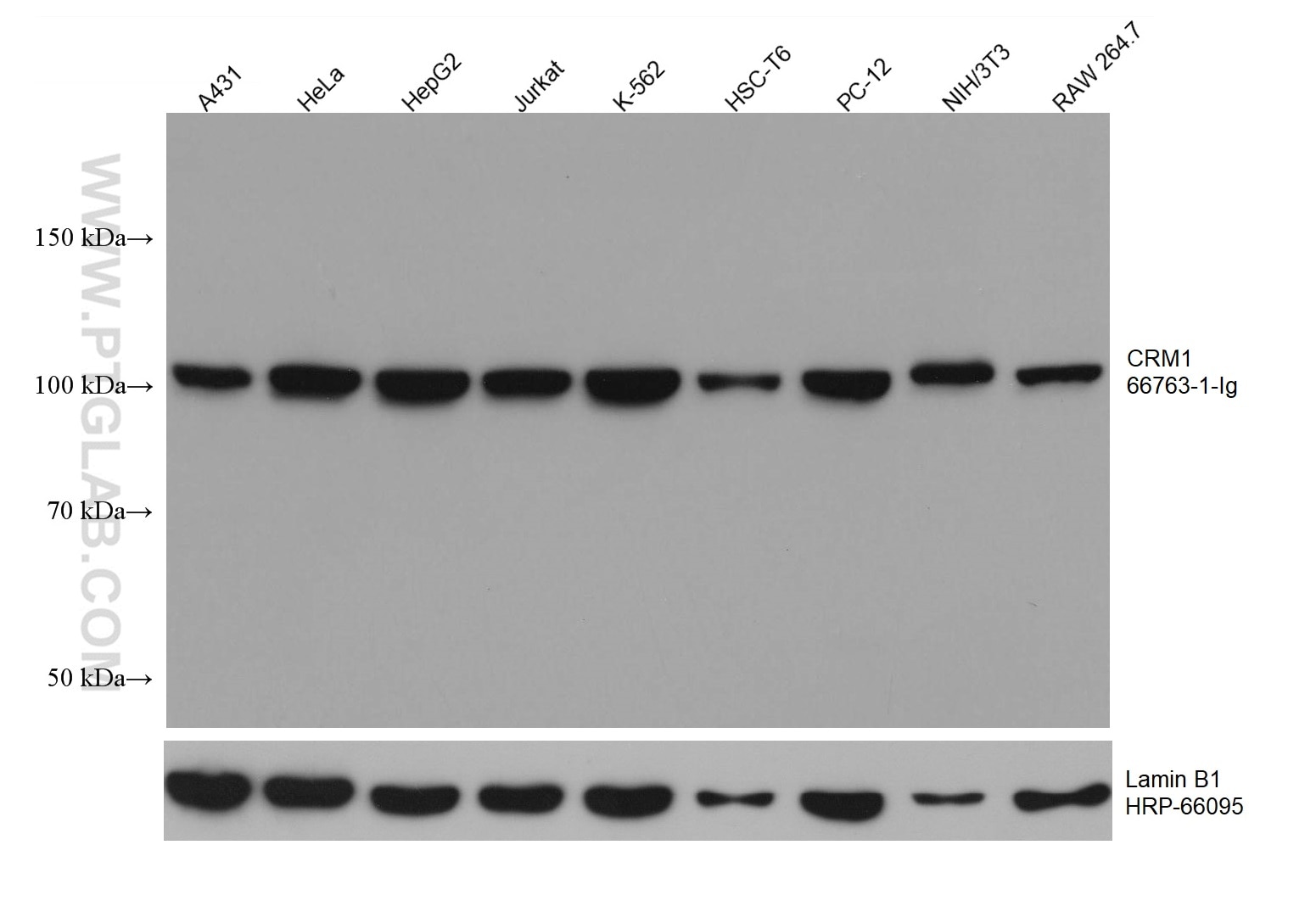
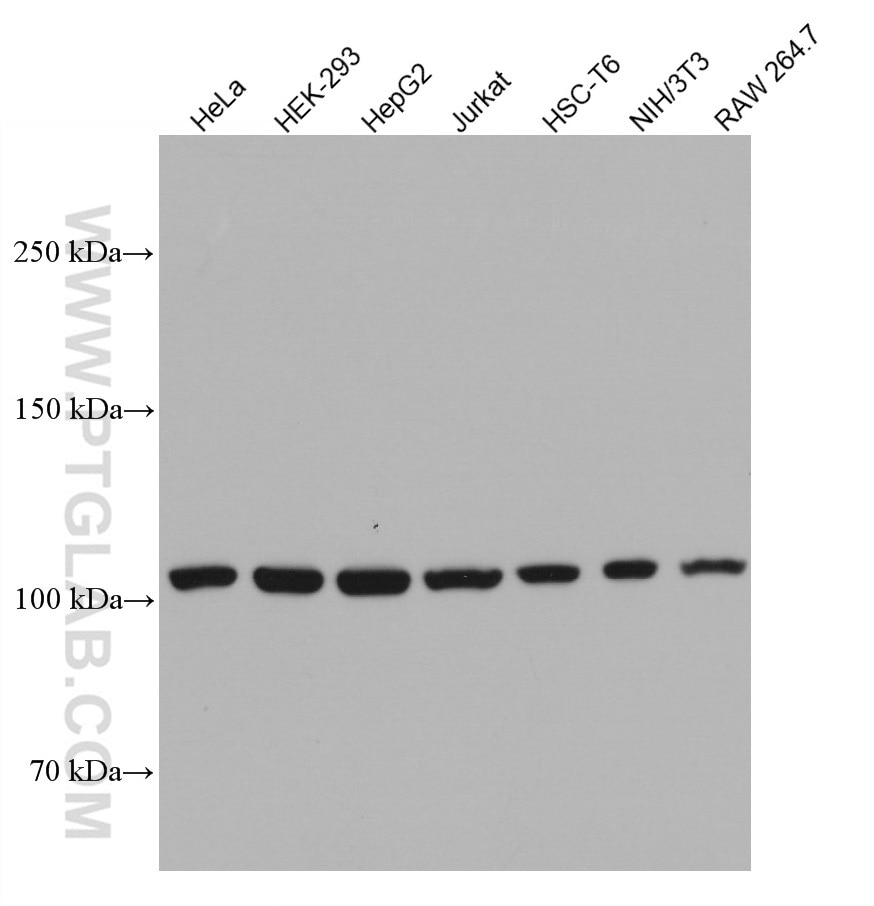
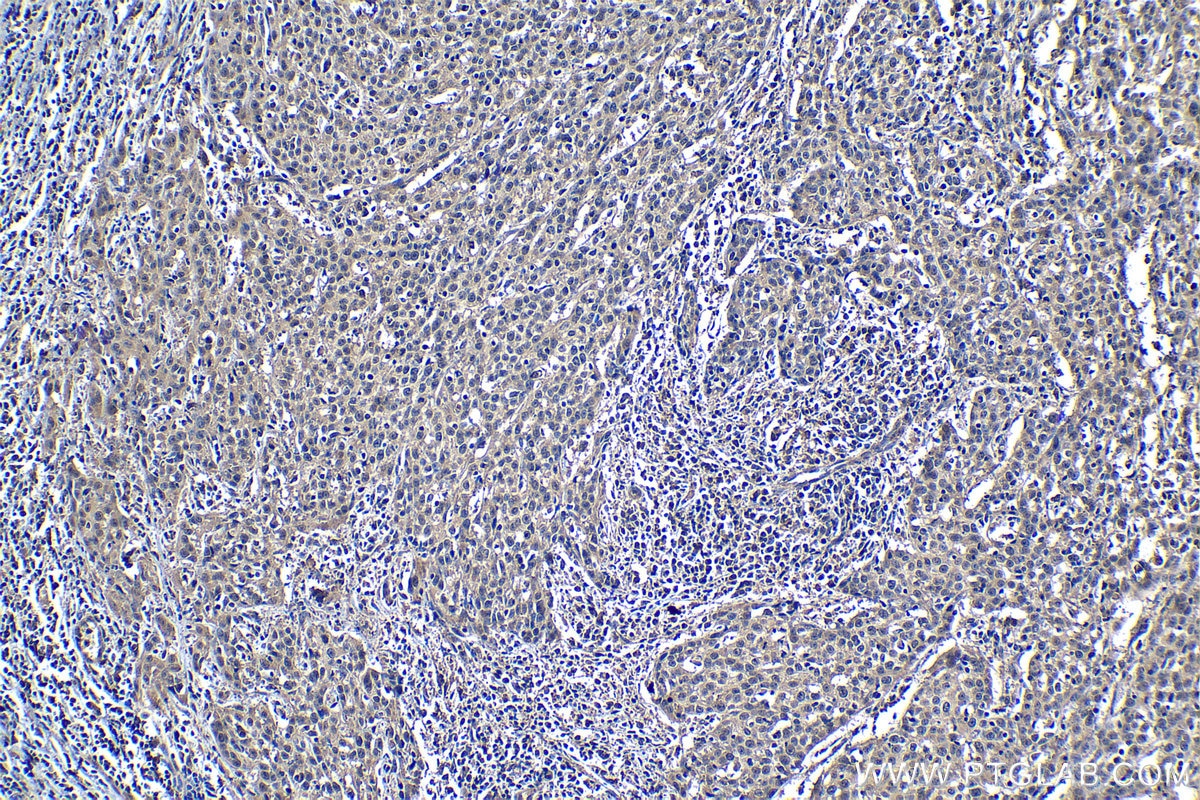
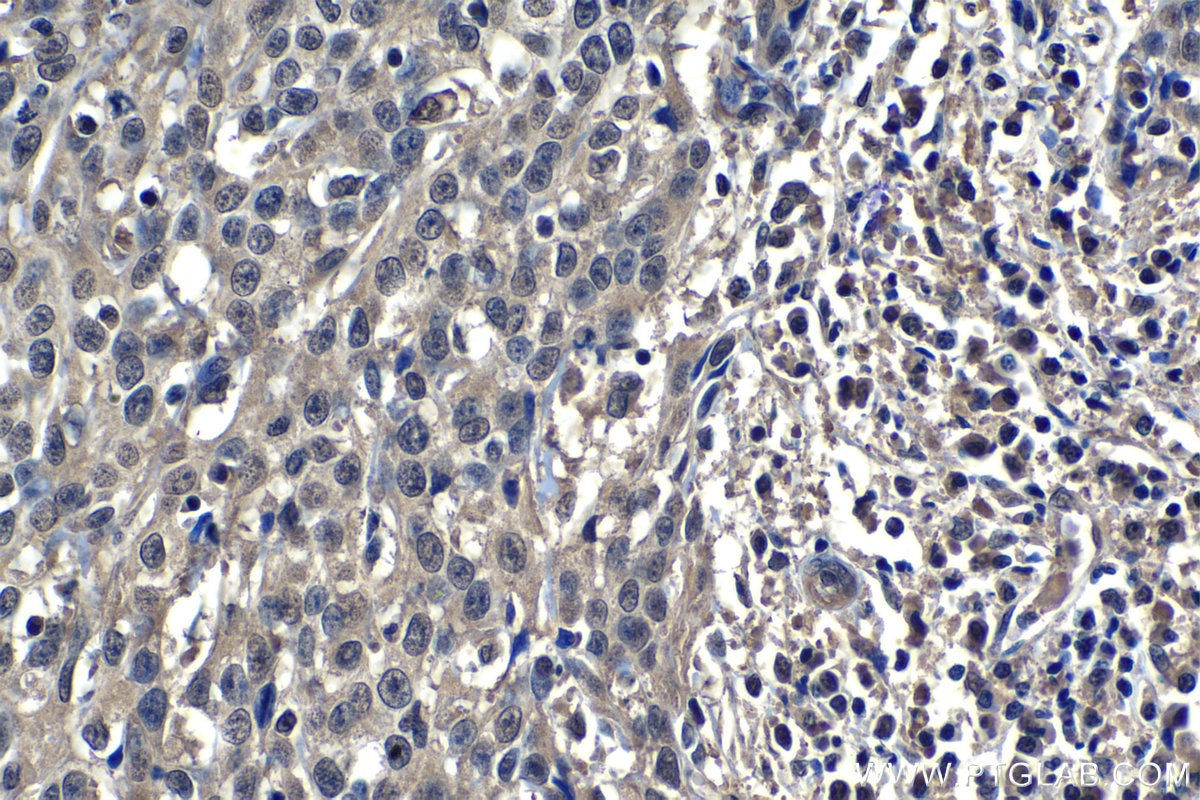

Tested Applications
| Positive WB detected in | A431 cells, HeLa cells, HepG2 cells, Jurkat cells, K-562 cells, HSC-T6 cells, PC-12 cells, NIH/3T3 cells, RAW 264.7 cells, HEK-293 cells |
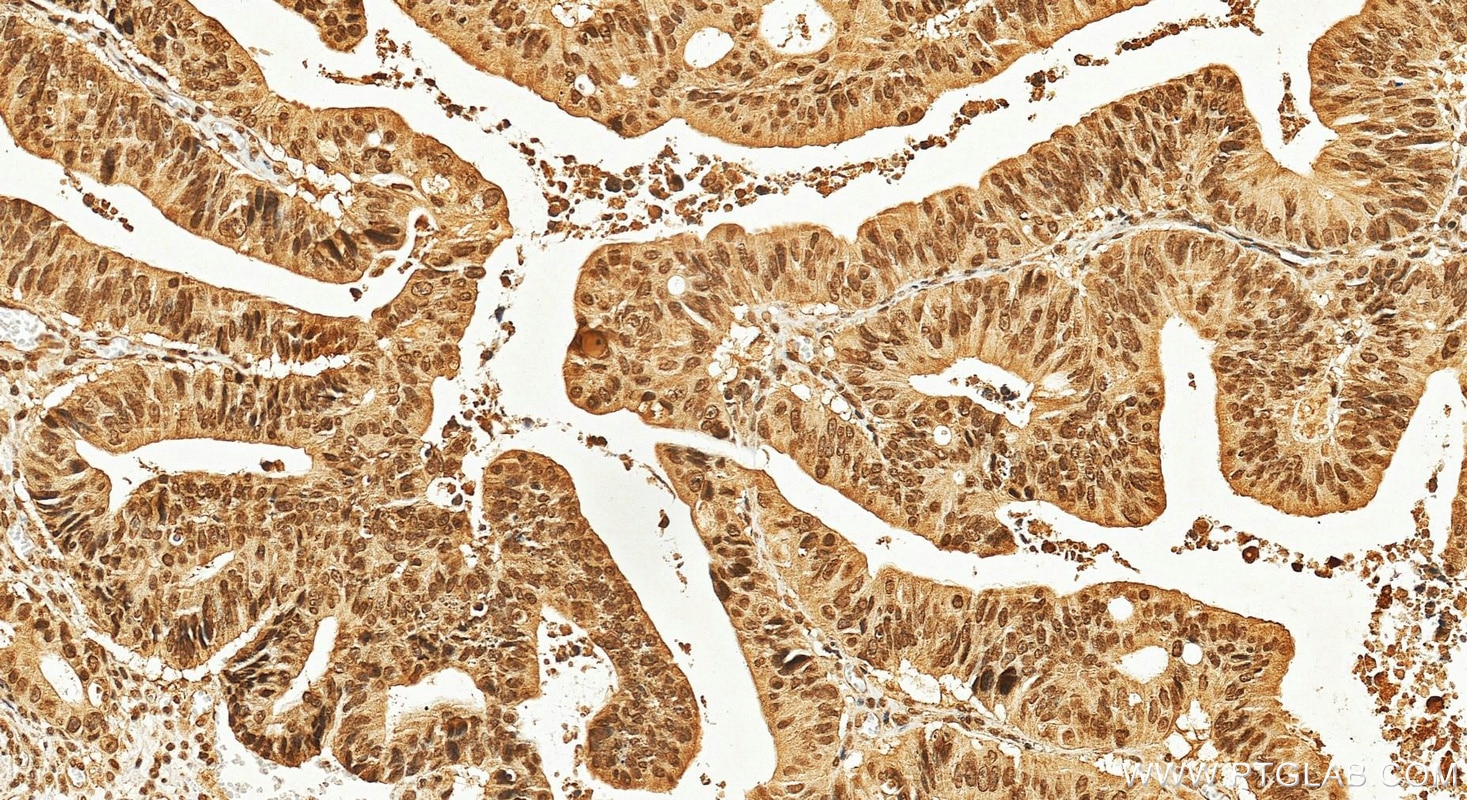
| Positive IHC detected in | human cervical cancer tissue, human colon cancer tissue Note: suggested antigen retrieval with TE buffer pH 9.0; (*) Alternatively, antigen retrieval may be performed with citrate buffer pH 6.0 |
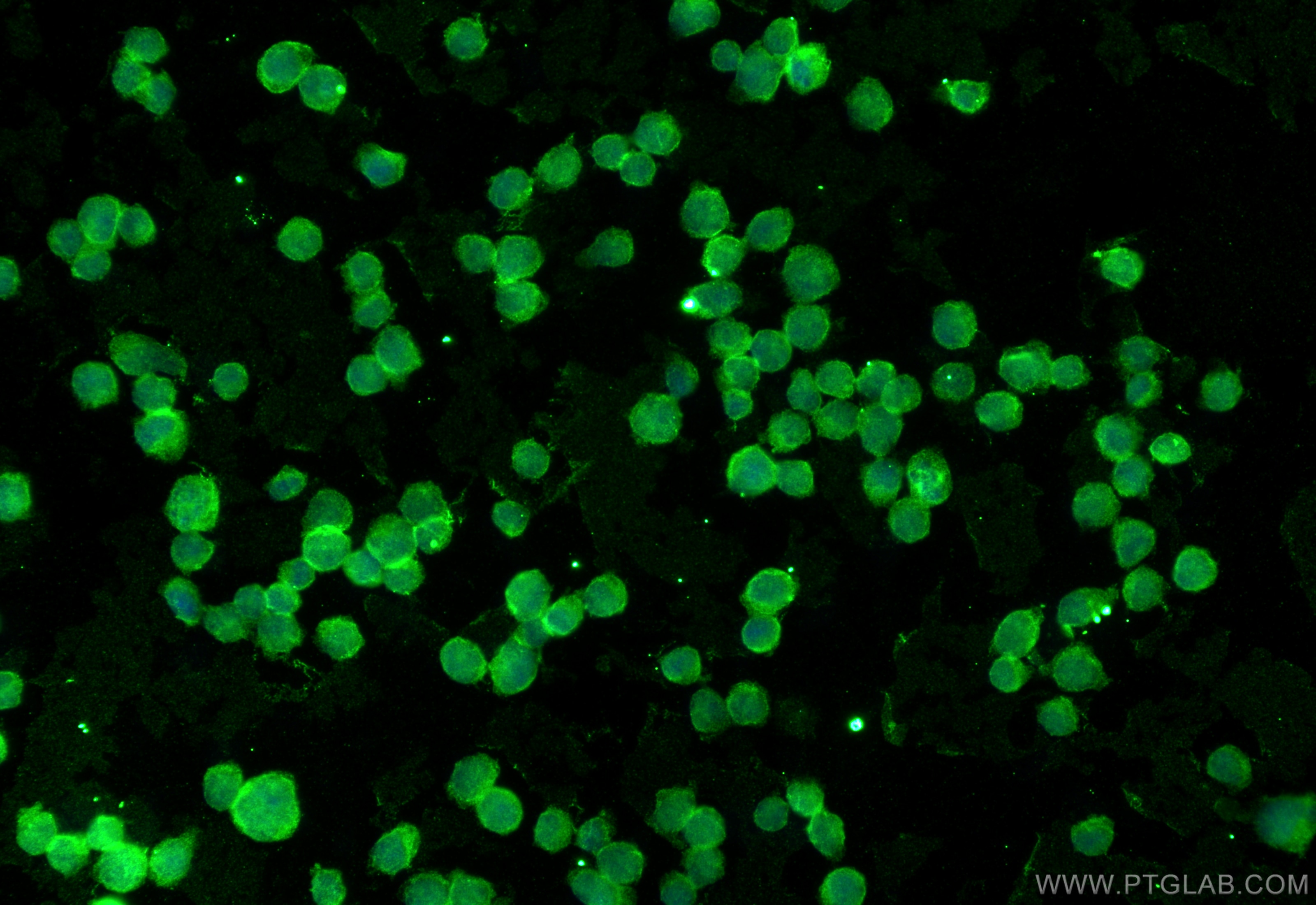
| Positive IF/ICC detected in | K-562 cells |
Recommended dilution
| Application | Dilution |
|---|---|
| Western Blot (WB) | WB : 1:5000-1:50000 |
| Immunohistochemistry (IHC) | IHC : 1:500-1:2000 |
| Immunofluorescence (IF)/ICC | IF/ICC : 1:400-1:1600 |
| It is recommended that this reagent should be titrated in each testing system to obtain optimal results. | |
| Sample-dependent, Check data in validation data gallery. | |
Product Information
66763-1-Ig targets CRM1 in WB, IHC, IF/ICC, IP, ELISA applications and shows reactivity with human, mouse, rat samples.
| Tested Reactivity | human, mouse, rat |
| Cited Reactivity | human, mouse, rat |
| Host / Isotype | Mouse / IgG1 |
| Class | Monoclonal |
| Type | Antibody |
| Immunogen |
CatNo: Ag27337 Product name: Recombinant human XPO1 protein Source: e coli.-derived, PET28a Tag: 6*His Domain: 301-540 aa of BC032847 Sequence: NTNIRLAYSNGKDDEQNFIQNLSLFLCTFLKEHDQLIEKRLNLRETLMEALHYMLLVSEVEETEIFKICLEYWNHLAAELYRESPFSTSASPLLSGSQHFDVPPRRQLYLPMLFKVRLLMVSRMAKPEEVLVVENDQGEVVREFMKDTDSINLYKNMRETLVYLTHLDYVDTERIMTEKLHNQVNGTEWSWKNLNTLCWAIGSISGAMHEEDEKRFLVTVIKDLLGLCEQKRGKDNKAII Predict reactive species |
| Full Name | exportin 1 (CRM1 homolog, yeast) |
| Calculated Molecular Weight | 1071 aa, 123 kDa |
| Observed Molecular Weight | 100-110 kDa |
| GenBank Accession Number | BC032847 |
| Gene Symbol | CRM1 |
| Gene ID (NCBI) | 7514 |
| RRID | AB_2882109 |
| Conjugate | Unconjugated |
| Form | Liquid |
| Purification Method | Protein G purification |
| UNIPROT ID | O14980 |
| Storage Buffer | PBS with 0.02% sodium azide and 50% glycerol, pH 7.3. |
| Storage Conditions | Store at -20°C. Stable for one year after shipment. Aliquoting is unnecessary for -20oC storage. 20ul sizes contain 0.1% BSA. |
Background Information
CRM1 (chromosome region maintenance 1, also known as exportin-1 or XPO1), a member of the karyopherin β family of transport receptors, is an important nuclear export receptor recognizing proteins bearing a leucine-rich nuclear export signal (PMID: 9323133). CRM1 is the major receptor for the export of proteins out of the nucleus and is also required for transport of many RNAs (PMID: 17317185). In addition to nuclear export, CRM1 also plays a role in centrosome duplication and spindle assembly (PMID: 22773955). Elevated CRM1 expression has been reported in several cancers, which implicates CRM1 as a potential anti-cancer drug target (PMID: 22677130; 21683812 ).
Protocols
| Product Specific Protocols | |
|---|---|
| IF protocol for CRM1 antibody 66763-1-Ig | Download protocol |
| IHC protocol for CRM1 antibody 66763-1-Ig | Download protocol |
| WB protocol for CRM1 antibody 66763-1-Ig | Download protocol |
| Standard Protocols | |
|---|---|
| Click here to view our Standard Protocols |
Publications
What published studies show
The CRM1 Monoclonal antibody (Catalog No. 66763-1-Ig) has 21 total citations. It appears in leading journals including Advanced Science, Molecular Biomedicine, Cell Death & Disease, Cell Death Discovery, Diabetologia, Oncogene, International Journal of Molecular Medicine, Brain Behavior and Immunity, Cellular and Molecular Life Sciences, Experimental Gerontology, Scientific Reports, Journal of Virology, Laboratory Investigation, Journal of Biological Chemistry, Experimental Cell Research, PeerJ, Hematology, and Cells. Research fields span cancer biology (breast, glioma, gastric, colorectal, bladder, colon), osteoarthritis, diabetes/islet function, lupus nephritis, hepatic fibrosis, viral infection, inflammation, and nuclear-cytoplasmic transport mechanisms.
| Species | Application | Title |
|---|---|---|
Adv Sci (Weinh) Positive Feedback Regulation between KLF5 and XPO1 Promotes Cell Cycle Progression of Basal like Breast Cancer
| ||
Adv Sci (Weinh) Lactylation of HMGB1 at K177 Drives Nuclear Export of TIAR to Promote Hypoxia-Induced Stress Granule Formation | ||
Adv Sci (Weinh) UGDH Lactylation Aggravates Osteoarthritis by Suppressing Glycosaminoglycan Synthesis and Orchestrating Nucleocytoplasmic Transport to Activate MAPK Signaling | ||
Adv Sci (Weinh) TRIM24 Cooperates with Ras Mutation to Drive Glioma Progression through snoRNA Recruitment of PHAX and DNA-PKcs | ||
Mol Biomed GEF-independent Ran activation shifts a fraction of the protein to the cytoplasm and promotes cell proliferation. | ||
Cell Death Dis Synergistic antifibrotic effects of miR-451 with miR-185 partly by co-targeting EphB2 on hepatic stellate cells. |







