
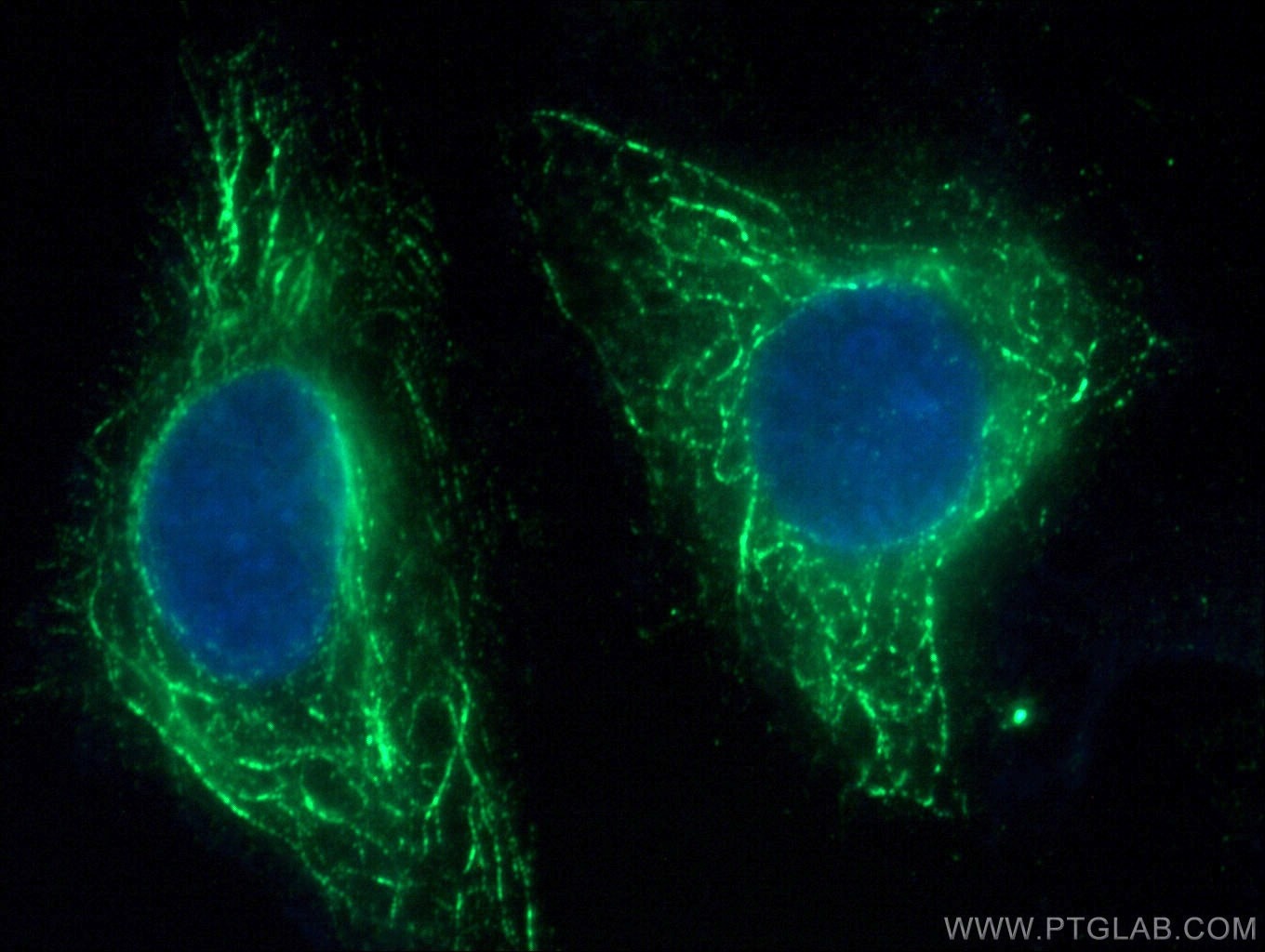

Tested Applications
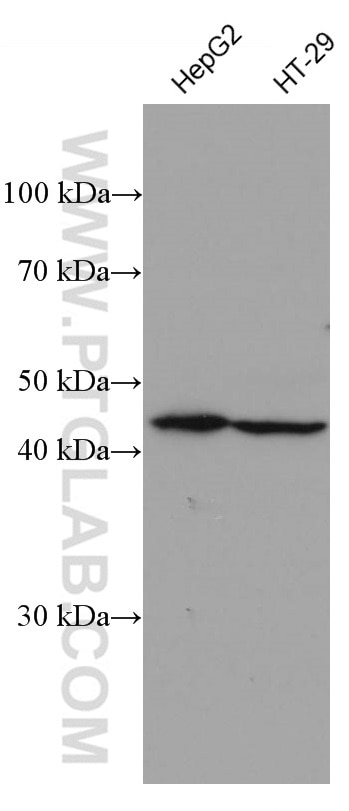
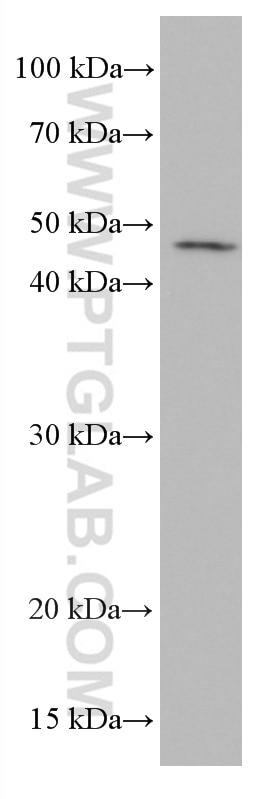
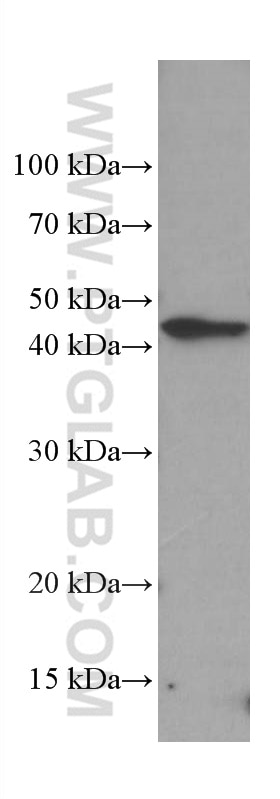
| Positive WB detected in | HepG2 cells, human adipose tissue, HT-29 cells |
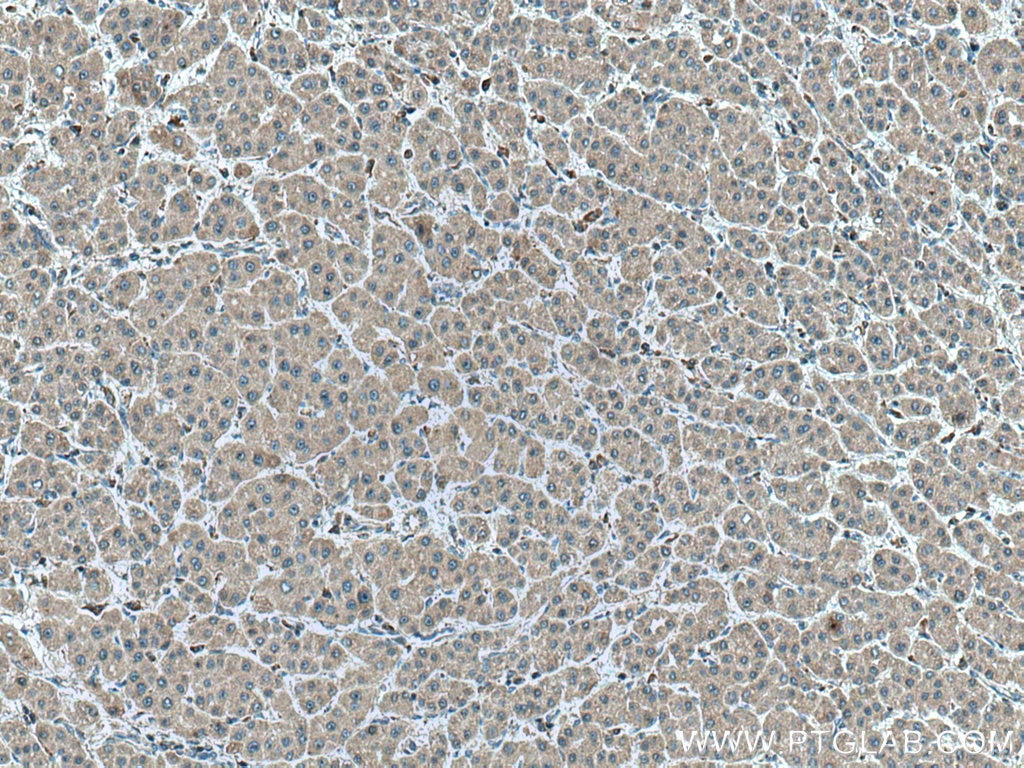
| Positive IHC detected in | human liver cancer tissue Note: suggested antigen retrieval with TE buffer pH 9.0; (*) Alternatively, antigen retrieval may be performed with citrate buffer pH 6.0 |
| Positive IF/ICC detected in | A549 cells |
Recommended dilution
| Application | Dilution |
|---|---|
| Western Blot (WB) | WB : 1:500-1:3000 |
| Immunohistochemistry (IHC) | IHC : 1:200-1:800 |
| Immunofluorescence (IF)/ICC | IF/ICC : 1:50-1:500 |
| It is recommended that this reagent should be titrated in each testing system to obtain optimal results. | |
| Sample-dependent, Check data in validation data gallery. | |
Product Information
66811-1-Ig targets FFAR3 in WB, IHC, IF/ICC, ELISA applications and shows reactivity with human samples.
| Tested Reactivity | human |
| Cited Reactivity | human, mouse, rat, pig |
| Host / Isotype | Mouse / IgG1 |
| Class | Monoclonal |
| Type | Antibody |
| Immunogen |
CatNo: Ag28025 Product name: Recombinant human FFAR3 protein Source: e coli.-derived, PET30a Tag: 6*His Domain: 246-346 aa of BC035657 Sequence: VVGYICGESPAWRIYVTLLSTLNSCVDPFVYYFSSSGFQADFHELLRRLCGLWGQWQQESSMELKEQKGGEEQRADRPAERKTSEHSQGCGTGGQVACAES Predict reactive species |
| Full Name | free fatty acid receptor 3 |
| Calculated Molecular Weight | 39 kDa |
| Observed Molecular Weight | 40-48 kDa |
| GenBank Accession Number | BC035657 |
| Gene Symbol | FFAR3 |
| Gene ID (NCBI) | 2865 |
| RRID | AB_2882154 |
| Conjugate | Unconjugated |
| Form | Liquid |
| Purification Method | Protein G purification |
| UNIPROT ID | O14843 |
| Storage Buffer | PBS with 0.02% sodium azide and 50% glycerol, pH 7.3. |
| Storage Conditions | Store at -20°C. Stable for one year after shipment. Aliquoting is unnecessary for -20oC storage. 20ul sizes contain 0.1% BSA. |
Background Information
FFAR3 (Free fatty acid receptors 3) also known as GPR41, with another GPR43 protein, both are Gai-coupled receptor activated by short-chain fatty acids (SCFAs) such as acetate, propionate, and butyrate (PMID:26870043). GPR41 protein is translated from the bicistronic mRNA encoding GPR40 and GPR41, where an internal ribosome entry site (IRES) is utilized for the GPR41 coding sequence downstream of GPR40 (PMID:22493486). GPR41 is expressed in adipose tissue, gut, and the peripheral nervous system, and it is involved in SCFA-dependent energy regulation(PMID: 24904531).
Protocols
| Product Specific Protocols | |
|---|---|
| IF protocol for FFAR3 antibody 66811-1-Ig | Download protocol |
| IHC protocol for FFAR3 antibody 66811-1-Ig | Download protocol |
| WB protocol for FFAR3 antibody 66811-1-Ig | Download protocol |
| Standard Protocols | |
|---|---|
| Click here to view our Standard Protocols |
Publications
What published studies show
The FFAR3 Monoclonal antibody (1D10B7), catalog number 66811-1-Ig, has 23 citations published across 22 journals, including Cell Host Microbe, Gut Microbes, NPJ Biofilms Microbiomes, Front Immunol, Biochem Pharmacol, and PLoS One. Research fields span gut microbiota, short-chain fatty acid signaling, metabolic disorders (obesity, insulin resistance, NASH), inflammation, liver fibrosis, colorectal cancer, osteoporosis, cardiovascular injury, neurological disorders, and immune regulation.
| Species | Application | Title |
|---|---|---|
Gut Microbes Sialic acid-based probiotic intervention in lactating mothers improves the neonatal gut microbiota and immune responses by regulating sialylated milk oligosaccharide synthesis via the gut-breast axis | ||
Gut Microbes Butyrate reduces adherent-invasive E. coli-evoked disruption of epithelial mitochondrial morphology and barrier function: involvement of free fatty acid receptor 3 | ||
NPJ Biofilms Microbiomes Gut-resident Phascolarctobacterium succinatutens decreases fat accumulation via MYC-driven epigenetic regulation of arginine biosynthesis | ||
Int J Biol Macromol Effects of Rehmanniae Radix Praeparata polysaccharides on LPS-induced immune activation in mice based on gut microbiota, metabolomics and transcriptomics | ||
Biomed Pharmacother Fish-derived lipids directly stimulate NK cell activity and IFN-γ synthesis: A novel dietary intervention strategy to enhance antiviral immunity in humans. |
Reviews
What customers say
The single review for this antibody is highly positive, rating it 5 out of 5 stars. The reviewer found it to be a great antibody for Western blot applications, using it at a 1:1500 dilution in milk on human iPSC-derived macrophages and microglia. Overall, the feedback highlights strong performance and reliability for WB.
The reviews below have been submitted by verified Proteintech customers who received an incentive for providing their feedback.
Christin (Verified Customer) (01-26-2025) | Great antibody for western blots.
|






