
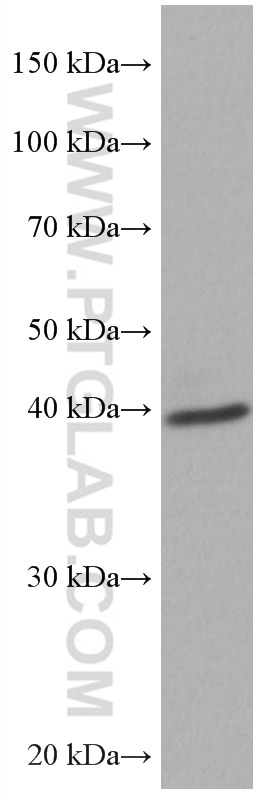
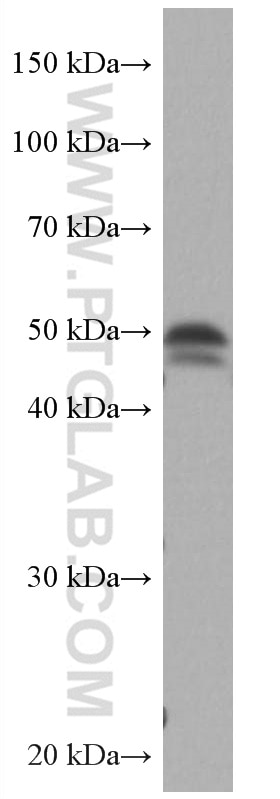
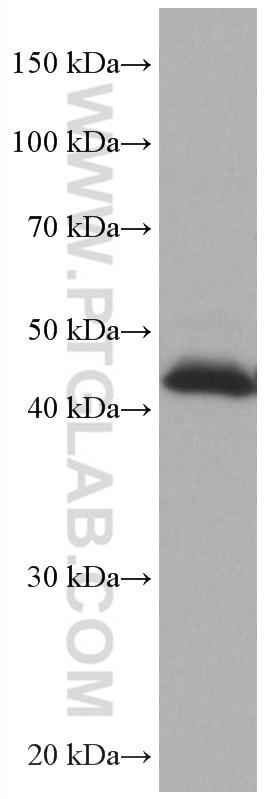
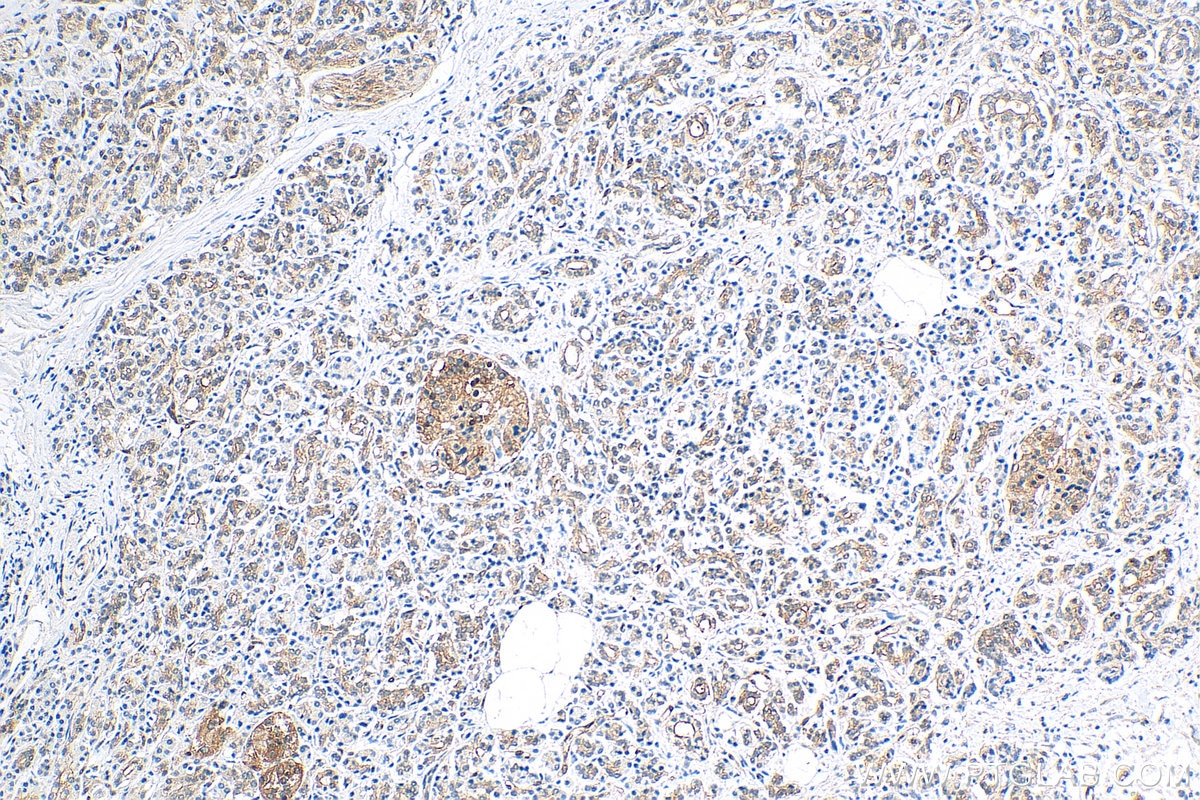

Tested Applications
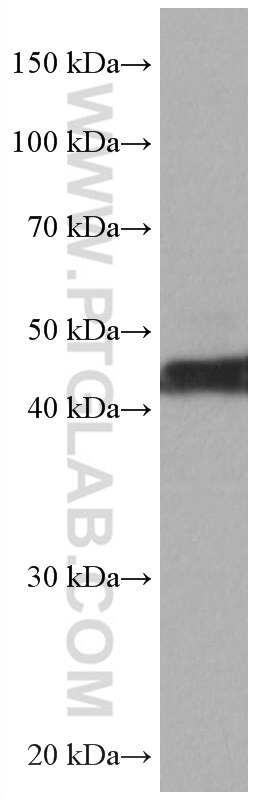
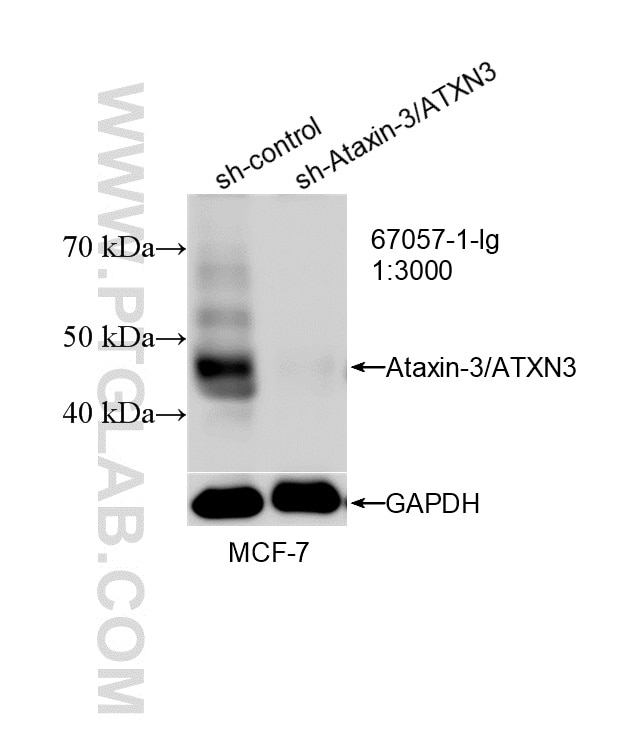
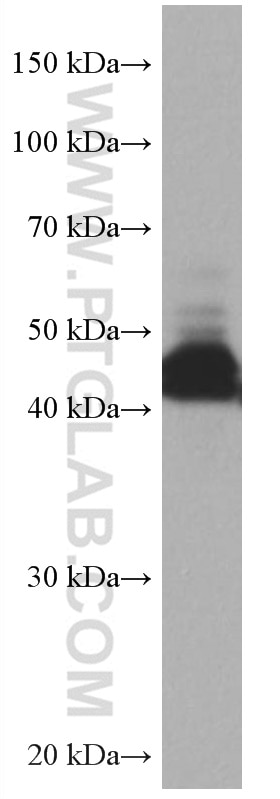
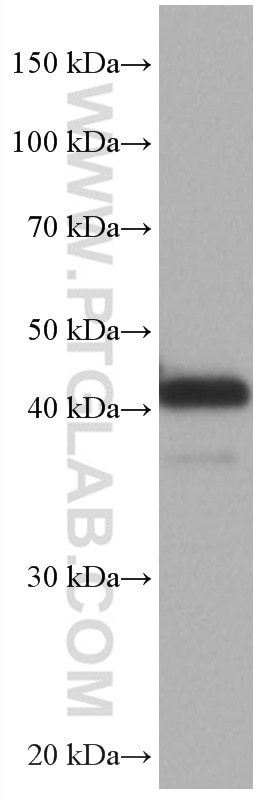
| Positive WB detected in | MCF-7 cells, HEK-293 cells, HeLa cells, Jurkat cells, mouse brain tissue, pig brain tissue |
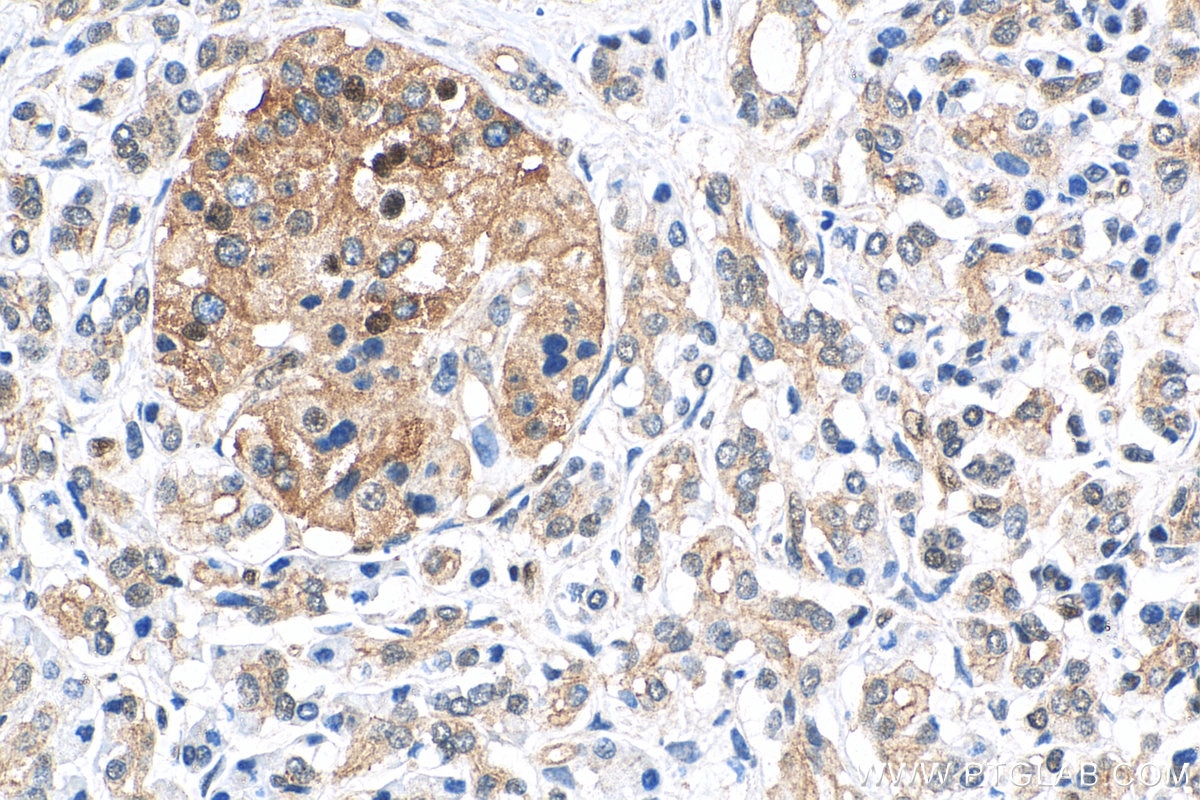
| Positive IHC detected in | human pancreas cancer tissue Note: suggested antigen retrieval with TE buffer pH 9.0; (*) Alternatively, antigen retrieval may be performed with citrate buffer pH 6.0 |
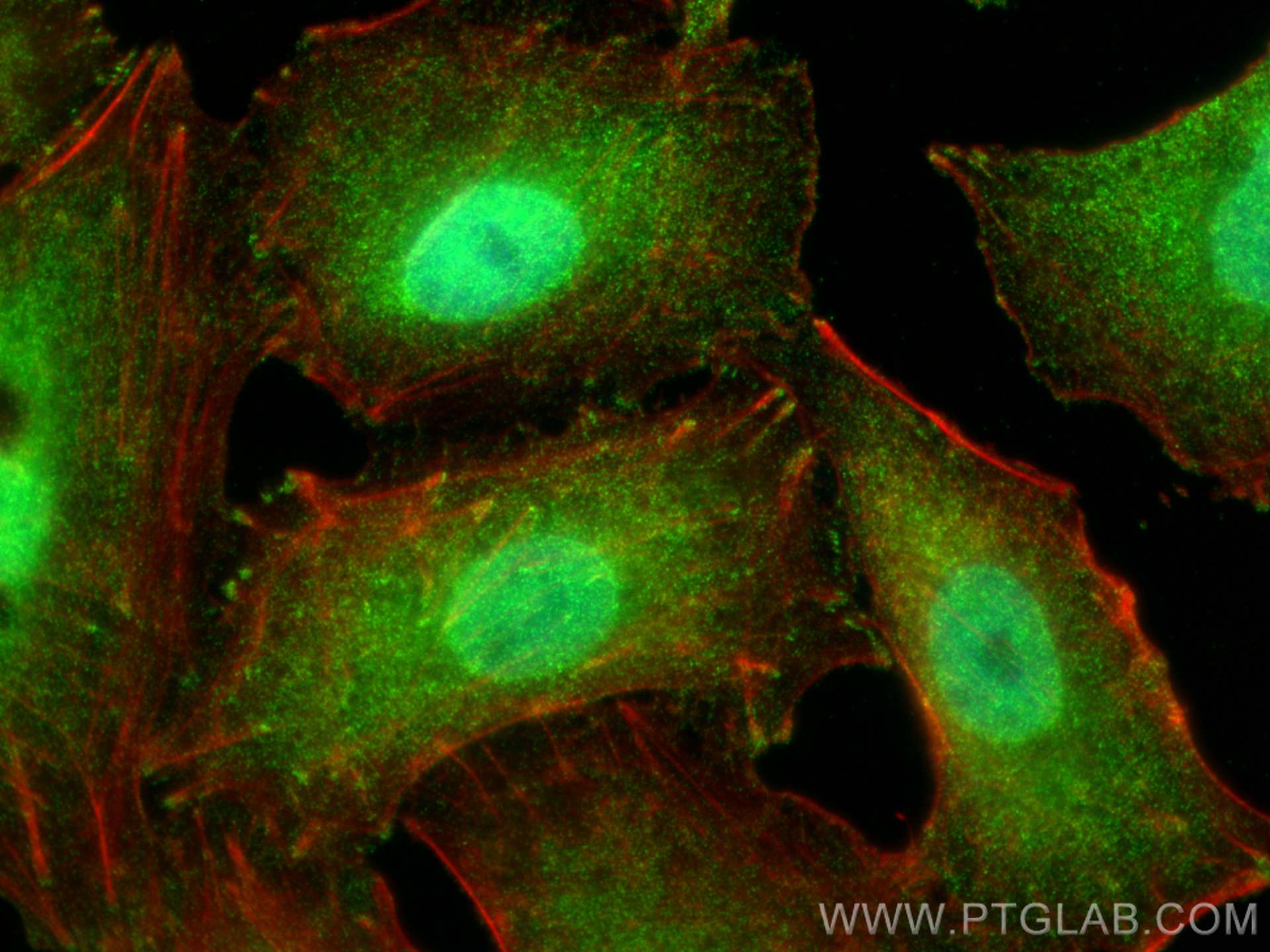
| Positive IF/ICC detected in | A549 cells |
Recommended dilution
| Application | Dilution |
|---|---|
| Western Blot (WB) | WB : 1:5000-1:50000 |
| Immunohistochemistry (IHC) | IHC : 1:500-1:2000 |
| Immunofluorescence (IF)/ICC | IF/ICC : 1:400-1:1600 |
| It is recommended that this reagent should be titrated in each testing system to obtain optimal results. | |
| Sample-dependent, Check data in validation data gallery. | |
Product Information
67057-1-Ig targets Ataxin-3/ATXN3 in WB, IHC, IF/ICC, ELISA applications and shows reactivity with human, mouse, pig samples.
| Tested Reactivity | human, mouse, pig |
| Cited Reactivity | human, mouse |
| Host / Isotype | Mouse / IgG2a |
| Class | Monoclonal |
| Type | Antibody |
| Immunogen |
CatNo: Ag6627 Product name: Recombinant human Ataxin-3/ATXN3 protein Source: e coli.-derived, PET28a Tag: 6*His Domain: 1-370 aa of BC033711 Sequence: MESIFHEKQEGSLCAQHCLNNLLQGEYFSPVELSSIAHQLDEEERMRMAEGGVTSEDYRTFLQQPSGNMDDSGFFSIQVISNALKVWGLELILFNSPEYQRLRIDPINERSFICNYKEHWFTVRKLGKQWFNLNSLLTGPELISDTYLALFLAQLQQEGYSIFVVKGDLPDCEADQLLQMIRVQQMHRPKLIGEELAQLKEQRVHKTDLERVLEANDGSGMLDEDEEDLQRALALSRQEIDMEDEEADLRRAIQLSMQGSSRNISQDMTQTSGTNLTSEELRKRREAYFEKQQQKQQQQQQQQQQQQQQQQQQQGDLSGQSSHPCERPATSSGALGSDLGDAMSEEDMLQAAVTMSLETVRNDLKTEGKK Predict reactive species |
| Full Name | ataxin 3 |
| Calculated Molecular Weight | 370 aa, 43 kDa |
| Observed Molecular Weight | 41-45 kDa |
| GenBank Accession Number | BC033711 |
| Gene Symbol | ATXN3 |
| Gene ID (NCBI) | 4287 |
| RRID | AB_2882368 |
| Conjugate | Unconjugated |
| Form | Liquid |
| Purification Method | Protein A purification |
| UNIPROT ID | P54252 |
| Storage Buffer | PBS with 0.02% sodium azide and 50% glycerol, pH 7.3. |
| Storage Conditions | Store at -20°C. Stable for one year after shipment. Aliquoting is unnecessary for -20oC storage. 20ul sizes contain 0.1% BSA. |
Background Information
ATXN3, which has deubiquitinase activity and act as a component of the ubiquitin proteasome system, plays a role in transcriptional regulation and neuroprotection. ATXN3 interacts with RAD23, HHR23A and HHR23B, involves in the pathology of MJD. ATXN3 is a mixed-linkage, chain-editing enzyme and that the UIM region of ATXN3 regulates its substrate specificity. Contains an N-terminal deubiquitinating domain, called the Josephin domain, followed by 2 ubiquitin-interacting motifs (UIMs) and a polyQ tract near the C terminus. ATXN3 can be phosphorylated in a protein casein kinase-2-dependent manner, thus the MW would be larger than the predicted one.
Protocols
| Product Specific Protocols | |
|---|---|
| IF protocol for Ataxin-3/ATXN3 antibody 67057-1-Ig | Download protocol |
| IHC protocol for Ataxin-3/ATXN3 antibody 67057-1-Ig | Download protocol |
| WB protocol for Ataxin-3/ATXN3 antibody 67057-1-Ig | Download protocol |
| Standard Protocols | |
|---|---|
| Click here to view our Standard Protocols |
Publications
What published studies show
The ATXN3 antibody (Cat# 67057-1-Ig) has 3 total citations. These appear in Journal of Clinical Investigation, ASN Neuro, and Journal of Biological Chemistry. Associated research fields include tumor immunology and immune evasion, neurodegeneration and microglial inflammation, and cancer biology (colon adenocarcinoma). Applications span IHC, WB, and IF in both mouse and human samples.
| Species | Application | Title |
|---|---|---|
J Clin Invest CRISPR screening identifies the deubiquitylase ATXN3 as a PD-L1-positive regulator for tumor immune evasion | ||
ASN Neuro Polyglutamine-Expanded Ataxin-3 Accelerates CFTR Degradation Through K63-Linked Ubiquitination to Exacerbate Microglial Inflammation.
| ||
J Biol Chem ATXN3 functions as a tumor suppresser through potentiating Galectin-9-mediated apoptosis in human colon adenocarcinoma |












