

Tested Applications
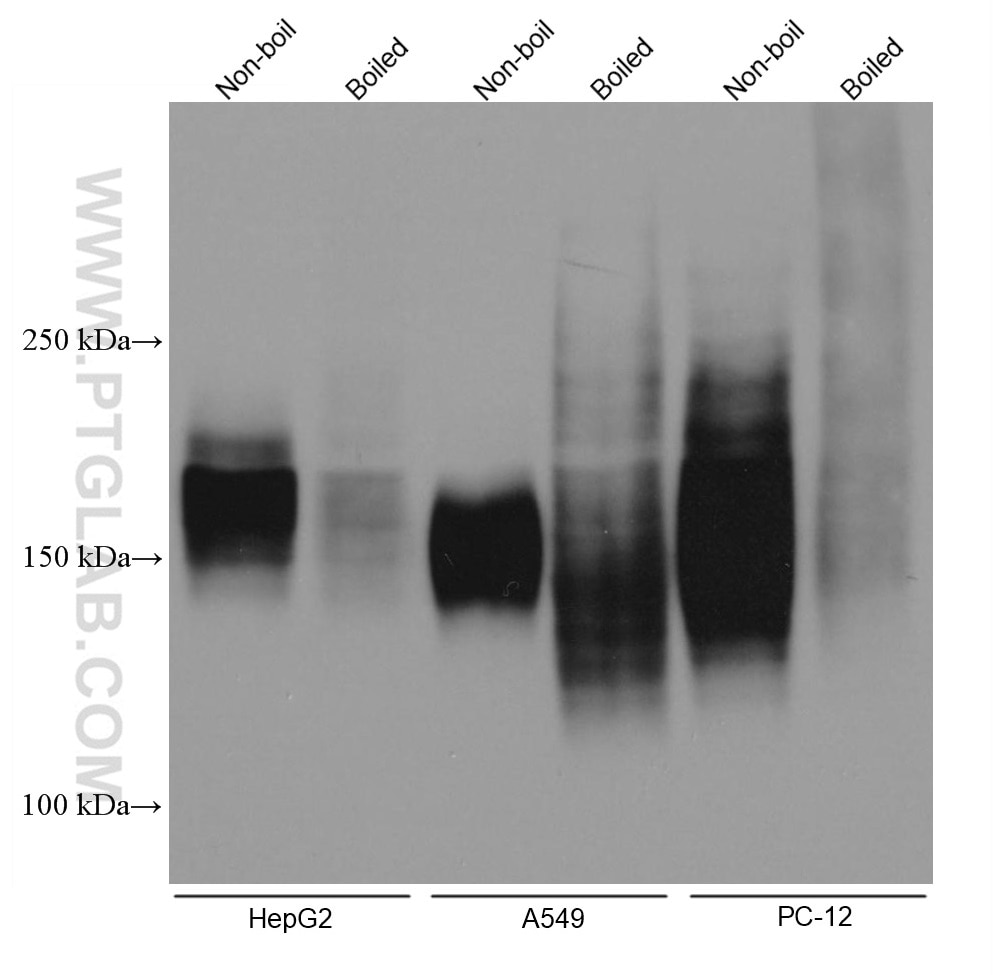
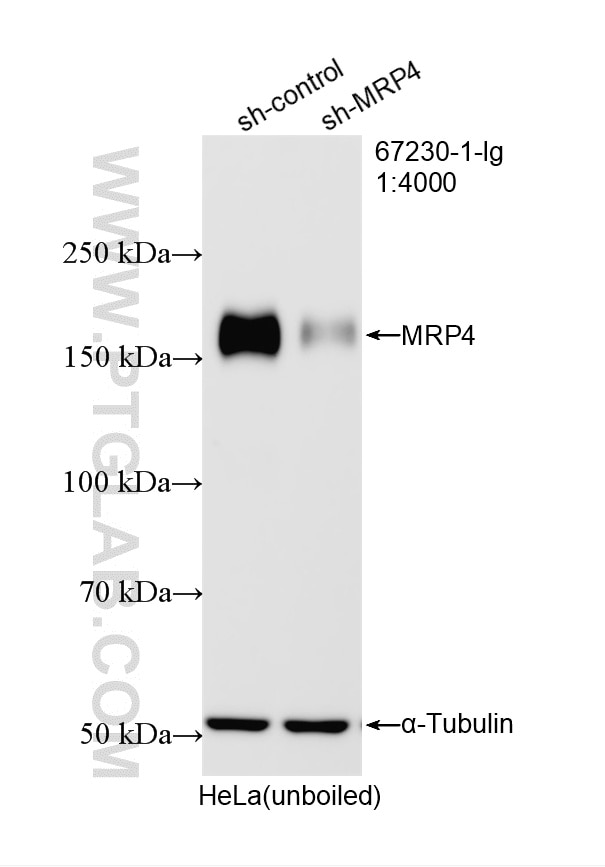
| Positive WB detected in | unboiled HepG2 cells, unboiled HeLa cells, unboiled A549 cells, unboiled PC-12 cells |
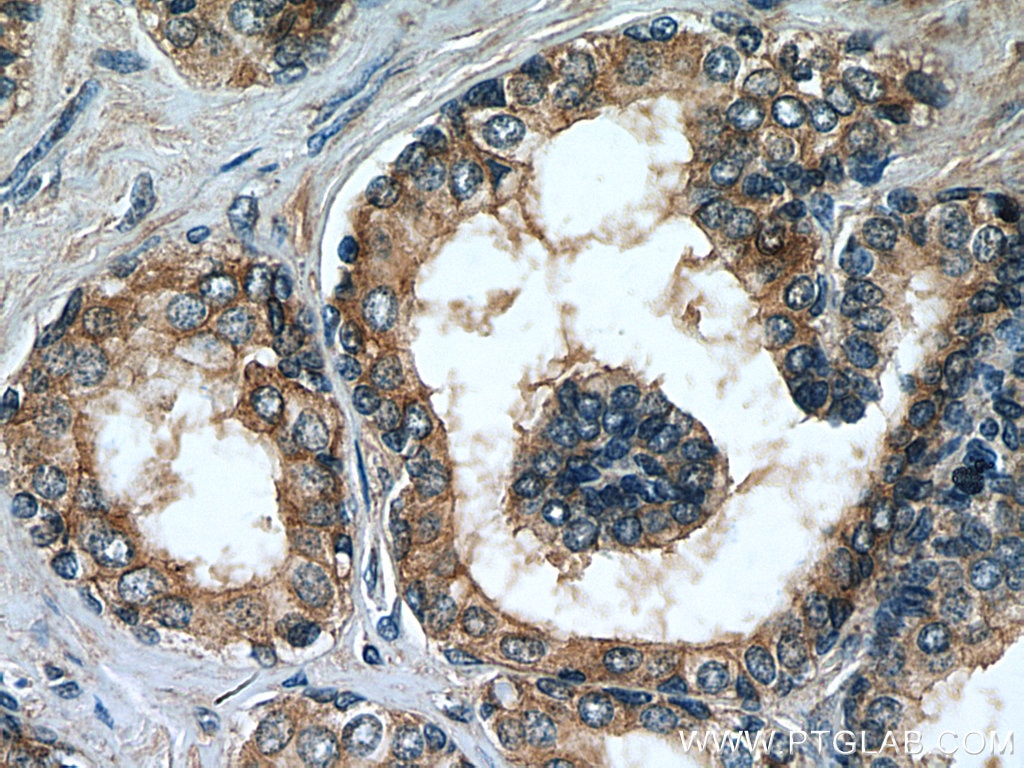
| Positive IHC detected in | human prostate hyperplasia tissue Note: suggested antigen retrieval with TE buffer pH 9.0; (*) Alternatively, antigen retrieval may be performed with citrate buffer pH 6.0 |
Recommended dilution
| Application | Dilution |
|---|---|
| Western Blot (WB) | WB : 1:5000-1:50000 |
| Immunohistochemistry (IHC) | IHC : 1:500-1:2000 |
| It is recommended that this reagent should be titrated in each testing system to obtain optimal results. | |
| Sample-dependent, Check data in validation data gallery. | |
Product Information
67230-1-Ig targets MRP4 in WB, IHC, ELISA applications and shows reactivity with human samples.
| Tested Reactivity | human |
| Cited Reactivity | human |
| Host / Isotype | Mouse / IgG1 |
| Class | Monoclonal |
| Type | Antibody |
| Immunogen |
CatNo: Ag10171 Product name: Recombinant human ABCC4 protein Source: e coli.-derived, PET28a Tag: 6*His Domain: 347-707 aa of BC041560 Sequence: TASRVFVAVTLYGAVRLTVTLFFPSAIERVSEAIVSIRRIQTFLLLDEISQRNRQLPSDGKKMVHVQDFTAFWDKASETPTLQGLSFTVRPGELLAVVGPVGAGKSSLLSAVLGELAPSHGLVSVHGRIAYVSQQPWVFSGTLRSNILFGKKYEKERYEKVIKACALKKDLQLLEDGDLTVIGDRGTTLSGGQKARVNLARAVYQDADIYLLDDPLSAVDAEVSRHLFELCICQILHEKITILVTHQLQYLKAASQILILKDGKMVQKGTYTEFLKSGIDFGSLLKKDNEESEQPPVPGTPTLRNRTFSESSVWSQQSSRPSLKDGALESQDTENVPVTLSEENRSEGKVGFQAYKNYFRA Predict reactive species |
| Full Name | ATP-binding cassette, sub-family C (CFTR/MRP), member 4 |
| Calculated Molecular Weight | 859 aa, 97 kDa |
| Observed Molecular Weight | 160-180 kDa |
| GenBank Accession Number | BC041560 |
| Gene Symbol | MRP4 |
| Gene ID (NCBI) | 10257 |
| RRID | AB_2882517 |
| Conjugate | Unconjugated |
| Form | Liquid |
| Purification Method | Protein G purification |
| UNIPROT ID | O15439 |
| Storage Buffer | PBS with 0.02% sodium azide and 50% glycerol, pH 7.3. |
| Storage Conditions | Store at -20°C. Stable for one year after shipment. Aliquoting is unnecessary for -20oC storage. 20ul sizes contain 0.1% BSA. |
Background Information
MRP4 (also known as ABCC4), belonging to ATP-binding cassette (ABC) transporter family, is a multi-transmembrane protein that is able to transport a range of organic anionic compounds (both endogenous and xenobiotic) out of the cell. It can exclude various drugs thus is considered as potential target to prevent drug-resistance.
Protocols
| Product Specific Protocols | |
|---|---|
| IHC protocol for MRP4 antibody 67230-1-Ig | Download protocol |
| WB protocol for MRP4 antibody 67230-1-Ig | Download protocol |
| Standard Protocols | |
|---|---|
| Click here to view our Standard Protocols |
Publications
What published studies show
The MRP4 Monoclonal antibody (1B10B4), catalog number 67230-1-Ig, has a total of 3 citations. These appear in Nature Communications, Journal of Cellular and Molecular Medicine, and Frontiers in Genetics. The associated research fields include rheumatoid arthritis (meniscus destruction), chronic myeloid leukaemia (drug resistance mechanisms), and hepatocellular carcinoma (ABC transporter gene significance). Applications cited are IHC and WB in human samples.
| Species | Application | Title |
|---|---|---|
Nat Commun CD142-positive synovial fibroblasts drive meniscus destruction in rheumatoid arthritis | ||
J Cell Mol Med Overcoming flumatinib resistance in chronic myeloid leukaemia: Insights into cellular mechanisms and ivermectin's therapeutic potential | ||
Front Genet Clinical Significance and Potential Mechanisms of ATP Binding Cassette Subfamily C Genes in Hepatocellular Carcinoma. |




