


Tested Applications
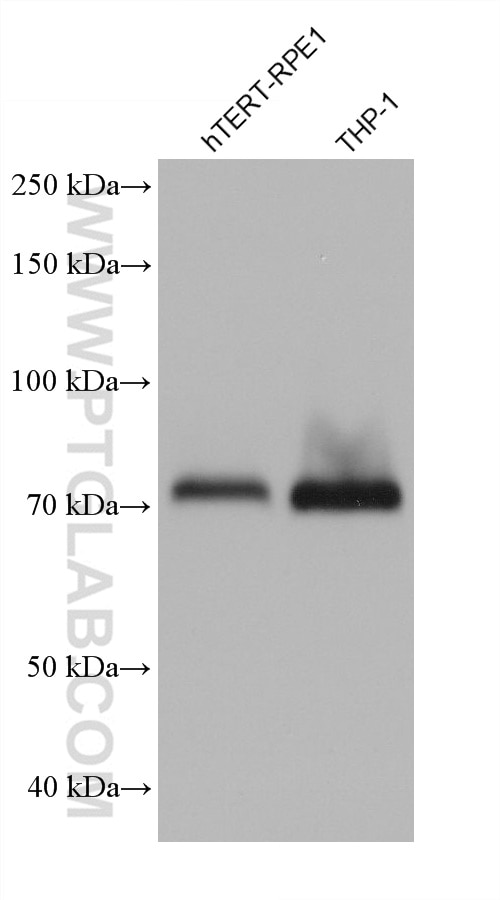
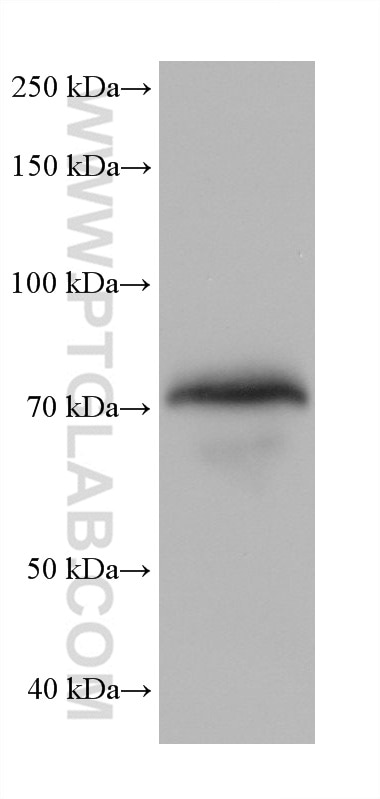
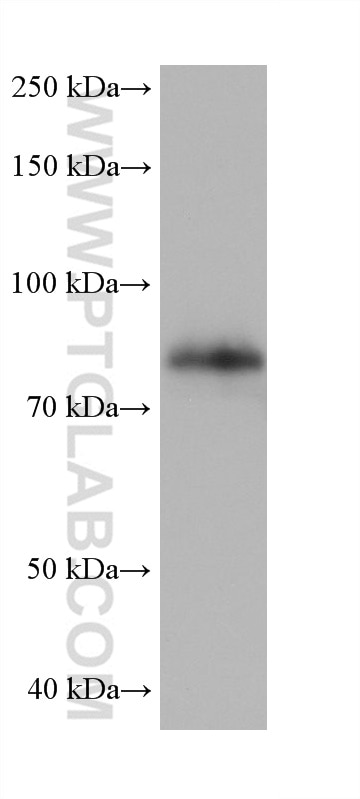
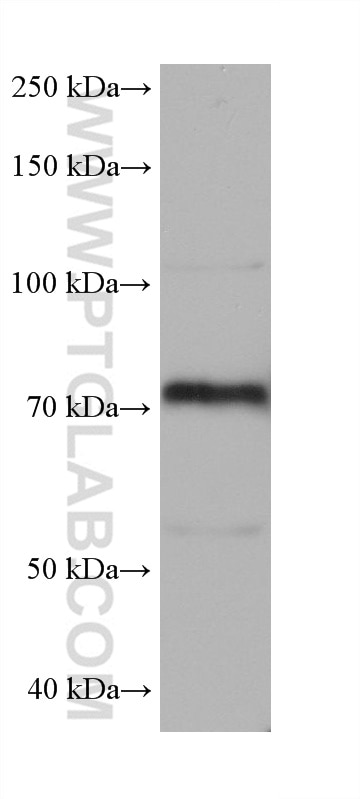
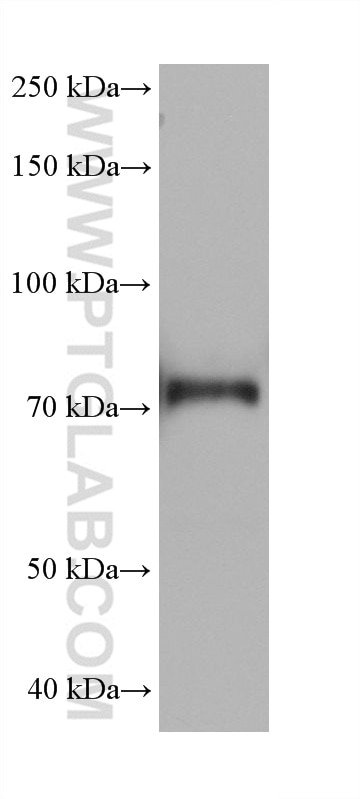
| Positive WB detected in | hTERT-RPE1 cells, A431 cells, K-562 cells, human placenta tissue, human plasma, THP-1 cells |
| Positive IHC detected in | human skin cancer tissue Note: suggested antigen retrieval with TE buffer pH 9.0; (*) Alternatively, antigen retrieval may be performed with citrate buffer pH 6.0 |
Recommended dilution
| Application | Dilution |
|---|---|
| Western Blot (WB) | WB : 1:5000-1:50000 |
| Immunohistochemistry (IHC) | IHC : 1:2000-1:8000 |
| It is recommended that this reagent should be titrated in each testing system to obtain optimal results. | |
| Sample-dependent, Check data in validation data gallery. | |
Product Information
68472-1-Ig targets ECM1 in WB, IHC, ELISA applications and shows reactivity with human samples.
| Tested Reactivity | human |
| Host / Isotype | Mouse / IgG1 |
| Class | Monoclonal |
| Type | Antibody |
| Immunogen |
CatNo: Eg0533 Product name: Recombinant Human ECM1 protein (His Tag) Source: mammalian cells-derived, pHZ-KIsec-C-6*HIS Tag: C-6*HIS Domain: 20-540 aa of BC023505 Sequence: ASEGGFTATGQRQLRPEHFQEVGYAAPPSPPLSRSLPMDHPDSSQHGPPFEGQSQVQPPPSQEATPLQQEKLLPAQLPAEKEVGPPLPQEAVPLQKELPSLQHPNEQKEGMPAPFGDQSHPEPESWNAAQHCQQDRSQGGWGHRLDGFPPGRPSPDNLNQICLPNRQHVVYGPWNLPQSSYSHLTRQGETLNFLEIGYSRCCHCRSHTNRLECAKLVWEEAMSRFCEAEFSVKTRPHWCCTRQGEARFSCFQEEAPQPHYQLRACPSHQPDISSGLELPFPPGVPTLDNIKNICHLRRFRSVPRNLPATDPLQRELLALIQLEREFQRCCRQGNNHTCTWKAWEDTLDKYCDREYAVKTHHHLCCRHPPSPTRDECFARRAPYPNYDRDILTIDISRVTPNLMGHLCGNQRVLTKHKHIPGLIHNMTARCCDLPFPEQACCAEEEKLTFINDLCGPRRNIWRDPALCCYLSPGDEQVNCFNINYLRNVALVSGDTENAKGQGEQGSTGGTNISSTSEPKEE Predict reactive species |
| Full Name | extracellular matrix protein 1 |
| Calculated Molecular Weight | 540 aa, 61 kDa |
| Observed Molecular Weight | 60-80 kDa |
| GenBank Accession Number | BC023505 |
| Gene Symbol | ECM1 |
| Gene ID (NCBI) | 1893 |
| RRID | AB_3085183 |
| Conjugate | Unconjugated |
| Form | Liquid |
| Purification Method | Protein G purification |
| UNIPROT ID | Q16610 |
| Storage Buffer | PBS with 0.02% sodium azide and 50% glycerol, pH 7.3. |
| Storage Conditions | Store at -20°C. Stable for one year after shipment. Aliquoting is unnecessary for -20oC storage. 20ul sizes contain 0.1% BSA. |
Background Information
ECM1 (extracellular matrix protein 1), also known as URBWD. It is located in secreted, extracellular space, and extracellular matrix, which is mainly expressed in esophagus and gall bladder. The gene encodes a soluble protein that is involved in endochondral bone formation, angiogenesis, and tumor biology. It also interacts with a variety of extracellular and structural proteins, contributing to the maintenance of skin integrity and homeostasis. Mutations in this gene are associated with lipoid proteinosis disorder (also known as hyalinosis cutis et mucosae or Urbach-Wiethe disease) that is characterized by generalized thickening of skin, mucosae and certain viscera. The calculated molecular weight of ECM1 is 60 kDa, and this antibody can recognize the 63 kDa isoform of target, moreover, this protein may have glycosylation modification.
Protocols
| Product Specific Protocols | |
|---|---|
| IHC protocol for ECM1 antibody 68472-1-Ig | Download protocol |
| WB protocol for ECM1 antibody 68472-1-Ig | Download protocol |
| Standard Protocols | |
|---|---|
| Click here to view our Standard Protocols |
Publications
What published studies show
The ECM1 Monoclonal antibody (2D1A3), catalog number 68472-1-Ig, has a total of 1 citation. It appears in the Journal of Proteome Research (2025), in a study performing differential proteomic analysis on patient sera with Neuromyelitis Spectrum Disorders (NMOSD) and MOG Antibody-Associated Disease (MOGAD). The research field is neuroimmunology/proteomics, investigating shared and distinct disease mechanisms in demyelinating disorders.
| Species | Application | Title |
|---|---|---|
J Proteome Res A Differential Proteomic Analysis on Patient Sera with Neuromyelitis Spectrum Disorders (NMOSD) and Myelin Oligodendrocyte Glycoprotein Antibody-Associated Disease (MOGAD) Suggested Shared and Distinct Disease Mechanisms |







