

Tested Applications
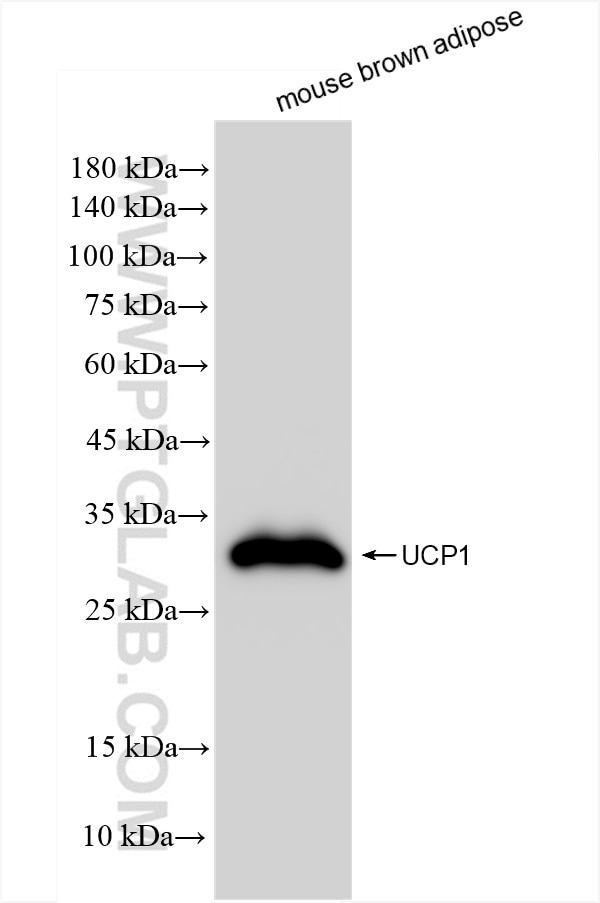
| Positive WB detected in | mouse brown adipose tissue |
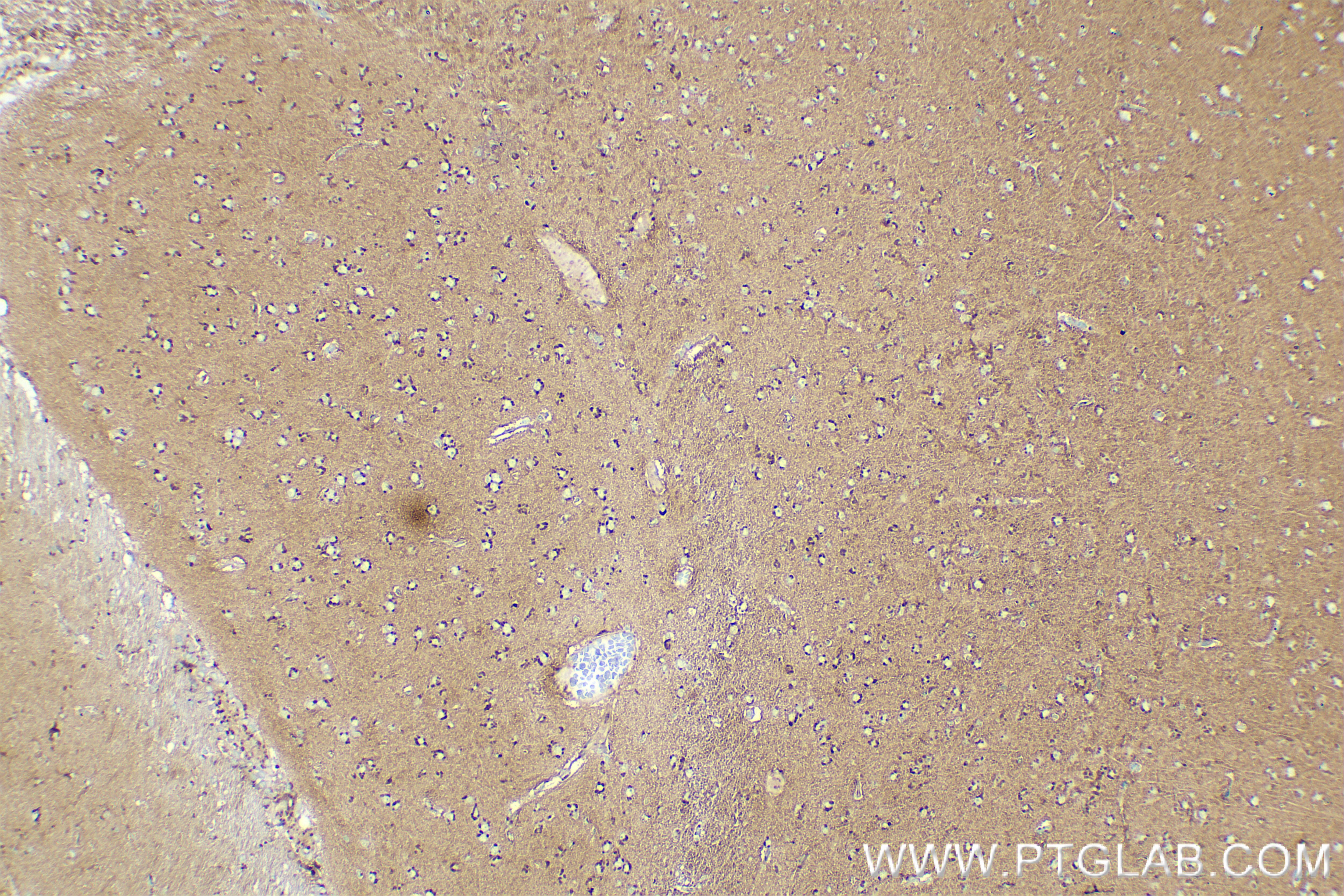
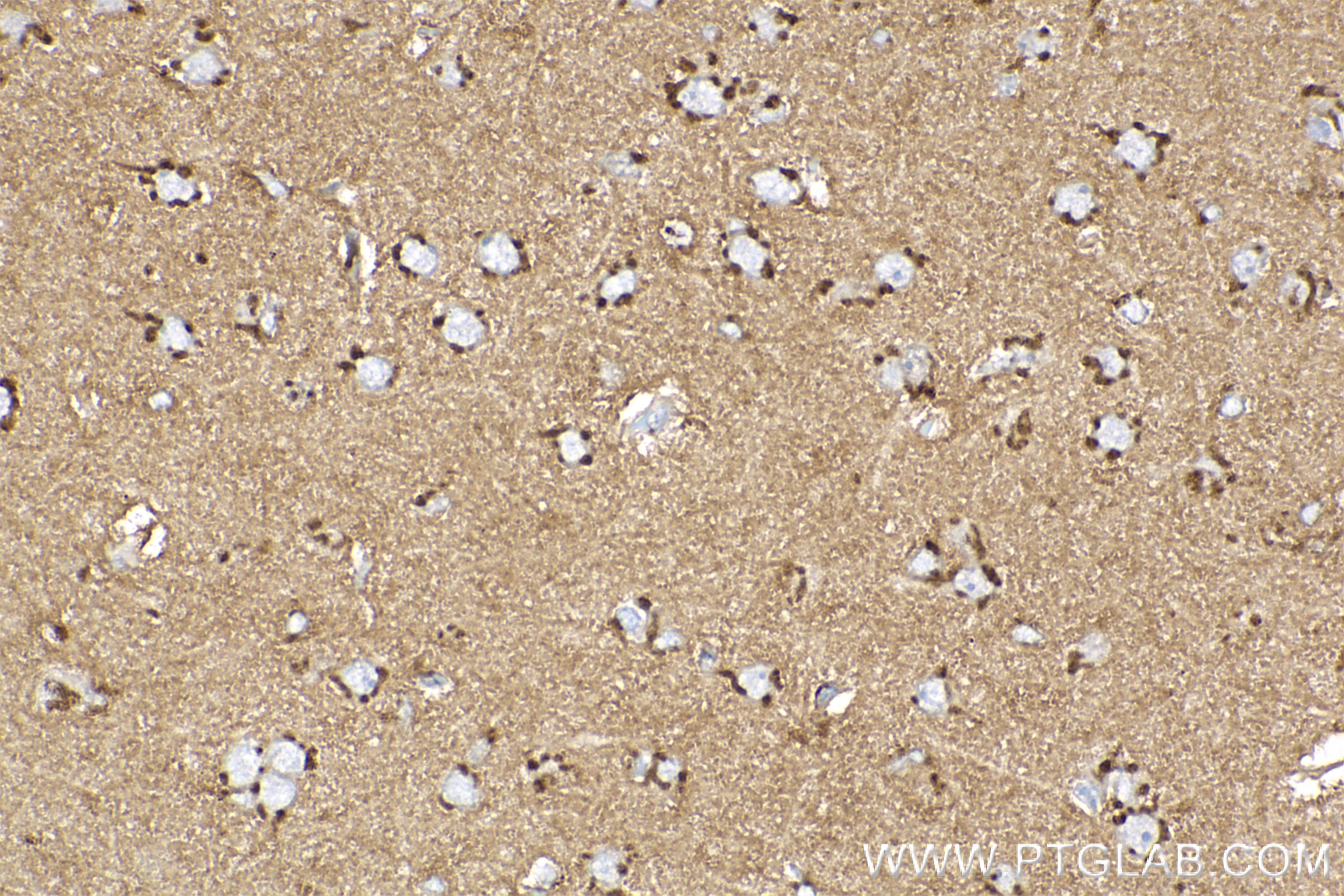
| Positive IHC detected in | rat brain tissue Note: suggested antigen retrieval with TE buffer pH 9.0; (*) Alternatively, antigen retrieval may be performed with citrate buffer pH 6.0 |
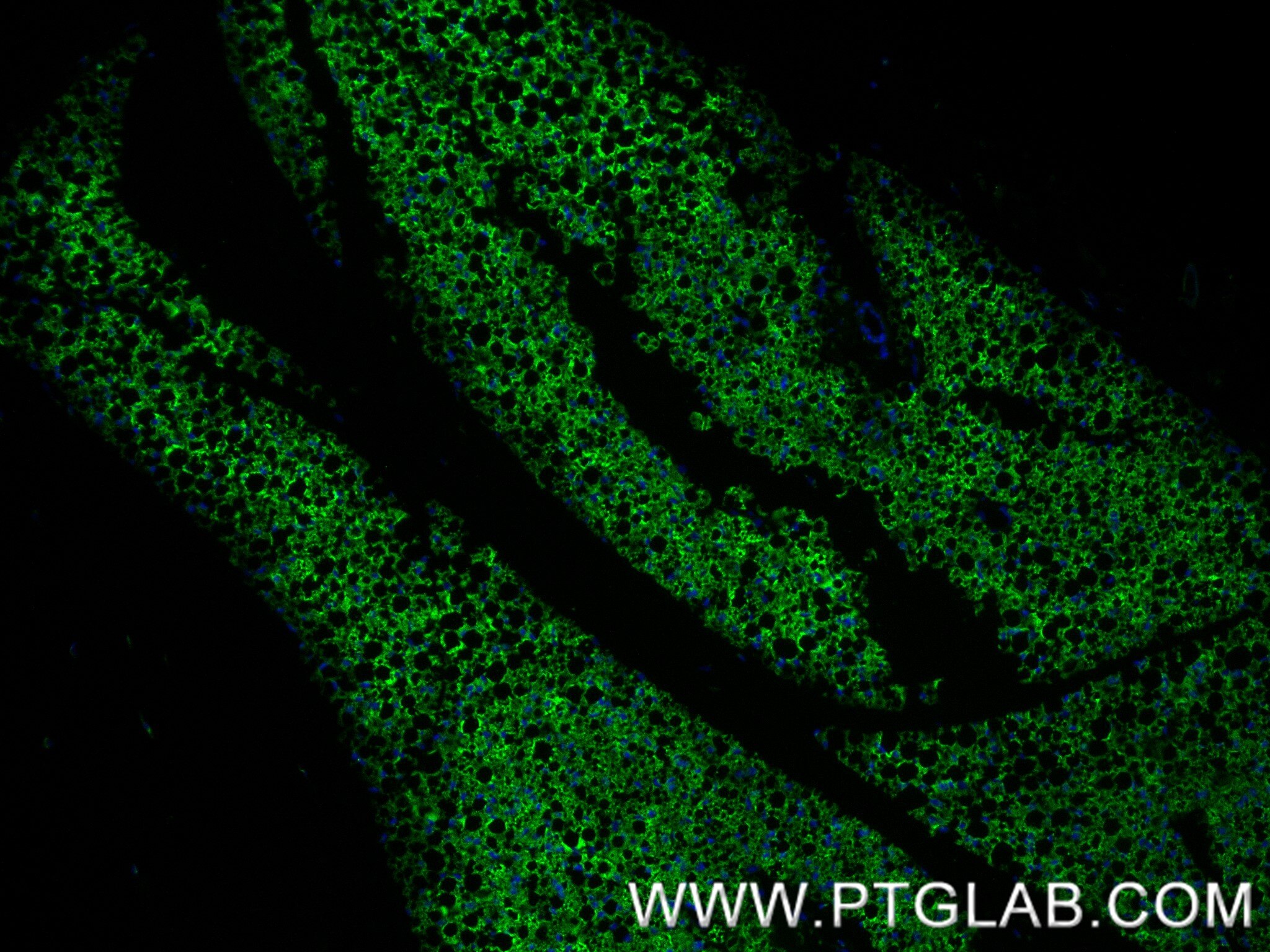
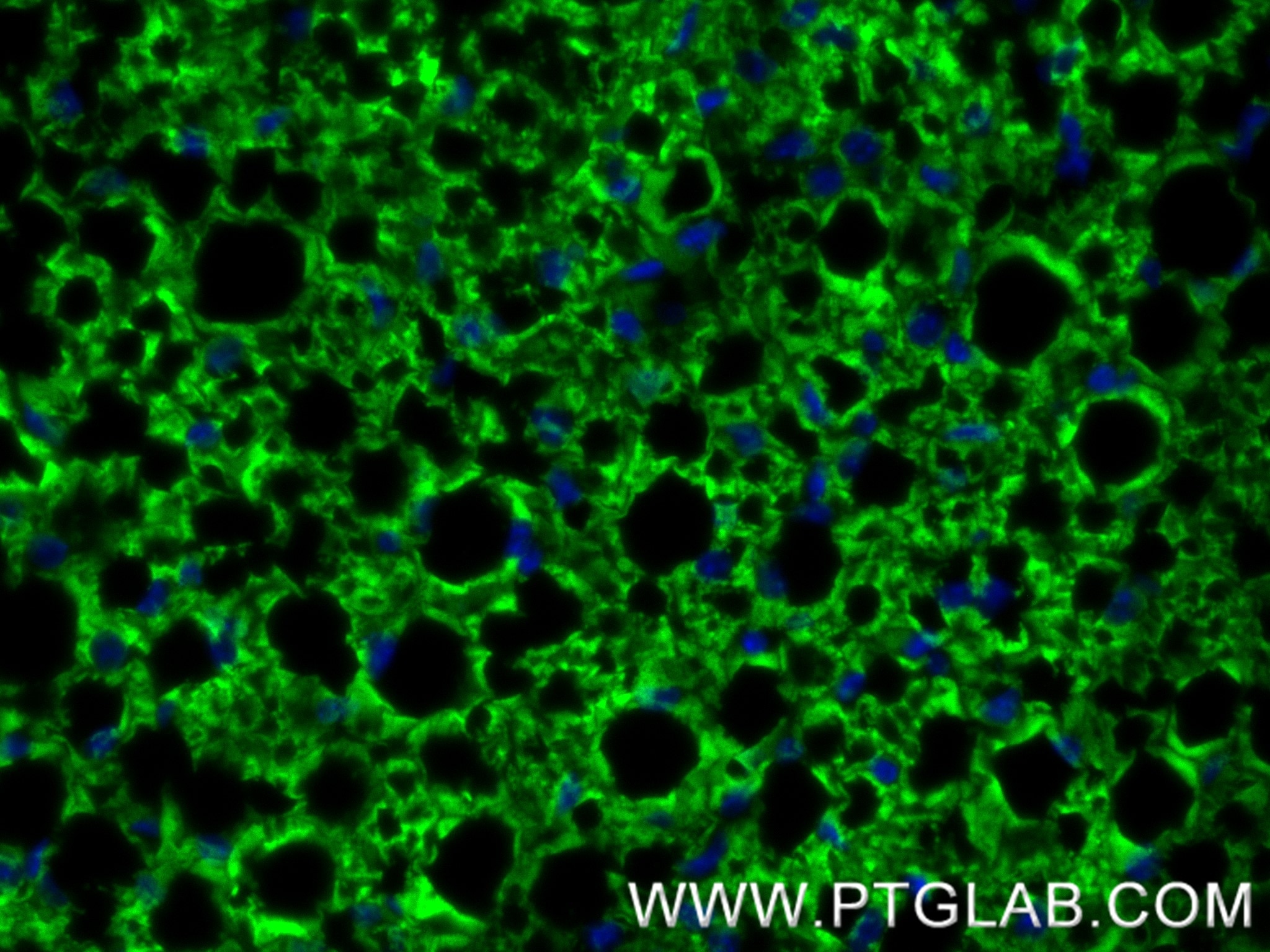
| Positive IF-P detected in | mouse brown adipose tissue |
Recommended dilution
| Application | Dilution |
|---|---|
| Western Blot (WB) | WB : 1:5000-1:50000 |
| Immunohistochemistry (IHC) | IHC : 1:200-1:800 |
| Immunofluorescence (IF)-P | IF-P : 1:200-1:800 |
| It is recommended that this reagent should be titrated in each testing system to obtain optimal results. | |
| Sample-dependent, Check data in validation data gallery. | |
Product Information
83870-1-RR targets UCP1 in WB, IHC, IF-P, ELISA applications and shows reactivity with human, mouse samples.
| Tested Reactivity | human, mouse |
| Cited Reactivity | human, mouse |
| Host / Isotype | Rabbit / IgG |
| Class | Recombinant |
| Type | Antibody |
| Immunogen |
CatNo: Ag20388 Product name: Recombinant human UCP1 protein Source: e coli.-derived, PET28a Tag: 6*His Domain: 1-307 aa of BC098168 Sequence: MGGLTASDVHPTLGVQLFSAGIAACLADVITFPLDTAKVRLQVQGECPTSSVIRYKGVLGTITAVVKTEGRMKLYSGLPAGLQRQISSASLRIGLYDTVQEFLTAGKETAPSLGSKILAGLTTGGVAVFIGQPTEVVKVRLQAQSHLHGIKPRYTGTYNAYRIIATTEGLTGLWKGTTPNLMRSVIINCTELVTYDLMKEAFVKNNILADDVPCHLVSALIAGFCATAMSSPVDVVKTRFINSPPGQYKSVPNCAMKVFTNEGPTAFFKGLVPSFLRLGSWNVIMFVCFEQLKRELSKSRQTMDCAT Predict reactive species |
| Full Name | uncoupling protein 1 (mitochondrial, proton carrier) |
| Calculated Molecular Weight | 307 aa, 33 kDa |
| Observed Molecular Weight | 33 kDa |
| GenBank Accession Number | BC098168 |
| Gene Symbol | UCP1 |
| Gene ID (NCBI) | 7350 |
| RRID | AB_3671456 |
| Conjugate | Unconjugated |
| Form | Liquid |
| Purification Method | Protein A purification |
| UNIPROT ID | P25874 |
| Storage Buffer | PBS with 0.02% sodium azide and 50% glycerol, pH 7.3. |
| Storage Conditions | Store at -20°C. Stable for one year after shipment. Aliquoting is unnecessary for -20oC storage. 20ul sizes contain 0.1% BSA. |
Background Information
UCP-1 (Mitochondrial uncoupling protein 1), is a mitochondrial transporter protein that creates proton leaks across the inner mitochondrial membrane, thus uncoupling oxidative phosphorylation from ATP synthesis. It has been identified a key molecule for metabolic thermogenesis to avoid an excess of fat accumulation. UCP-1 expression is usually restricted to brown adipose when induced by cold exposure and thyroid hormone.
Protocols
| Product Specific Protocols | |
|---|---|
| IF protocol for UCP1 antibody 83870-1-RR | Download protocol |
| IHC protocol for UCP1 antibody 83870-1-RR | Download protocol |
| WB protocol for UCP1 antibody 83870-1-RR | Download protocol |
| Standard Protocols | |
|---|---|
| Click here to view our Standard Protocols |
Publications
What published studies show
The UCP1 Recombinant monoclonal antibody (240782F3), catalog number 83870-1-RR, has 6 citations. These appear in Advanced Healthcare Materials, Food Research International, Clinical and Translational Medicine, Food Science & Nutrition, International Journal of Antimicrobial Agents, and Neoplasia. The research spans obesity, adipose tissue browning, thermogenesis, lipolysis, sepsis-associated metabolic disorders, gut mycobiome modulation, and bladder cancer progression.
| Species | Application | Title |
|---|---|---|
Adv Healthc Mater Near-Infrared-II Photothermal Agents Targeting Lipid Droplets to Ameliorate Obesity Through Induction of Adipose Tissue Browning. | ||
Food Res Int Structural characterization of CYP-A from Chinese yam and its modulation of adipocyte lipolysis via the cAMP/PKA/HSL axis. | ||
Clin Transl Med DNA-mediated UCP1 overexpression in adipose tissue: A promising anti-obesity gene therapy. | ||
Int J Antimicrob Agents Amphotericin B ameliorates obesity through modulating gut mycobiome dysbiosis and brown adipose tissue thermogenesis in high-fat diet-induced mice. | ||
Food Sci Nutr Octanoic Acid-Rich Enteral Nutrition Alleviates Sepsis-Associated Metabolic Disorders by Suppressing White Adipose Tissue Browning in Mice. | ||
Reviews
What customers say
The single review for this antibody is highly positive, with a 5-star rating. The reviewer used it for immunohistochemistry on mouse brown adipose tissue sections at a 1:500 dilution (IHC-F) and reported that the antibody works great and is recommended. Overall, the feedback indicates strong performance and satisfaction with the product for IHC applications.
The reviews below have been submitted by verified Proteintech customers who received an incentive for providing their feedback.
Daniel (Verified Customer) (10-29-2025) | The antibody works great, I can recommend it
|







