
Recombinant Mouse TNFR1/CD120a protein (His Tag)
Species
Mouse
Purity
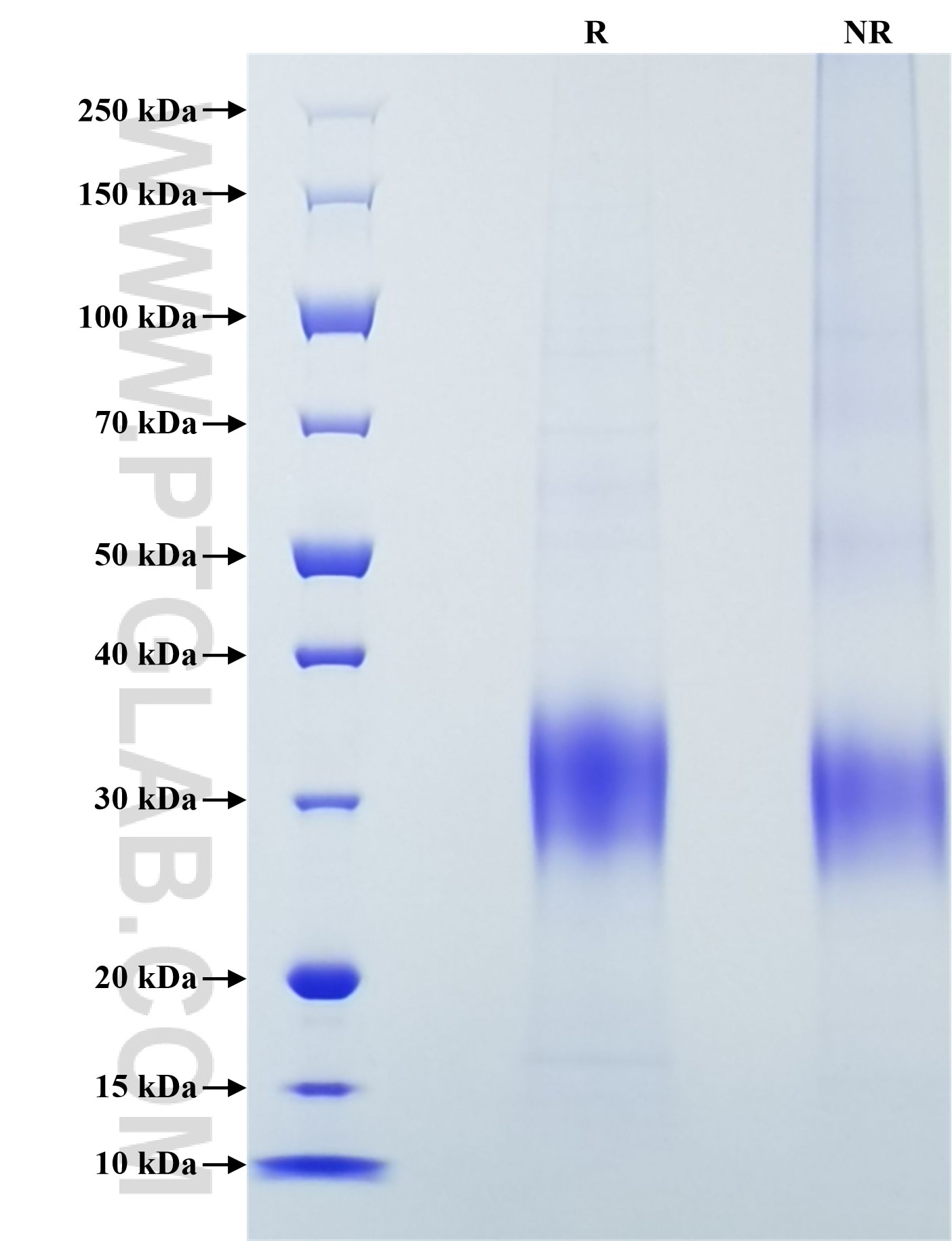
>90 %, SDS-PAGE
Tag
His Tag
Activity
not tested
Cat no : Eg0733
Validation Data Gallery
Product Information
| Purity | >90 %, SDS-PAGE |
| Endotoxin | <0.1 EU/μg protein, LAL method |
| Activity |
Not tested |
| Expression | HEK293-derived Mouse TNFR1 protein Leu30-Ala212 (Accession# P25118) with a His tag at the C-terminus. |
| GeneID | 21937 |
| Accession | P25118 |
| PredictedSize | 20.1 kDa |
| SDS-PAGE | 27-37 kDa, reducing (R) conditions |
| Formulation | Lyophilized from 0.22 μm filtered solution in PBS, pH 7.4. Normally 5% trehalose and 5% mannitol are added as protectants before lyophilization. |
| Reconstitution | Briefly centrifuge the tube before opening. Reconstitute at 0.1-0.5 mg/mL in sterile water. |
| Storage Conditions |
It is recommended that the protein be aliquoted for optimal storage. Avoid repeated freeze-thaw cycles.
|
| Shipping | The product is shipped at ambient temperature. Upon receipt, store it immediately at the recommended temperature. |
Background
Tumor necrosis factor (TNF) is a multifunctional cytokine that plays a key role in regulating inflammation, immune functions, host defense, and apoptosis. TNF signals through two distinct cell surface receptors, TNFR1 (TNFRSF1A, CD120a) and TNFR2 (TNFRSF1B, CD120b). TNFR1, which contains a death domain (DD) within its intracytoplasmic region, is thought to be the key receptor for TNF signaling. This receptor can be released to the extracellular space by two mechanisms, ectodomain shedding and constitutive release of full-length 55 kDa TNFR1. Soluble TNFR1 (sTNFR1) could function as TNF-binding protein, inhibiting TNF bioactivity.
References:
1. Islam A, et al. (2006). J Biol Chem. 281(10):6860-73.
2. Aggarwal BB, et al. (2012). Blood. 119(3):651-65.
3. Aderka D , et al. (2012). J Exp Med. 175(2):323-9.