
Recombinant Human TGFBI/BIGH3 protein (His Tag)
Species
Human
Purity
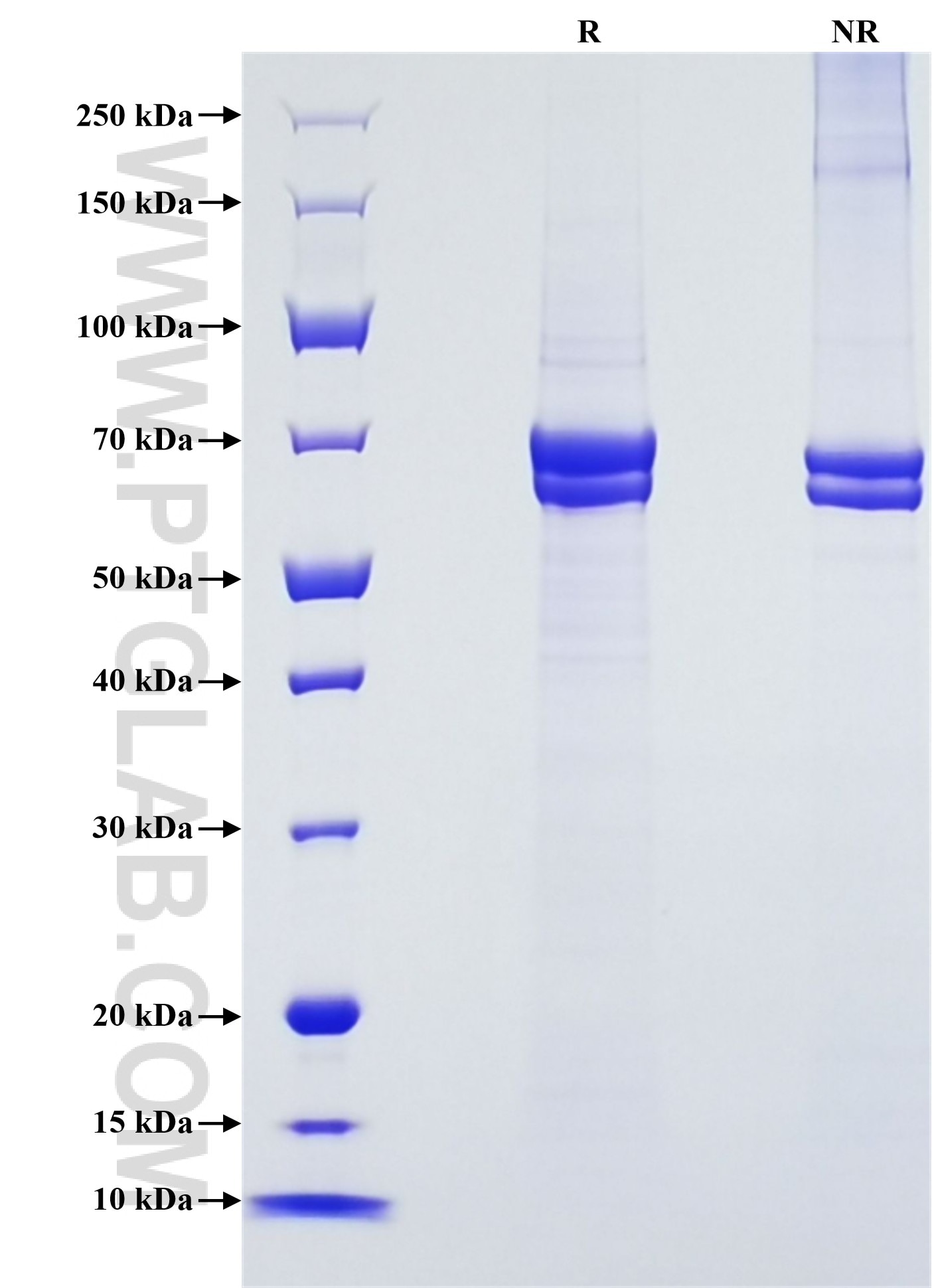
>90 %, SDS-PAGE
Tag
His Tag
Activity
not tested
Cat no : Eg1233
Validation Data Gallery
Product Information
| Purity | >90 %, SDS-PAGE |
| Endotoxin | <0.1 EU/μg protein, LAL method |
| Activity |
Not tested |
| Expression | HEK293-derived Human TGFBI protein Gly24-His683 (Accession# Q15582) with a His tag at the C-terminus. |
| GeneID | 7045 |
| Accession | Q15582 |
| PredictedSize | 73.2 kDa |
| SDS-PAGE | 60-75 kDa, reducing (R) conditions |
| Formulation | Lyophilized from 0.22 μm filtered solution in PBS, pH 7.4. Normally 5% trehalose and 5% mannitol are added as protectants before lyophilization. |
| Reconstitution | Briefly centrifuge the tube before opening. Reconstitute at 0.1-0.5 mg/mL in sterile water. |
| Storage Conditions |
It is recommended that the protein be aliquoted for optimal storage. Avoid repeated freeze-thaw cycles.
|
| Shipping | The product is shipped at ambient temperature. Upon receipt, store it immediately at the recommended temperature. |
Background
TGFBI, also named as BIGH3, Kerato-epithelin and RGD-CAP, binds to type I, II, and IV collagens. TGFBI is an adhesion protein which may play an important role in cell-collagen interactions. In cartilage, it may be involved in endochondral bone formation. TGFBI is an extracellular matrix adaptor protein, it has been reported to be differentially expressed in transformed tissues. TGFBI is a predictive factor of the response to chemotherapy, and suggest the use of TGFBI-derived peptides as possible therapeutic adjuvants for the enhancement of responses to chemotherapy.
References:
1.J Skonier, et al. (1992) DNA Cell Biol. 11(7):511-22.
2.J Skonier, et al. (1994) DNA Cell Biol. 13(6):571-84.
3.Narendra Thapa, et al. (2007) Int J Biochem Cell Biol. 39(12):2183-94.
4.Marta Irigoyen, et al. (2010) Mol Cancer. 28:9:130.
5.Miranda P Ween, et al. (2012) Int J Mol Sci. 13(8):10461-10477.