
Recombinant Human ADAM8 protein (rFc Tag)
Species
Human
Purity
>70 %, SDS-PAGE
Tag
rFc Tag
Activity
not tested
Cat no : Eg2912
Validation Data Gallery
Product Information
| Purity | >70 %, SDS-PAGE |
| Endotoxin | <0.1 EU/μg protein, LAL method |
| Activity |
Not tested |
| Expression | HEK293-derived Human ADAM8 protein Ile17-Pro497 (Accession# P78325-1) with a rabbit IgG Fc tag at the C-terminus. |
| GeneID | 101 |
| Accession | P78325-1 |
| PredictedSize | 78.5 kDa |
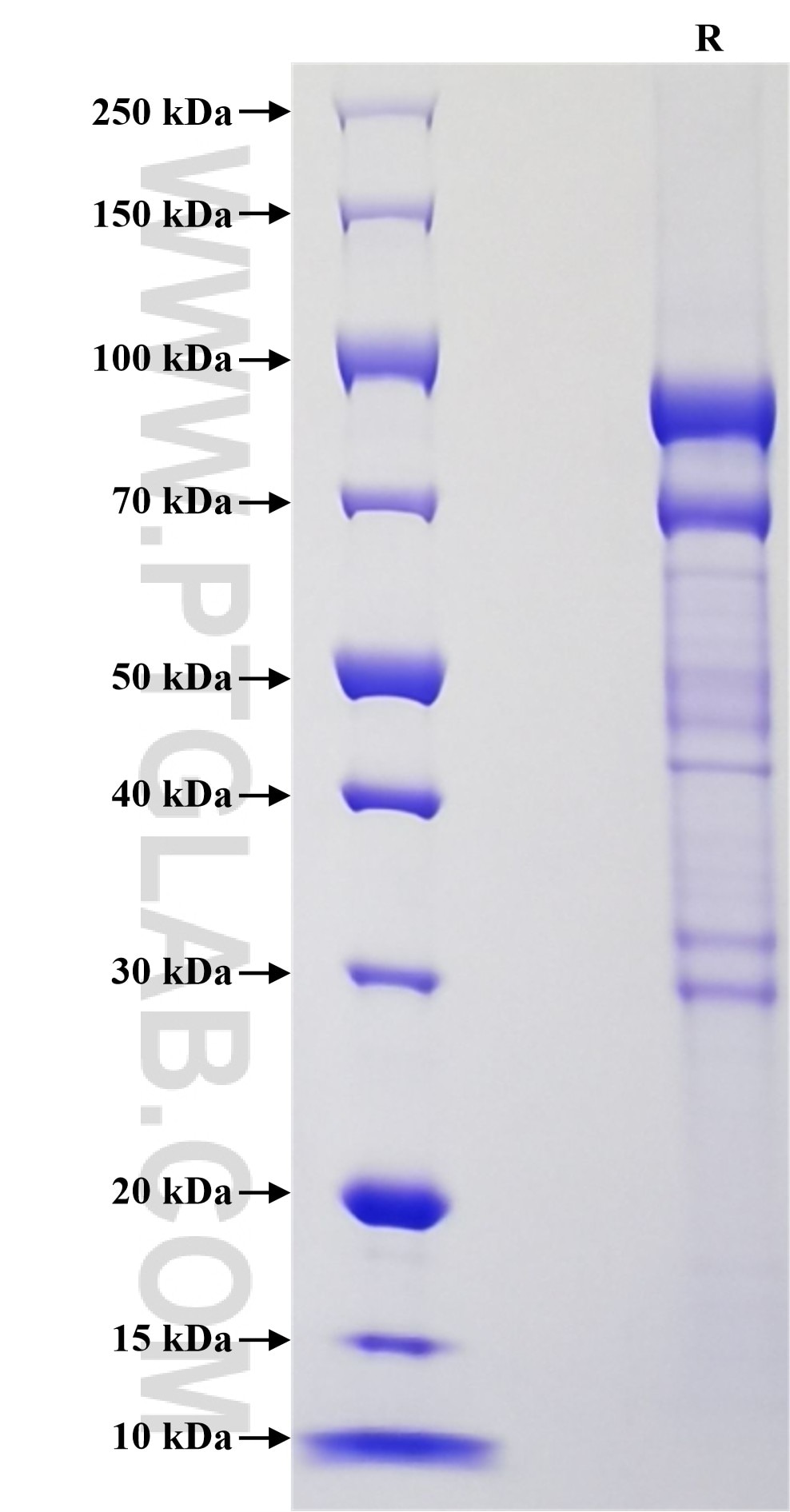
| SDS-PAGE | 68-75 kDa and 85-100 kDa, reducing (R) conditions |
| Formulation | Lyophilized from 0.22 μm filtered solution in PBS, pH 7.4. Normally 5% trehalose and 5% mannitol are added as protectants before lyophilization. |
| Reconstitution | Briefly centrifuge the tube before opening. Reconstitute at 0.1-0.5 mg/mL in sterile water. |
| Storage Conditions |
It is recommended that the protein be aliquoted for optimal storage. Avoid repeated freeze-thaw cycles.
|
| Shipping | The product is shipped at ambient temperature. Upon receipt, store it immediately at the recommended temperature. |
Background
ADAM8 (A Disintegrin and Metalloproteinase 8) is also known as CD156a (cluster of differentiation 156a), a transmembrane glycoprotein belonging to the ADAM family of metalloproteinase-disintegrins. Under physiological conditions, its expression is relatively low and dispensable. However, its expression is potently induced by a variety of inflammatory stimuli, including cytokines (e.g., TNF-α, IL-1β, IFN-γ), lipopolysaccharide (LPS), and hypoxic conditions. ADAM8 is significantly expressed in key immune cells within inflammatory and tumor microenvironments. It is found in neutrophils), macrophages, and natural killer (NK) cells. In neutrophils, it is crucial for migration and transmigration. ADAM8 is also highly overexpressed in some aggressive cancers, including pancreatic ductal adenocarcinoma (PDAC), high expression levels of ADAM8, a metalloprotease disintegrin, are correlated with poor clinical outcome.
References:
1.Kuo, Paul C et al. Cancers vol. 15,12 (2023).
2.Cuffaro, Doretta et al. ACS medicinal chemistry letters vol. 12,11 (2021): 1787-1793.
3.Zuo, Wenjie et al. Journal of advanced research vol. 73, (2025): 483-499.
4.Schlomann, Uwe et al. Nature communications vol. 6, (2015): 6175.