
Recombinant Mouse Klk1 protein (rFc Tag)
Species
Mouse
Purity
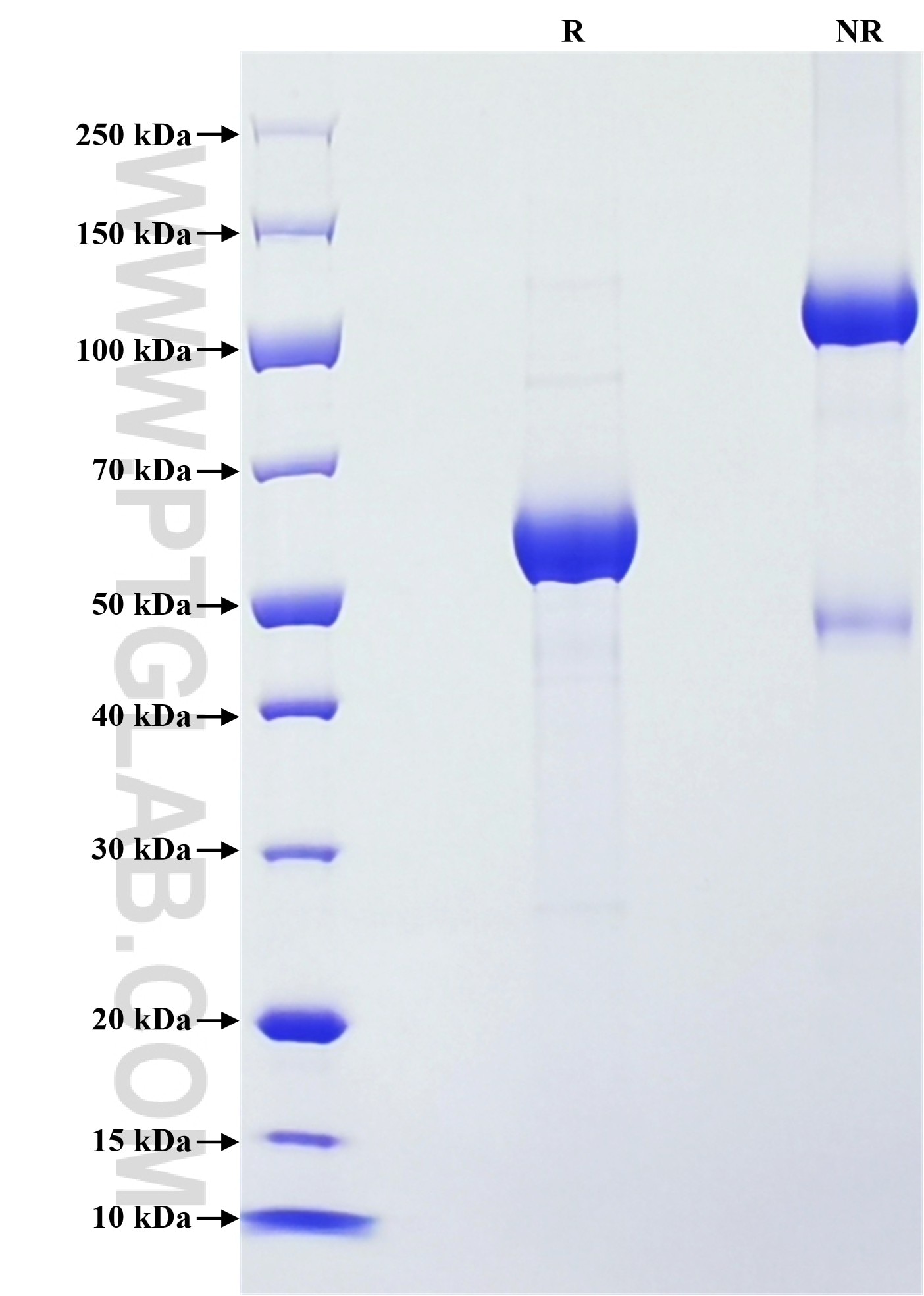
>90 %, SDS-PAGE
Tag
rFc Tag
Activity
not tested
Cat no : Eg2996
Validation Data Gallery
Product Information
| Purity | >90 %, SDS-PAGE |
| Endotoxin | <0.1 EU/μg protein, LAL method |
| Activity |
Not tested |
| Expression | HEK293-derived Mouse Klk1 protein Pro19-Asp261 (Accession# P15947) with a rabbit IgG Fc tag at the C-terminus. |
| GeneID | 16612 |
| Accession | P15947 |
| PredictedSize | 52.5 kDa |
| SDS-PAGE | 52-65 kDa, reducing (R) conditions |
| Formulation | Lyophilized from 0.22 μm filtered solution in PBS, pH 7.4. Normally 5% trehalose and 5% mannitol are added as protectants before lyophilization. |
| Reconstitution | Briefly centrifuge the tube before opening. Reconstitute at 0.1-0.5 mg/mL in sterile water. |
| Storage Conditions |
It is recommended that the protein be aliquoted for optimal storage. Avoid repeated freeze-thaw cycles.
|
| Shipping | The product is shipped at ambient temperature. Upon receipt, store it immediately at the recommended temperature. |
Background
Klk1, or kallikrein 1, is a serine protease and an important member of the kallikrein family. It is synthesized and secreted in various tissues, including the kidneys and salivary glands. The core function of Klk1 is to catalyze the cleavage of kininogen, generating highly bioactive kinins such as bradykinin. Kinins are key inflammatory mediators and vasoactive peptides that regulate blood pressure, inflammatory responses, pain perception, and vascular permeability through their receptors. Therefore, Klk1 and its kinin system play a central role in pathological processes such as hypertension, heart failure, inflammatory diseases, and angioedema. This system is also a critical downstream pathway through which classic drugs like ACE inhibitors exert their effects, while Klk1 itself serves as a potential target for novel anti-inflammatory and analgesic drugs.
References:
1. Zhou, Lisha et al. Advanced science (Weinheim, Baden-Wurttemberg, Germany) vol. 12,42 (2025): e07063. 2. Han, Siliang et al. American journal of translational research vol. 17,3 (2025) 1872-1881. 3. Adamopoulos, Panagiotis G et al. Genomics vol. 111,4 (2019): 642-652.