
Recombinant Human Fibronectin protein (rFc Tag)
Species
Human
Purity
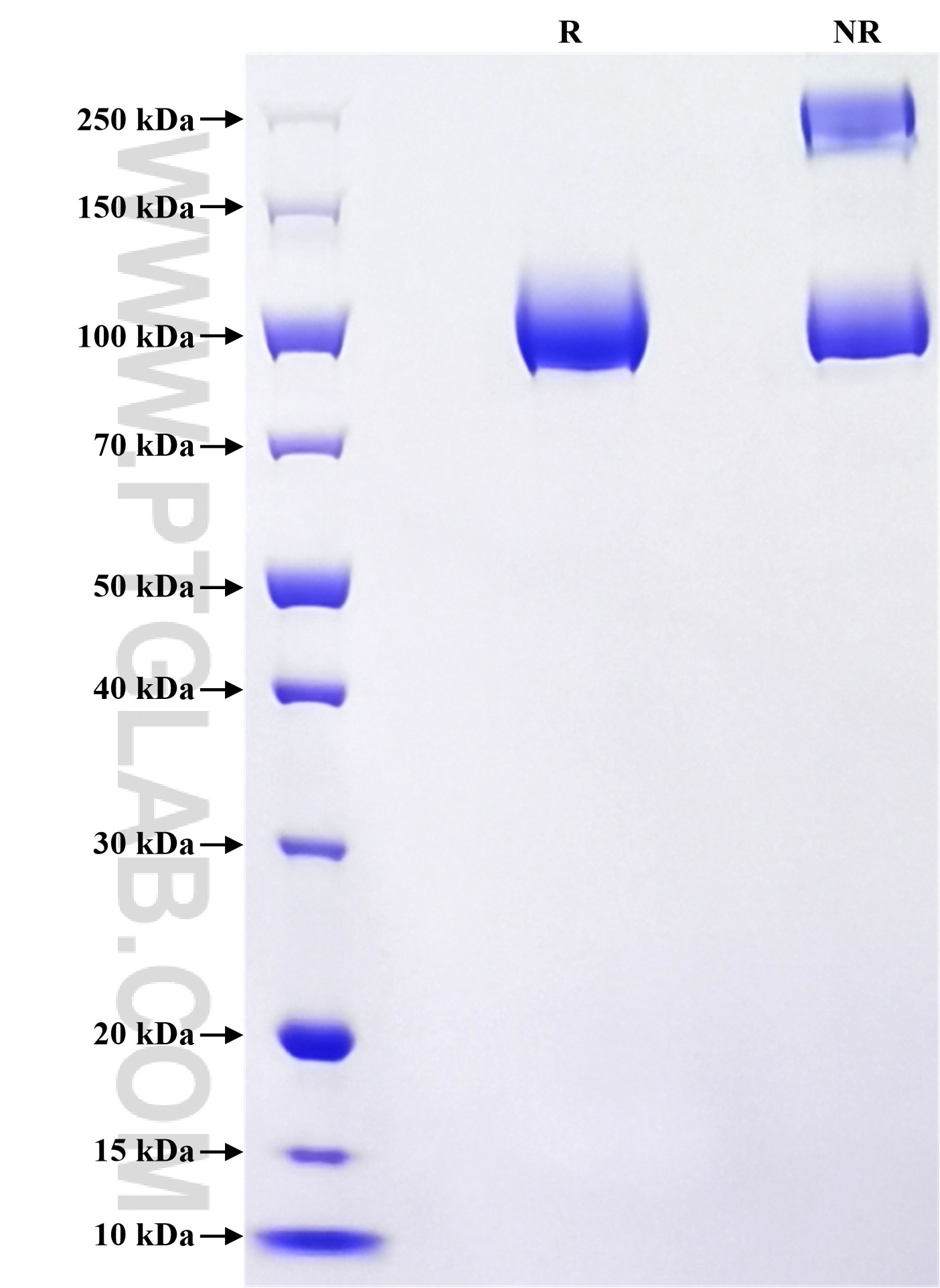
>90 %, SDS-PAGE
Tag
rFc Tag
Activity
not tested
Cat no : Eg5117
Validation Data Gallery
Product Information
| Purity | >90 %, SDS-PAGE |
| Endotoxin | <0.1 EU/μg protein, LAL method |
| Activity |
Not tested |
| Expression | HEK293-derived Human Fibronectin protein Ser607-Pro1265 (Accession# P02751-15) with a rabbit IgG Fc tag at the C-terminus. |
| GeneID | 2335 |
| Accession | P02751-15 |
| PredictedSize | 97.8 kDa |
| SDS-PAGE | 90-120 kDa, reducing (R) conditions |
| Formulation | Lyophilized from 0.22 μm filtered solution in PBS, pH 7.4. Normally 5% trehalose and 5% mannitol are added as protectants before lyophilization. |
| Reconstitution | Briefly centrifuge the tube before opening. Reconstitute at 0.1-0.5 mg/mL in sterile water. |
| Storage Conditions |
It is recommended that the protein be aliquoted for optimal storage. Avoid repeated freeze-thaw cycles.
|
| Shipping | The product is shipped at ambient temperature. Upon receipt, store it immediately at the recommended temperature. |
Background
Fibronectin (FN1) is a high molecular weight glycoprotein which exists in both a soluble form in plasma (plasma FN1) and other body fluids and an insoluble form in the extracellular matrix (cellular FN1). Plasma FN1 (dimeric form) is secreted by hepatocytes. Cellular FN (dimeric or cross-linked multimeric forms), made by fibroblasts, epithelial and other cell types, is deposited as fibrils in the extracellular matrix. FN1 binds to cell surfaces through integrins and to various compounds including collagen, fibrin and heparin. It is involved in cell adhesion and migration processes including embryogenesis, wound healing, hemostasis, host defense, and metastasis.
References:
1.Mosher, D F, and L T Furcht. The Journal of investigative dermatology vol. 77,2 (1981): 175-80.
2.Pankov, Roumen, and Kenneth M Yamada. Journal of cell science vol. 115,Pt 20 (2002): 3861-3.
3.Muro, Andres F et al. The Journal of cell biology vol. 162,1 (2003): 149-60.