
Recombinant Human PLVAP protein (rFc Tag)
Species
Human
Purity
>90 %, SDS-PAGE
Tag
rFc Tag
Activity
not tested
Cat no : Eg5463
Validation Data Gallery
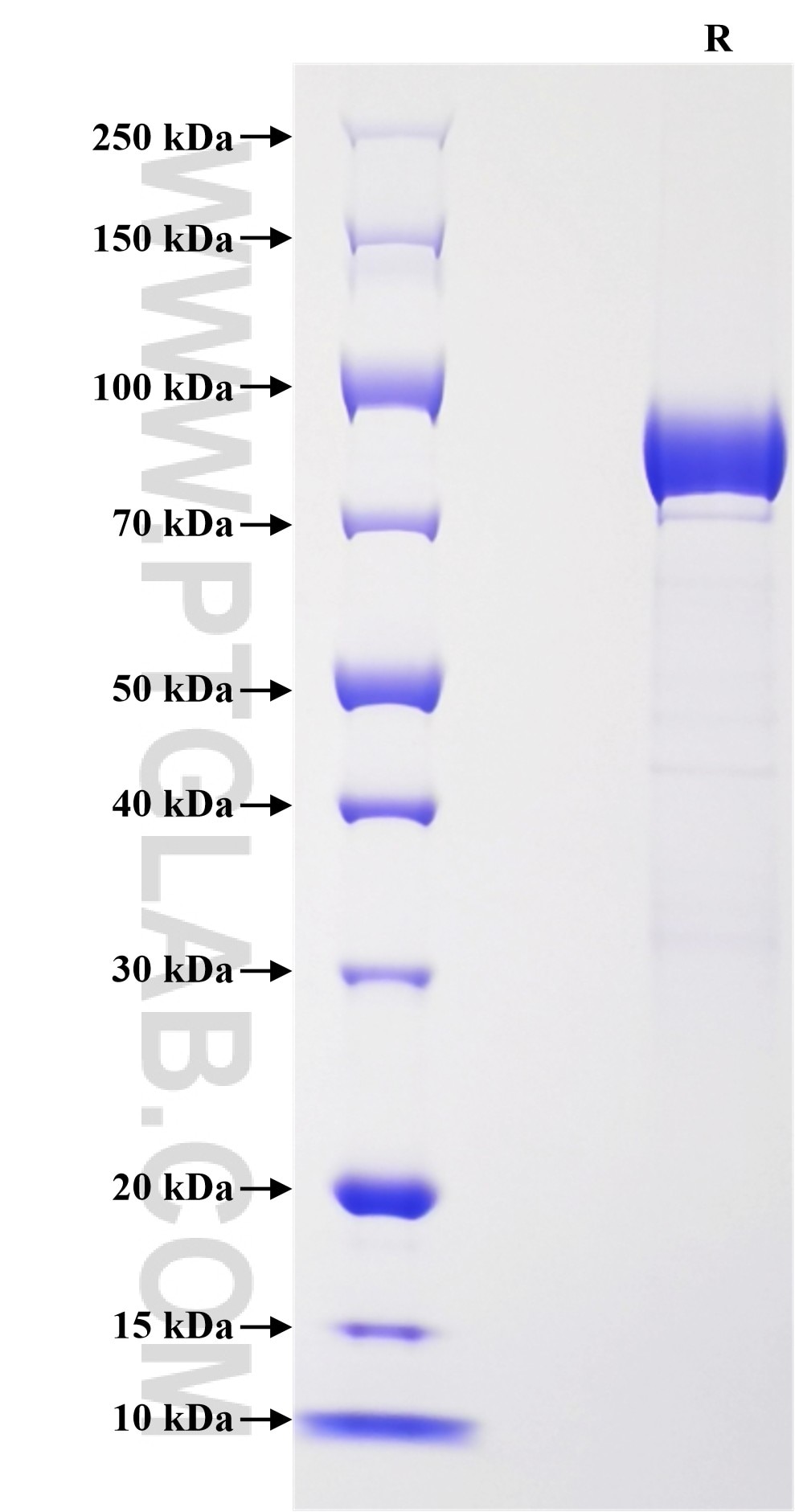
Product Information
| Purity | >90 %, SDS-PAGE |
| Endotoxin | <0.1 EU/μg protein, LAL method |
| Activity |
Not tested |
| Expression | HEK293-derived Human PLVAP protein Tyr49-Gly442 (Accession# Q9BX97) with a rabbit IgG Fc tag at the C-terminus. |
| GeneID | 83483 |
| Accession | Q9BX97 |
| PredictedSize | 70.7 kDa |
| SDS-PAGE | 75-95 kDa, reducing (R) conditions |
| Formulation | Lyophilized from 0.22 μm filtered solution in PBS, pH 7.4. Normally 5% trehalose and 5% mannitol are added as protectants before lyophilization. |
| Reconstitution | Briefly centrifuge the tube before opening. Reconstitute at 0.1-0.5 mg/mL in sterile water. |
| Storage Conditions |
It is recommended that the protein be aliquoted for optimal storage. Avoid repeated freeze-thaw cycles.
|
| Shipping | The product is shipped at ambient temperature. Upon receipt, store it immediately at the recommended temperature. |
Background
Plasmalemma vesicle-associated protein (PLVAP) is an endothelial-associated protein involved in endothelial diaphragm formation and maintenance of basal vascular permeability. At the same time, PLVAP has roles in immunity by facilitating leukocyte diapedesis at inflammatory sites and controlling peripheral lymph node morphogenesis and the entry of soluble antigens into lymph node conduits. Structurally, PLVAP forms sieve-like diaphragms across fenestral pores and caveolae, acting as a size-selective barrier. PLVAP deficiency in mice leads to complete loss of endothelial diaphragms, resulting in severe vascular leakage, impaired immune cell trafficking, and neonatal lethality, underscoring its essential role in both vascular and immune functions.
References:
1.Wen, Yuting et al. Journal of cancer research and clinical oncology vol. 149,10 (2023): 7139-7153.
2.Wilkinson, Alex L et al. iScience vol. 26,10 (2023): 107966.