
Recombinant Rat RBP4 protein (rFc Tag)
Species
Rat
Purity
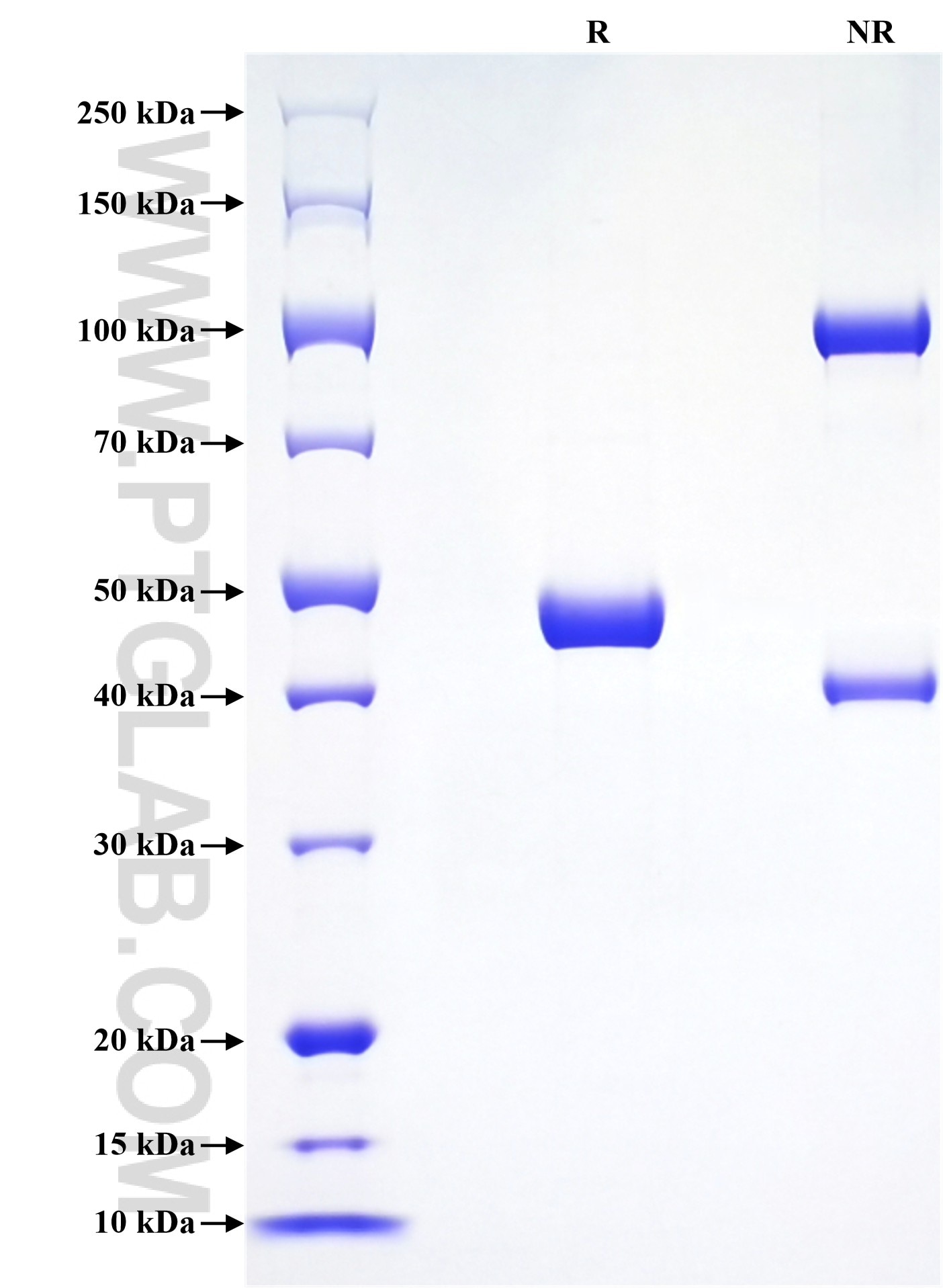
>90 %, SDS-PAGE
Tag
rFc Tag
Activity
not tested
Cat no : Eg9545
Validation Data Gallery
Product Information
| Purity | >90 %, SDS-PAGE |
| Endotoxin | <0.1 EU/μg protein, LAL method |
| Activity |
Not tested |
| Expression | HEK293-derived Rat RBP4 protein Glu19-Leu201 (Accession# P04916) with a rabbit IgG Fc tag at the C-terminus. |
| GeneID | 25703 |
| Accession | P04916 |
| PredictedSize | 47.0 kDa |
| SDS-PAGE | 44-50 kDa, reducing (R) conditions |
| Formulation | Lyophilized from 0.22 μm filtered solution in PBS, pH 7.4. Normally 5% trehalose and 5% mannitol are added as protectants before lyophilization. |
| Reconstitution | Briefly centrifuge the tube before opening. Reconstitute at 0.1-0.5 mg/mL in sterile water. |
| Storage Conditions |
It is recommended that the protein be aliquoted for optimal storage. Avoid repeated freeze-thaw cycles.
|
| Shipping | The product is shipped at ambient temperature. Upon receipt, store it immediately at the recommended temperature. |
Background
RBP4 (retinol-binding protein 4) belongs to the lipocalin family and is the specific carrier for retinol (Vitamin A) in the blood. It is mainly synthesized in the liver and circulates in the bloodstream bound to retinol in a complex with transthyretin. RBP4 acts as a drug target for ophthalmology research and reduction in serum RBP4 level inhibits lipofuscin without inhibiting the visual cycle. Urinary RBP4 could act as a marker for glomerular disease. And RBP4 also was identified as an adipokine that elevated in some insulin-resistant states. Measurement of serum RBP4 could be used to assess the risk of insulin resistance, type 2 diabetes, obesity, and cardiovascular disease.
References:
1. P A Peterson. et al. (1971). J Biol Chem. 246(1): 44-9.
2. Yang Q. et al. (2005). Nature. 436(7049): 356-62.
3. Frey SK. et al. (2008). Lipids Health Dis. 7(29).
4. Christopher L Cioffi. et al. (2014). J Med Chem. 57(18): 7731-57.