

Tested Applications
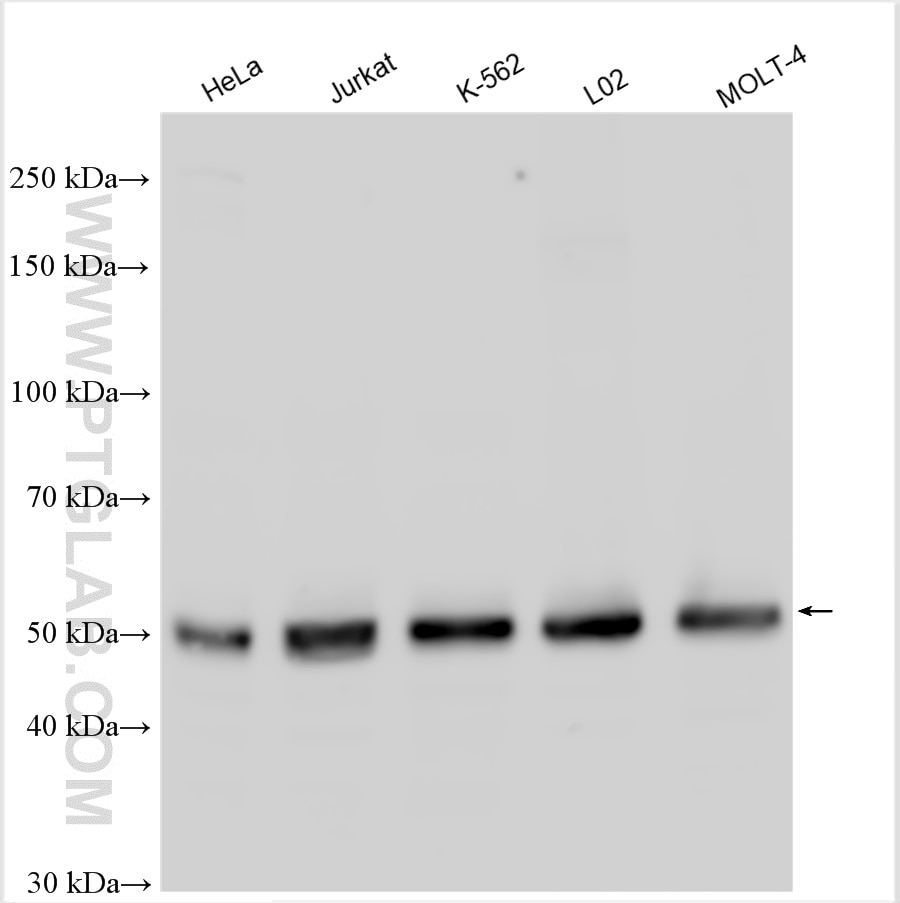
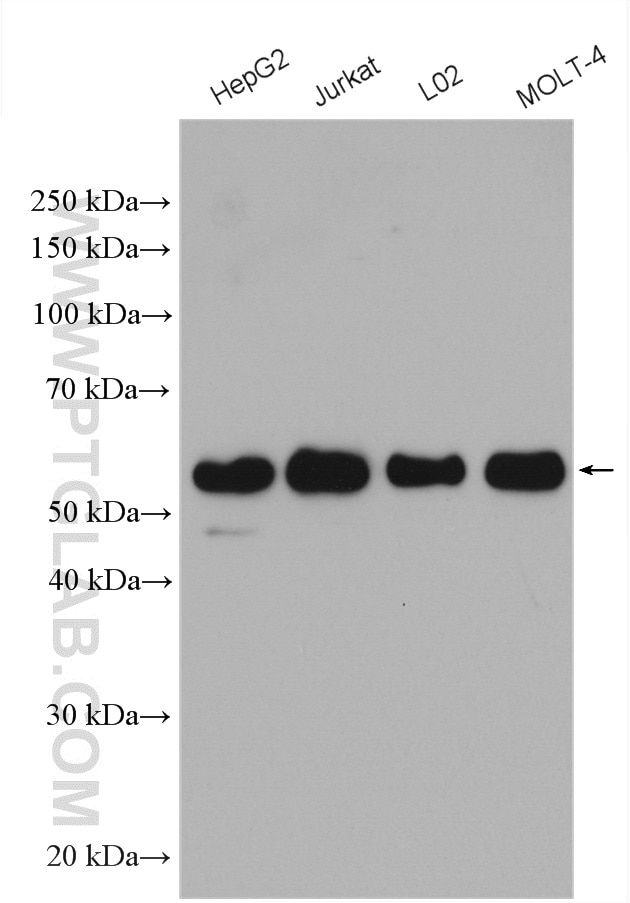
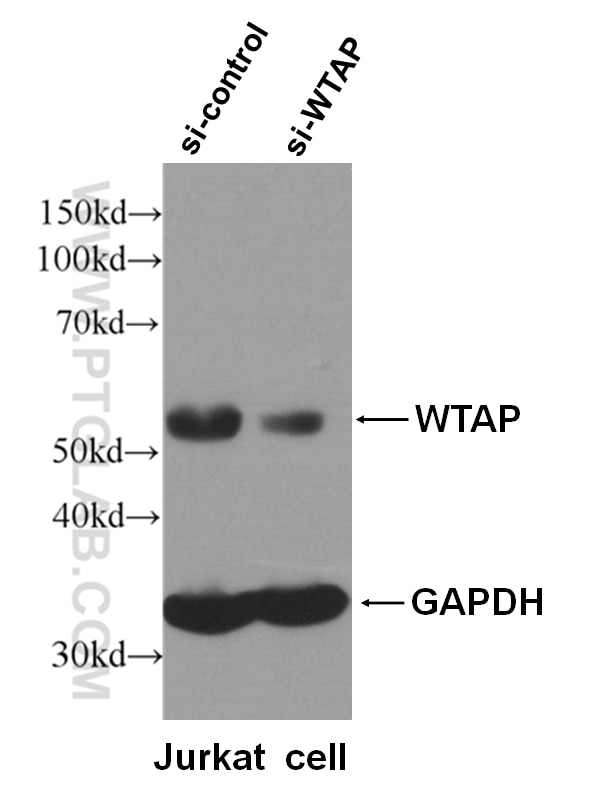
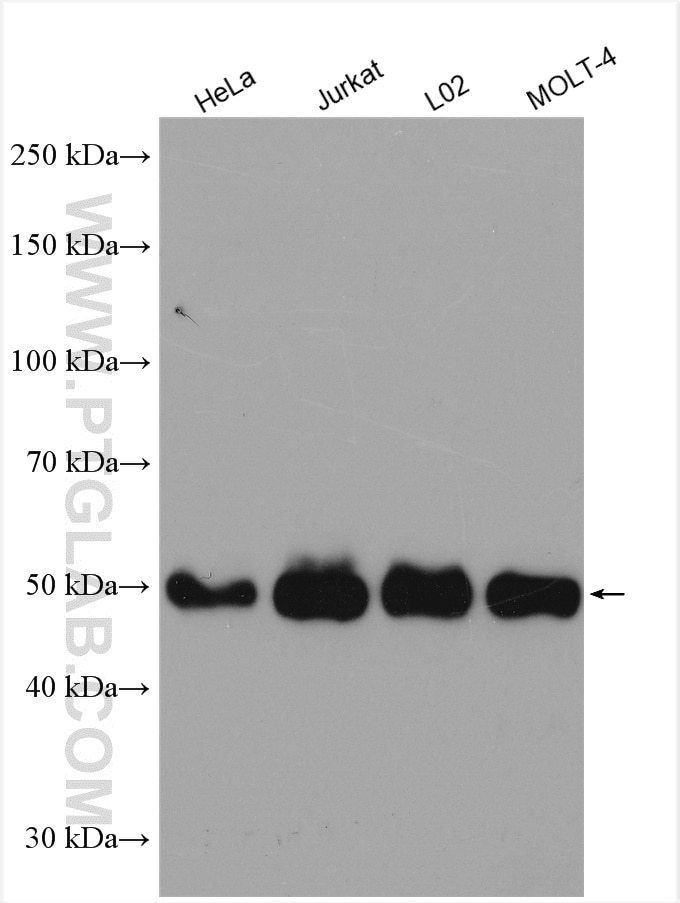
| Positive WB detected in | HeLa cells, Jurkat cells, HepG2 cells, MOLT-4 cells, L02 cells, K-562 cells |
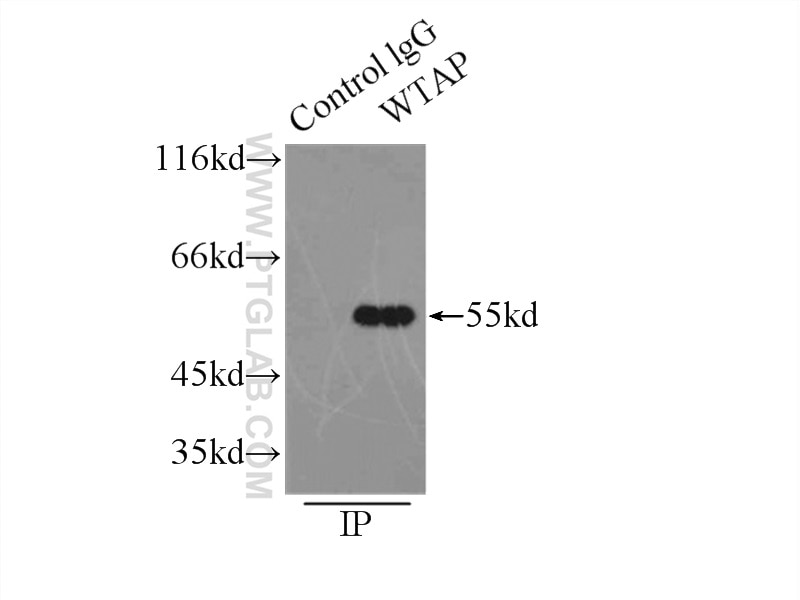
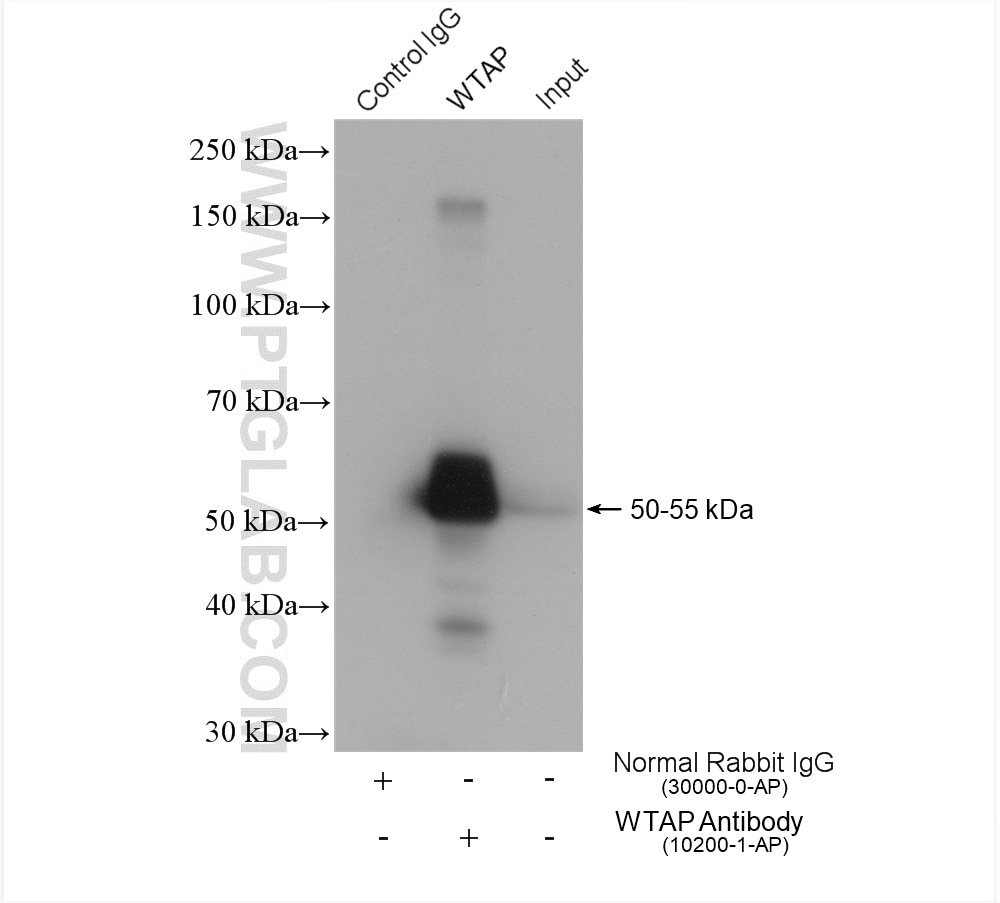
| Positive IP detected in | Jurkat cells, HEK-293 cells |
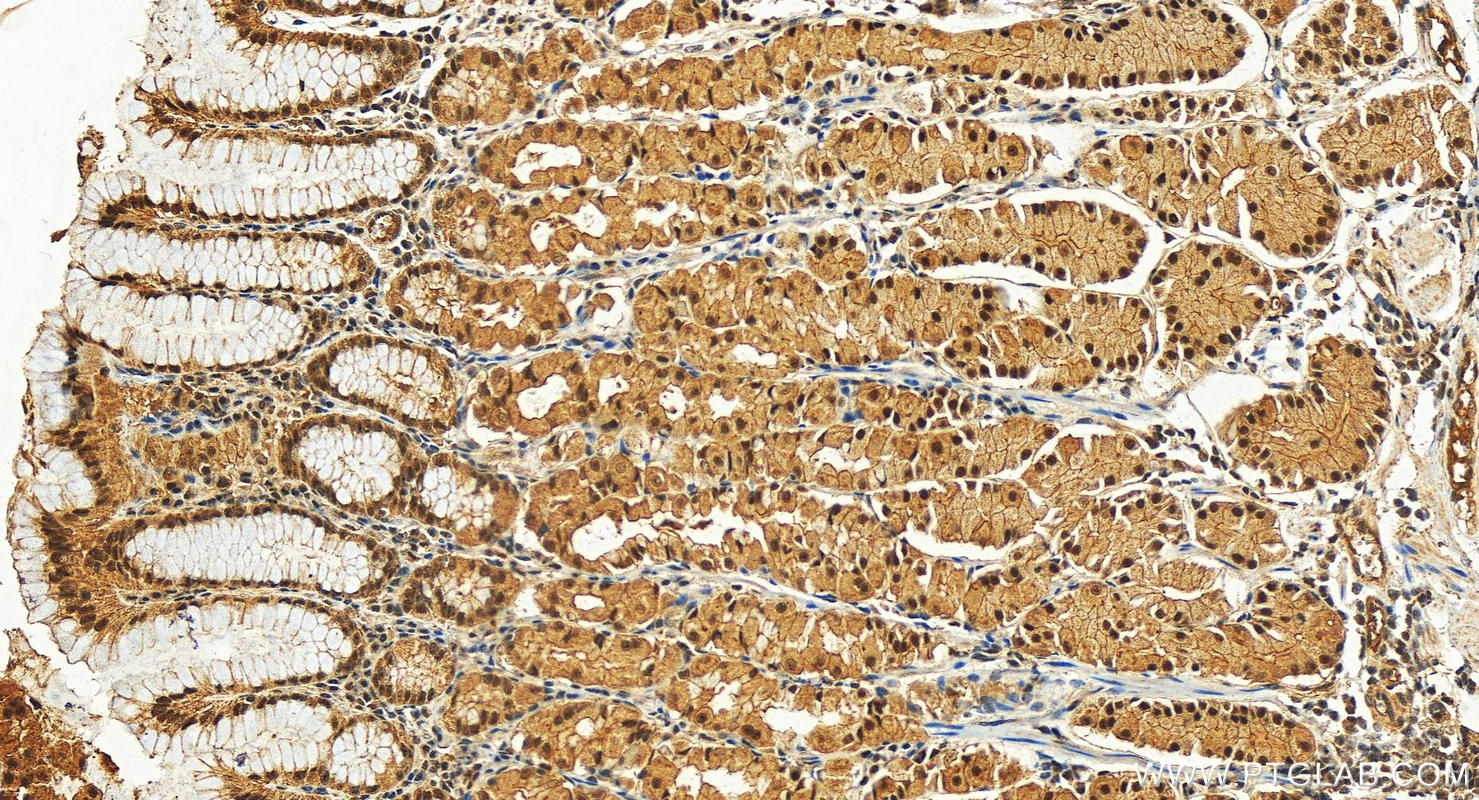
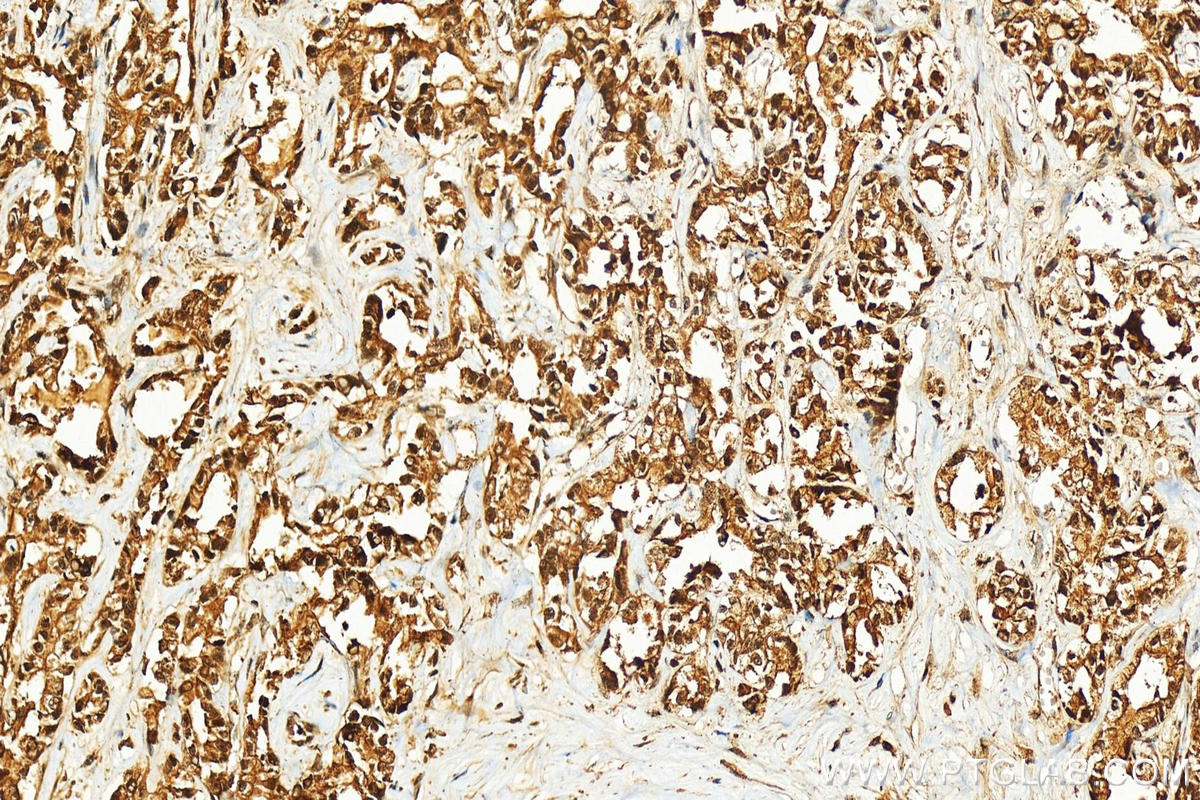
| Positive IHC detected in | human intrahepatic cholangiocarcinoma tissue, human stomach tissue Note: suggested antigen retrieval with TE buffer pH 9.0; (*) Alternatively, antigen retrieval may be performed with citrate buffer pH 6.0 |
Recommended dilution
| Application | Dilution |
|---|---|
| Western Blot (WB) | WB : 1:2000-1:16000 |
| Immunoprecipitation (IP) | IP : 0.5-4.0 ug for 1.0-3.0 mg of total protein lysate |
| Immunohistochemistry (IHC) | IHC : 1:500-1:2000 |
| It is recommended that this reagent should be titrated in each testing system to obtain optimal results. | |
| Sample-dependent, Check data in validation data gallery. | |
Product Information
10200-1-AP targets WTAP in WB, IHC, IF, IP, CoIP, RIP, ELISA applications and shows reactivity with human, mouse, rat samples.
| Tested Reactivity | human, mouse, rat |
| Cited Reactivity | human, mouse, rat |
| Host / Isotype | Rabbit / IgG |
| Class | Polyclonal |
| Type | Antibody |
| Immunogen |
CatNo: Ag0259 Product name: Recombinant human WTAP protein Source: e coli.-derived, PGEX-4T Tag: GST Domain: 2-150 aa of BC000383 Sequence: TNEEPLPKKVRLSETDFKVMARDELILRWKQYEAYVQALEGKYTDLNSNDVTGLRESEEKLKQQQQESARRENILVMRLATKEQEMQECTTQIQYLKQVQQPSVAQLRSTMVDPAINLFFLKMKGELEQTKDKLEQAQNELSAWKFTPD Predict reactive species |
| Full Name | Wilms tumor 1 associated protein |
| Calculated Molecular Weight | 45 kDa |
| Observed Molecular Weight | 50-55 kDa |
| GenBank Accession Number | BC000383 |
| Gene Symbol | WTAP |
| Gene ID (NCBI) | 9589 |
| RRID | AB_2216349 |
| Conjugate | Unconjugated |
| Form | Liquid |
| Purification Method | Antigen affinity purification |
| UNIPROT ID | Q15007 |
| Storage Buffer | PBS with 0.02% sodium azide and 50% glycerol, pH 7.3. |
| Storage Conditions | Store at -20°C. Stable for one year after shipment. Aliquoting is unnecessary for -20oC storage. 20ul sizes contain 0.1% BSA. |
Background Information
WTAP, also named as KIAA0105 and hFL(2)D, is previously identified as a protein associated with Wilms' tumor-1 (WT-1) protein that is essential for the development of the genitourinary system. It is a Pre-mRNA-splicing regulator protein. It is a regulatory subunit of the WMM N6-methyltransferase complex which plays a role in the efficiency of mRNA splicing and processing and mRNA stability. It is required for accumulation of METTL3 and METTL14 to nuclear speckle. MW of WTAP is 50-55 kDa due to phosphorylation.
Protocols
| Product Specific Protocols | |
|---|---|
| IHC protocol for WTAP antibody 10200-1-AP | Download protocol |
| IP protocol for WTAP antibody 10200-1-AP | Download protocol |
| WB protocol for WTAP antibody 10200-1-AP | Download protocol |
| Standard Protocols | |
|---|---|
| Click here to view our Standard Protocols |
Publications
What published studies show
The WTAP polyclonal antibody (Cat# 10200-1-AP) has 91 citations across journals including Nature, Science, Cell Metabolism, Nature Communications, Molecular Cell, and eLife. Research fields span m6A RNA methylation, oncology (hepatocellular, breast, colorectal, and lung cancers), cardiovascular disease, metabolic disorders (diabetes, NAFLD), neurology (Alzheimer's, stroke, TBI), immunology, infectious diseases (HIV, HCV), and developmental biology.
| Species | Application | Title |
|---|---|---|
Science Liver ALKBH5 regulates glucose and lipid homeostasis independently through GCGR and mTORC1 signaling | ||
Mol Cancer WTAP facilitates progression of hepatocellular carcinoma via m6A-HuR-dependent epigenetic silencing of ETS1.
| ||
Cell Metab Amelioration of nonalcoholic fatty liver disease by inhibiting the deubiquitylating enzyme RPN11 | ||
Cell Metab m6A mRNA methylation in brown fat regulates systemic insulin sensitivity via an inter-organ prostaglandin signaling axis independent of UCP1 |









