

Product Information
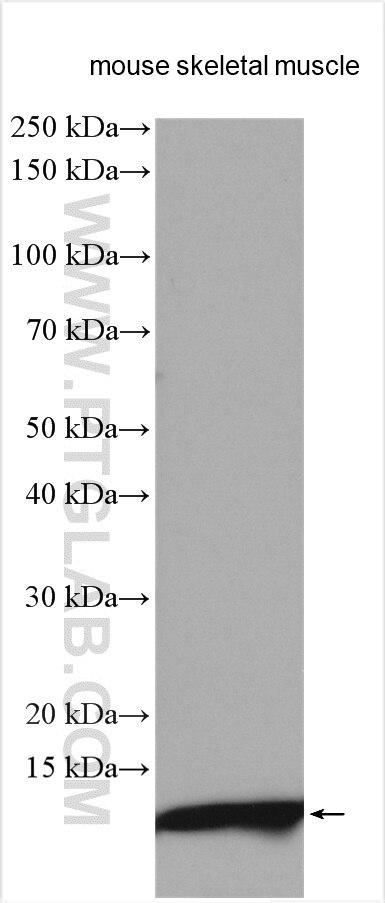
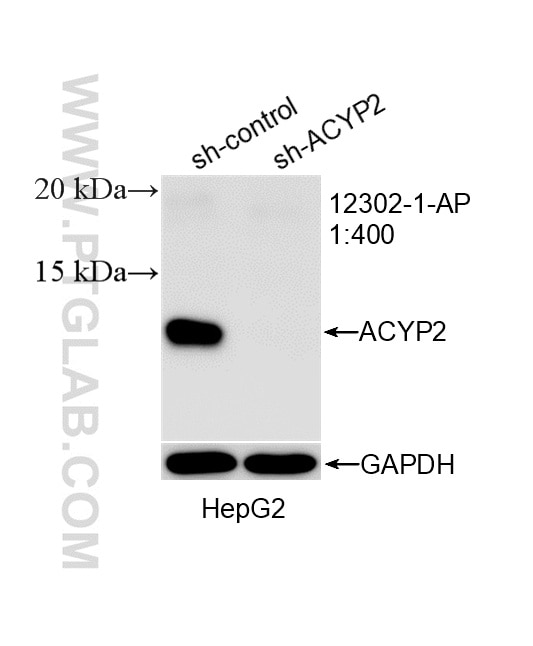
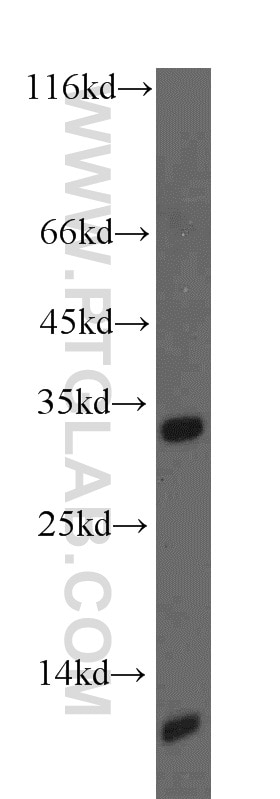
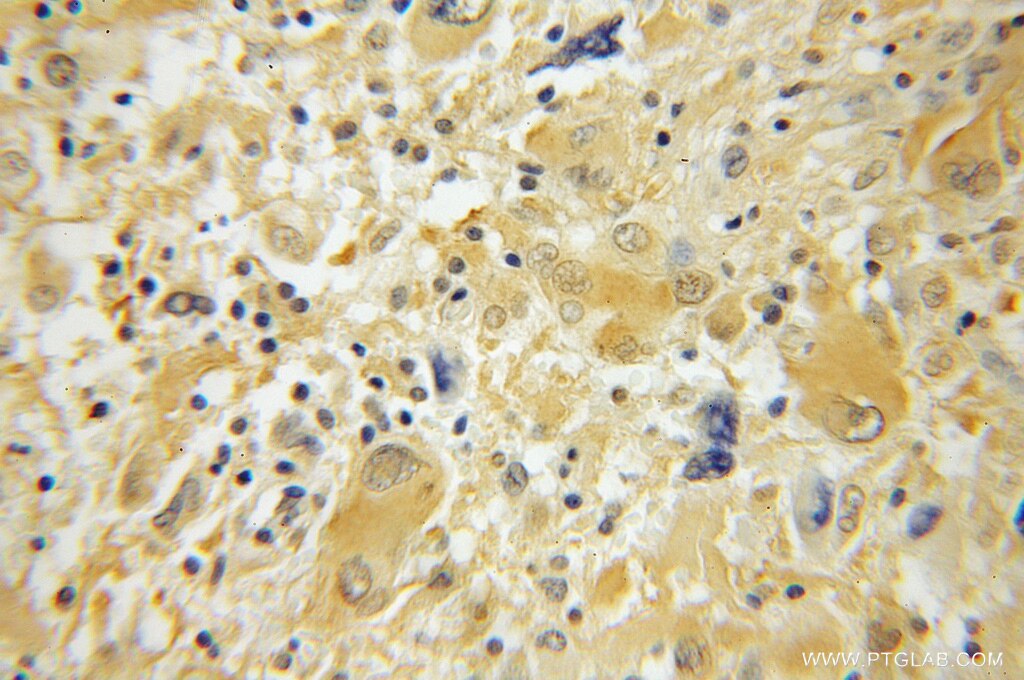
12302-1-PBS targets ACYP2 in WB, IHC, Indirect ELISA applications and shows reactivity with human, mouse, rat samples.
| Tested Reactivity | human, mouse, rat |
| Host / Isotype | Rabbit / IgG |
| Class | Polyclonal |
| Type | Antibody |
| Immunogen |
CatNo: Ag2948 Product name: Recombinant human ACYP2 protein Source: e coli.-derived, PGEX-4T Tag: GST Domain: 1-99 aa of BC012290 Sequence: MSTAQSLKSVDYEVFGRVQGVCFRMYTEDEARKIGVVGWVKNTSKGTVTGQVQGPEDKVNSMKSWLSKVGSPSSRIDRTNFSNEKTISKLEYSNFSIRY Predict reactive species |
| Full Name | acylphosphatase 2, muscle type |
| Calculated Molecular Weight | 99 aa, 11 kDa |
| Observed Molecular Weight | 11 kDa |
| GenBank Accession Number | BC012290 |
| Gene Symbol | ACYP2 |
| Gene ID (NCBI) | 98 |
| RRID | AB_10597999 |
| Conjugate | Unconjugated |
| Form | Liquid |
| Purification Method | Antigen affinity purification |
| UNIPROT ID | P14621 |
| Storage Buffer | PBS only, pH 7.3. |
| Storage Conditions | Store at -80°C. |
Background Information
ACYP2, also named muscle-type acylphosphatase (ACYM), is a small cytoplasmic hydrolase (EC 3.6.1.7) encoded by the ACYP2 gene at human chromosome 2p16.2, with UniProt ID P14621. It catalyzes hydrolysis of acyl phosphate intermediates of ion pumps, especially sarcoplasmic reticulum Ca²⁺/Mg²⁺-ATPase, regulating intracellular calcium homeostasis and skeletal muscle differentiation. Widely expressed in muscle, brain and tumor tissues, ACYP2 exerts dual oncogenic or tumor-suppressive effects across malignancies. In glioma, it boosts Ca²⁺ efflux to activate c-Myc/STAT3 and drives temozolomide resistance; in hepatocellular carcinoma, it inhibits KCNN4/ERK and TERT to suppress tumor progression. It also participates in glycolysis, cell apoptosis and ion transport, serving as a potential prognostic biomarker for multiple cancers. (PMID: 32517717, 39267048)





