

Tested Applications
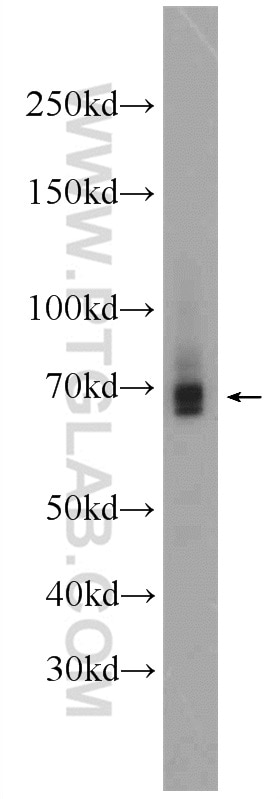
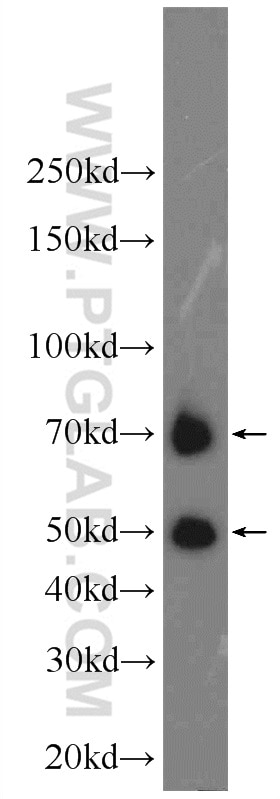
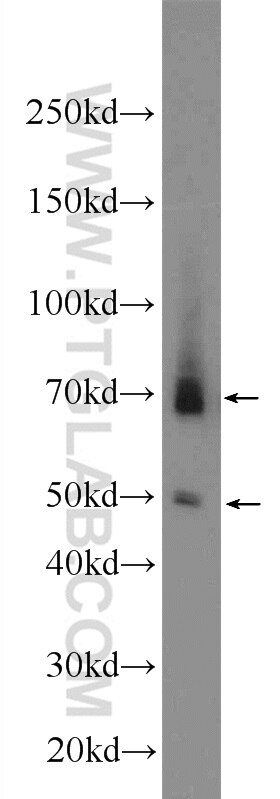
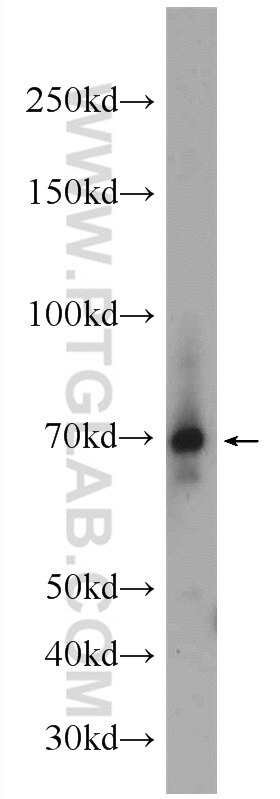
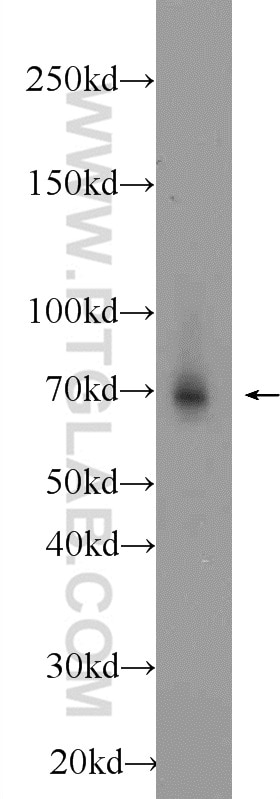
| Positive WB detected in | L02 cells, human plasma tissue, human spleen tissue, mouse thymus tissue, U-937 cells |
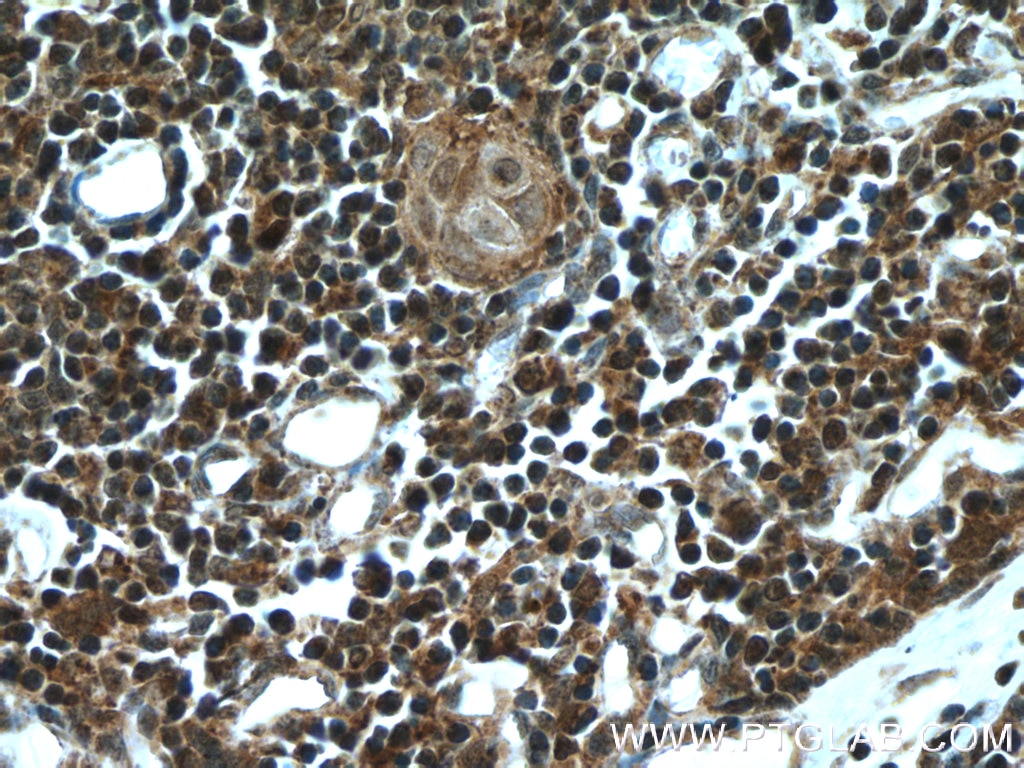
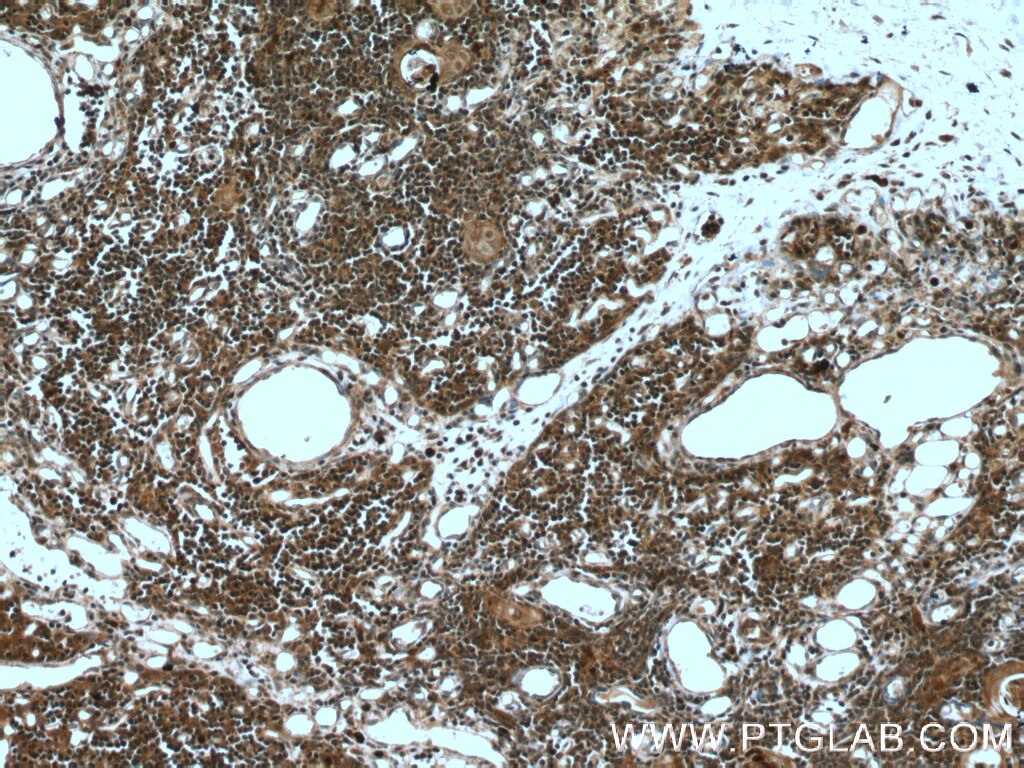
| Positive IHC detected in | human thymus tissue Note: suggested antigen retrieval with TE buffer pH 9.0; (*) Alternatively, antigen retrieval may be performed with citrate buffer pH 6.0 |
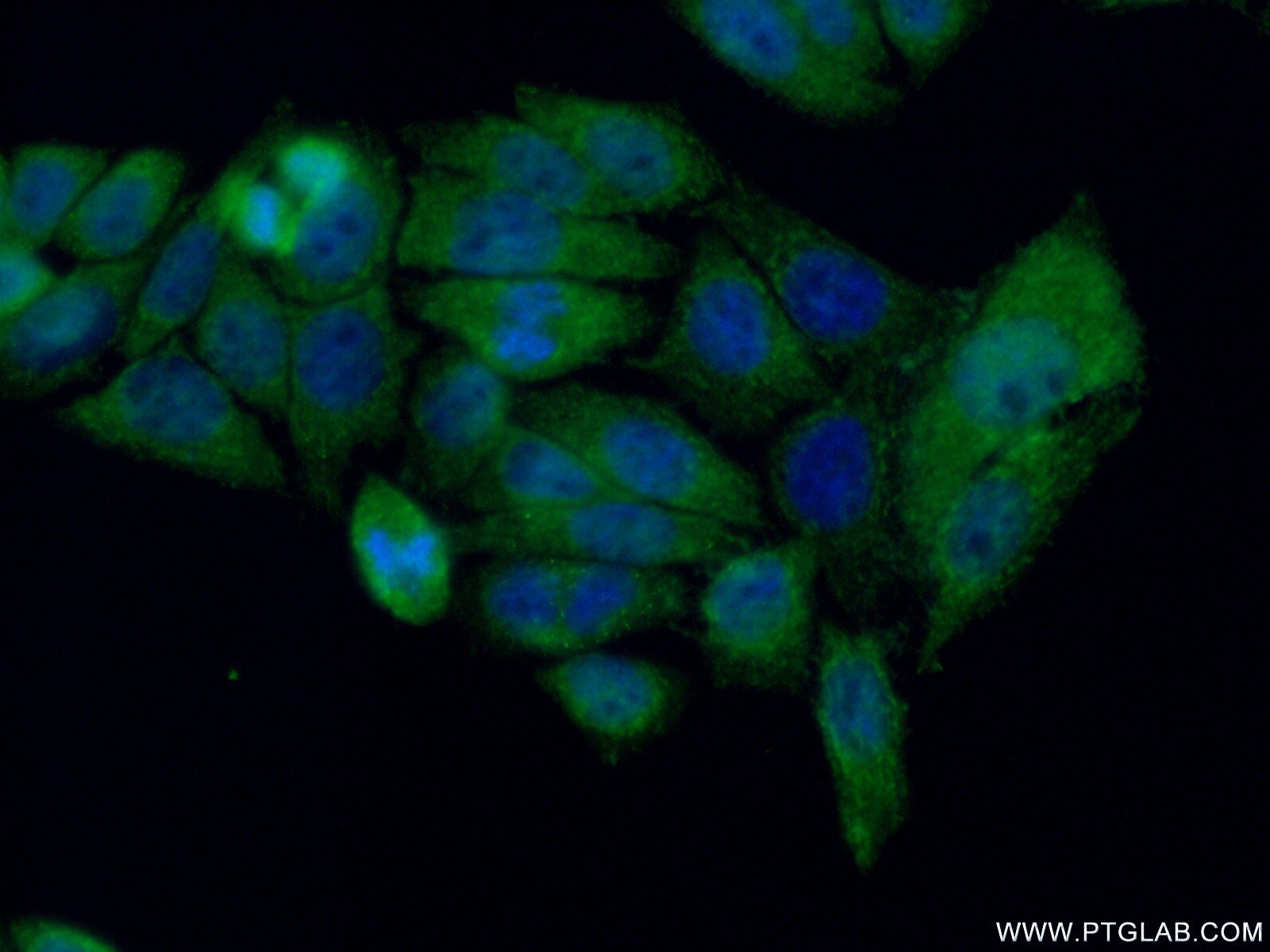
| Positive IF/ICC detected in | HeLa cells |
Recommended dilution
| Application | Dilution |
|---|---|
| Western Blot (WB) | WB : 1:500-1:2000 |
| Immunohistochemistry (IHC) | IHC : 1:50-1:500 |
| Immunofluorescence (IF)/ICC | IF/ICC : 1:50-1:500 |
| It is recommended that this reagent should be titrated in each testing system to obtain optimal results. | |
| Sample-dependent, Check data in validation data gallery. | |
Product Information
22517-1-AP targets AIRE in WB, IHC, IF/ICC, ELISA applications and shows reactivity with human, mouse samples.
| Tested Reactivity | human, mouse |
| Cited Reactivity | human, mouse |
| Host / Isotype | Rabbit / IgG |
| Class | Polyclonal |
| Type | Antibody |
| Immunogen |
CatNo: Ag18249 Product name: Recombinant human AIRE protein Source: e coli.-derived, PGEX-4T Tag: GST Domain: 96-348 aa of BC137270 Sequence: QKNEDECAVCRDGGELICCDGCPRAFHLACLSPPLREIPSGTWRCSSCLQATVQEVQPRAEEPRPQEPPVETPLPPGLRSAGEEVRGPPGEPLAGMDTTLVYKHLPAPPSAAPLPGLDSSALHPLLCVGPEGQQNLAPGARCGVCGDGTDVLRCTHCAAAFHWRCHFPAGTSRPGTGLRCRSCSGDVTPAPVEGVLAPSPARLAPGPAKDDTASHEPALHRDDLESLLSEHTFDGILQWAIQSMARPAAPFPS Predict reactive species |
| Full Name | autoimmune regulator |
| Calculated Molecular Weight | 545 aa, 58 kDa |
| Observed Molecular Weight | 58-69 kDa |
| GenBank Accession Number | BC137270 |
| Gene Symbol | AIRE |
| Gene ID (NCBI) | 326 |
| RRID | AB_2879113 |
| Conjugate | Unconjugated |
| Form | Liquid |
| Purification Method | Antigen Affinity purified |
| UNIPROT ID | O43918 |
| Storage Buffer | PBS with 0.02% sodium azide and 50% glycerol, pH 7.3. |
| Storage Conditions | Store at -20°C. Stable for one year after shipment. Aliquoting is unnecessary for -20oC storage. 20ul sizes contain 0.1% BSA. |
Background Information
The function of the protein is not well defined, however it contains zinc finger motifs suggestive of a transcription factor. The protein (isoform 1) is localized to both the nucleus and cytoplasm. Three splice variant mRNAs products have been described [1]. The longer AIRE1 mRNA appears to be more abundant and includes exons 1 through 14. Splice variant AIRE2 includes a portion of the non-coding region of exon 1, an alternatively spliced longer exon 8, plus exons 9 through 14. Variant AIRE3 includes the same exon 1-8-9 sequences as found in AIRE2 but utilizes additional alternative splicing in exon 10 that shifts the reading frame such that a stop codon in exon 12 is utilized. The resulting protein products of these splice variants differ significantly. Defects in this gene cause the autosomal-recessive systemic autoimmune disease termed autoimmune polyendocrinopathy-candidiasis-ectodermal dystrophy (APECED).
Protocols
| Product Specific Protocols | |
|---|---|
| IF protocol for AIRE antibody 22517-1-AP | Download protocol |
| IHC protocol for AIRE antibody 22517-1-AP | Download protocol |
| WB protocol for AIRE antibody 22517-1-AP | Download protocol |
| Standard Protocols | |
|---|---|
| Click here to view our Standard Protocols |
Publications
What published studies show
The AIRE antibody (catalog no. 22517-1-AP) has 6 citations. They appear in Nature Immunology, Nature Communications, Frontiers in Pharmacology, Biochemistry (Moscow), Tumori, and Research Square. Research fields span central immune tolerance, thymic epithelial cell biology, aging, and cancer immunotherapy, including AIRE's role in lung squamous cell carcinoma and tumor epitope conditioning. Applications include WB, IF, and IHC in human and mouse.
| Species | Application | Title |
|---|---|---|
Front Pharmacol Protective effects of Ganoderma lucidum spores on estradiol benzoate-induced TEC apoptosis and compromised double-positive thymocyte development | ||
Biochemistry (Mosc) Defective Central Immune Tolerance Induced by High-Dose D-Galactose Resembles Aging. | ||
Tumori Nuclear expression of AIRE in lung squamous cell carcinoma correlates with immune microenvironment remodeling and poor prognosis. | ||









