
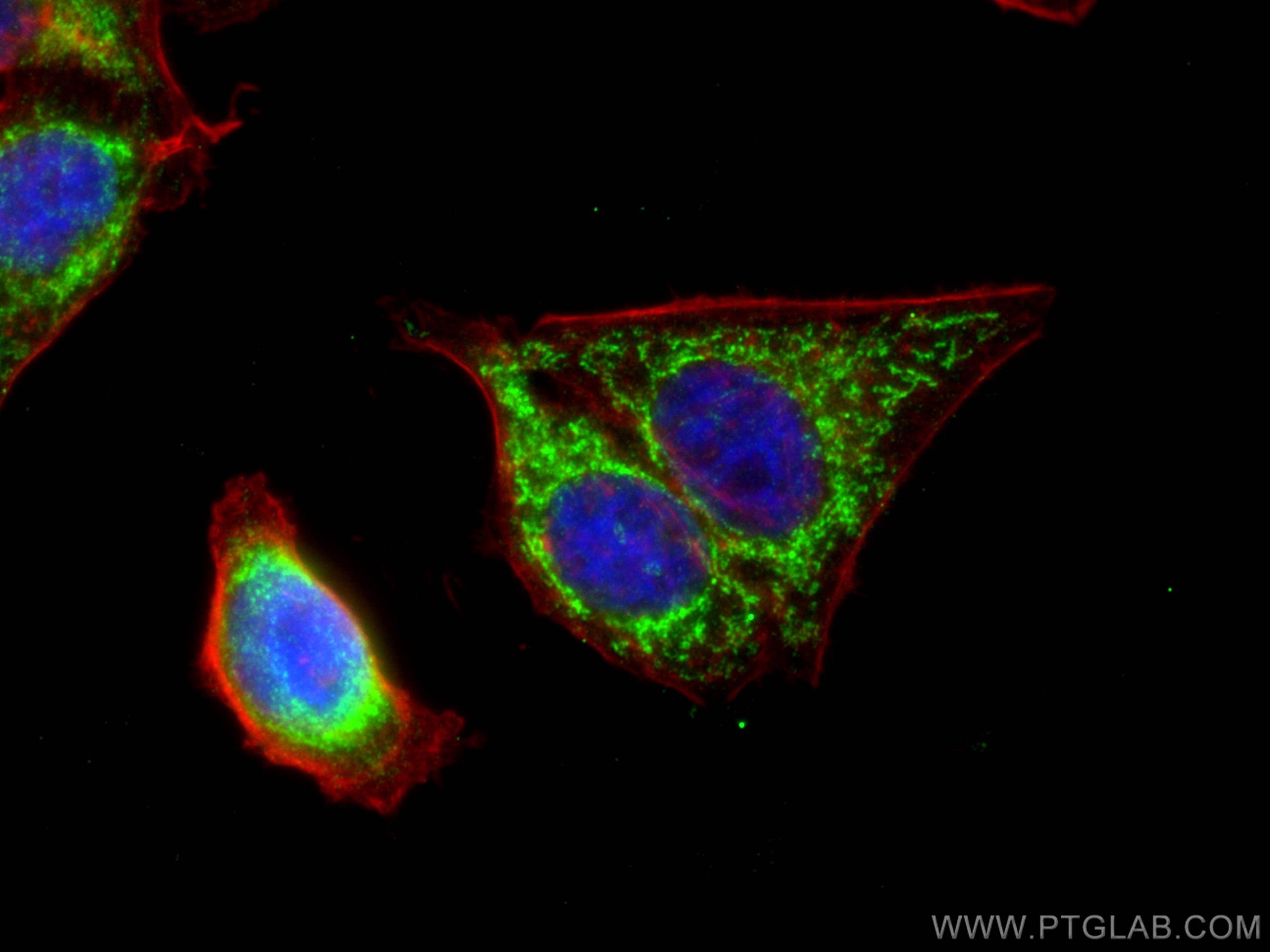

Tested Applications
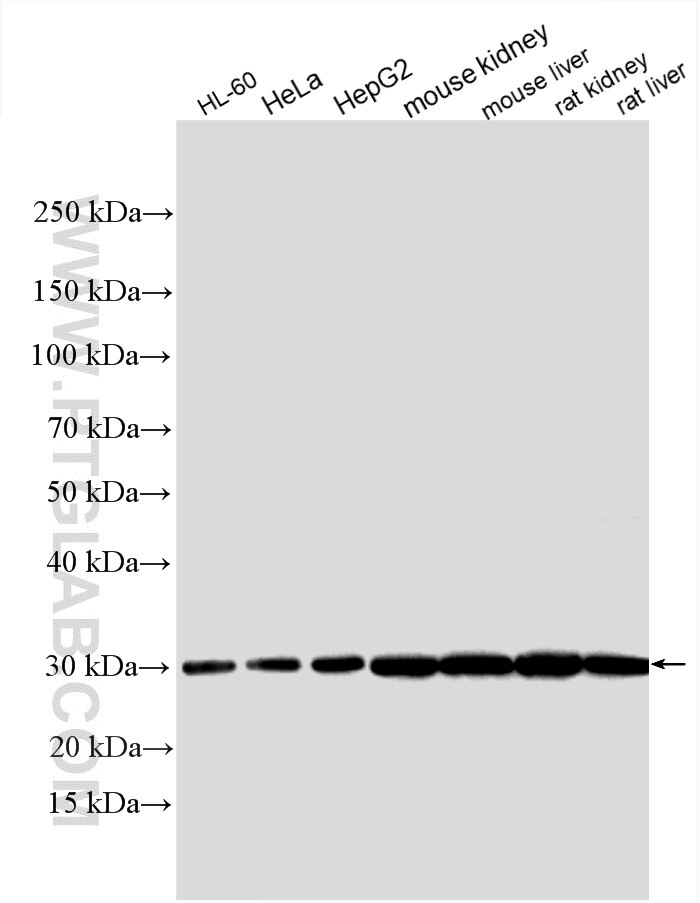
| Positive WB detected in | HL-60 cells, HeLa cells, HepG2 cells, mouse kidney tissue, mouse liver tissue, rat kidney tissue, rat liver tissue |
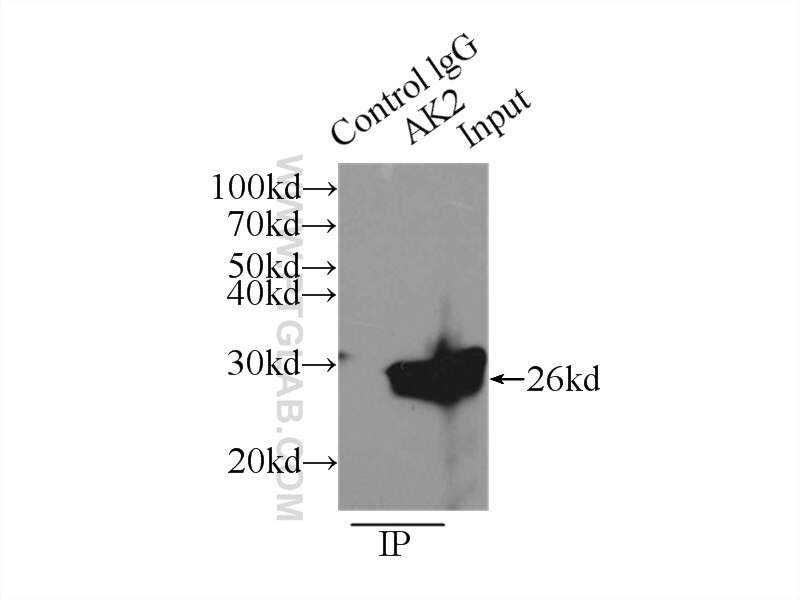
| Positive IP detected in | mouse liver tissue |
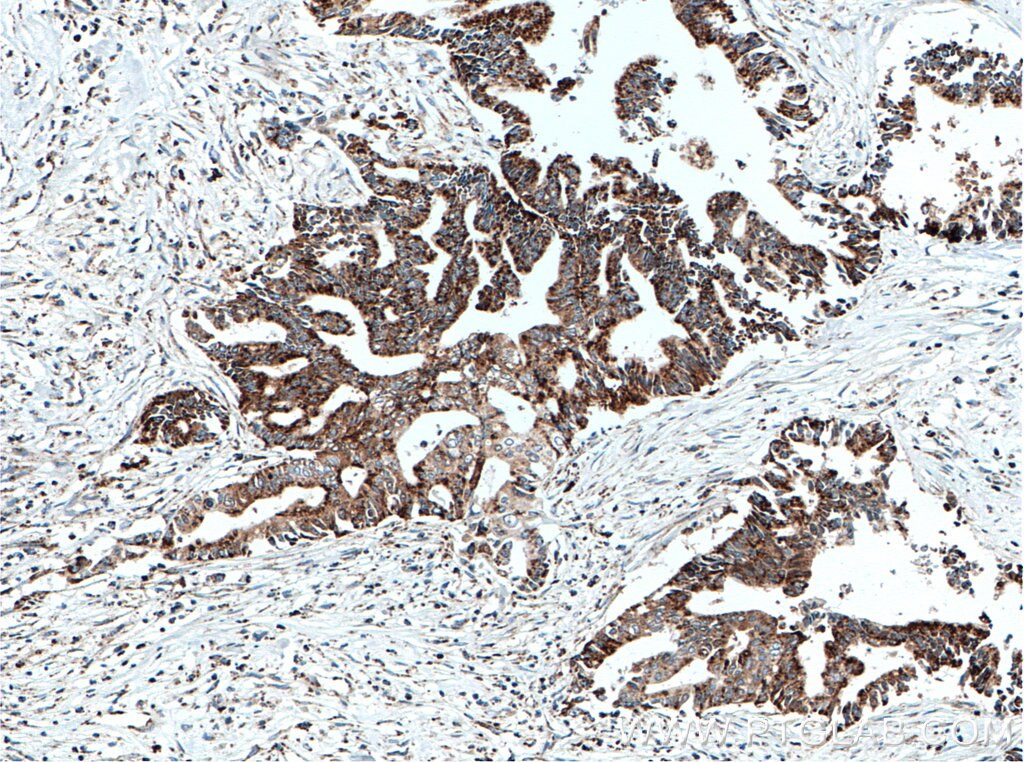
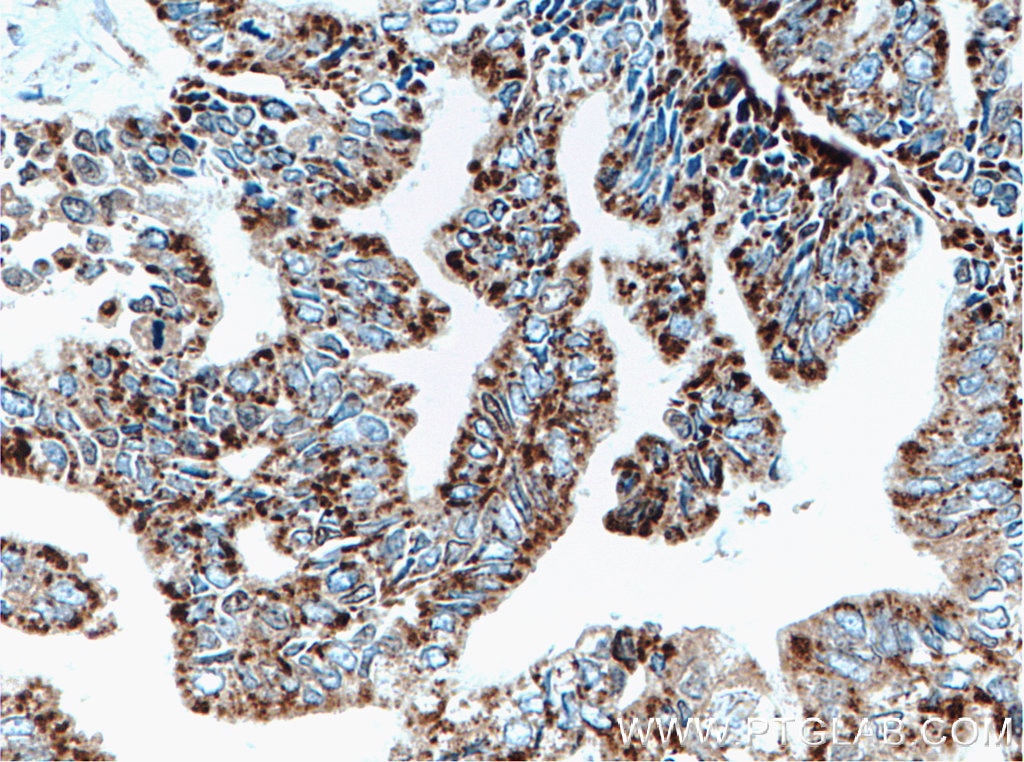
| Positive IHC detected in | human pancreas cancer tissue Note: suggested antigen retrieval with TE buffer pH 9.0; (*) Alternatively, antigen retrieval may be performed with citrate buffer pH 6.0 |
| Positive IF/ICC detected in | HepG2 cells |
Recommended dilution
| Application | Dilution |
|---|---|
| Western Blot (WB) | WB : 1:1000-1:4000 |
| Immunoprecipitation (IP) | IP : 0.5-4.0 ug for 1.0-3.0 mg of total protein lysate |
| Immunohistochemistry (IHC) | IHC : 1:50-1:500 |
| Immunofluorescence (IF)/ICC | IF/ICC : 1:50-1:500 |
| It is recommended that this reagent should be titrated in each testing system to obtain optimal results. | |
| Sample-dependent, Check data in validation data gallery. | |
Product Information
11014-1-AP targets AK2 in WB, IHC, IF/ICC, IP, ELISA applications and shows reactivity with human, mouse, rat samples.
| Tested Reactivity | human, mouse, rat |
| Cited Reactivity | human, mouse, zebrafish |
| Host / Isotype | Rabbit / IgG |
| Class | Polyclonal |
| Type | Antibody |
| Immunogen |
CatNo: Ag1464 Product name: Recombinant human AK2 protein Source: e coli.-derived, PGEX-4T Tag: GST Domain: 1-202 aa of BC009405 Sequence: MAPSVPAAEPEYPKGIRAVLLGPPGAGKGTQAPRLAENFCVCHLATGDMLRAMVASGSELGKKLKATMDAGKLVSDEMVVELIEKNLETPLCKNGFLLDGFPRTVRQAEMLDDLMEKRKEKLDSVIEFSIPDSLLIRRITGRLIHPKSGRSYHEEFNPPKEPMKDDITGEPLIRRSDDNEKALKIRLQAYHTQTTPLIEYYR Predict reactive species |
| Full Name | adenylate kinase 2 |
| Calculated Molecular Weight | 26 kDa |
| Observed Molecular Weight | 26 kDa |
| GenBank Accession Number | BC009405 |
| Gene Symbol | AK2 |
| Gene ID (NCBI) | 204 |
| RRID | AB_2305358 |
| Conjugate | Unconjugated |
| Form | Liquid |
| Purification Method | Antigen affinity purification |
| UNIPROT ID | P54819 |
| Storage Buffer | PBS with 0.02% sodium azide and 50% glycerol, pH 7.3. |
| Storage Conditions | Store at -20°C. Stable for one year after shipment. Aliquoting is unnecessary for -20oC storage. 20ul sizes contain 0.1% BSA. |
Background Information
AK2(Adenylate kinase 2, mitochondrial ) is also named as ADK2 and belongs to the adenylate kinase family. It plays a unique role in energy metabolism and energy transfer by regulating the ATP/ADP rate between the cytoplasma matrix and the mitochondria and it is increased expression during adipocyte and B cell differentiation(PMID:23020757). AK2 catalyzes the reversible transfer of a phosphoryl group from ATP to AMP(PMID:19043417). Defects in AK2 are the cause of reticular dysgenesis (RDYS)(PMID:19043416). It has 6 isoforms produced by alternative splicing.
Protocols
| Product Specific Protocols | |
|---|---|
| IF protocol for AK2 antibody 11014-1-AP | Download protocol |
| IHC protocol for AK2 antibody 11014-1-AP | Download protocol |
| IP protocol for AK2 antibody 11014-1-AP | Download protocol |
| WB protocol for AK2 antibody 11014-1-AP | Download protocol |
| Standard Protocols | |
|---|---|
| Click here to view our Standard Protocols |
Publications
What published studies show
Anti-AK2 antibody (Cat# 11014-1-AP) has 14 citations published in journals including Nature Genetics, Blood, Neuron, Redox Biology, Journal of Experimental Medicine, EMBO Molecular Medicine, Cell Reports, Fluids and Barriers of the CNS, Cell Biology and Toxicology, Molecules, ACS Pharmacology & Translational Science, and bioRxiv. Research fields span mitochondrial biology, neurodegeneration, acute myeloid leukemia, blood-brain barrier pharmacology, liver injury, nucleotide metabolism, and drug transport mechanisms.
| Species | Application | Title |
|---|---|---|
Nat Genet Reticular dysgenesis (aleukocytosis) is caused by mutations in the gene encoding mitochondrial adenylate kinase 2. | ||
Blood The palmitoyltransferase ZDHHC21 regulates oxidative phosphorylation to induce differentiation block and stemness in AML | ||
Neuron Loss of PYCR2 Causes Neurodegeneration by Increasing Cerebral Glycine Levels via SHMT2. | ||
J Exp Med A loss-of-function NUAK2 mutation in humans causes anencephaly due to impaired Hippo-YAP signaling. | ||
EMBO Mol Med A progeroid syndrome caused by a deep intronic variant in TAPT1 is revealed by RNA/SI-NET sequencing |






