

Tested Applications
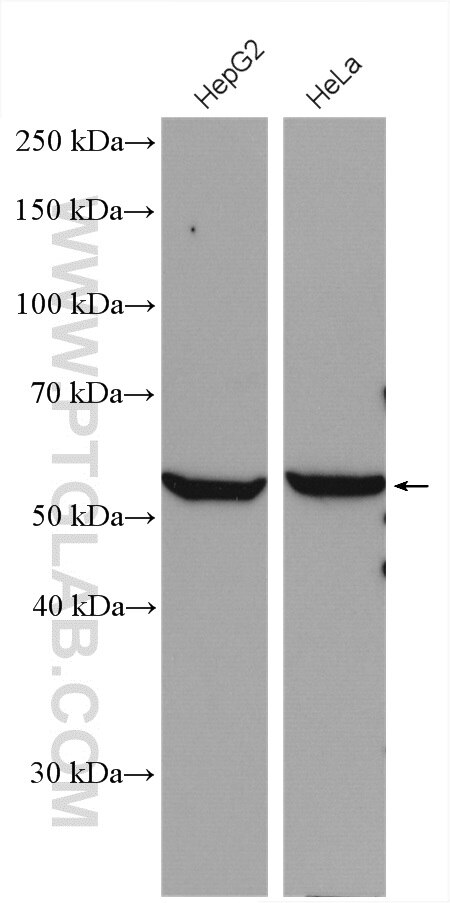
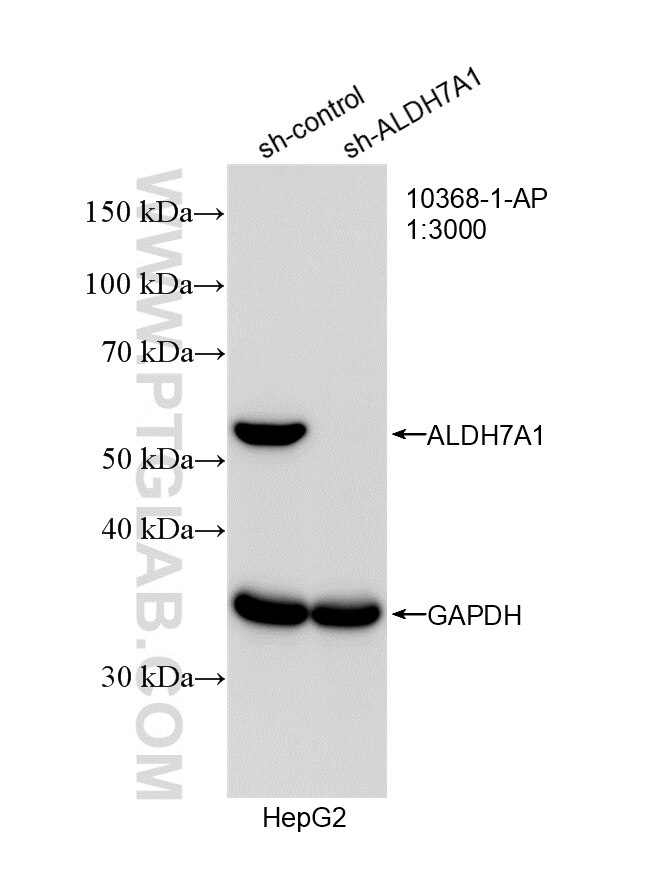
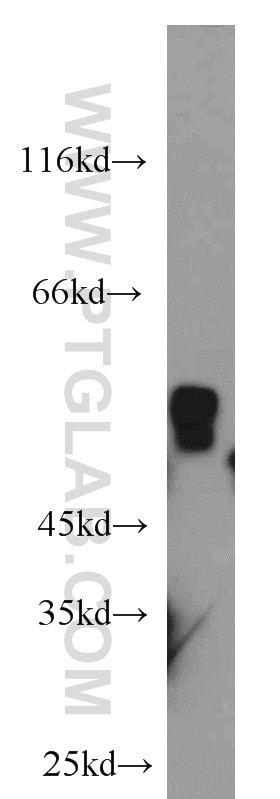
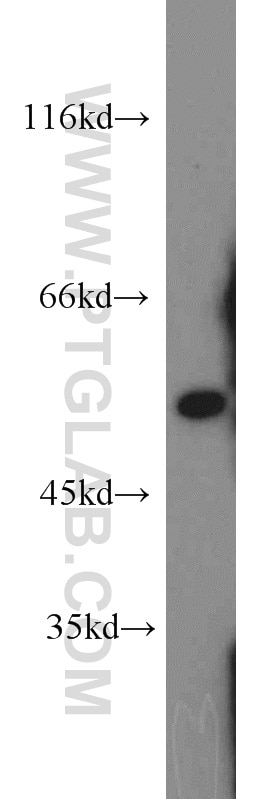
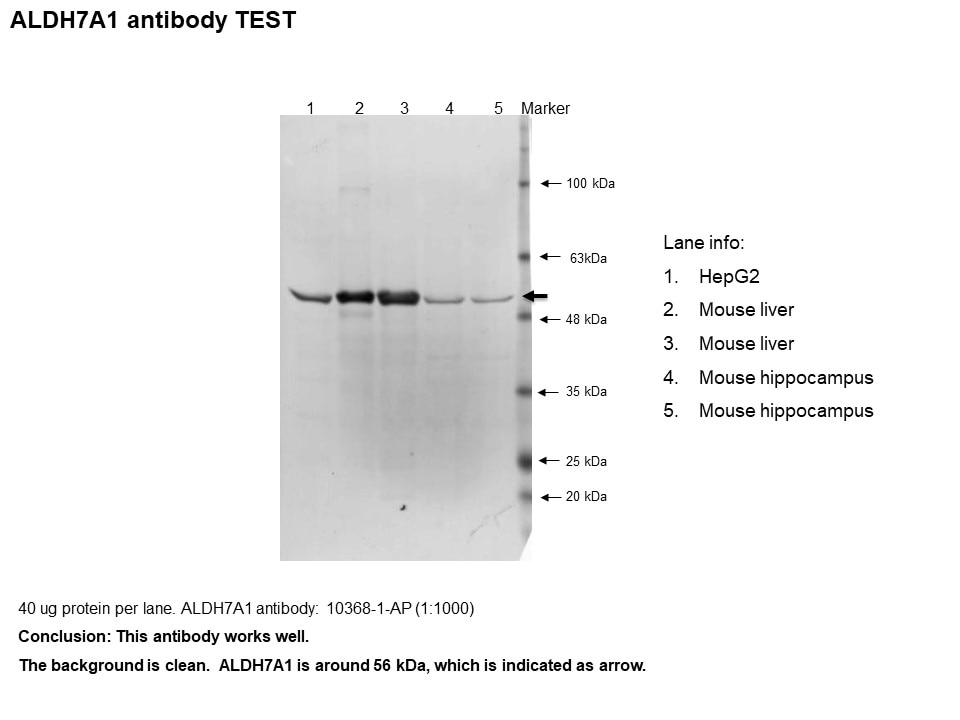
| Positive WB detected in | HepG2 cells, mouse kidney tissue, mouse liver tissue, HeLa cells |
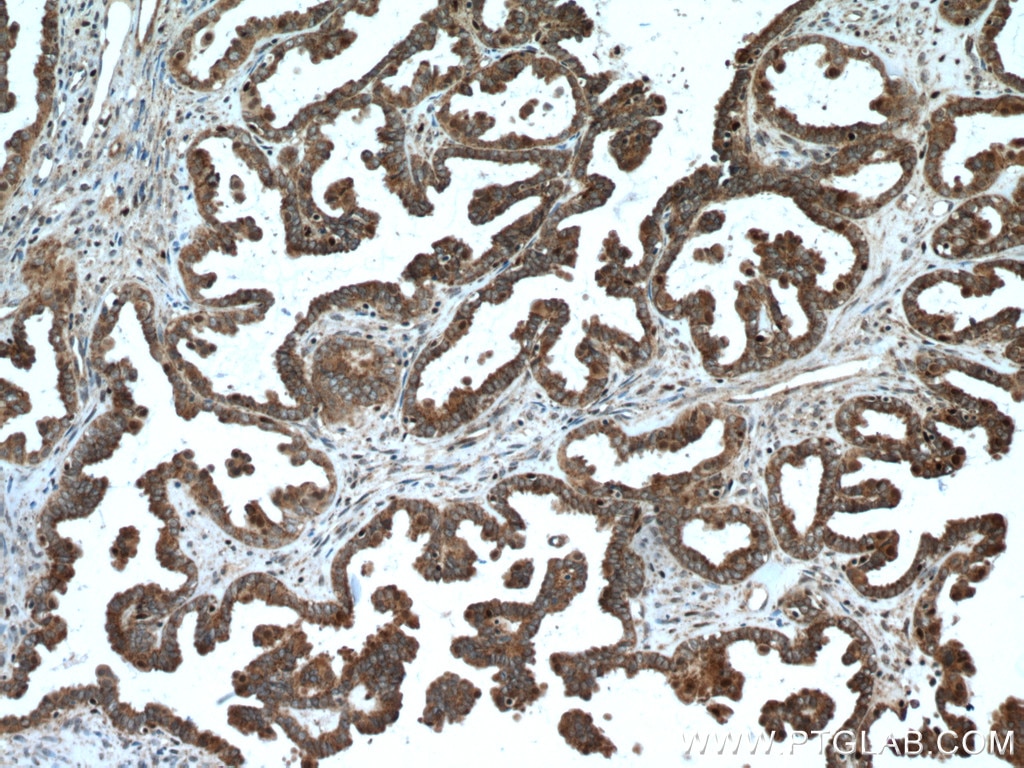
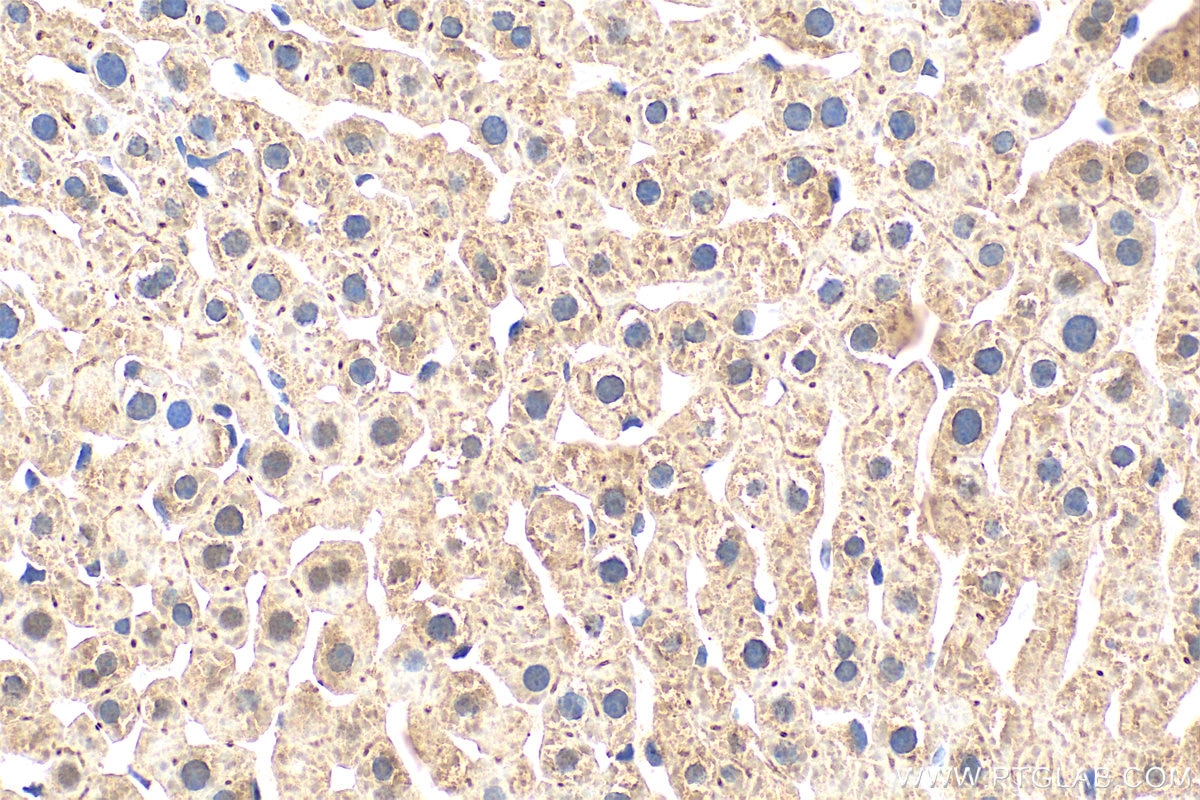
| Positive IHC detected in | rat liver tissue, human ovary tumor tissue Note: suggested antigen retrieval with TE buffer pH 9.0; (*) Alternatively, antigen retrieval may be performed with citrate buffer pH 6.0 |
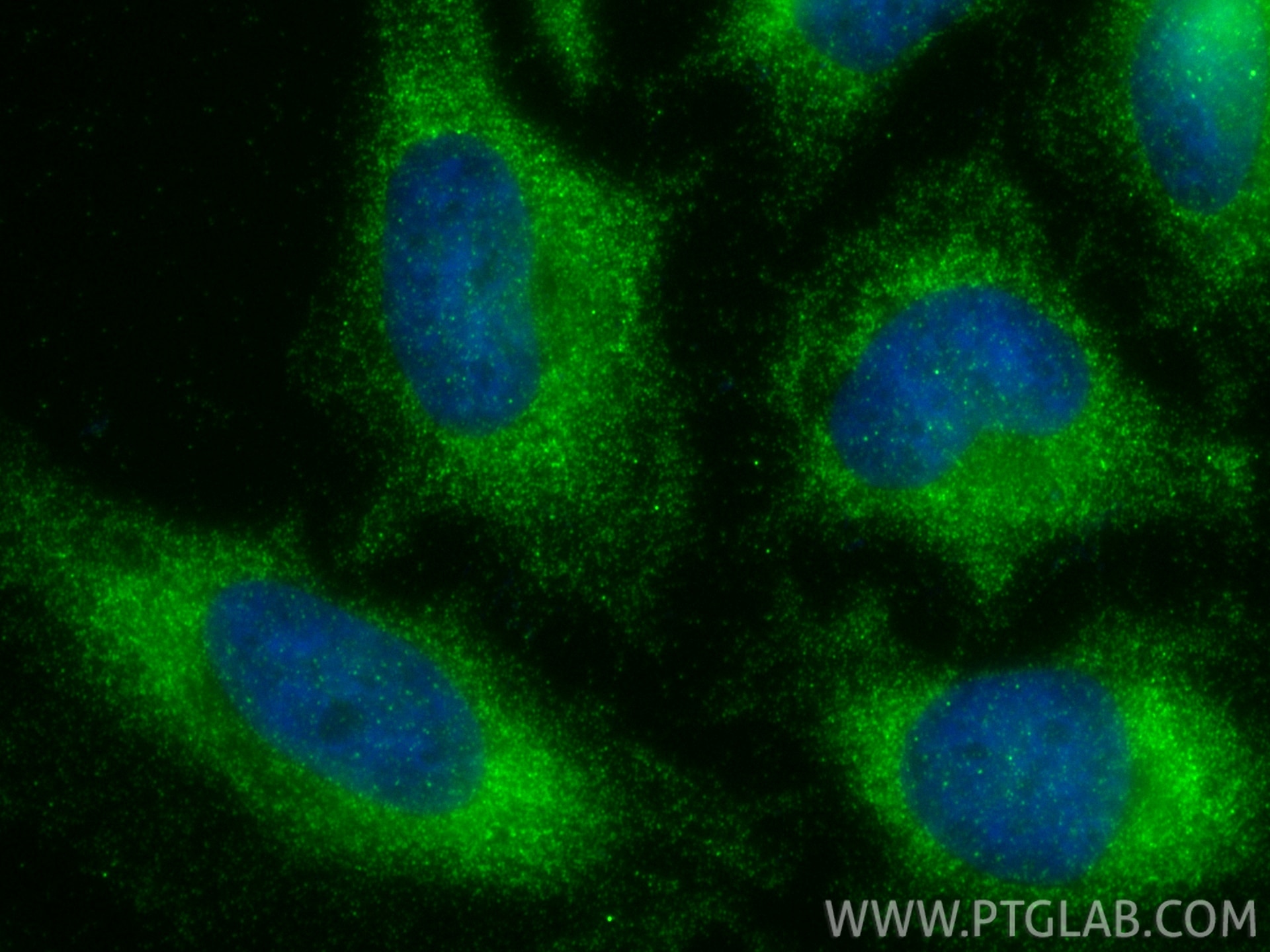
| Positive IF/ICC detected in | HeLa cells |
Recommended dilution
| Application | Dilution |
|---|---|
| Western Blot (WB) | WB : 1:500-1:3000 |
| Immunohistochemistry (IHC) | IHC : 1:200-1:800 |
| Immunofluorescence (IF)/ICC | IF/ICC : 1:50-1:500 |
| It is recommended that this reagent should be titrated in each testing system to obtain optimal results. | |
| Sample-dependent, Check data in validation data gallery. | |
Product Information
10368-1-AP targets ALDH7A1 in WB, IHC, IF/ICC, ELISA applications and shows reactivity with human, mouse, rat samples.
| Tested Reactivity | human, mouse, rat |
| Cited Reactivity | human, mouse, rat, pig |
| Host / Isotype | Rabbit / IgG |
| Class | Polyclonal |
| Type | Antibody |
| Immunogen |
CatNo: Ag0383 Product name: Recombinant human ALDH7A1 protein Source: e coli.-derived, PGEX-4T Tag: GST Domain: 196-398 aa of BC002515 Sequence: SLISVAVTKIIAKVLEDNKLPGAICSLTCGGADIGTAMAKDERVNLLSFTGSTQVGKQVGLMVQERFGRSLLELGGNNAIIAFEDADLSLVVPSALFAAVGTAGQRCTTARRLFIHESIHDEVVNRLKKAYAQIRVGNPWDPNVLYGPLHTKQAVSMFLGAVEEAKKEGGTVVYGGKVMDRPGNYVEPTIVTGLGHDASIAHT Predict reactive species |
| Full Name | aldehyde dehydrogenase 7 family, member A1 |
| Calculated Molecular Weight | 55 kDa |
| Observed Molecular Weight | 55 kDa |
| GenBank Accession Number | BC002515 |
| Gene Symbol | ALDH7A1 |
| Gene ID (NCBI) | 501 |
| RRID | AB_2242476 |
| Conjugate | Unconjugated |
| Form | Liquid |
| Purification Method | Antigen affinity purification |
| UNIPROT ID | P49419 |
| Storage Buffer | PBS with 0.02% sodium azide and 50% glycerol, pH 7.3. |
| Storage Conditions | Store at -20°C. Stable for one year after shipment. Aliquoting is unnecessary for -20oC storage. 20ul sizes contain 0.1% BSA. |
Background Information
ALDH7A1(Alpha-aminoadipic semialdehyde dehydrogenase) is also named as ATQ1 and belongs to the aldehyde dehydrogenase family. It plays a major role in the detoxification of aldehydes generated by alcohol metabolism and lipid peroxidation. This protein has 4 isoforms produced by alternative splicing.
Protocols
| Product Specific Protocols | |
|---|---|
| IF protocol for ALDH7A1 antibody 10368-1-AP | Download protocol |
| IHC protocol for ALDH7A1 antibody 10368-1-AP | Download protocol |
| WB protocol for ALDH7A1 antibody 10368-1-AP | Download protocol |
| Standard Protocols | |
|---|---|
| Click here to view our Standard Protocols |
Publications
What published studies show
The ALDH7A1 Polyclonal antibody (Cat# 10368-1-AP) has 12 citations spanning journals including Archives of Toxicology, Chemical Science, Food & Function, International Journal of Molecular Sciences, Journal of Inflammation Research, iScience, Experimental Cell Research, PLoS ONE, Veterinary Microbiology, Journal of Toxicological Sciences, and Cell Death & Differentiation. Research fields cover liver injury and fibrosis, hepatic steatosis, drug target identification, glioblastoma, endometriosis, ovarian/cervical cancer, pancreatic cancer, viral infection, and ferroptosis.
| Species | Application | Title |
|---|---|---|
Chem Sci Highly effective identification of drug targets at the proteome level by pH-dependent protein precipitation | ||
Food Funct Total saponins from Rosa laevigata Michx fruit attenuates hepatic steatosis induced by high-fat diet in rats. | ||
Food Funct Correction: Total saponins from Rosa laevigata Michx fruit attenuates hepatic steatosis induced by high-fat diet in rats. | ||
Int J Mol Sci Targeting Retinaldehyde Dehydrogenases to Enhance Temozolomide Therapy in Glioblastoma | ||
J Inflamm Res Tellimagrandin II Stimulates Inflammasomes by Causing an Accumulation of 3-Aminopropanal, Which Promotes Apoptosis of Endometriotic Cells While Inhibiting Invasion. |
Reviews
What customers say
The antibody received a 4/5 rating in a Western Blot application at a 1:1000 dilution. It was validated on mouse liver, mouse hippocampus, and HepG2 cells, demonstrating reliable performance across both tissue and cell line samples. No additional written comments were provided beyond the rating and experimental details.
The reviews below have been submitted by verified Proteintech customers who received an incentive for providing their feedback.
Hua (Verified Customer) (12-04-2018) |
 |








