

Product Information
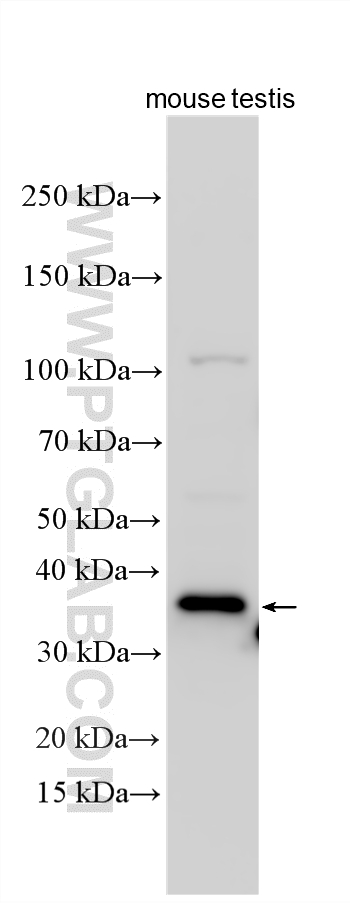
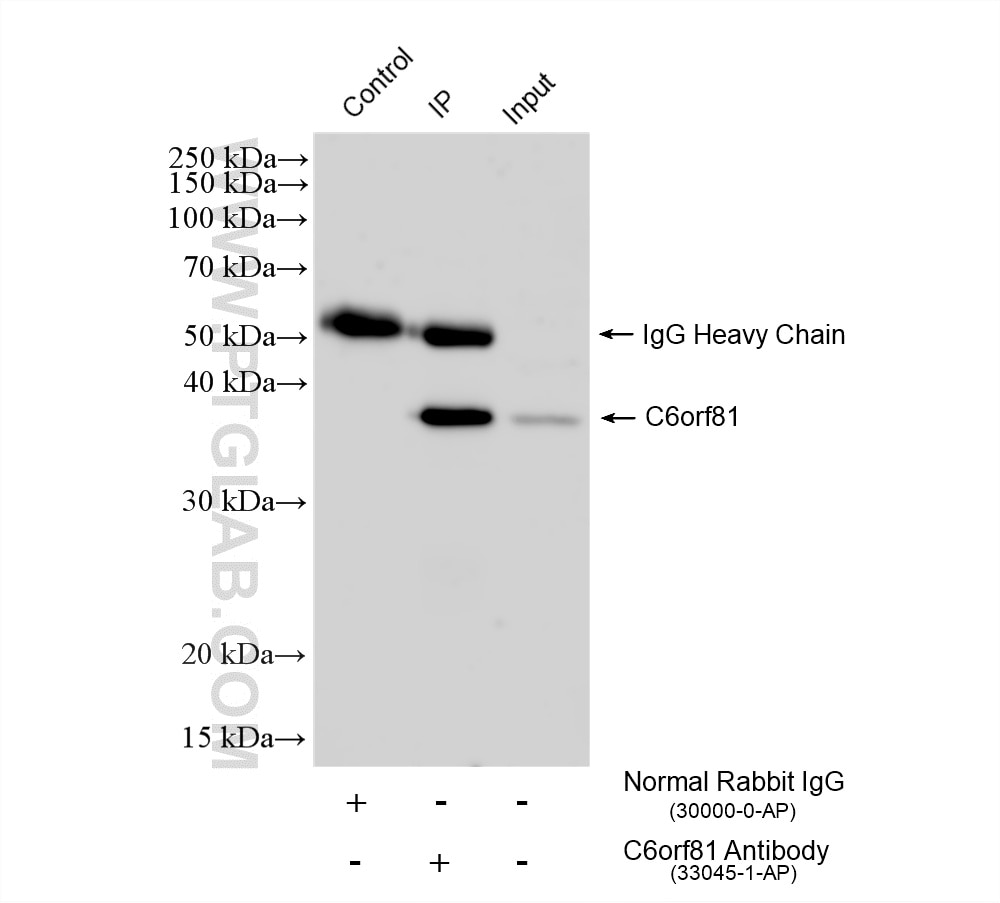
33045-1-PBS targets ARMC12 in WB, IP, Indirect ELISA applications and shows reactivity with human, mouse samples.
| Tested Reactivity | human, mouse |
| Host / Isotype | Rabbit / IgG |
| Class | Polyclonal |
| Type | Antibody |
| Immunogen |
CatNo: Ag37979 Product name: Recombinant human C6orf81 protein Source: e coli.-derived, PGEX-4T Tag: GST Domain: 1-367 aa of BC033033 Sequence: MGKSIPQYLGQLDIRKSVVSLATGAGAIYLLYKAIKAGIKCKPPLCSNSPICIARECPGPGERALPQEAPAPEASAVGGPKGLAVERERHGRDSGELRRLLNSLECKQDEYAKSMILHSITRCVYLLEAEASACTTDDIVLLGYMLDDKDNSVKTQALNTLKAFSGIRKFRLKIQEHSIKVLELISTIWDTELHIAGLRLLNNLPLPDYVHPQLRRVMPALMEILQSDYILAQVQAVRLLSYLAQKNDLLYDILNCQVHSNFLNLFQPTQSGSLLYEVLVFAERLSEGRNAPHYHVVKWHYNEQSLHESLFGEESRLADRLLALVIHPEEDVQIQACKVIVSLQYPQDLRARPSSCQPSRSYFKNTE Predict reactive species |
| Full Name | chromosome 6 open reading frame 81 |
| Observed Molecular Weight | 37 kDa |
| GenBank Accession Number | BC033033 |
| Gene Symbol | C6orf81 |
| Gene ID (NCBI) | 221481 |
| RRID | AB_3742834 |
| Conjugate | Unconjugated |
| Form | Liquid |
| Purification Method | Antigen affinity Purification |
| UNIPROT ID | Q5T9G4 |
| Storage Buffer | PBS only, pH 7.3. |
| Storage Conditions | Store at -80°C. |
Background Information
ARMC12 (Armadillo Repeat Containing 12) is a protein localized to the outer mitochondrial membrane and belongs to the protein family containing Armadillo repeat sequences. Its primary function is to act as a positive regulator of mitochondrial fission. Research indicates that ARMC12 interacts with core proteins involved in mitochondrial fission, such as the dynamin-related protein DRP1 and its receptor MFF, facilitating the proper assembly and localization of the mitochondrial fission complex on the mitochondrial surface, thereby precisely regulating the fission process. Mitochondrial fission is crucial for maintaining mitochondrial network homeostasis, energy metabolism, apoptosis, and autophagy. Consequently, dysfunction of ARMC12 is believed to be potentially associated with diseases related to abnormal mitochondrial morphology, such as neurodegenerative diseases, metabolic disorders, and cancer, making it an important subject of study in the field of mitochondrial dynamics.



