

Tested Applications
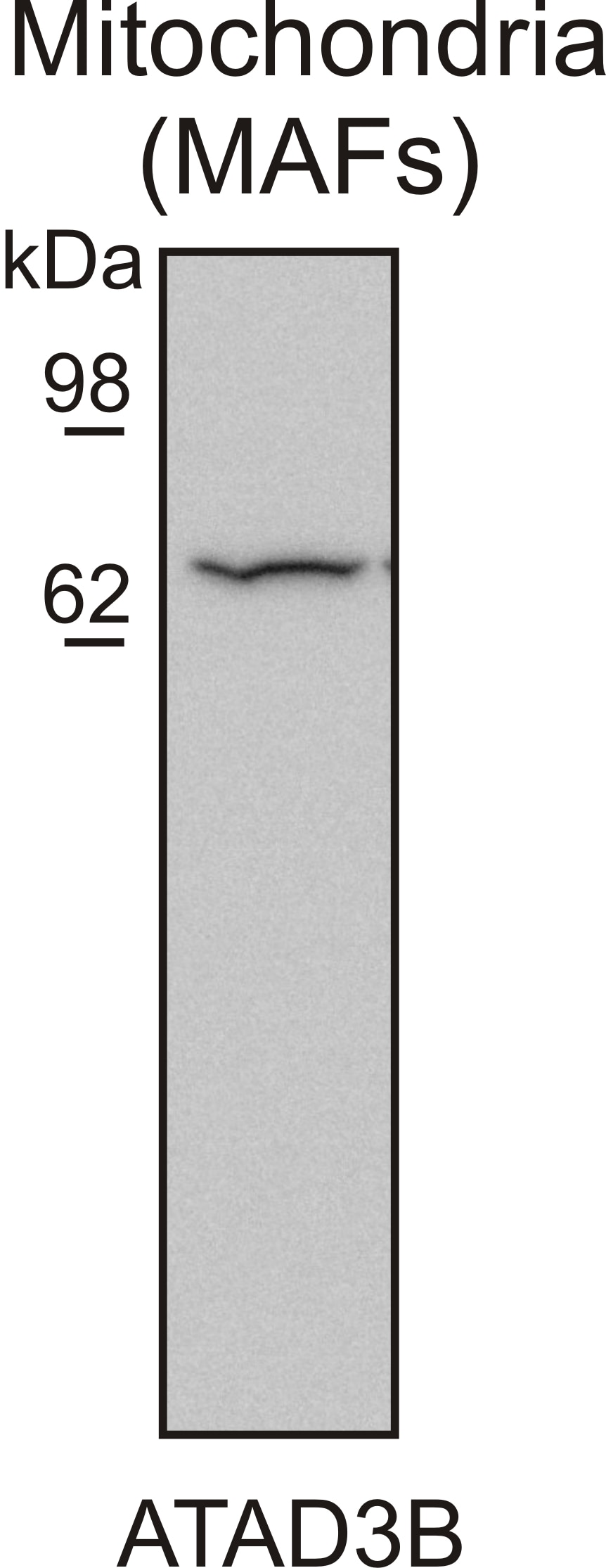
| Positive WB detected in | MAF cells |
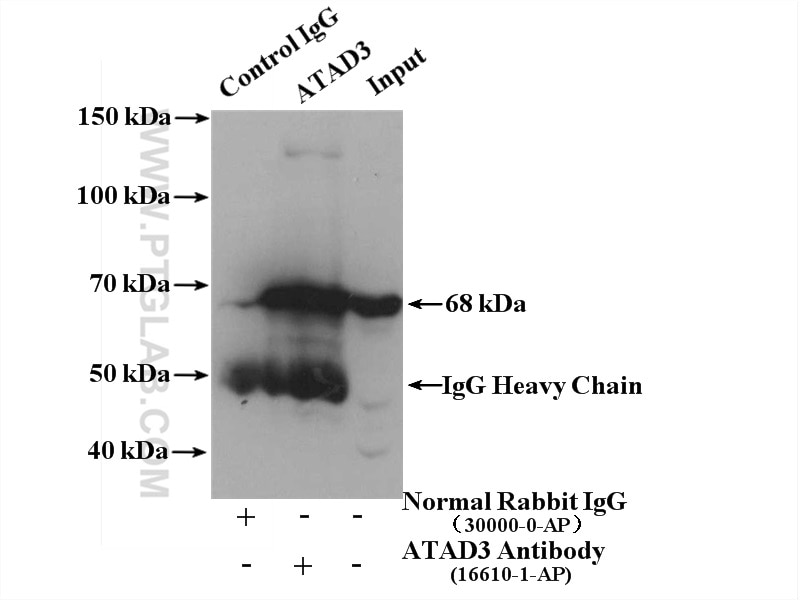
| Positive IP detected in | NCCIT cell |
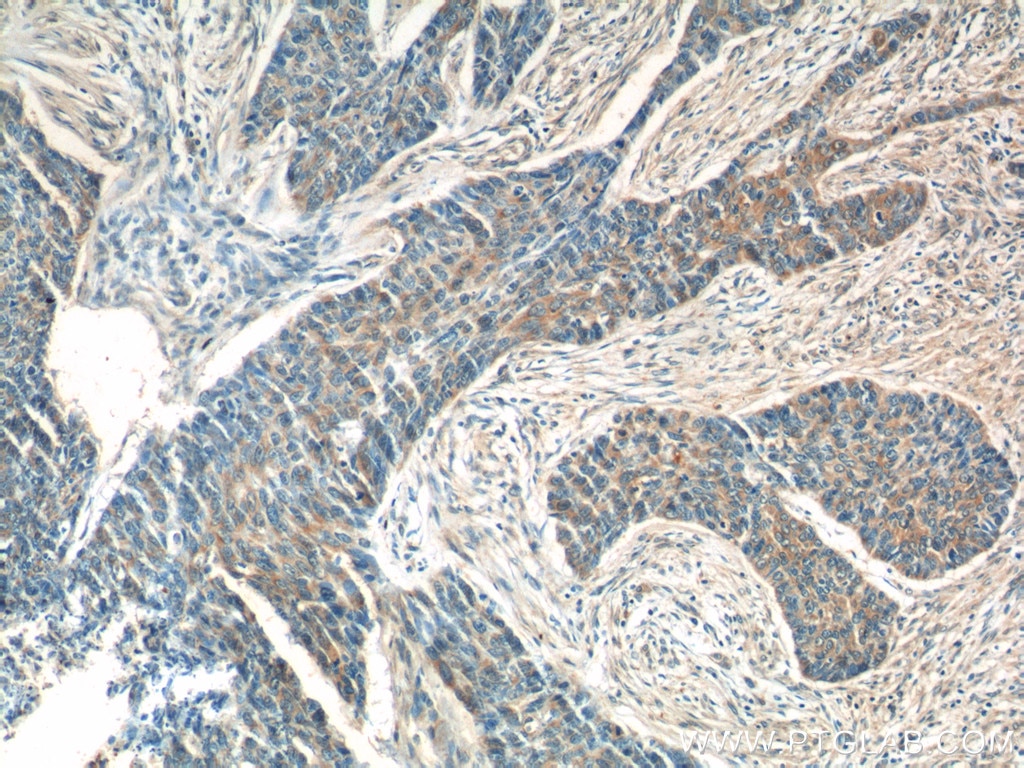
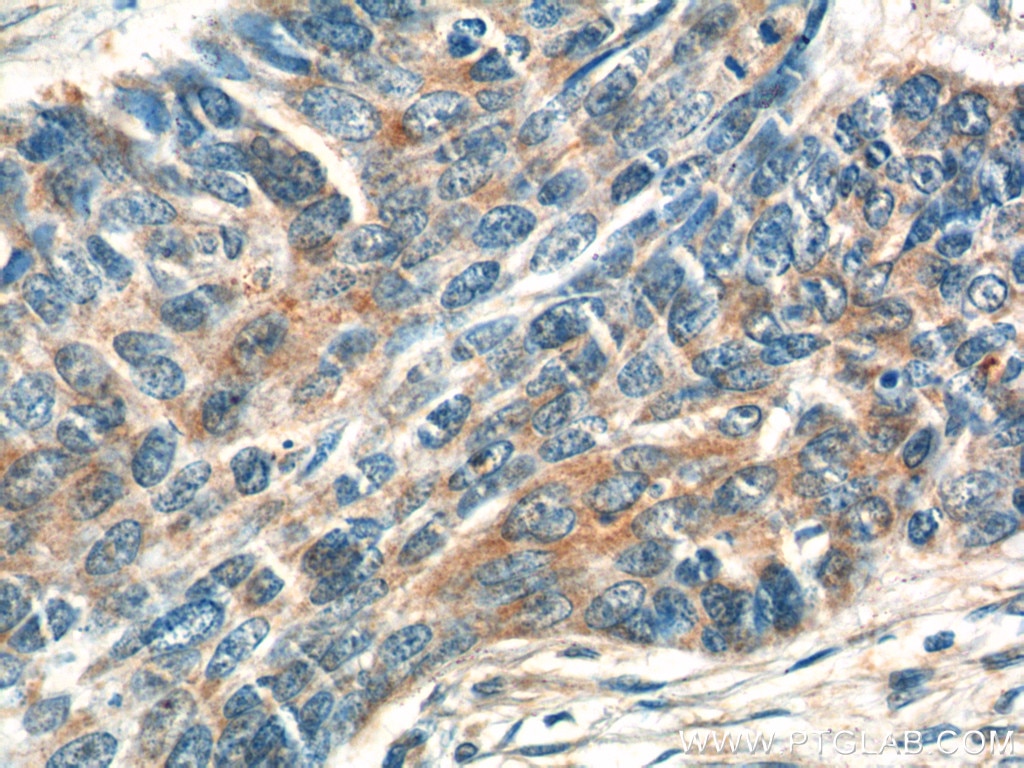
| Positive IHC detected in | human skin cancer tissue Note: suggested antigen retrieval with TE buffer pH 9.0; (*) Alternatively, antigen retrieval may be performed with citrate buffer pH 6.0 |
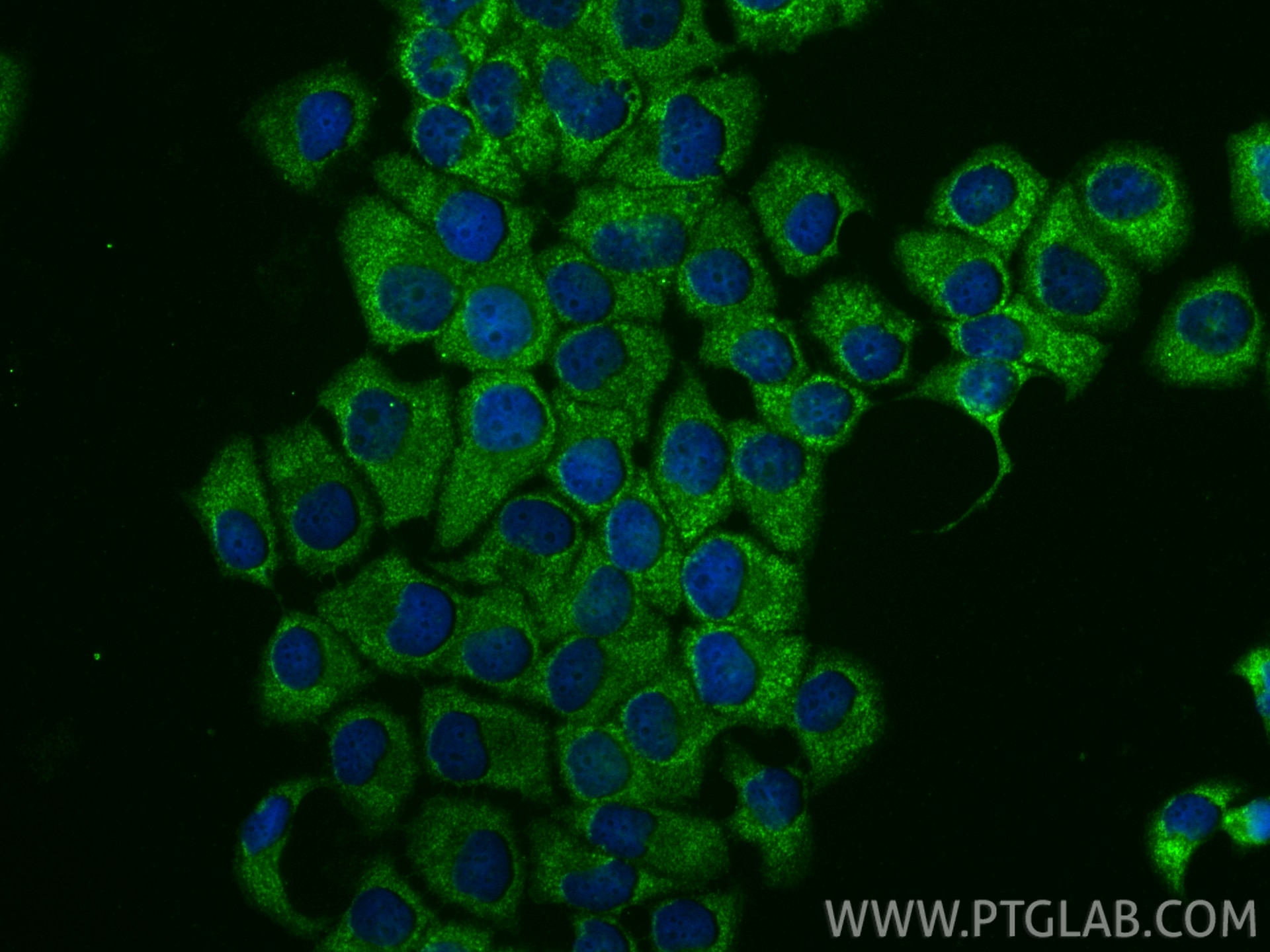
| Positive IF/ICC detected in | NCCIT cells |
Recommended dilution
| Application | Dilution |
|---|---|
| Western Blot (WB) | WB : 1:500-1:1000 |
| Immunoprecipitation (IP) | IP : 0.5-4.0 ug for 1.0-3.0 mg of total protein lysate |
| Immunohistochemistry (IHC) | IHC : 1:50-1:500 |
| Immunofluorescence (IF)/ICC | IF/ICC : 1:200-1:800 |
| It is recommended that this reagent should be titrated in each testing system to obtain optimal results. | |
| Sample-dependent, Check data in validation data gallery. | |
Product Information
16610-1-AP targets ATAD3A/B in WB, IHC, IF/ICC, IP, CoIP, ELISA applications and shows reactivity with human, mouse, rat samples.
| Tested Reactivity | human, mouse, rat |
| Cited Reactivity | human, mouse, rat |
| Host / Isotype | Rabbit / IgG |
| Class | Polyclonal |
| Type | Antibody |
| Immunogen |
CatNo: Ag9836 Product name: Recombinant human ATAD3B protein Source: e coli.-derived, PGEX-4T Tag: GST Domain: 1-270 aa of BC002542 Sequence: MSWLFGVNKGPKGEGAGPPPPLPPAQPGAEGGGDRGLGDRPAPKDKWSNFDPTGLERAAKAARELEHSRYAKEALNLAQMQEQTLQLEQQSKLKEYEAAVEQLKSEQIRAQAEERRKTLSEETRQHQARAQYQDKLARQRYEDQLKQQRLLNEENLRKQEESVQKQEAMRRATVEREMELRHKNEMLRVETEARARAKAERENADIIREQIRLKASEHRQTVLESIRTAGTLFGEGFRAFVTDRDKVTATVAGLTLLAVGVYSAKNATAV Predict reactive species |
| Full Name | ATPase family, AAA domain containing 3B |
| Calculated Molecular Weight | 72 kDa |
| Observed Molecular Weight | 68 kDa |
| GenBank Accession Number | BC002542 |
| Gene Symbol | ATAD3B |
| Gene ID (NCBI) | 83858 |
| RRID | AB_2878288 |
| Conjugate | Unconjugated |
| Form | Liquid |
| Purification Method | Antigen affinity purification |
| UNIPROT ID | Q5T9A4 |
| Storage Buffer | PBS with 0.02% sodium azide and 50% glycerol, pH 7.3. |
| Storage Conditions | Store at -20°C. Stable for one year after shipment. Aliquoting is unnecessary for -20oC storage. 20ul sizes contain 0.1% BSA. |
Background Information
ATAD3 (ATPase family AAA Domain-containing protein 3) is a mitochondrial membrane bound ATPase whose function has not yet been discovered but its role is essential for embryonic development. The analysis of the cellular properties of ATAD3A and ATAD3B in different human cancer cell lines shows on the contrary that they can present anti-proliferative and chemoresistant properties. This antibody can detect both ATAD3A and ATAD3B.
Protocols
| Product Specific Protocols | |
|---|---|
| IF protocol for ATAD3A/B antibody 16610-1-AP | Download protocol |
| IHC protocol for ATAD3A/B antibody 16610-1-AP | Download protocol |
| IP protocol for ATAD3A/B antibody 16610-1-AP | Download protocol |
| Standard Protocols | |
|---|---|
| Click here to view our Standard Protocols |
Publications
What published studies show
The ATAD3A/B Polyclonal antibody (Cat# 16610-1-AP) has 22 citations published in journals including Nature Communications, Cell Metabolism, Molecular Cell, EMBO Journal, PNAS, Cell Reports, Hepatology, Metabolism, Journal of Biological Chemistry, Free Radical Biology and Medicine, and others. Research fields span mitochondrial biology, mitophagy, mtDNA dynamics, cristae remodeling, oxidative stress, ischemia-reperfusion injury, metabolic disease, and neurodegeneration.
| Species | Application | Title |
|---|---|---|
Cell Metab MARIGOLD and MitoCIAO, two searchable compendia to visualize and functionalize protein complexes during mitochondrial remodeling
| ||
Nat Commun Mitochondrial membrane proteins and VPS35 orchestrate selective removal of mtDNA | ||
Hepatology Loss of Sam50 in hepatocytes induces cardiolipin-dependent mitochondrial membrane remodeling to trigger mtDNA release and liver injury | ||
Metabolism SEC62 at mitochondria-associated membranes drives MASH progression by suppressing ATAD3B-mediated mitochondrial quality control. | ||
Mol Cell Mitochondrial DNA breaks activate an integrated stress response to reestablish homeostasis |






