

Tested Applications
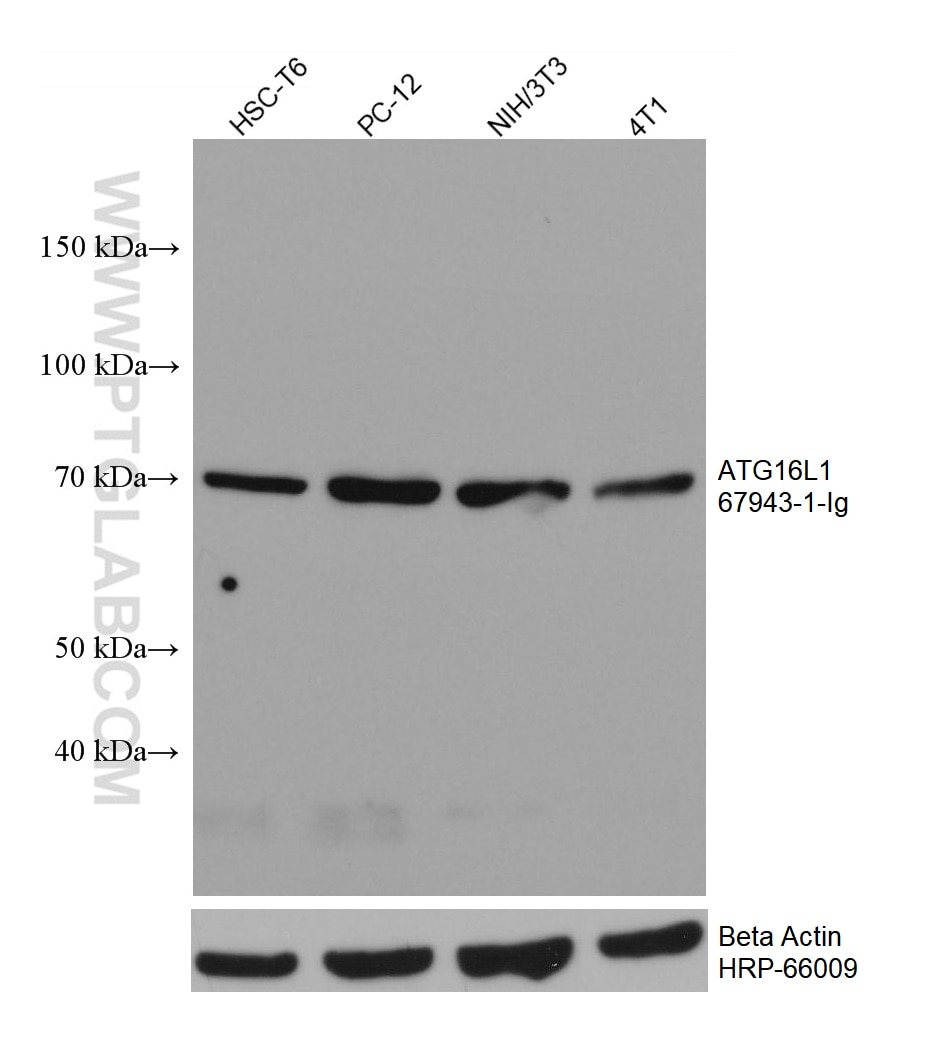
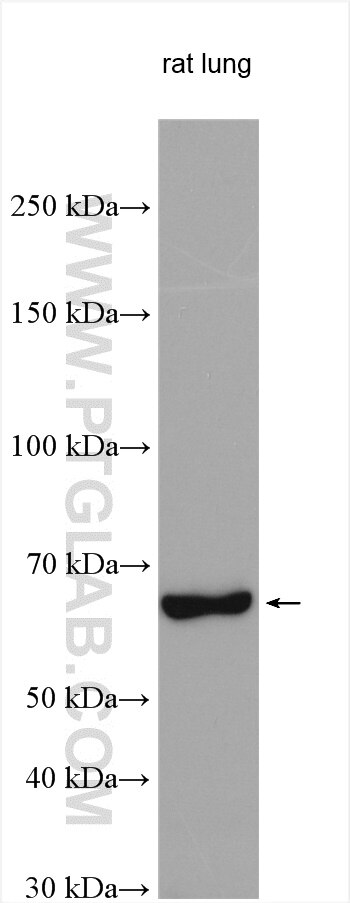
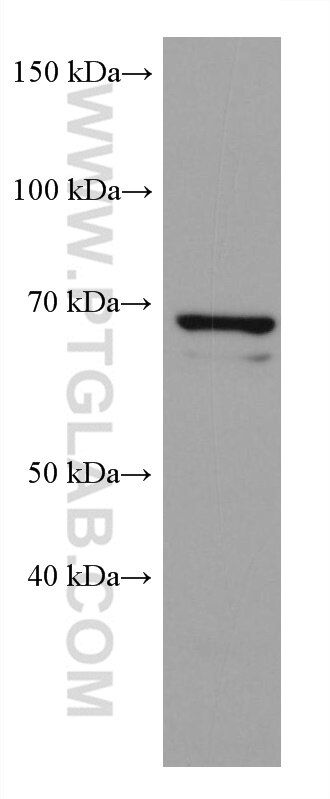
| Positive WB detected in | HSC-T6 cells, HepG2 cells, rat lung tissue, PC-12 cells, NIH/3T3 cells, 4T1 cells |
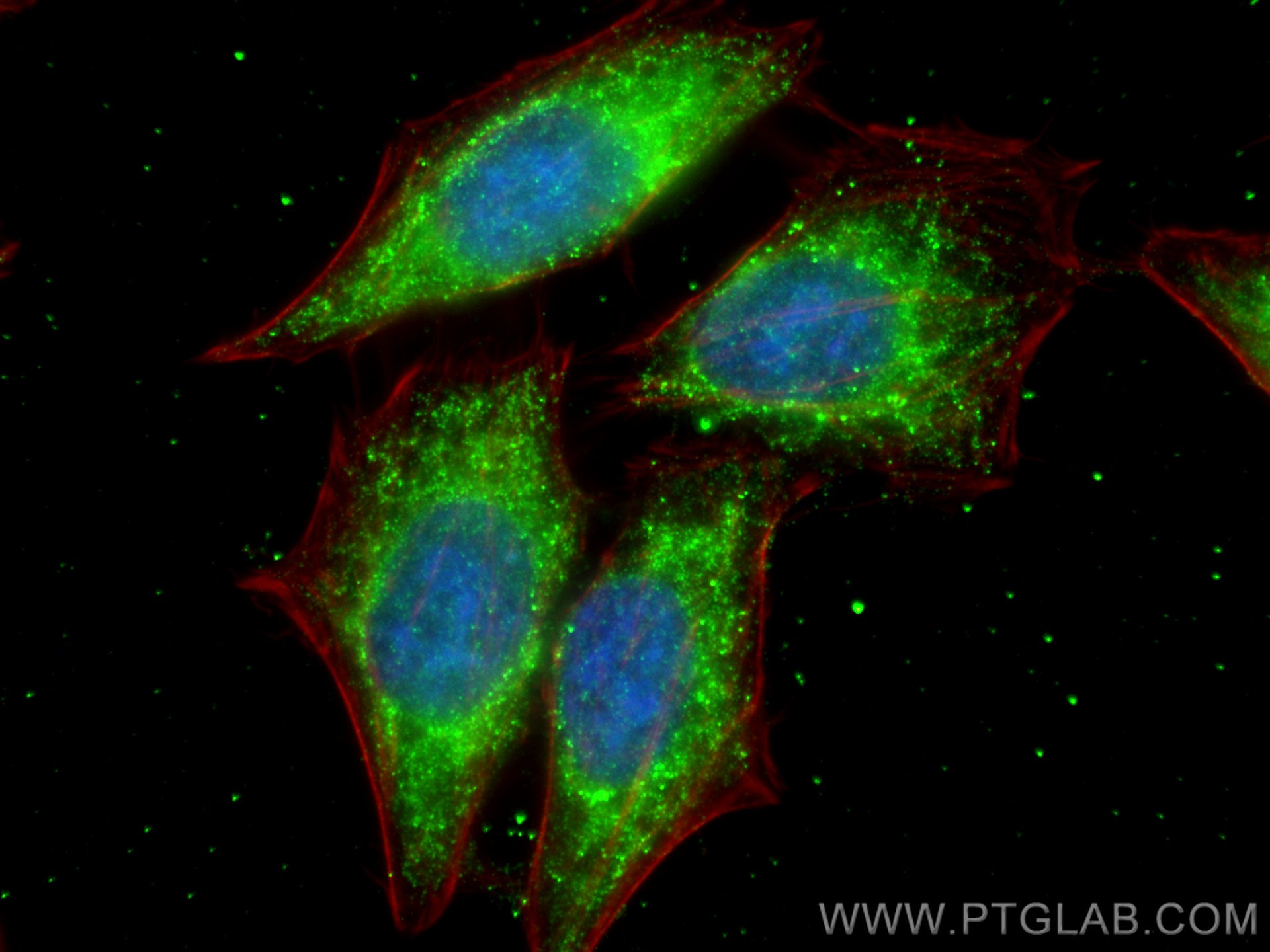
| Positive IF/ICC detected in | HepG2 cells |
Recommended dilution
| Application | Dilution |
|---|---|
| Western Blot (WB) | WB : 1:1000-1:6000 |
| Immunofluorescence (IF)/ICC | IF/ICC : 1:200-1:800 |
| It is recommended that this reagent should be titrated in each testing system to obtain optimal results. | |
| Sample-dependent, Check data in validation data gallery. | |
Product Information
67943-1-Ig targets ATG16L1 in WB, IF/ICC, ELISA applications and shows reactivity with Human, mouse, rat samples.
| Tested Reactivity | Human, mouse, rat |
| Cited Reactivity | human, mouse, rat, pig |
| Host / Isotype | Mouse / IgG1 |
| Class | Monoclonal |
| Type | Antibody |
| Immunogen |
CatNo: Ag14881 Product name: Recombinant human ATG16L1 protein Source: e coli.-derived, PET28a Tag: 6*His Domain: 258-607 aa of BC000061 Sequence: RAISRAATKRLSQPAGGLLDSITNIFGRRSVSSFPVPQDNVDAHPGSGKEVRVPATALCVFDAHDGEVNAVQFSPGSRLLATGGMDRRVKLWEVFGEKCEFKGSLSGSNAGITSIEFDSAGSYLLAASNDFASRIWTVDDYRLRHTLTGHSGKVLSAKFLLDNARIVSGSHDRTLKLWDLRSKVCIKTVFAGSSCNDIVCTEQCVMSRHFDKKIRFWDIRSESIVREMELLGKITALDLNPERTELLSCSRDDLLKVIDLRTNAIKQTFSAPGFKCGSDWTRVVFSPDGSYVAAGSAEGSLYIWSVLTGKVEKVLSKQHSSSINAVAWSPSGSHVVSVDKGCKAVLWAQY Predict reactive species |
| Full Name | ATG16 autophagy related 16-like 1 (S. cerevisiae) |
| Calculated Molecular Weight | 607 aa, 68 kDa |
| Observed Molecular Weight | 68-75 kDa |
| GenBank Accession Number | BC000061 |
| Gene Symbol | ATG16L1 |
| Gene ID (NCBI) | 55054 |
| RRID | AB_2918695 |
| Conjugate | Unconjugated |
| Form | Liquid |
| Purification Method | Protein G purification |
| UNIPROT ID | Q676U5 |
| Storage Buffer | PBS with 0.02% sodium azide and 50% glycerol, pH 7.3. |
| Storage Conditions | Store at -20°C. Stable for one year after shipment. Aliquoting is unnecessary for -20oC storage. 20ul sizes contain 0.1% BSA. |
Background Information
Human ATG16L1 is a 607 amino acid protein (~68 kDa) comprising three major domains: the N‐terminal ATG5 binding domain (ATG5‐BD), the central coiled‐coil domain (CCD) and a predicted C‐terminal WD40‐domain. ATG16L1α and β (Atg16L1α, 63 kDa; and Atg16L1β, 71 kDa) are the major isoforms expressed in intestinal epithelium and macrophages , and all isoforms encode exon 9, which contains Thr 300. Atg16L1 mediates the cellular degradative process of autophagy and is considered a critical regulator of inflammation based on its genetic association with inflammatory bowel disease. ATG16L1 has been implicated in Crohn's disease. (PMID: 24553140, PMID: 22740627,PMID: 28685931)
Protocols
| Product Specific Protocols | |
|---|---|
| IF protocol for ATG16L1 antibody 67943-1-Ig | Download protocol |
| WB protocol for ATG16L1 antibody 67943-1-Ig | Download protocol |
| Standard Protocols | |
|---|---|
| Click here to view our Standard Protocols |
Publications
What published studies show
The ATG16L1 Monoclonal antibody (1G5G7), catalog number 67943-1-Ig, has 17 citations. These appear in journals including Immunity, Nature Biomedical Engineering, Redox Biology, Theranostics, Cancer Letters, Developmental Cell, EMBO Journal, Cell Reports, Frontiers in Immunology, Virulence, Cell Signaling, Molecular Carcinogenesis, and others. Research fields span autophagy regulation, cGAS-STING signaling, cardiotoxicity, liver injury, inflammation, cancer biology, neurology, and reproductive science.
| Species | Application | Title |
|---|---|---|
Immunity The cGAS-STING pathway activates transcription factor TFEB to stimulate lysosome biogenesis and pathogen clearance | ||
Nat Biomed Eng A deep learning and large language hybrid workflow for omics interpretation. | ||
Redox Biol Regulatory roles of NAMPT and NAD+ metabolism in uterine leiomyoma progression: Implications for ECM accumulation, stemness, and microenvironment | ||
Theranostics FUNDC1 alleviates doxorubicin-induced cardiotoxicity by restoring mitochondrial-endoplasmic reticulum contacts and blocked autophagic flux | ||
Cancer Lett LncRNA HITT inhibits autophagy by attenuating ATG12-ATG5-ATG16L1 complex formation | ||
Dev Cell V-ATPase recruitment to ER exit sites switches COPII-mediated transport to lysosomal degradation |





