

Tested Applications
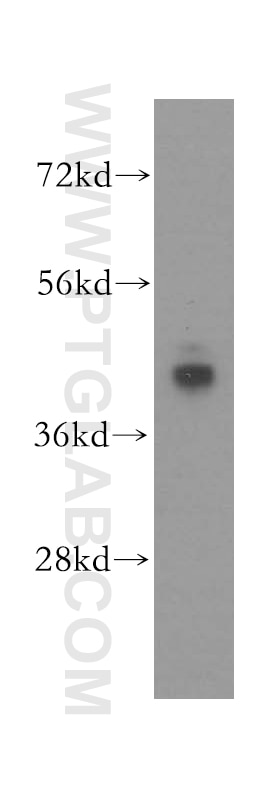
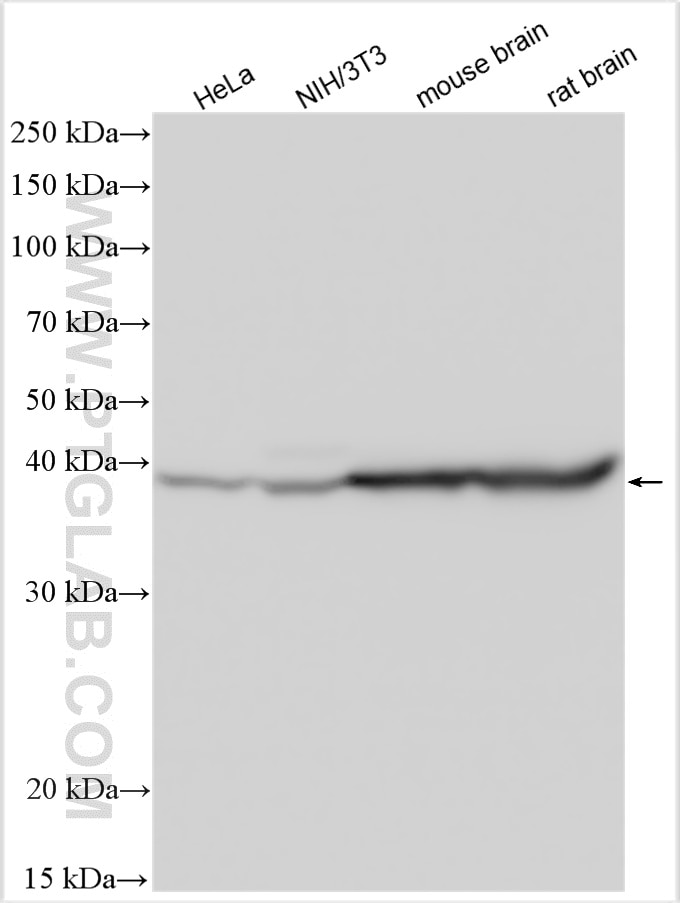
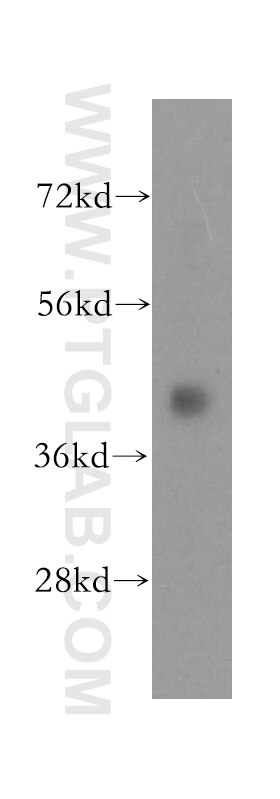
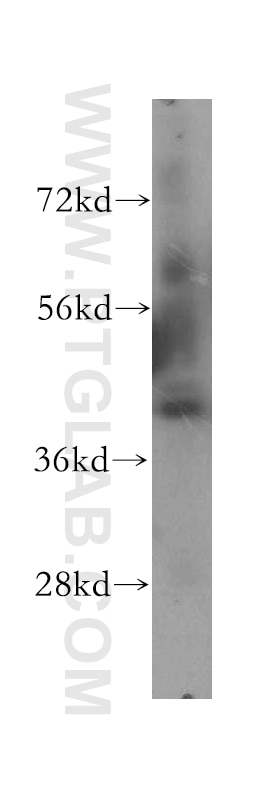
| Positive WB detected in | HeLa cells, NIH/3T3 cells, human brain tissue, human testis tissue, mouse brain tissue, rat brain tissue |
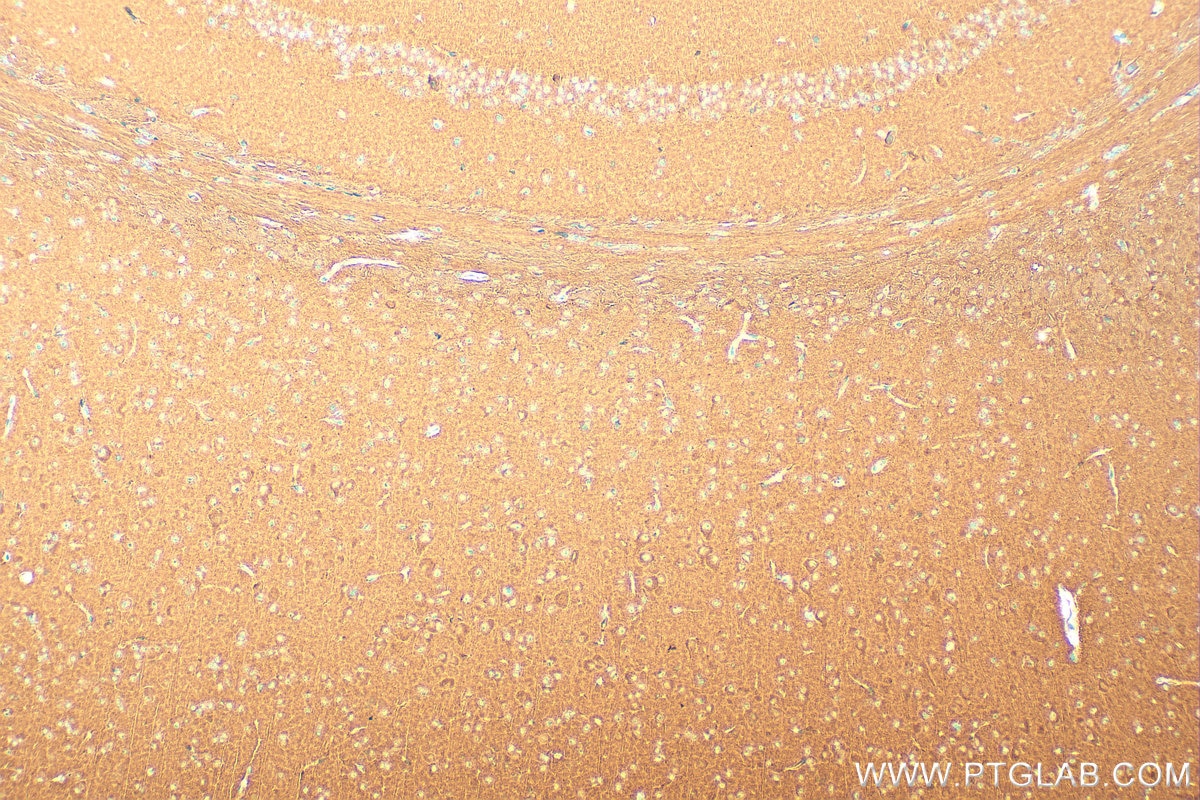
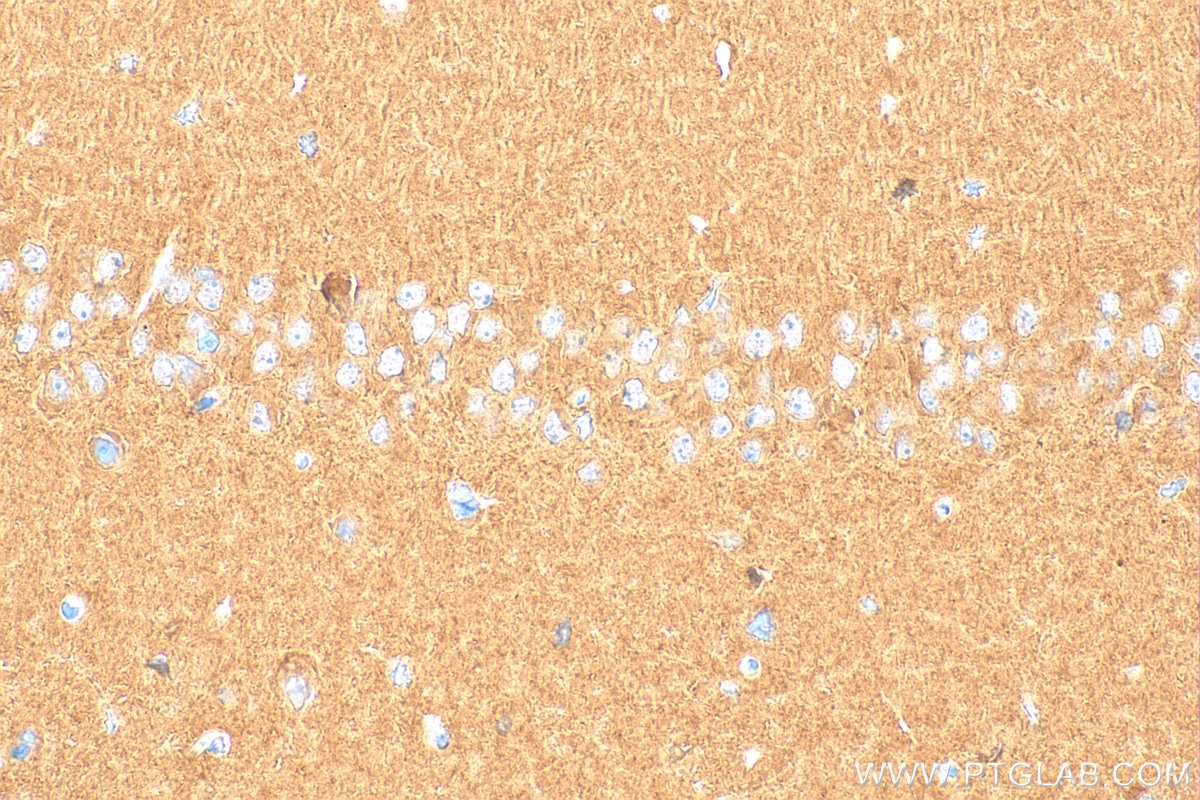
| Positive IHC detected in | mouse brain tissue Note: suggested antigen retrieval with TE buffer pH 9.0; (*) Alternatively, antigen retrieval may be performed with citrate buffer pH 6.0 |
Recommended dilution
| Application | Dilution |
|---|---|
| Western Blot (WB) | WB : 1:1000-1:4000 |
| Immunohistochemistry (IHC) | IHC : 1:250-1:1000 |
| It is recommended that this reagent should be titrated in each testing system to obtain optimal results. | |
| Sample-dependent, Check data in validation data gallery. | |
Product Information
16054-1-AP targets ATP6V1C1 in WB, IHC, IF, ELISA applications and shows reactivity with human, mouse, rat samples.
| Tested Reactivity | human, mouse, rat |
| Cited Reactivity | human, mouse |
| Host / Isotype | Rabbit / IgG |
| Class | Polyclonal |
| Type | Antibody |
| Immunogen |
CatNo: Ag9020 Product name: Recombinant human ATP6V1C1 protein Source: e coli.-derived, PGEX-4T Tag: GST Domain: 1-381 aa of BC010960 Sequence: MTEFWLISAPGEKTCQQTWEKLHAATSKNNNLAVTSKFNIPDLKVGTLDVLVGLSDELAKLDAFVEGVVKKVAQYMADVLEDSKDKVQENLLANGVDLVTYITRFQWDMAKYPIKQSLKNISEIIAKGVTQIDNDLKSRASAYNNLKGNLQNLERKNAGSLLTRSLAEIVKKDDFVLDSEYLVTLLVVVPKLNHNDWIKQYETLAEMVVPRSSNVLSEDQDSYLCNVTLFRKAVDDFRHKARENKFIVRDFQYNEEEMKADKEEMNRLSTDKKKQFGPLVRWLKVNFSEAFIAWIHVKALRVFVESVLRYGLPVNFQAMLLQPNKKTLKKLREVLHELYKHLDSSAAAIIDAPMDIPGLNLSQQEYYPYVYYKIDCNLLEF Predict reactive species |
| Full Name | ATPase, H+ transporting, lysosomal 42kDa, V1 subunit C1 |
| Calculated Molecular Weight | 382 aa, 44 kDa |
| Observed Molecular Weight | 42-44 kDa |
| GenBank Accession Number | BC010960 |
| Gene Symbol | ATP6V1C1 |
| Gene ID (NCBI) | 528 |
| RRID | AB_2062501 |
| Conjugate | Unconjugated |
| Form | Liquid |
| Purification Method | Antigen affinity purification |
| UNIPROT ID | P21283 |
| Storage Buffer | PBS with 0.02% sodium azide and 50% glycerol, pH 7.3. |
| Storage Conditions | Store at -20°C. Stable for one year after shipment. Aliquoting is unnecessary for -20oC storage. 20ul sizes contain 0.1% BSA. |
Background Information
The vacuolar H+-ATPase (V-ATPase) is a functionally conserved multimeric complex localized at the membranes of many organelles where its proton-pumping action is required for proper lumen acidification (PMID: 39210597). ATP6V1C1, also known as ATPase, H+ transporting, lysosomal V1 subunit C1, is a component of the V1 sector of the V-ATPase complex. ATP6v1c1 knockdown significantly reduces tumor stimulated bone resorption through osteoclastogenesis at the bone and metastasis in vivo, as well as V-ATPase activity, proliferation, and mTORC1 activation in vitro (PMID: 28504970). Also, ATP6V1C1, associated with the tumor microenvironment and mTORC1 signaling pathway, is a potential diagnostic, prognostic, and therapeutic biomarker for hepatocellular carcinoma () (PMID: 39557733).
Protocols
| Product Specific Protocols | |
|---|---|
| IHC protocol for ATP6V1C1 antibody 16054-1-AP | Download protocol |
| WB protocol for ATP6V1C1 antibody 16054-1-AP | Download protocol |
| Standard Protocols | |
|---|---|
| Click here to view our Standard Protocols |
Publications
What published studies show
The ATP6V1C1 Polyclonal antibody (Cat# 16054-1-AP) has 13 citations. Journals include Nature, Autophagy, Nat Struct Mol Biol, Mol Ther, Proc Natl Acad Sci U S A, Cell Rep, Commun Biol, J Biol Chem, JBMR Plus, Discov Oncol, Biochem Biophys Res Commun, Bioengineered, and bioRxiv. Research fields span autophagy, lysosomal biology, V-ATPase structure, cancer (glioblastoma, hepatocellular carcinoma, lung adenocarcinoma), ferroptosis, bone remodeling, and lysosomal stress signaling.
| Species | Application | Title |
|---|---|---|
Autophagy Inhibition of autophagy and induction of glioblastoma cell death by NEO214, a perillyl alcohol-rolipram conjugate | ||
Nat Struct Mol Biol A heterotrimeric protein complex assembles the metazoan V-ATPase upon dissipation of proton gradients | ||
Proc Natl Acad Sci U S A Oxr1 and Ncoa7 regulate V-ATPase to achieve optimal pH for glycosylation within the Golgi apparatus and trans-Golgi network | ||
Cell Rep Cancer-associated fibroblast-derived extracellular vesicles deliver ATP6V1C1 to promote lung adenocarcinoma metastasis via the ID1-IGFBP3 axis. | ||
Commun Biol A substrate-trapping strategy to find E3 ubiquitin ligase substrates identifies Parkin and TRIM28 targets. |







