

Tested Applications
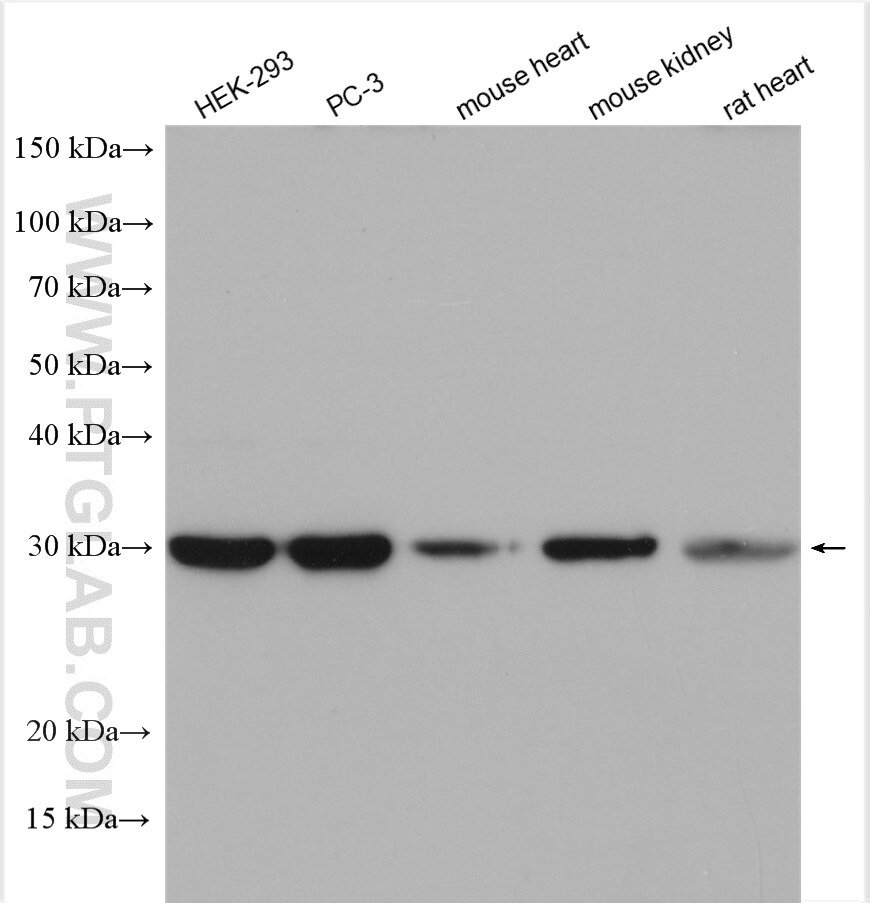
| Positive WB detected in | HEK-293 cells, PC-3 cells, mouse heart tissue, mouse kidney tissue, rat heart tissue, |
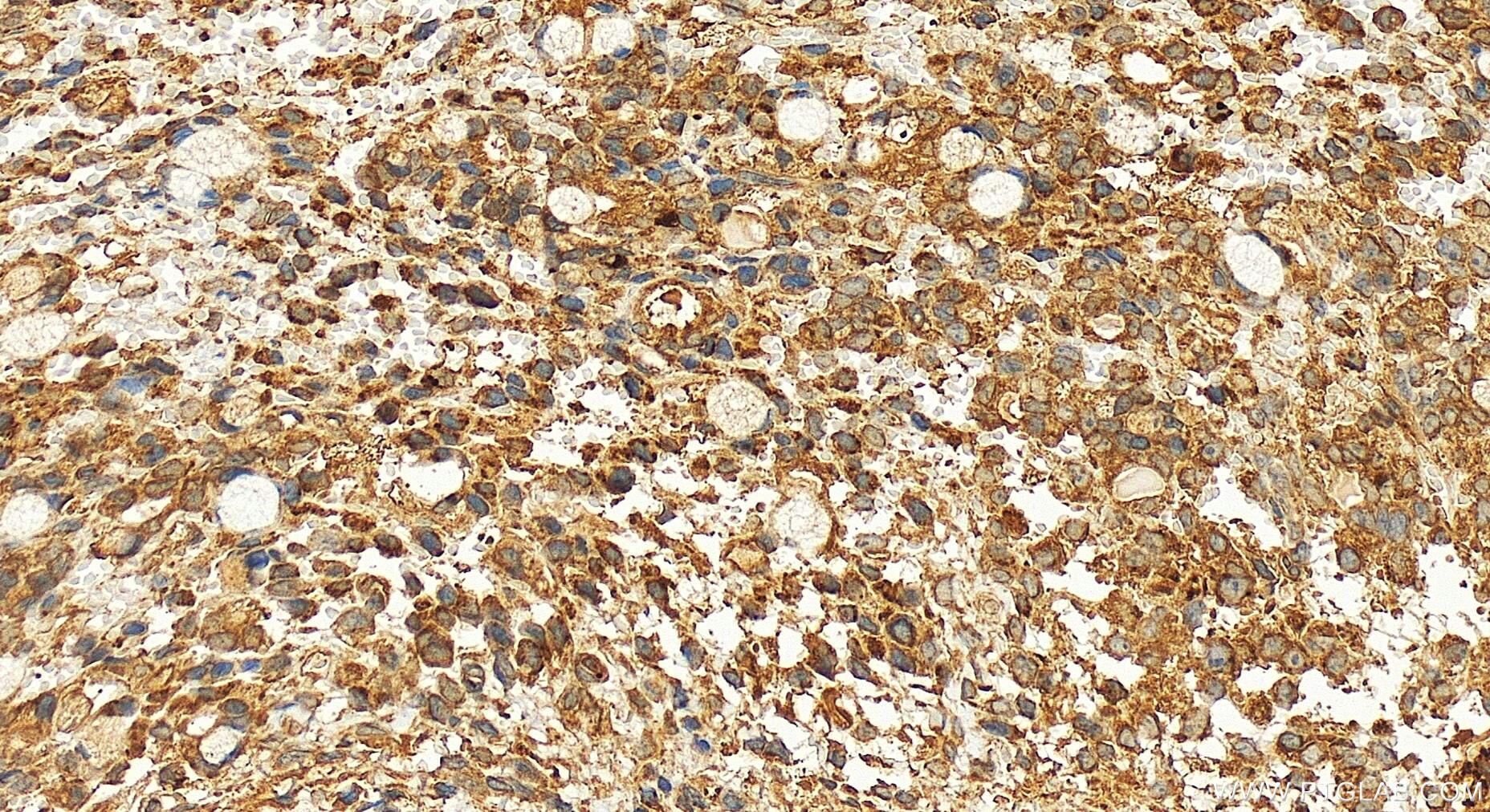
| Positive IHC detected in | human ovary cancer tissue Note: suggested antigen retrieval with TE buffer pH 9.0; (*) Alternatively, antigen retrieval may be performed with citrate buffer pH 6.0 |
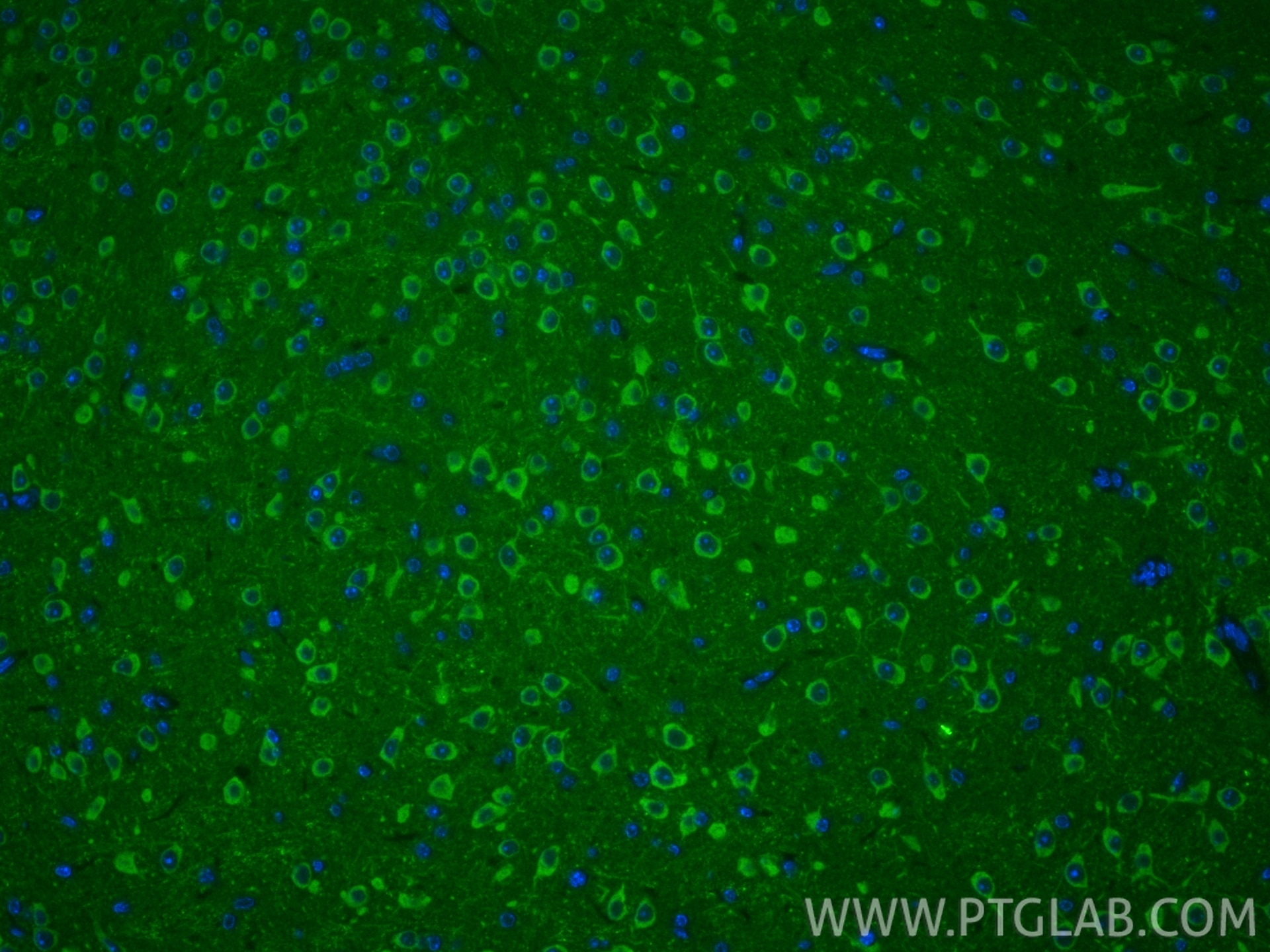
| Positive IF-P detected in | mouse brain tissue |
Recommended dilution
| Application | Dilution |
|---|---|
| Western Blot (WB) | WB : 1:500-1:4000 |
| Immunohistochemistry (IHC) | IHC : 1:50-1:500 |
| Immunofluorescence (IF)-P | IF-P : 1:200-1:800 |
| It is recommended that this reagent should be titrated in each testing system to obtain optimal results. | |
| Sample-dependent, Check data in validation data gallery. | |
Product Information
18016-1-AP targets ATPAF1 in WB, IHC, IF-P, ELISA applications and shows reactivity with human, mouse, rat samples.
| Tested Reactivity | human, mouse, rat |
| Cited Reactivity | human, mouse |
| Host / Isotype | Rabbit / IgG |
| Class | Polyclonal |
| Type | Antibody |
| Immunogen |
CatNo: Ag12557 Product name: Recombinant human ATPAF1 protein Source: e coli.-derived, PET28a Tag: 6*His Domain: 25-328 aa of BC071731 Sequence: GLCAVRSRALGLGLVSPAQLRVFPVRPGSGRPEGGADGSGVGAEAELQANPFYDRYRDKIQLLRRSDPAAFESRLEKRSEFRKQPVGHSRQGDFIKCVEQKTDALGKQSVNRGFTKDKTLSSIFNIEMVKEKTAEEIKQIWQQYFAAKDTVYAVIPAEKFDLIWNRAQSCPTFLCALPRREGYEFFVGQWTGTELHFTALINIQTRGEAAASQLILYHYPELKEEKGIVLMTAEMDSTFLNVAEAQCIANQVQLFYATDRKETYGLVETFNLRPNEFKYMSVIAELEQSGLGAELKCAQNQNKT Predict reactive species |
| Full Name | ATP synthase mitochondrial F1 complex assembly factor 1 |
| Calculated Molecular Weight | 328 aa, 36 kDa |
| Observed Molecular Weight | 31 kDa |
| GenBank Accession Number | BC071731 |
| Gene Symbol | ATPAF1 |
| Gene ID (NCBI) | 64756 |
| RRID | AB_2243352 |
| Conjugate | Unconjugated |
| Form | Liquid |
| Purification Method | Antigen affinity purification |
| UNIPROT ID | Q5TC12 |
| Storage Buffer | PBS with 0.02% sodium azide and 50% glycerol, pH 7.3. |
| Storage Conditions | Store at -20°C. Stable for one year after shipment. Aliquoting is unnecessary for -20oC storage. 20ul sizes contain 0.1% BSA. |
Protocols
| Product Specific Protocols | |
|---|---|
| IF protocol for ATPAF1 antibody 18016-1-AP | Download protocol |
| IHC protocol for ATPAF1 antibody 18016-1-AP | Download protocol |
| WB protocol for ATPAF1 antibody 18016-1-AP | Download protocol |
| Standard Protocols | |
|---|---|
| Click here to view our Standard Protocols |
Publications
What published studies show
The ATPAF1 Polyclonal antibody (Cat# 18016-1-AP) has 6 citations published in Metabolism, Cell Death & Disease, EMBO Journal, International Journal of Molecular Sciences, iScience, and American Journal of Physiology – Endocrinology and Metabolism. Research fields span ATP synthase structure and function, mitochondrial biogenesis, metabolic homeostasis, chemotherapy resistance in acute myeloid leukemia, renal cell carcinoma progression, tRNA modification–related mitochondrial quality control, and cardiac SIRT3-mediated deacetylation.
| Species | Application | Title |
|---|---|---|
Metabolism FAM3A maintains metabolic homeostasis by interacting with F1-ATP synthase to regulate the activity and assembly of ATP synthase | ||
Cell Death Dis The ALDH2/PolG2 axis enhances mitochondrial biogenesis via transcriptional regulation of Nrf2 and promotes chemotherapy resistance in acute myeloid leukaemia. | ||
Int J Mol Sci CA9 Silencing Promotes Mitochondrial Biogenesis, Increases Putrescine Toxicity and Decreases Cell Motility to Suppress ccRCC Progression. | ||
iScience Deficient tRNA posttranscription modification dysregulated the mitochondrial quality controls and apoptosis | ||
Am J Physiol Endocrinol Metab Exogenous H2S reduces acetylation levels of mitochondrial respiratory enzymes via regulating NAD+-SIRT3 pathway in cardiac tissues of db/db mice. |




