

Product Information
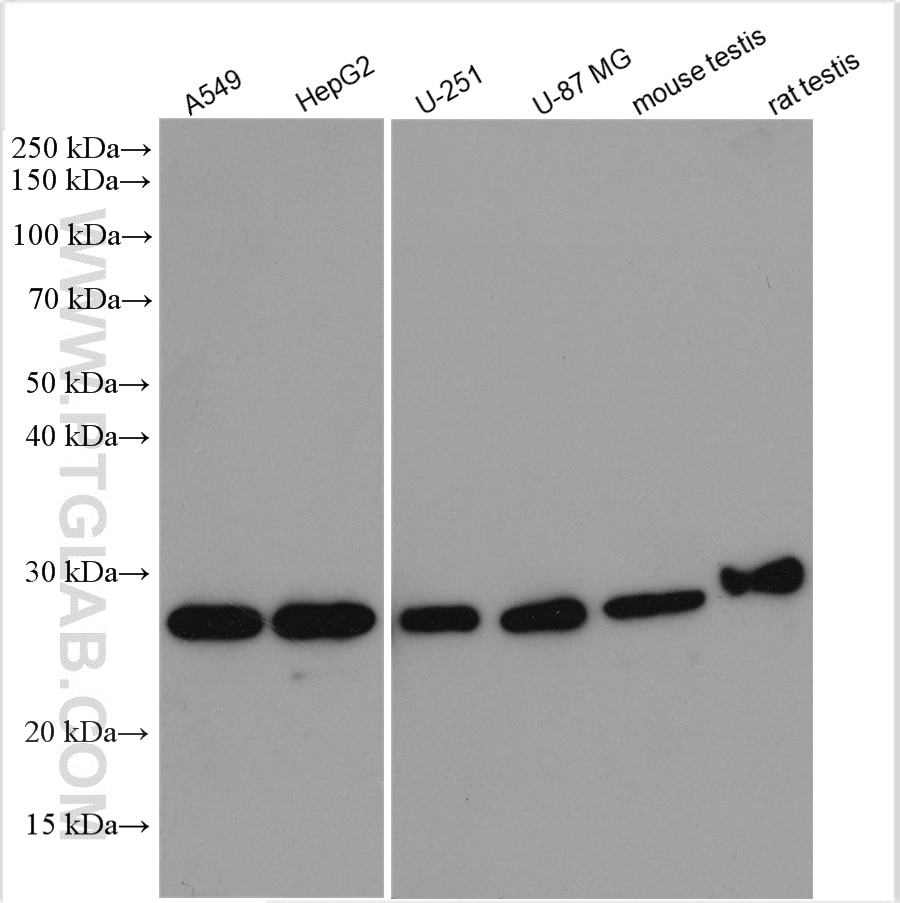
29820-1-PBS targets BAG2 in WB, Indirect ELISA applications and shows reactivity with human, mouse, rat samples.
| Tested Reactivity | human, mouse, rat |
| Host / Isotype | Rabbit / IgG |
| Class | Polyclonal |
| Type | Antibody |
| Immunogen |
CatNo: Ag30873 Product name: Recombinant human BAG2 protein Source: e coli.-derived, PGEX-4T Tag: GST Domain: 1-134 aa of NM_004282 Sequence: MAQAKINAKANEGRFCRSSSMADRSSRLLESLDQLELRVEALREAATAVEQEKEILLEMIHSIQNSQDMRQISDGEREELNLTANRLMGRTLTVEVSVETIRNPQQQESLKHATRIIDEVVNKFLDDLGNAKSH Predict reactive species |
| Full Name | BCL2-associated athanogene 2 |
| Calculated Molecular Weight | 24 kDa |
| Observed Molecular Weight | 25-27 kDa |
| GenBank Accession Number | NM_004282 |
| Gene Symbol | BAG2 |
| Gene ID (NCBI) | 9532 |
| RRID | AB_2918348 |
| Conjugate | Unconjugated |
| Form | Liquid |
| Purification Method | Antigen affinity purification |
| UNIPROT ID | O95816 |
| Storage Buffer | PBS only, pH 7.3. |
| Storage Conditions | Store at -80°C. |
Background Information
BAG2 (BAG family molecular chaperone regulator 2) is one of six proteins in mammals that contain the BAG domain, which belongs to the BAG (Bcl-2-associated athanogene) family. BAG2 has been described as a negative regulator of the chaperone-associated ubiquitin ligase C terminus of Hsc70-interacting protein (CHIP) that participates in the ubiquitin-mediated proteasomal degradation of misfolded substrate proteins (PMID: 16207813). BAG2 is widely expressed in human tissues, including brown adipose, heart and lung tissue, as well as in various types of tumor cells, including renal cell carcinoma, glioblastoma and thyroid carcinoma cells (PMID: 28536620). BAG2 overexpression is associated with poor prognosis in patients and mutp53 accumulation in tumors (PMID: 26271008).


