

Tested Applications
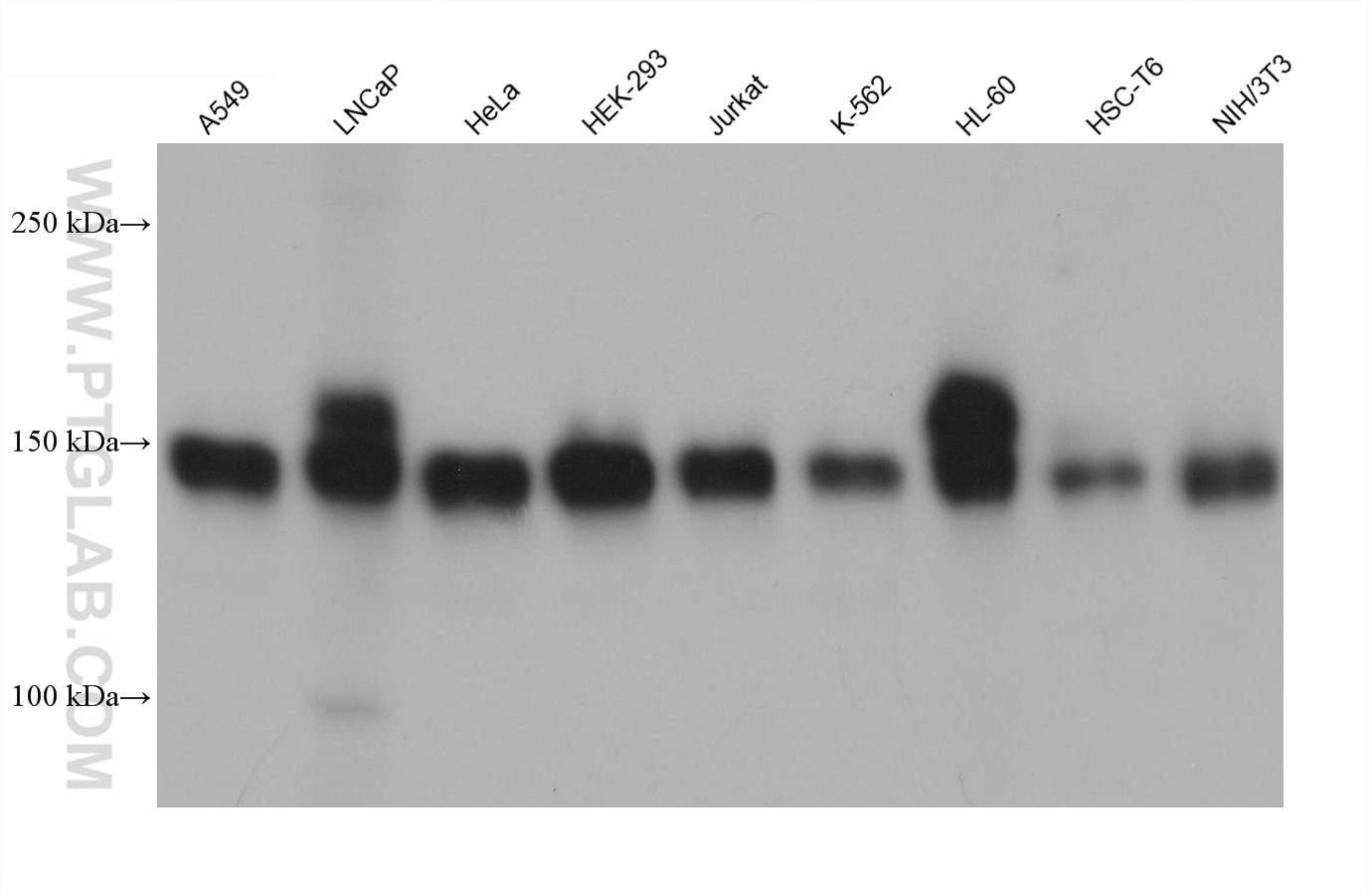
| Positive WB detected in | A549 cells, HEK-293 cells, LNCaP cells, HeLa cells, Jurkat cells, K-562 cells, HL-60 cells, HSC-T6 cells, NIH/3T3 cells |
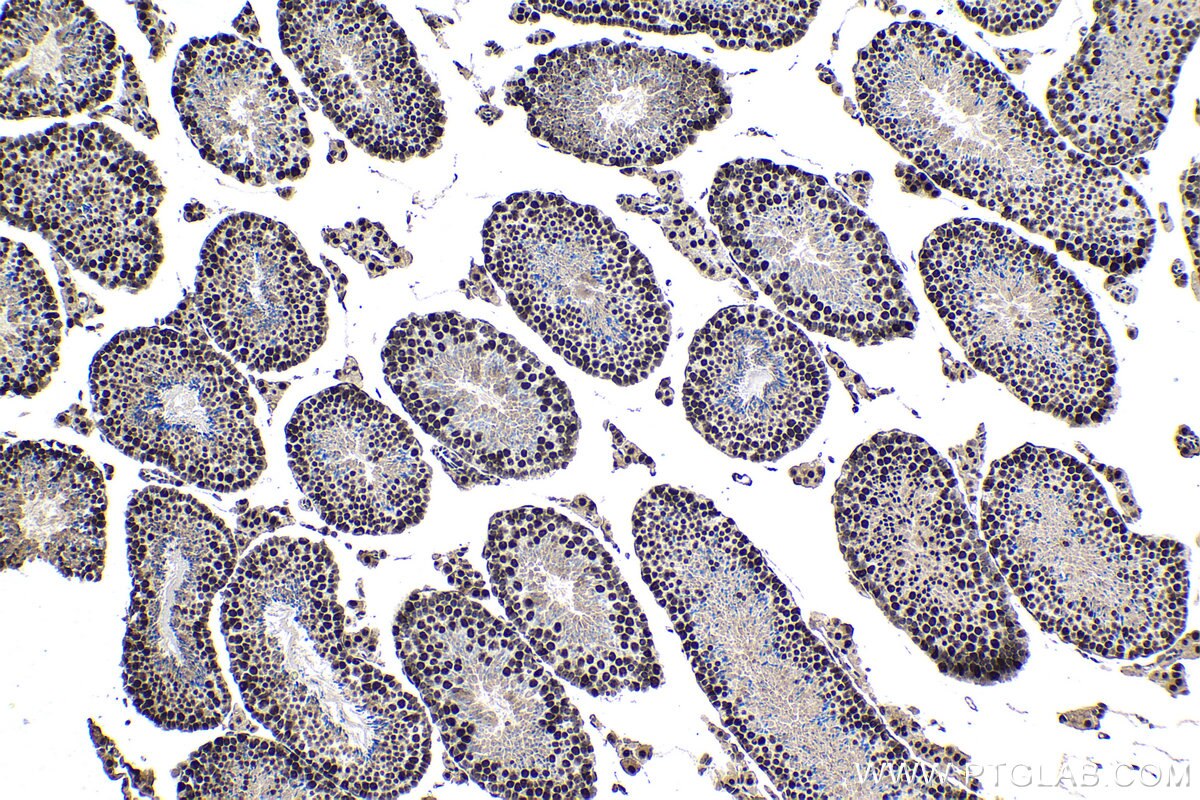
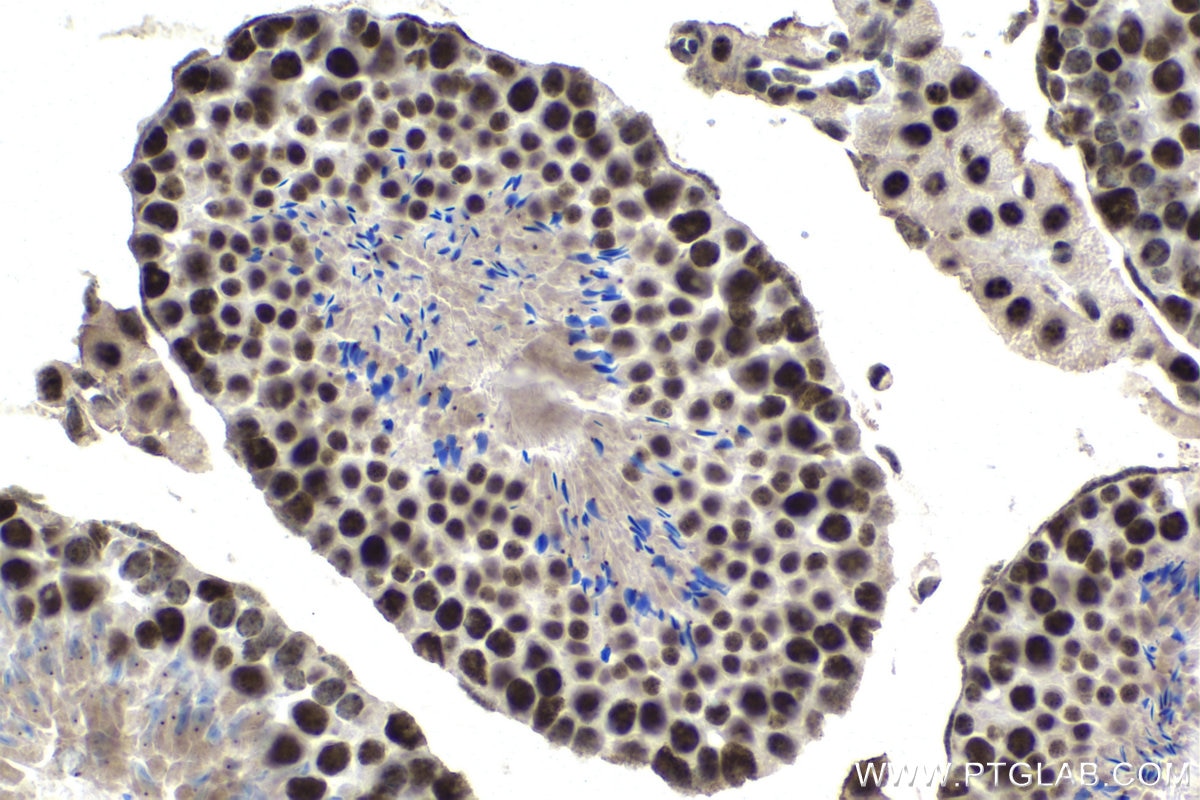
| Positive IHC detected in | mouse testis tissue Note: suggested antigen retrieval with TE buffer pH 9.0; (*) Alternatively, antigen retrieval may be performed with citrate buffer pH 6.0 |
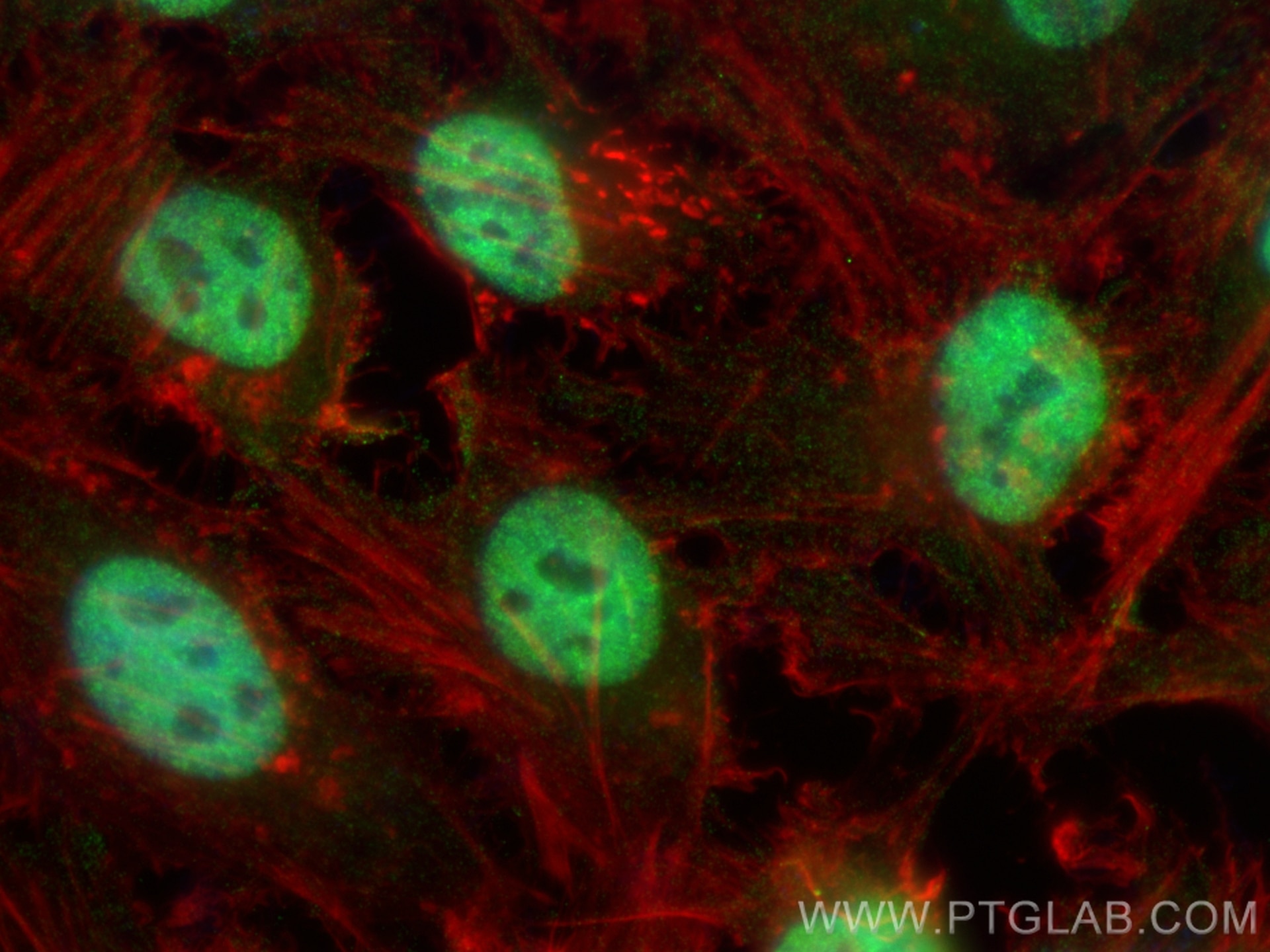
| Positive IF/ICC detected in | HeLa cells |
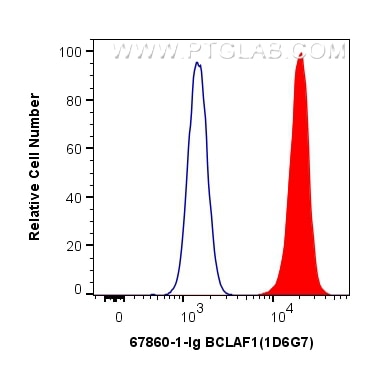
| Positive FC (Intra) detected in | HepG2 cells |
Recommended dilution
| Application | Dilution |
|---|---|
| Western Blot (WB) | WB : 1:5000-1:50000 |
| Immunohistochemistry (IHC) | IHC : 1:500-1:2000 |
| Immunofluorescence (IF)/ICC | IF/ICC : 1:400-1:1600 |
| Flow Cytometry (FC) (INTRA) | FC (INTRA) : 0.50 ug per 10^6 cells in a 100 µl suspension |
| It is recommended that this reagent should be titrated in each testing system to obtain optimal results. | |
| Sample-dependent, Check data in validation data gallery. | |
Product Information
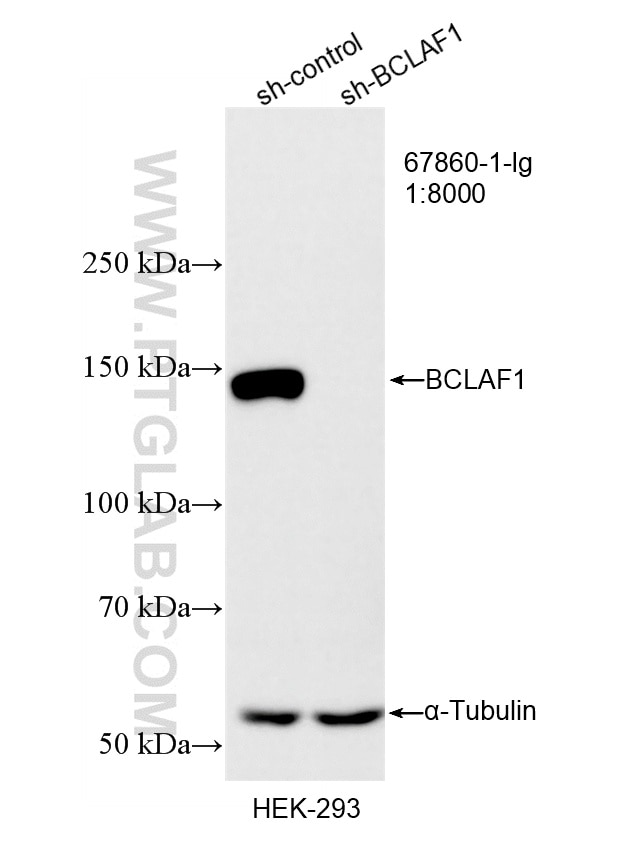
67860-1-Ig targets BCLAF1 in WB, IHC, IF/ICC, FC (Intra), ELISA applications and shows reactivity with human, mouse, rat samples.
| Tested Reactivity | human, mouse, rat |
| Cited Reactivity | human, mouse |
| Host / Isotype | Mouse / IgG1 |
| Class | Monoclonal |
| Type | Antibody |
| Immunogen |
CatNo: Ag25210 Product name: Recombinant human BCLAF1 protein Source: e coli.-derived, PGEX-4T Tag: GST Domain: 881-920 aa of BC132780 Sequence: SGSSPKWTHDKYQGDGIVEDEEETMENNEEKKDRRKEEKE Predict reactive species |
| Full Name | BCL2-associated transcription factor 1 |
| Calculated Molecular Weight | 920 aa, 106 kDa |
| Observed Molecular Weight | 145 kDa |
| GenBank Accession Number | BC132780 |
| Gene Symbol | BCLAF1 |
| Gene ID (NCBI) | 9774 |
| RRID | AB_2918618 |
| Conjugate | Unconjugated |
| Form | Liquid |
| Purification Method | Protein G purification |
| UNIPROT ID | Q9NYF8 |
| Storage Buffer | PBS with 0.02% sodium azide and 50% glycerol, pH 7.3. |
| Storage Conditions | Store at -20°C. Stable for one year after shipment. Aliquoting is unnecessary for -20oC storage. 20ul sizes contain 0.1% BSA. |
Background Information
BCLF1, also named as Bcl-2-associated transcription factor 1, is a 920 amino acid protein, which Interacts with Bcl-2 related proteins, EMD, with the adenovirus E1B 19 kDa protein and with DNA. BCLF1 as a death-promoting transcriptional repressor may be involved in cyclin-D1/CCND1 mRNA stability through the SNARP complex which associates with both the 3'end of the CCND1 gene and its mRNA. The calculated molecular weight of BCLF1 is a 110 kDa, but the modified BCLF1 protein is about 140-150 kDa.
Protocols
| Product Specific Protocols | |
|---|---|
| FC protocol for BCLAF1 antibody 67860-1-Ig | Download protocol |
| IF protocol for BCLAF1 antibody 67860-1-Ig | Download protocol |
| IHC protocol for BCLAF1 antibody 67860-1-Ig | Download protocol |
| WB protocol for BCLAF1 antibody 67860-1-Ig | Download protocol |
| Standard Protocols | |
|---|---|
| Click here to view our Standard Protocols |
Publications
What published studies show
The anti-PD-L1 antibody (Cat# 67860-1-Ig) has 2 citations published in Autophagy (IF 18.6) and Cell & Molecular Life Sciences (IF 6.5). Associated research fields include autophagy-related primary ovarian insufficiency in mouse granulosa cells (WB) and hepatocellular carcinoma immune escape via PD-L1 stabilization in humans (WB, IHC, IF).
| Species | Application | Title |
|---|---|---|
Autophagy Epg5 deficiency leads to primary ovarian insufficiency due to WT1 accumulation in mouse granulosa cells. | ||
Cell Mol Life Sci BCLAF1 binds SPOP to stabilize PD-L1 and promotes the development and immune escape of hepatocellular carcinoma
|







