

Product Information
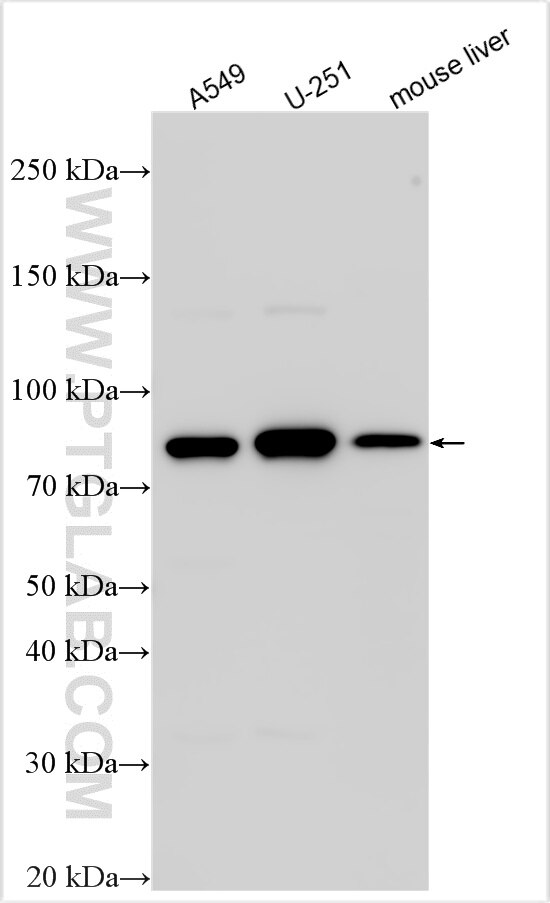
32933-1-PBS targets EXOC3L4 in WB, Indirect ELISA applications and shows reactivity with human, mouse samples.
| Tested Reactivity | human, mouse |
| Host / Isotype | Rabbit / IgG |
| Class | Polyclonal |
| Type | Antibody |
| Immunogen |
CatNo: Ag35995 Product name: Recombinant human C14orf73 protein Source: e coli.-derived, PGEX-4T Tag: GST Domain: 1-255 aa of BC113655 Sequence: MPSPQTDTPGPELQSPKEAEEPQTPAQGSRRTSSRKEPNAHRKDGTRLGLGSLRQAFSRASQRALTQVSKEDTGLFWRSSCSLFRSFRQALNEGPATGHSQATPEVPSGVMNGVSQQASTGAASEELKPEAEGKSVADLITERQLLAAFEQLLRLETLLVAEKASRTFEQDPTAFARRAMDVCLHYDGLAAEIGAIVRETLDSDGVDAAALAELARVVSAEEEAHPSPPDDGDFLRTPRRWRQHWEEAVRRSAQE Predict reactive species |
| Full Name | chromosome 14 open reading frame 73 |
| Observed Molecular Weight | 80 kDa |
| GenBank Accession Number | BC113655 |
| Gene Symbol | C14orf73 |
| Gene ID (NCBI) | 91828 |
| RRID | AB_3742795 |
| Conjugate | Unconjugated |
| Form | Liquid |
| Purification Method | Antigen affinity Purification |
| UNIPROT ID | Q17RC7 |
| Storage Buffer | PBS only, pH 7.3. |
| Storage Conditions | Store at -80°C. |
Background Information
C14orf73 (chromosome 14 open reading frame 73), also known as EXOC3L4 or SEC6-like protein C14orf73, is a protein composed of 722 amino acids and belongs to the SEC6 family. This protein is a component of the exocyst complex, which plays an important role in the cellular secretion process, participating in vesicle targeting and fusion. The C14orf73 protein is predicted to have SNARE binding activity, involved in the localization of the exocyst complex and exocytosis. Additionally, rare variants in the splicing regulatory elements of this gene are associated with Alzheimer's disease.


