

Product Information
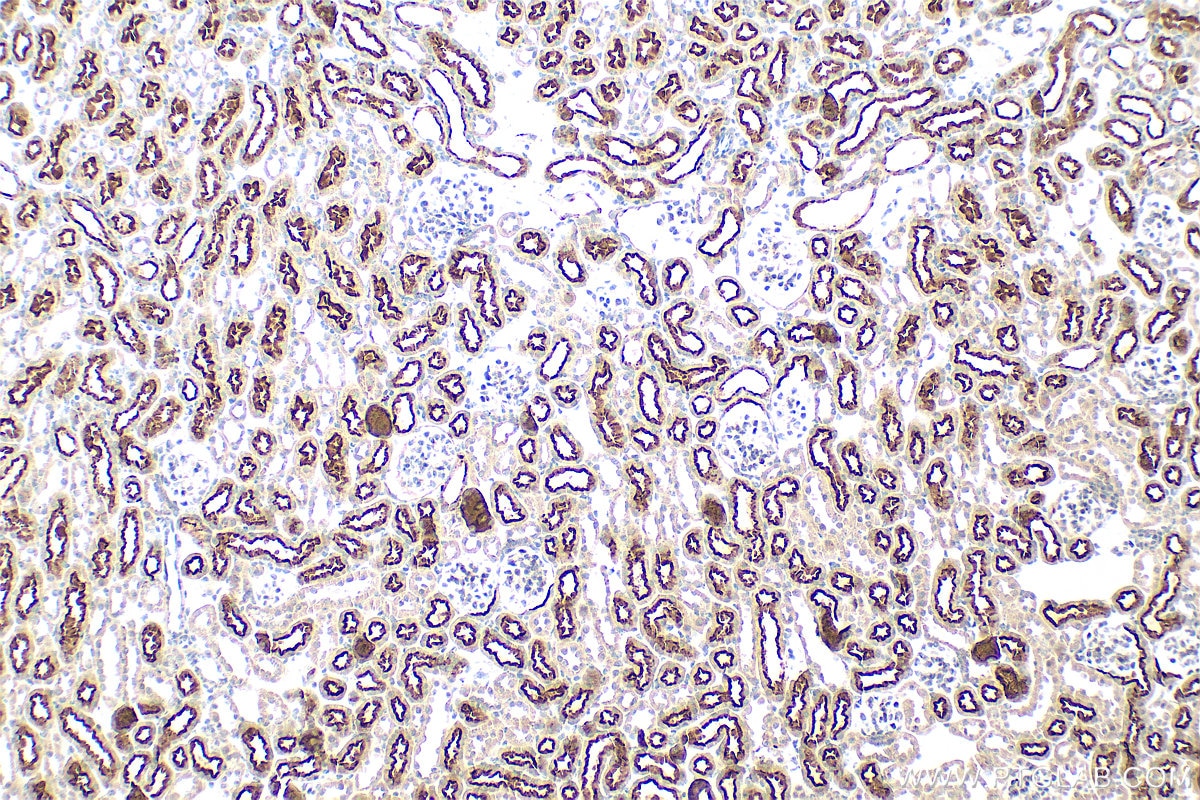
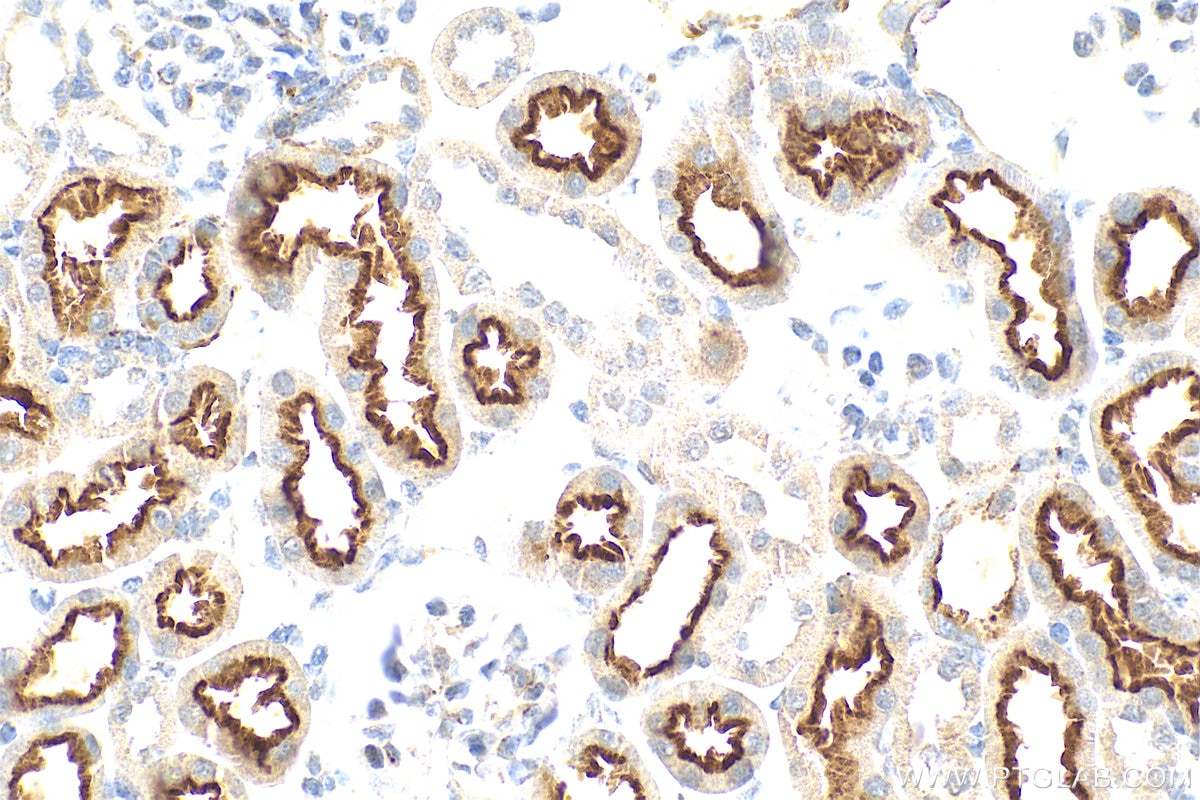
10343-1-PBS targets CD320 in WB, IHC, Indirect ELISA applications and shows reactivity with human, mouse samples.
| Tested Reactivity | human, mouse |
| Host / Isotype | Rabbit / IgG |
| Class | Polyclonal |
| Type | Antibody |
| Immunogen |
CatNo: Ag0344 Product name: Recombinant human CD320 protein Source: e coli.-derived, PGEX-4T Tag: GST Domain: 84-280 aa of BC000668 Sequence: SDEEECRIEPCTQKGQCPPPPGLPCPCTGVSDCSGGTDKKLRNCSRLACLAGELRCTLSDDCIPLTWRCDGHPDCPDSSDELGCGTNEILPEGDATTMGPPVTLESVTSLRNATTMGPPVTLESVPSVGNATSSSAGDQSGSPTAYGVIAAAAVLSASLVTATLLLLSWLRAQERLRPLGLLVAMKESLLLSEQKTS Predict reactive species |
| Full Name | CD320 molecule |
| Calculated Molecular Weight | 29 kDa |
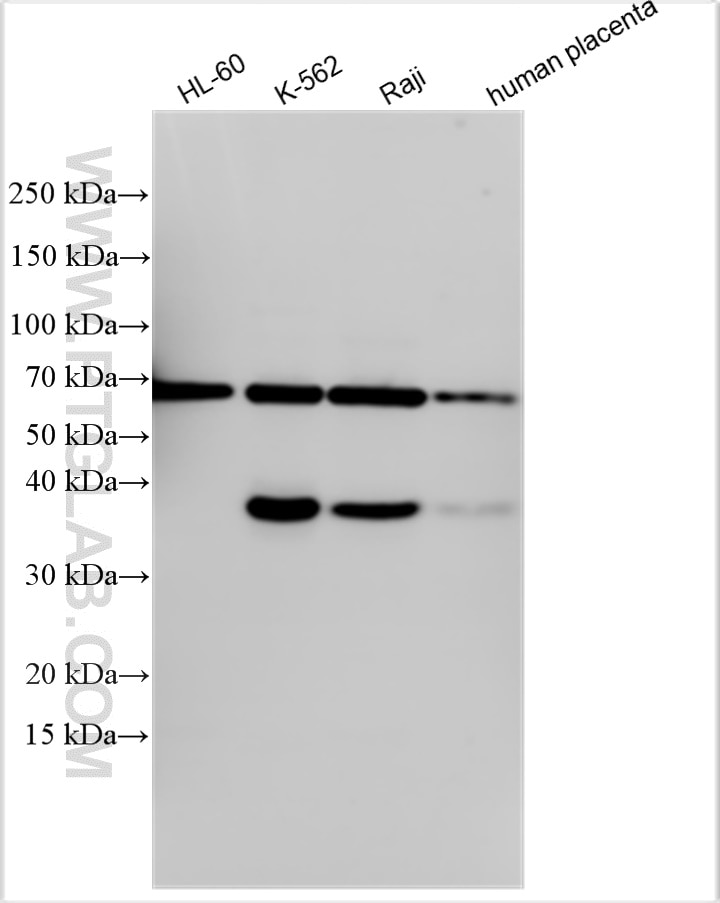
| Observed Molecular Weight | 60-70 kDa, 35-40 kDa |
| GenBank Accession Number | BC000668 |
| Gene Symbol | CD320 |
| Gene ID (NCBI) | 51293 |
| RRID | AB_2074223 |
| Conjugate | Unconjugated |
| Form | Liquid |
| Purification Method | Antigen affinity purification |
| UNIPROT ID | Q9NPF0 |
| Storage Buffer | PBS only, pH 7.3. |
| Storage Conditions | Store at -80°C. |
Background Information
CD320, also known as 8D6, 8D6A or TCblR, is a single-pass type I membrane protein containing 2 LDL-receptor class A domains. Expressed abundantly on follicular dendritic cells (FDCs), CD320 has been shown to enhance proliferation of germinal center (GC) B cells. It is the receptor for cellular uptake of transcobalamin-bound cobalamin. Defects in CD320 are the cause of methylmalonic aciduria type TCblR (MMATC). CD320 has a calculated molecular mass of 29 kDa. This antibody raised against 84-280aa of human CD320 protein detects bands at 35-40 kDa and 60-70 kDa. The aberrant mobility of the protein by SDS-PAGE is probably caused by extensive complex glycosylation (PMID: 18779389; 23415653).




