






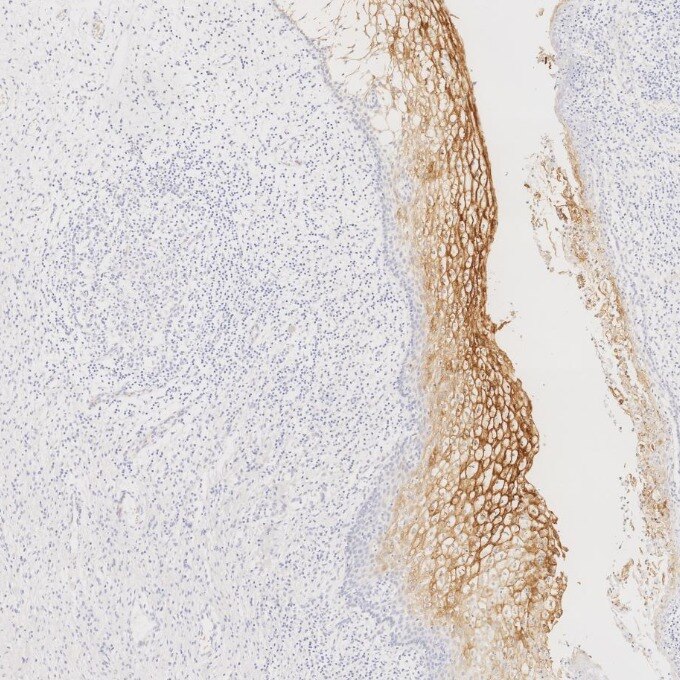

Tested Applications
| Positive WB detected in | HaCaT cells, human saliva, HT-29 cells, human rectum tissue |
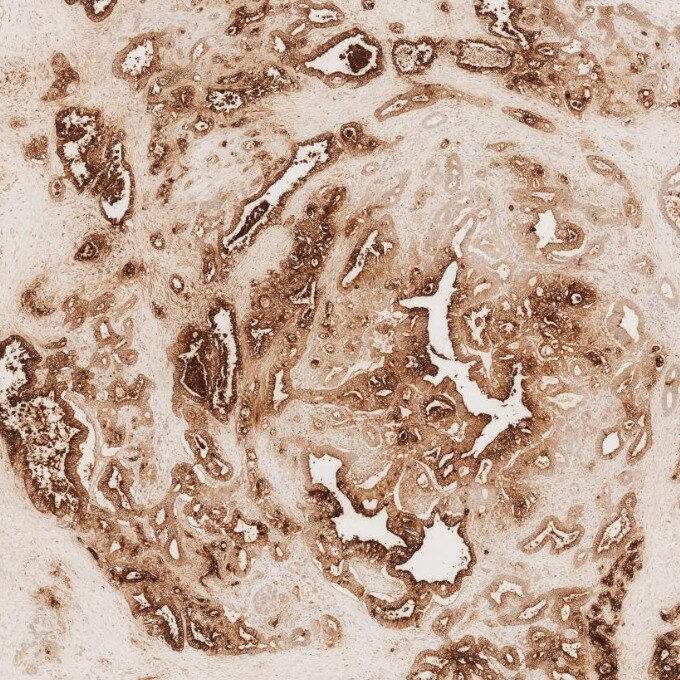
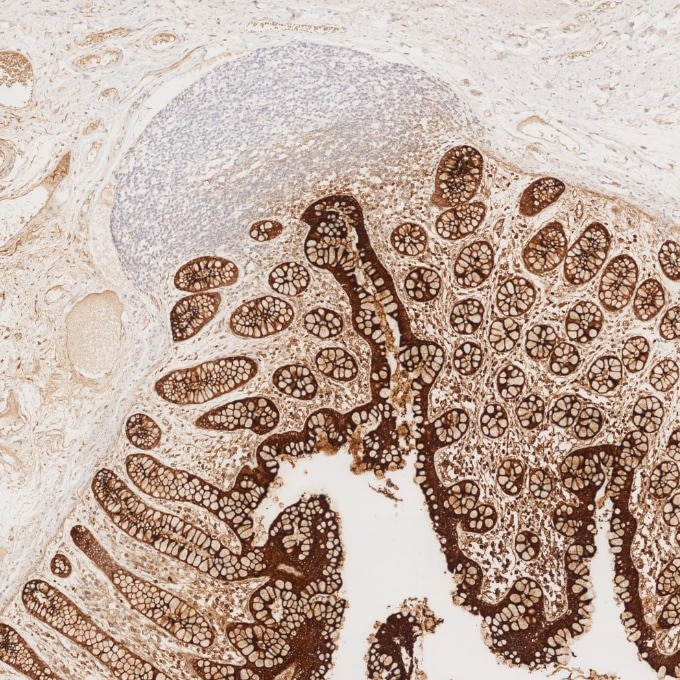
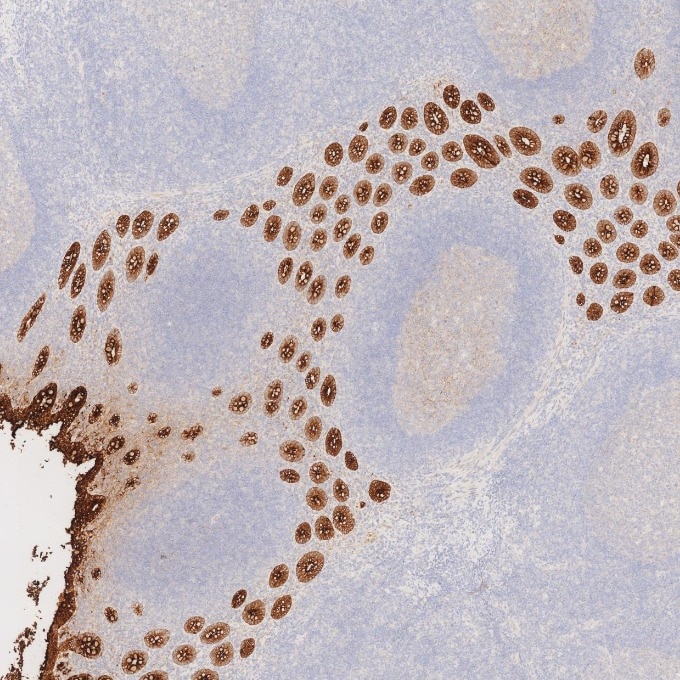
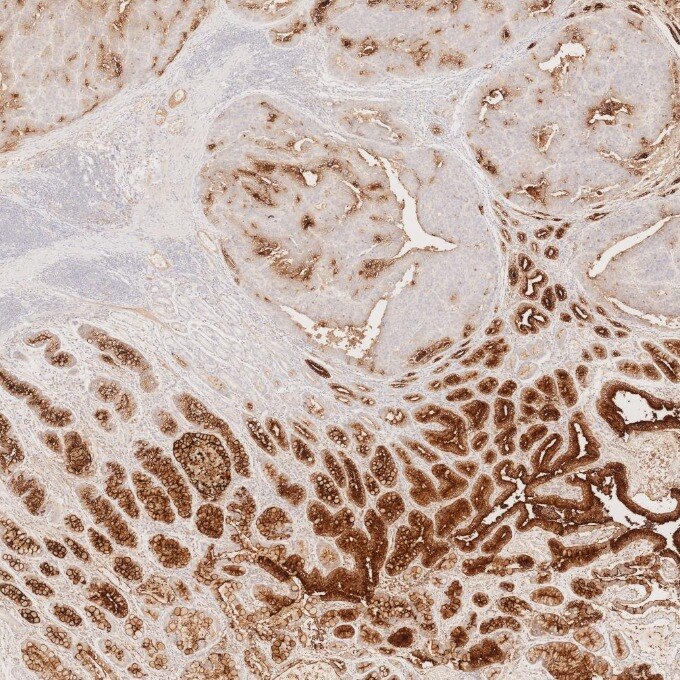
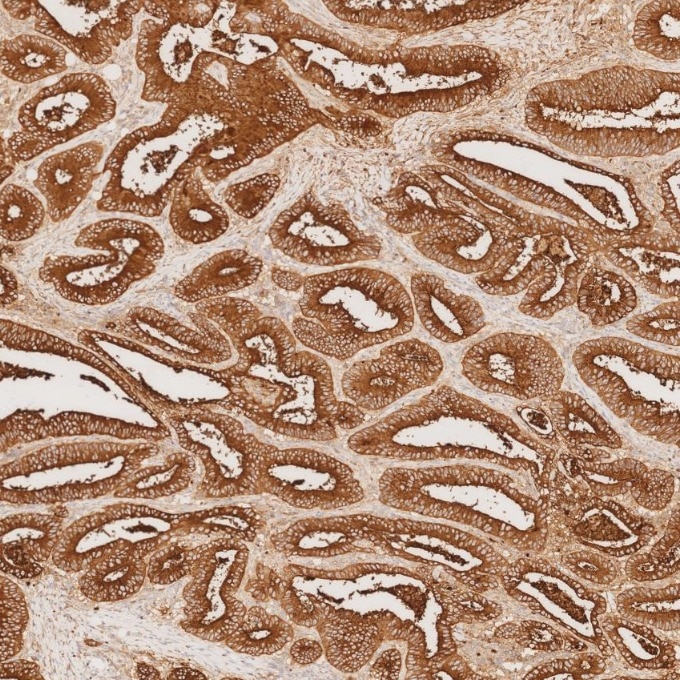
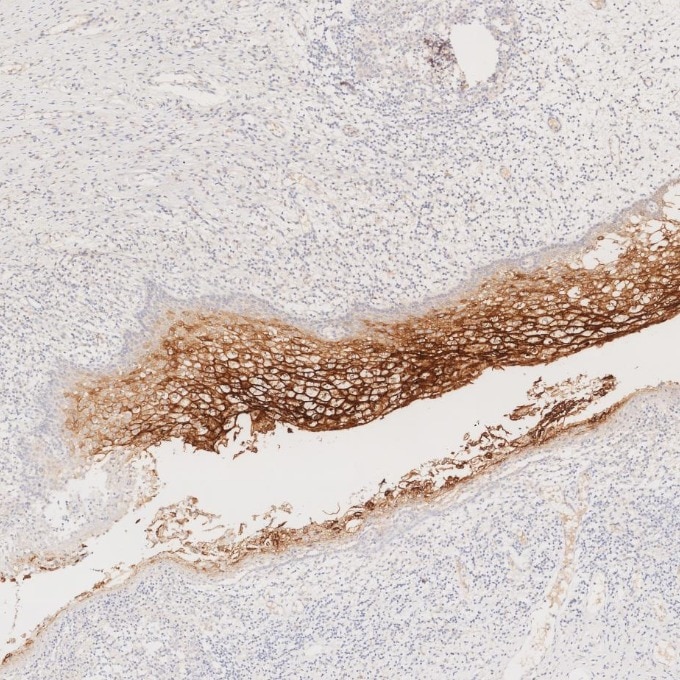
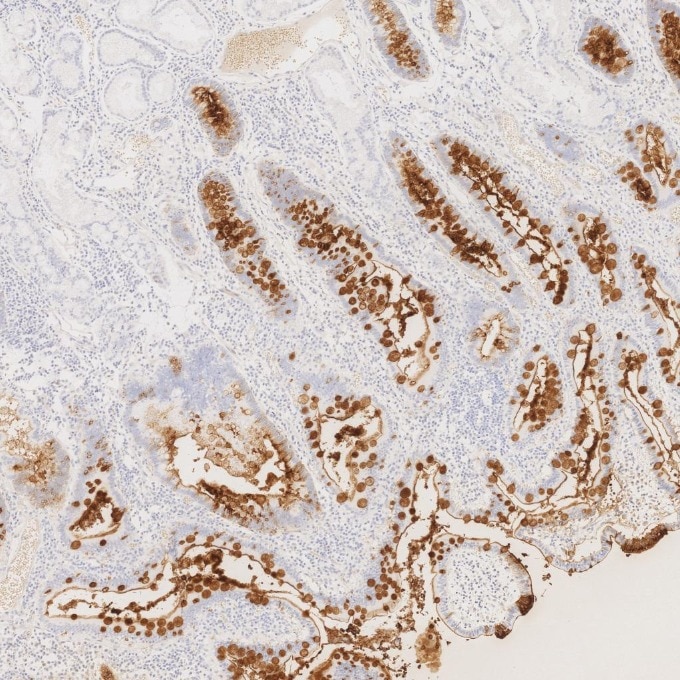
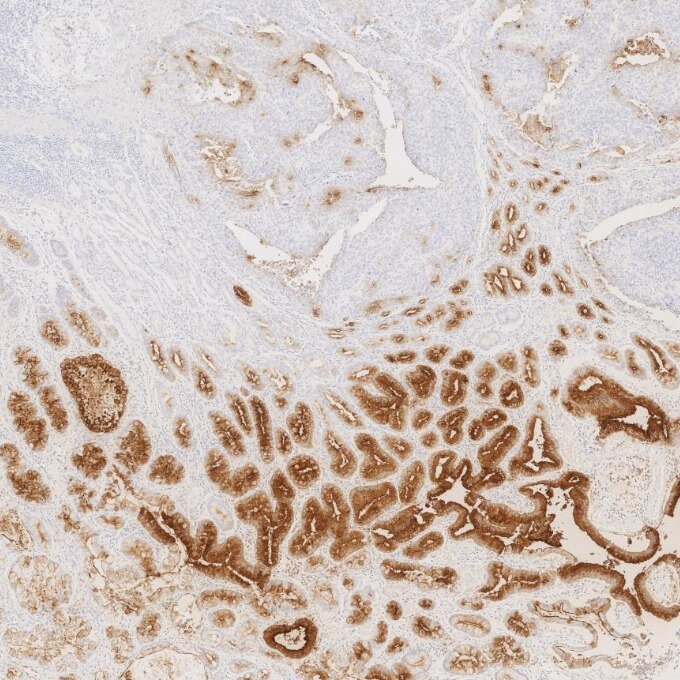
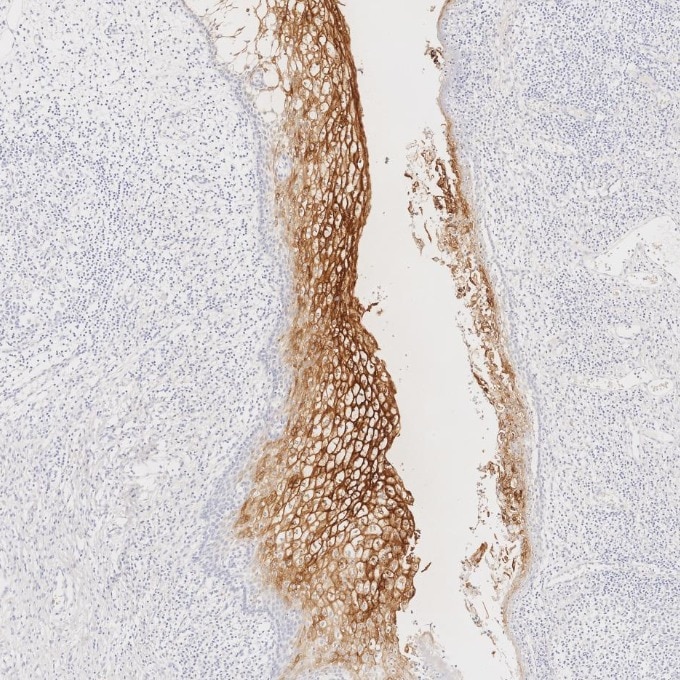
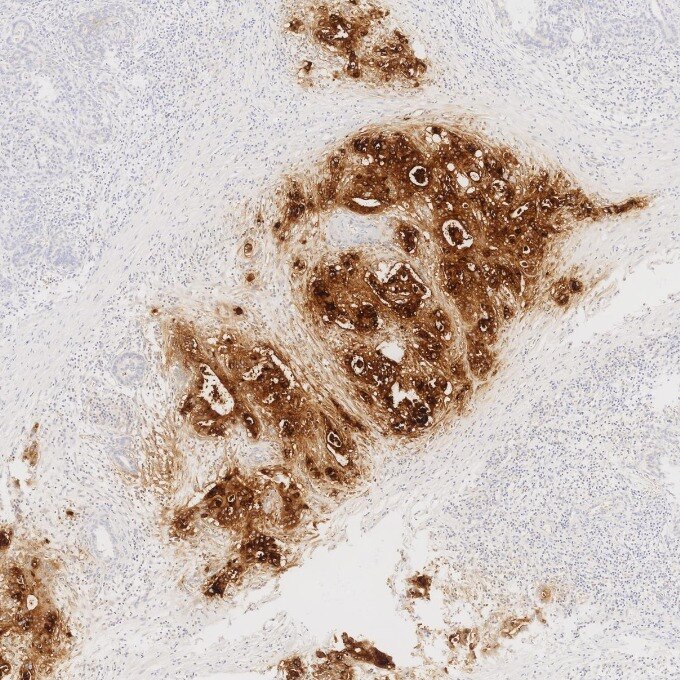
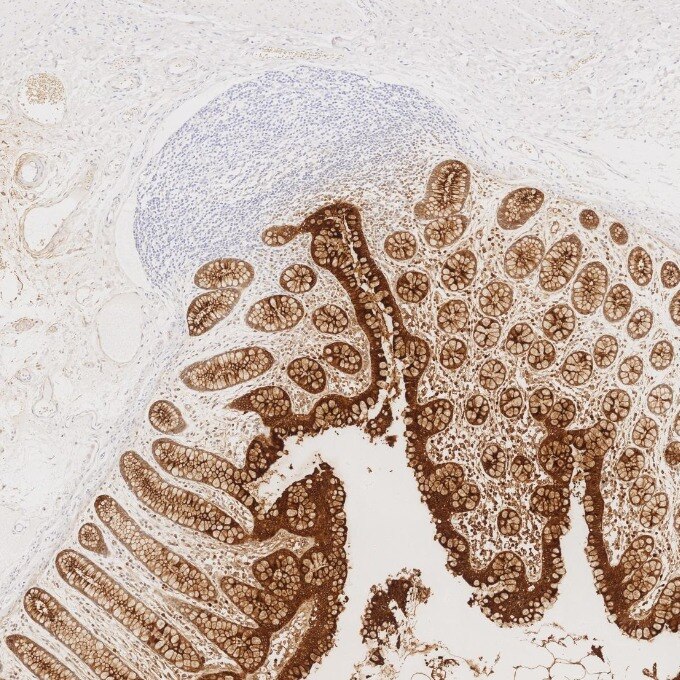
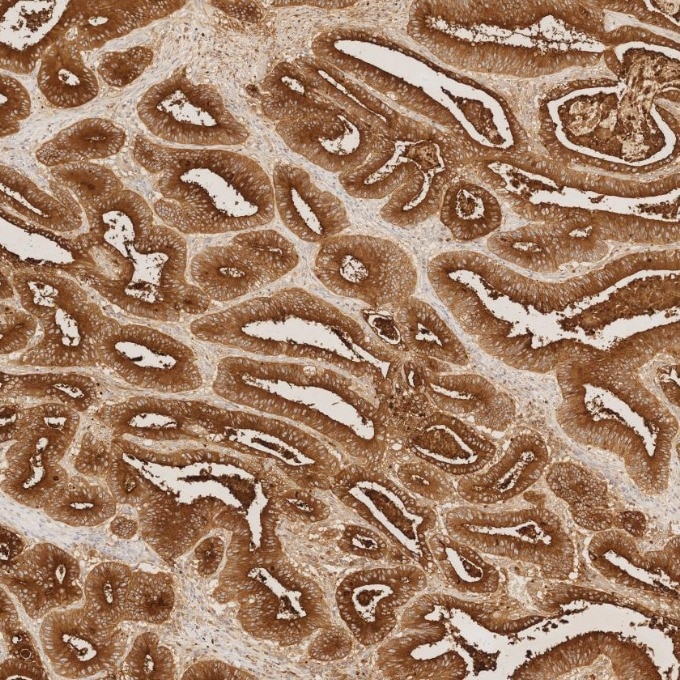
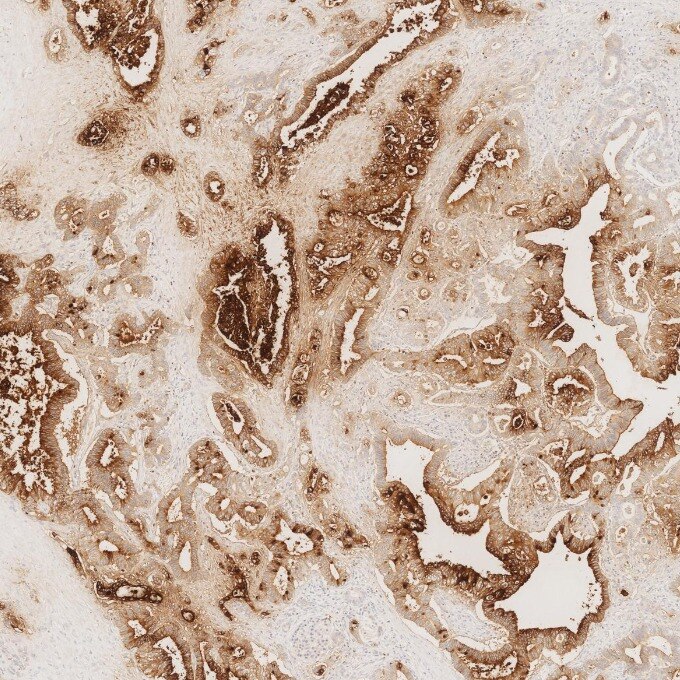
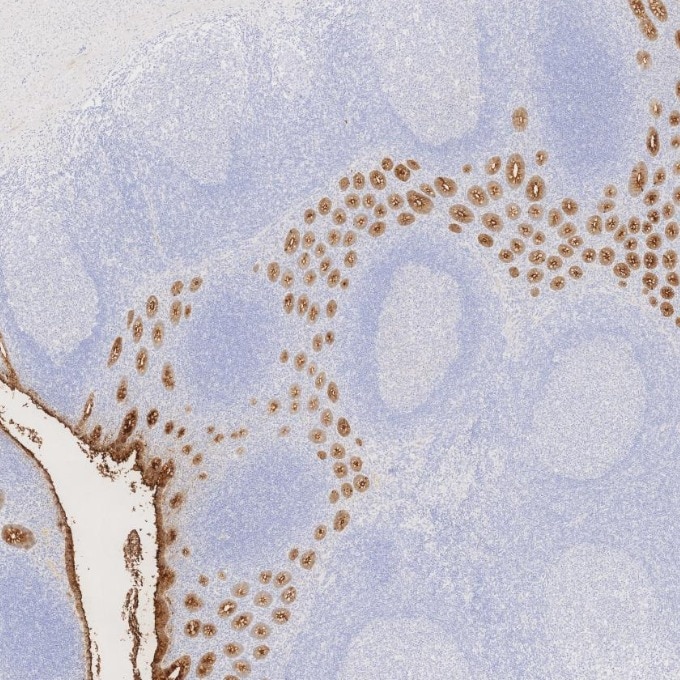
| Positive IHC-Autostainer detected in | human pancreas cancer tissue, human cervical cancer tissue, human colorectal cancer tissue, human large intestine tissue, human stomach cancer tissue, human appendicitis tissue |
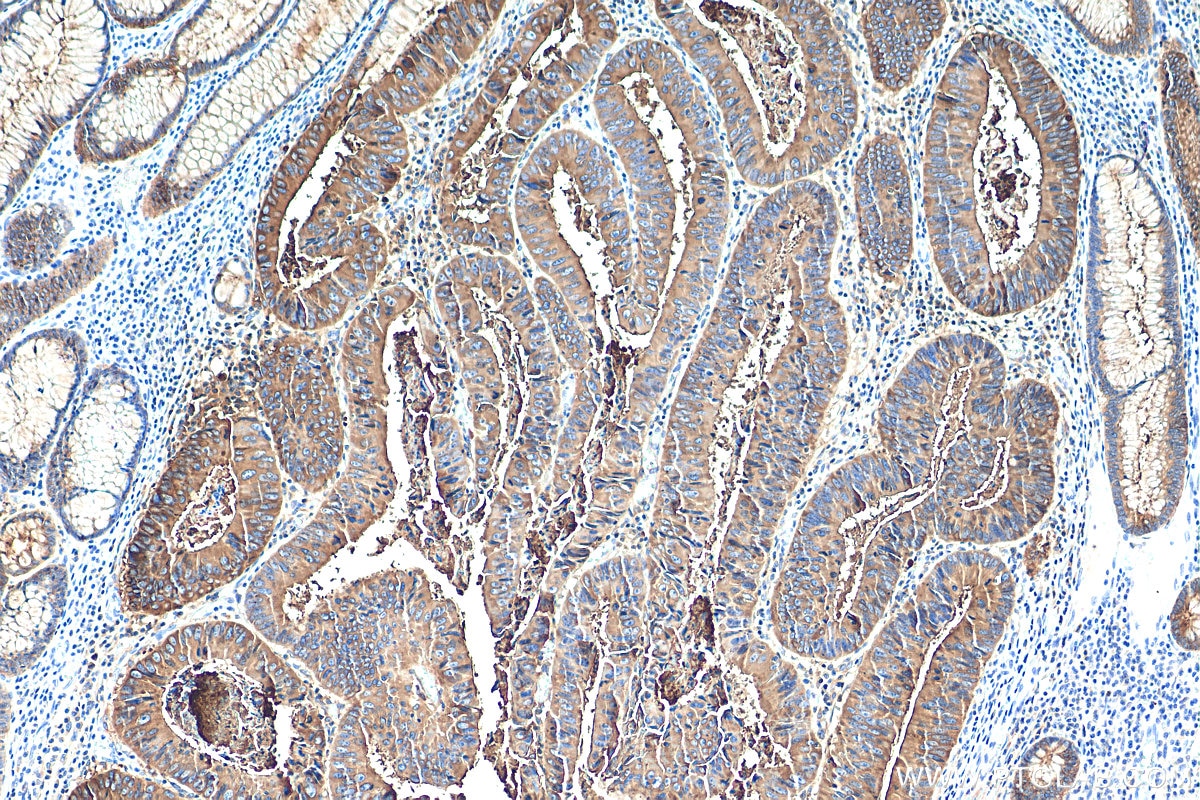
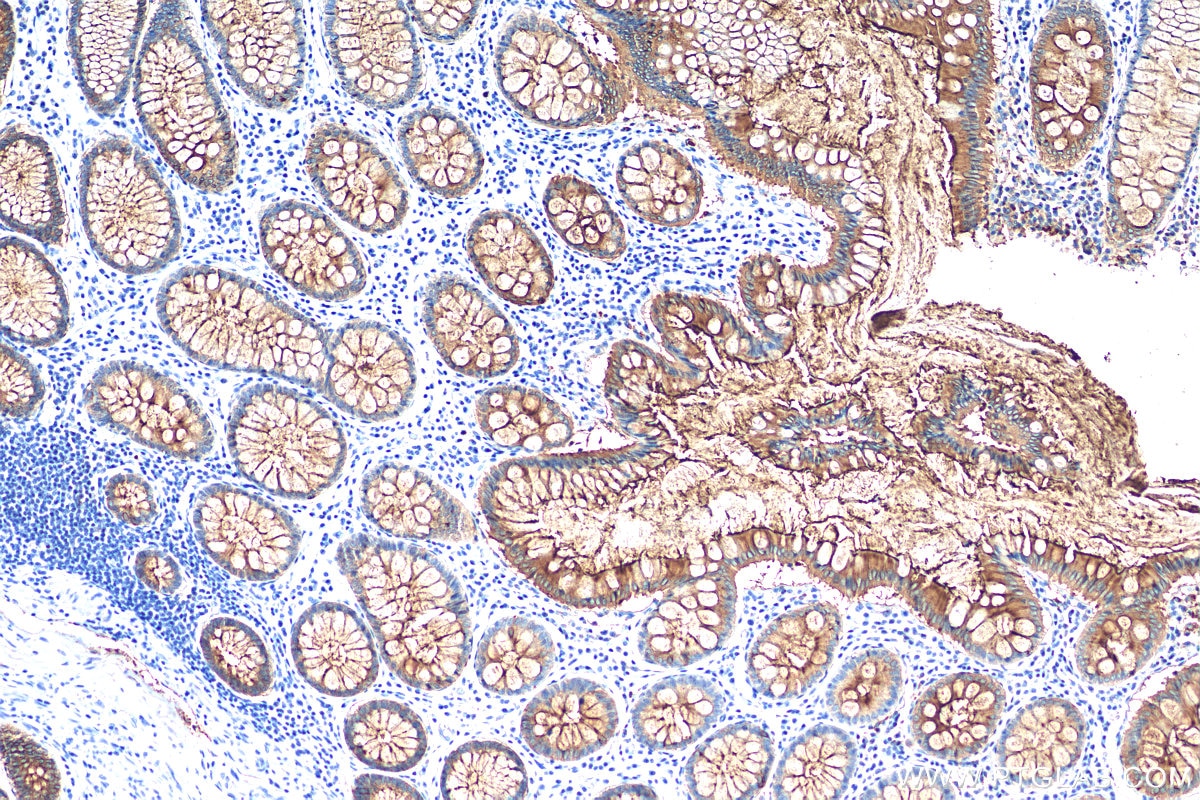
| Positive IHC detected in | human colon cancer tissue, human pancreas cancer tissue, human appendicitis tissue, human stomach cancer tissue, human cervical cancer tissue, human colorectal cancer tissue, human pancreas tissue, human large intestine tissue, human lung tissue Note: suggested antigen retrieval with TE buffer pH 9.0; (*) Alternatively, antigen retrieval may be performed with citrate buffer pH 6.0 |
Recommended dilution
| Application | Dilution |
|---|---|
| Western Blot (WB) | WB : 1:5000-1:50000 |
| Immunohistochemistry (IHC)-AUTOSTAINER | IHC-AUTOSTAINER : 1:1000-1:4000 |
| Immunohistochemistry (IHC) | IHC : 1:2500-1:10000 |
| It is recommended that this reagent should be titrated in each testing system to obtain optimal results. | |
| Sample-dependent, Check data in validation data gallery. | |
Product Information
68377-1-Ig targets CEA/CD66e in WB, IHC, IHC-Autostainer, ELISA applications and shows reactivity with human samples.
| Tested Reactivity | human |
| Cited Reactivity | human |
| Host / Isotype | Mouse / IgG1 |
| Class | Monoclonal |
| Type | Antibody |
| Immunogen |
CatNo: Eg0247 Product name: Recombinant Human CEA/CD66e protein (hFc Tag) Source: mammalian cells-derived, pINFUSE-IGSF8-CFc2(A2) Tag: C-hIGg2fc Domain: 35-685 aa of BC034671 Sequence: KLTIESTPFNVAEGKEVLLLVHNLPQHLFGYSWYKGERVDGNRQIIGYVIGTQQATPGPAYSGREIIYPNASLLIQNIIQNDTGFYTLHVIKSDLVNEEATGQFRVYPELPKPSISSNNSKPVEDKDAVAFTCEPETQDATYLWWVNNQSLPVSPRLQLSNGNRTLTLFNVTRNDSASYKCETQNPVSARRSDSVILNVLYGPDAPTISPLNTSYRSGENLNLSCHAASNPPAQYSWFVNGTFQQSTQELFIPNITVNNSGSYTCQAHNSDTGLNRTTVTTITVYAEPPKPFITSNNSNPVEDEDAVALTCEPEIQNTTYLWWVNNQSLPVSPRLQLSNDNRTLTLLSVTRNDVGPYECGIQNELSVDHSDPVILNVLYGPDDPTISPSYTYYRPGVNLSLSCHAASNPPAQYSWLIDGNIQQHTQELFISNITEKNSGLYTCQANNSASGHSRTTVKTITVSAELPKPSISSNNSKPVEDKDAVAFTCEPEAQNTTYLWWVNGQSLPVSPRLQLSNGNRTLTLFNVTRNDARAYVCGIQNSVSANRSDPVTLDVLYGPDTPIISPPDSSYLSGANLNLSCHSASNPSPQYSWRINGIPQQHTQVLFIAKITPNNNGTYACFVSNLATGRNNSIVKSITVSASGTSPGLSA Predict reactive species |
| Full Name | carcinoembryonic antigen-related cell adhesion molecule 5 |
| Calculated Molecular Weight | 77 kDa |
| Observed Molecular Weight | 180-200 kDa |
| GenBank Accession Number | BC034671 |
| Gene Symbol | CEA |
| Gene ID (NCBI) | 1048 |
| RRID | AB_3085095 |
| Conjugate | Unconjugated |
| Form | Liquid |
| Purification Method | Protein G purification |
| UNIPROT ID | P06731 |
| Storage Buffer | PBS with 0.02% sodium azide and 50% glycerol, pH 7.3. |
| Storage Conditions | Store at -20°C. Stable for one year after shipment. Aliquoting is unnecessary for -20oC storage. 20ul sizes contain 0.1% BSA. |
Background Information
Carcinoembryonic antigen (CEA), also known as CEACAM5 or CD66e, is a cell surface glycoprotein belonging to the immunoglobulin superfamily, mainly serving as a cell adhesion molecule mediating intercellular contact by both homophilic and heterophilic binding (PMID: 21731662). CEA inhibits anoikis and plays a role in tumorigenesis and metastasis. CEA has been found to be overexpressed in a wide variety of human cancers, including colon, breast, and lung (PMID: 17167768). CEA is a tumor marker and is routinely exploited for diagnosis.
Protocols
| Product Specific Protocols | |
|---|---|
| IHC protocol for CEA/CD66e antibody 68377-1-Ig | Download protocol |
| WB protocol for CEA/CD66e antibody 68377-1-Ig | Download protocol |
| Standard Protocols | |
|---|---|
| Click here to view our Standard Protocols |
Publications
What published studies show
The CEA/CD66e Monoclonal antibody (2B8H6), catalog number 68377-1-Ig, has 3 total citations. These appear in Biomark Res, Cancer Lett, and BMC Cancer. The associated research fields include gastric cancer (histone modification-regulated lncRNA and DNA repair), CEACAM5-positive tumor targeting via antibody-drug conjugates, and cholangiocarcinoma (organoid-based drug screening). All citations involve human samples, with applications in IHC and WB.
| Species | Application | Title |
|---|---|---|
Biomark Res Histone modification-regulated LncRNA DLEU1 interacts with ASCC2/ALKBH3 complex to drive DNA repair, antioxidant homeostasis and glucose metabolism in gastric cancer. | ||
Cancer Lett A High-Affinity Antibody-Drug Conjugates Actuximab-MMAE for Potent and Selective Targeting of CEACAM5-Positive Tumors | ||
BMC Cancer Individualized drug screening in cholangiocarcinoma using organoid models and patient-derived tumor xenograft. |
























