

Tested Applications
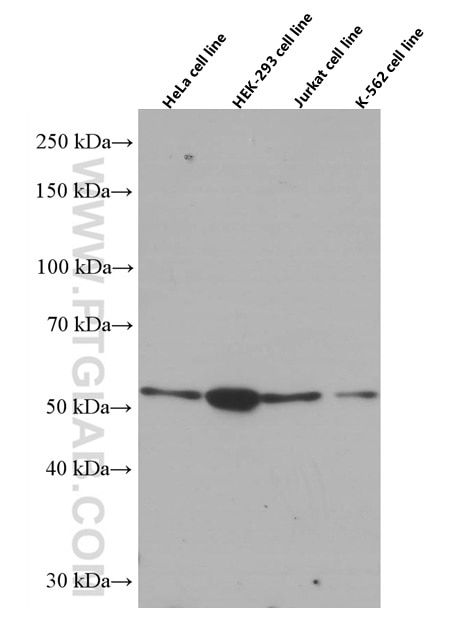
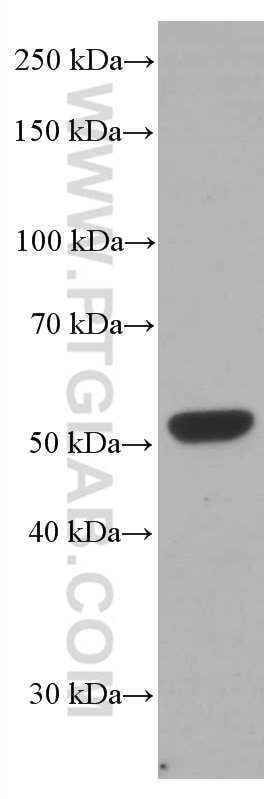
| Positive WB detected in | HeLa cells, NIH/3T3 cells, HEK-293 cells, Jurkat cells, K-562 cells |
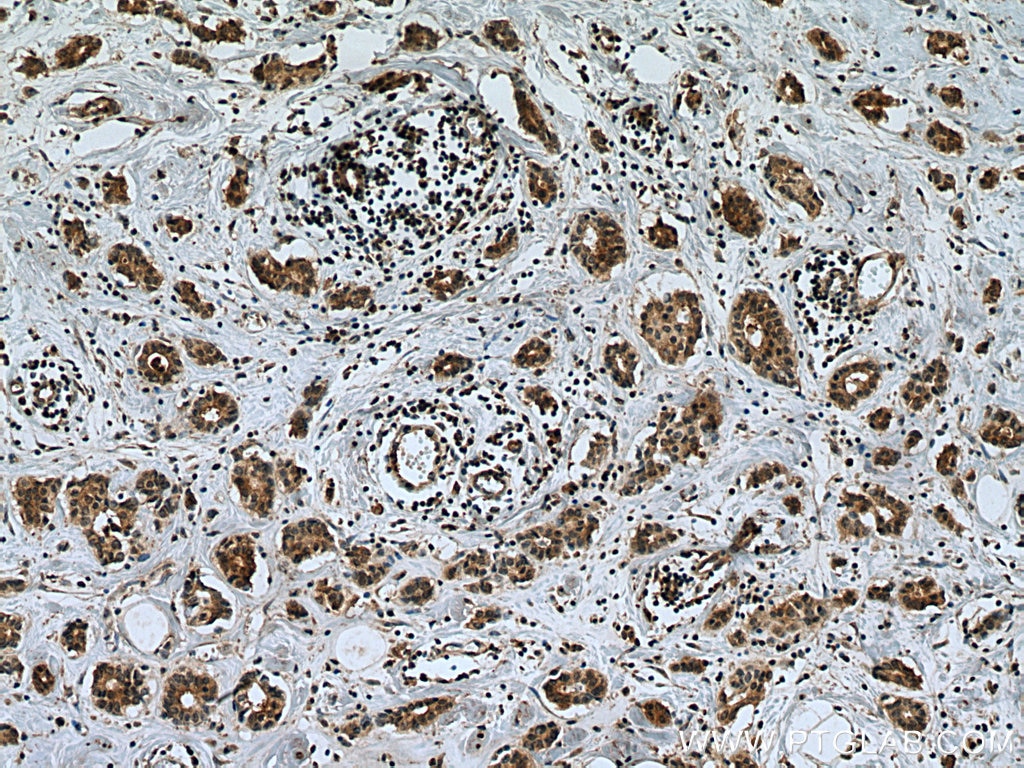
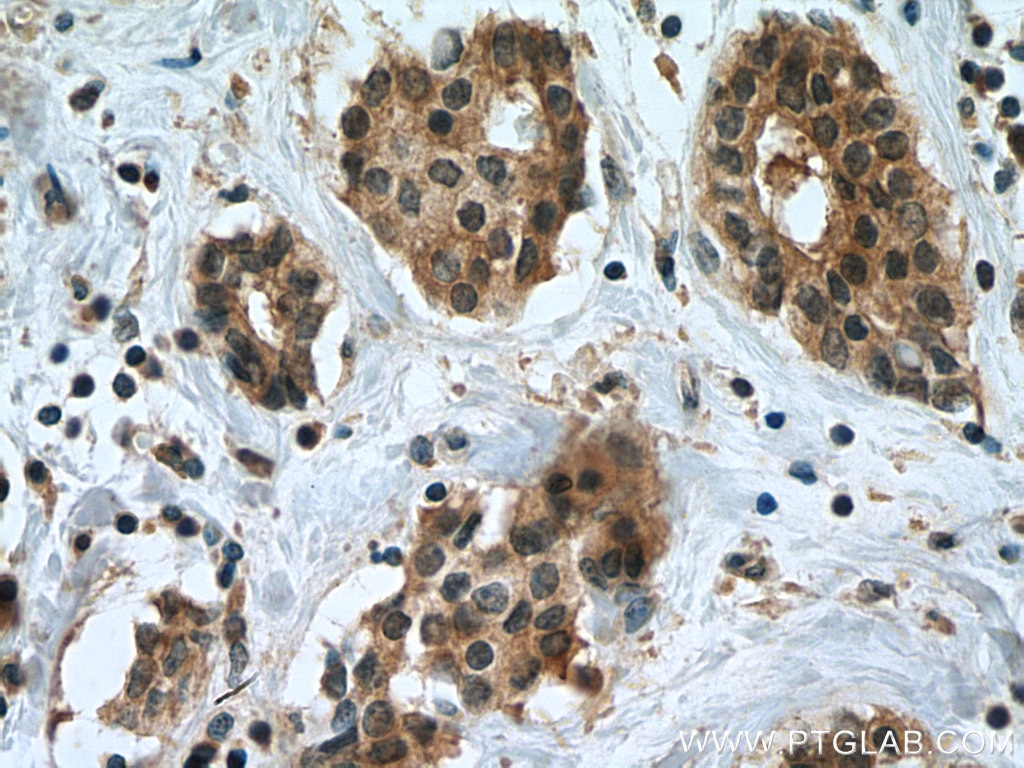
| Positive IHC detected in | human breast cancer tissue Note: suggested antigen retrieval with TE buffer pH 9.0; (*) Alternatively, antigen retrieval may be performed with citrate buffer pH 6.0 |
Recommended dilution
| Application | Dilution |
|---|---|
| Western Blot (WB) | WB : 1:1000-1:3000 |
| Immunohistochemistry (IHC) | IHC : 1:250-1:1000 |
| It is recommended that this reagent should be titrated in each testing system to obtain optimal results. | |
| Sample-dependent, Check data in validation data gallery. | |
Product Information
60277-1-Ig targets Chk1 in WB, IHC, ELISA applications and shows reactivity with human, mouse, rat samples.
| Tested Reactivity | human, mouse, rat |
| Cited Reactivity | human, mouse |
| Host / Isotype | Mouse / IgG2b |
| Class | Monoclonal |
| Type | Antibody |
| Immunogen |
CatNo: Ag0409 Product name: Recombinant human CHK1 protein Source: e coli.-derived, PGEX-4T Tag: GST Domain: 42-256 aa of BC004202 Sequence: MKRAVDCPENIKKEICINKMLNHENVVKFYGHRREGNIQYLFLEYCSGGELFDRIEPDIGMPEPDAQRFFHQLMAGVVYLHGIGITHRDIKPENLLLDERDNLKISDFGLATVFRYNNRERLLNKMCGTLPYVAPELLKRREFHAEPVDVWSCGIVLTAMLAGELPWDQPSDSCQEYSDWKEKKTYLNPWKKIDSAPLALLHKILVENPSARITI Predict reactive species |
| Full Name | CHK1 checkpoint homolog (S. pombe) |
| Calculated Molecular Weight | 54 kDa |
| Observed Molecular Weight | 50 kDa |
| GenBank Accession Number | BC004202 |
| Gene Symbol | Chk1 |
| Gene ID (NCBI) | 1111 |
| RRID | AB_2881396 |
| Conjugate | Unconjugated |
| Form | Liquid |
| Purification Method | Protein A purification |
| UNIPROT ID | O14757 |
| Storage Buffer | PBS with 0.02% sodium azide and 50% glycerol, pH 7.3. |
| Storage Conditions | Store at -20°C. Stable for one year after shipment. Aliquoting is unnecessary for -20oC storage. 20ul sizes contain 0.1% BSA. |
Background Information
CHEK1(Checkpoint kinase-1) is also named as CHK1 and belongs to the protein kinase superfamily. It is implicated in a circuit in which it activates checkpoints, DNA repair and proliferating cell nuclear antigen and FANCD2 monoubiquitinylation(PMID:21389083). CHEK1 protects vertebrate cells against spontaneous chromosome missegregation and is required to sustain anaphase delay when spindle function is disrupted by taxol(PMID:17276342). It has 3 isoforms produced by alternative splicing with the molecular mass of 54 kDa, 44 kDa and 50 kDa.
Protocols
| Product Specific Protocols | |
|---|---|
| IHC protocol for Chk1 antibody 60277-1-Ig | Download protocol |
| WB protocol for Chk1 antibody 60277-1-Ig | Download protocol |
| Standard Protocols | |
|---|---|
| Click here to view our Standard Protocols |
Publications
What published studies show
The anti-CHK1 antibody (Cat# 60277-1-Ig) has 15 total citations across journals including Cell Death & Disease, Phytomedicine, Cell Death Discovery, Nature Structural & Molecular Biology, Cell Signaling, iScience, Antiviral Research, Journal of Medical Virology, Medicine (Baltimore), and Inflammation Research. Research fields span cancer biology (gastric, colorectal, prostate, lung, osteosarcoma, GIST), DNA damage response, cell cycle regulation, apoptosis, viral infection, neurodegeneration, cardiac repair, and inflammation.
| Species | Application | Title |
|---|---|---|
Cell Death Dis Chromatin assembly factor 1 subunit A promotes TLS pathway by recruiting E3 ubiquitin ligase RAD18 in cancer cells | ||
Phytomedicine The anticancer effects of Aronia berry extract are mediated by Chk1 and p53 in colorectal cancer | ||
Phytomedicine Epiberberine induced p53/p21-dependent G2/M cell cycle arrest and cell apoptosis in gastric cancer cells by activating γ-aminobutyric acid receptor- β3 | ||
Cell Death Discov Tert promotes cardiac regenerative repair after MI through alleviating ROS-induced DNA damage response in cardiomyocyte | ||
Cell Death Discov Comparable radiation sensitivity in p53 wild-type and p53 deficient tumor cells associated with different cell death modalities. | ||
Nat Struct Mol Biol TDP-43 aggregation induced by oxidative stress causes global mitochondrial imbalance in ALS. |





