

Product Information
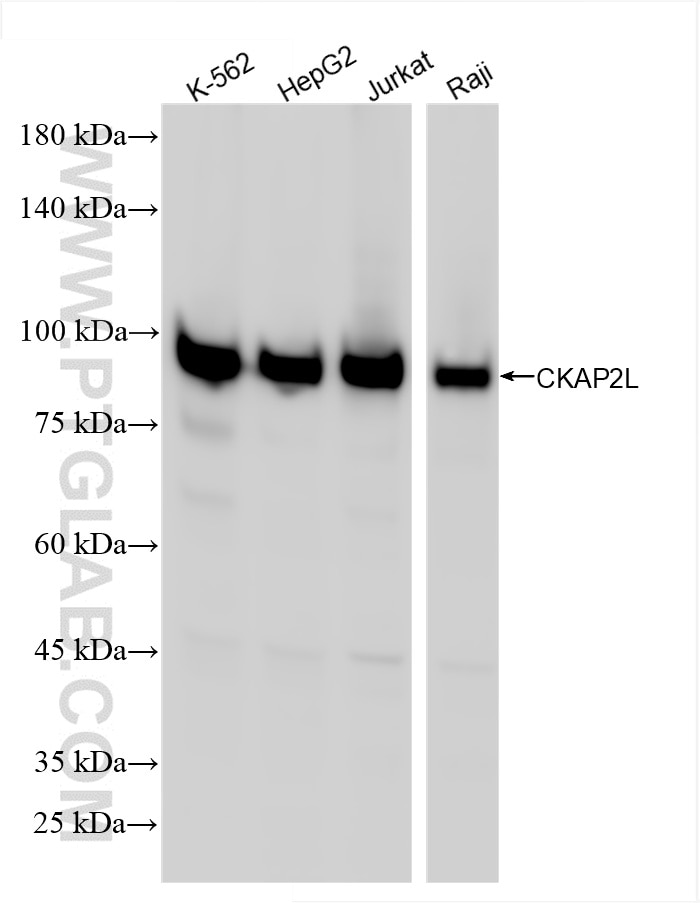
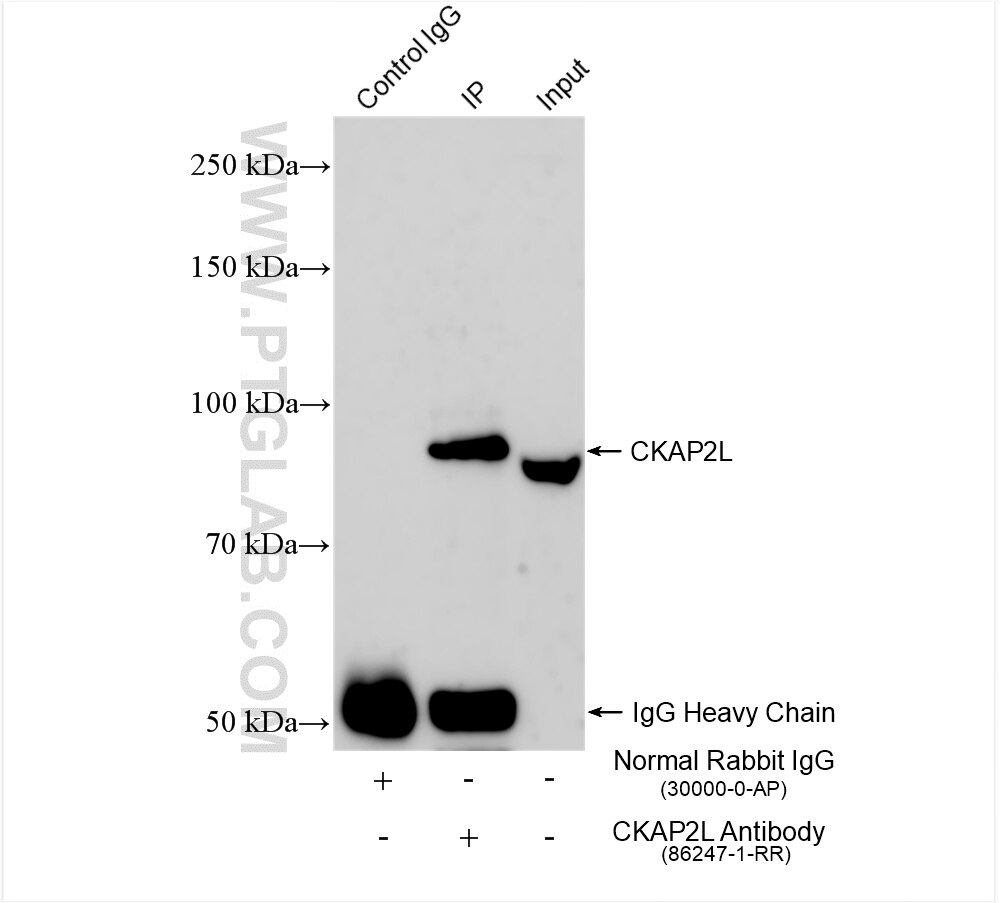
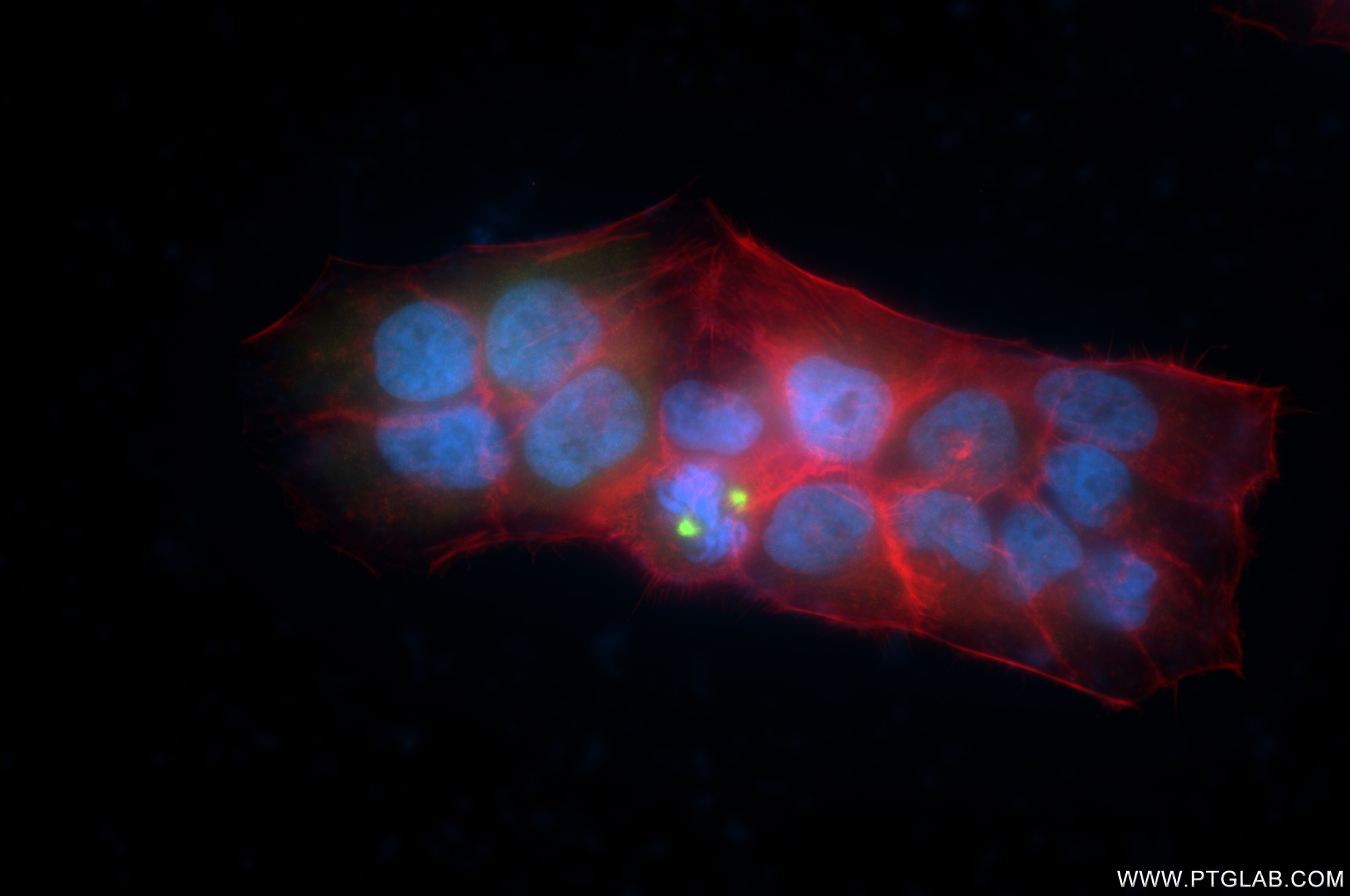
86247-1-PBS targets CKAP2L in WB, IF/ICC, IP, Indirect ELISA applications and shows reactivity with human samples.
| Tested Reactivity | human |
| Host / Isotype | Rabbit / IgG |
| Class | Recombinant |
| Type | Antibody |
| Immunogen |
CatNo: Ag10909 Product name: Recombinant human CKAP2L protein Source: e coli.-derived, PGEX-4T Tag: GST Domain: 396-745 aa of BC036217 Sequence: IRPNGTSGNKHNNNGFQQKAQTLDSKLKKAVPQNHFLNKTAPKTQADVTTVNGTQTNPNIKKKATAEDRRKQLEEWQKSKGKTYKRPPMELKTKRKVIKEMNISFWKSIEKEEEEKKAQLELSSKINNTLTECLNLIEGGVPSNEILNILSSIPEAEKFAKFWICKAKLLASKGTFDVIGLYEEAIKNGATPIQELRKVVLNILQDSNRTTEGITSDSLVAETSITSVEELAKKMESVKSCLSPKEREQVTATPRIAKAEQHNYPGIKLQIGPIPRINGMPEVQDMKFITPVRRSSRIERAVSRYPEMLQEHDLVVASLDELLEVEETKCFIFRRNEALPVTLGFQTPES Predict reactive species |
| Full Name | cytoskeleton associated protein 2-like |
| Calculated Molecular Weight | 745 aa, 84 kDa |
| Observed Molecular Weight | 84 kDa |
| GenBank Accession Number | BC036217 |
| Gene Symbol | CKAP2L |
| Gene ID (NCBI) | 150468 |
| RRID | AB_3744748 |
| Conjugate | Unconjugated |
| Form | Liquid |
| Purification Method | Protein A purification |
| UNIPROT ID | Q8IYA6 |
| Storage Buffer | PBS only, pH 7.3. |
| Storage Conditions | Store at -80°C. |
Background Information
CKAP2L is a microtubule-binding protein that is crucial for the formation of the mitotic spindle and the cell cycle progression of neural progenitor cells. Mutations in CKAP2L have been associated with spindle organization defects, including mitotic spindle defects, lagging chromosomes, and chromatin bridges. There is evidence that mutations in this gene are associated with Filippi syndrome, characterized by growth defects, microcephaly, intellectual disability, facial feature defects, and syndactyly(PMID: 25439729).




