

Tested Applications
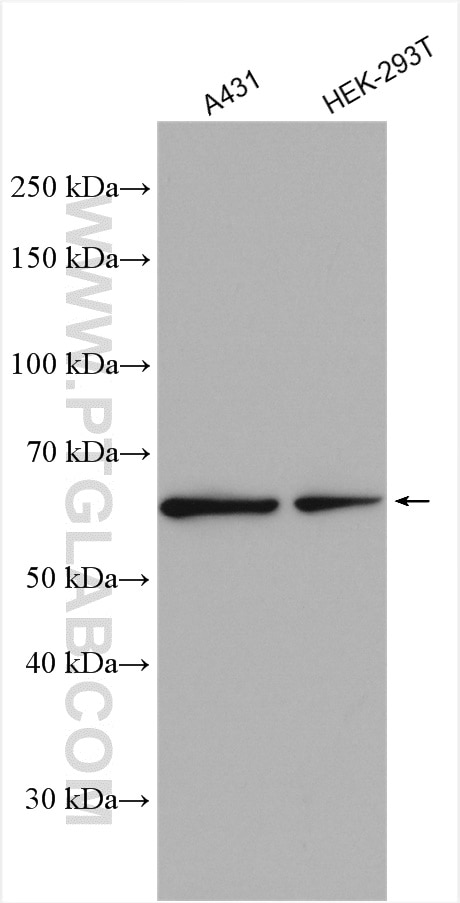
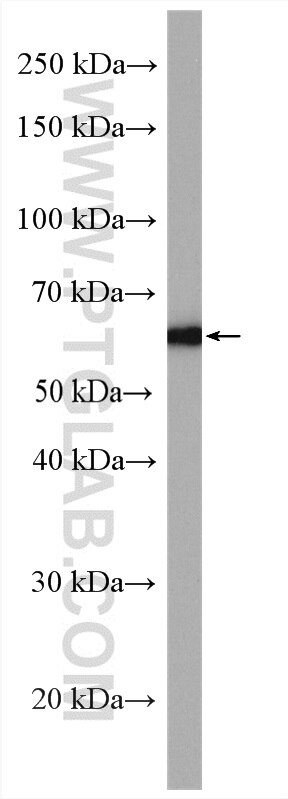
| Positive WB detected in | A431 cells, HEK-293T cells |
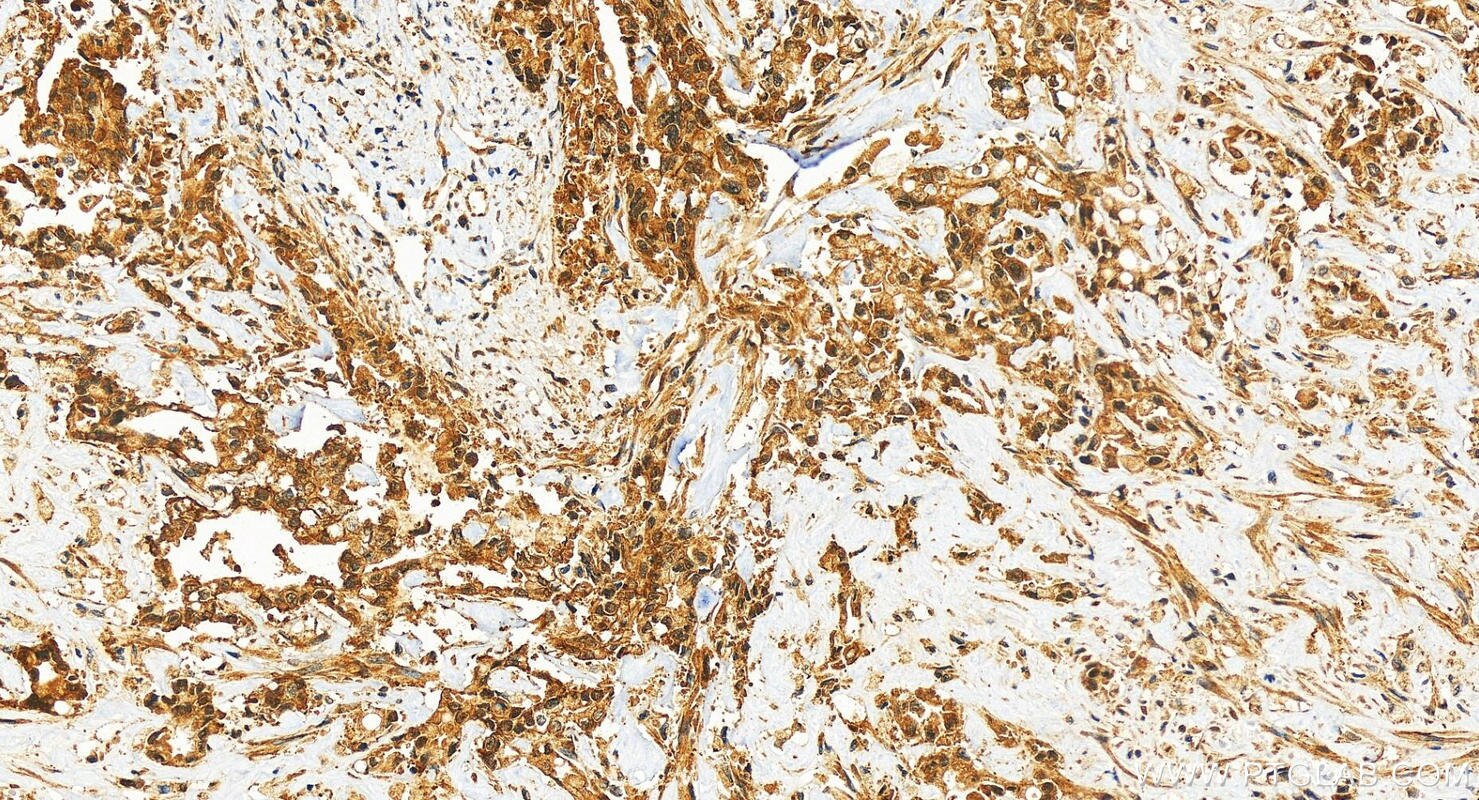
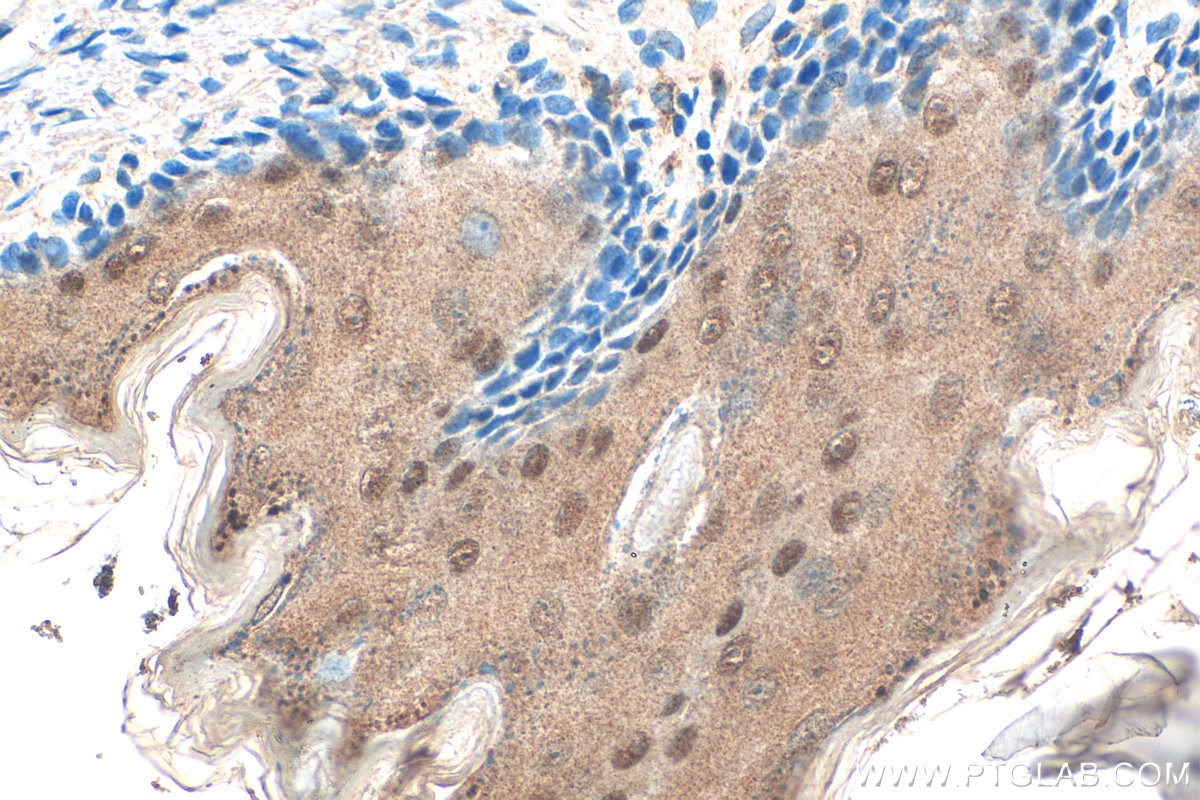
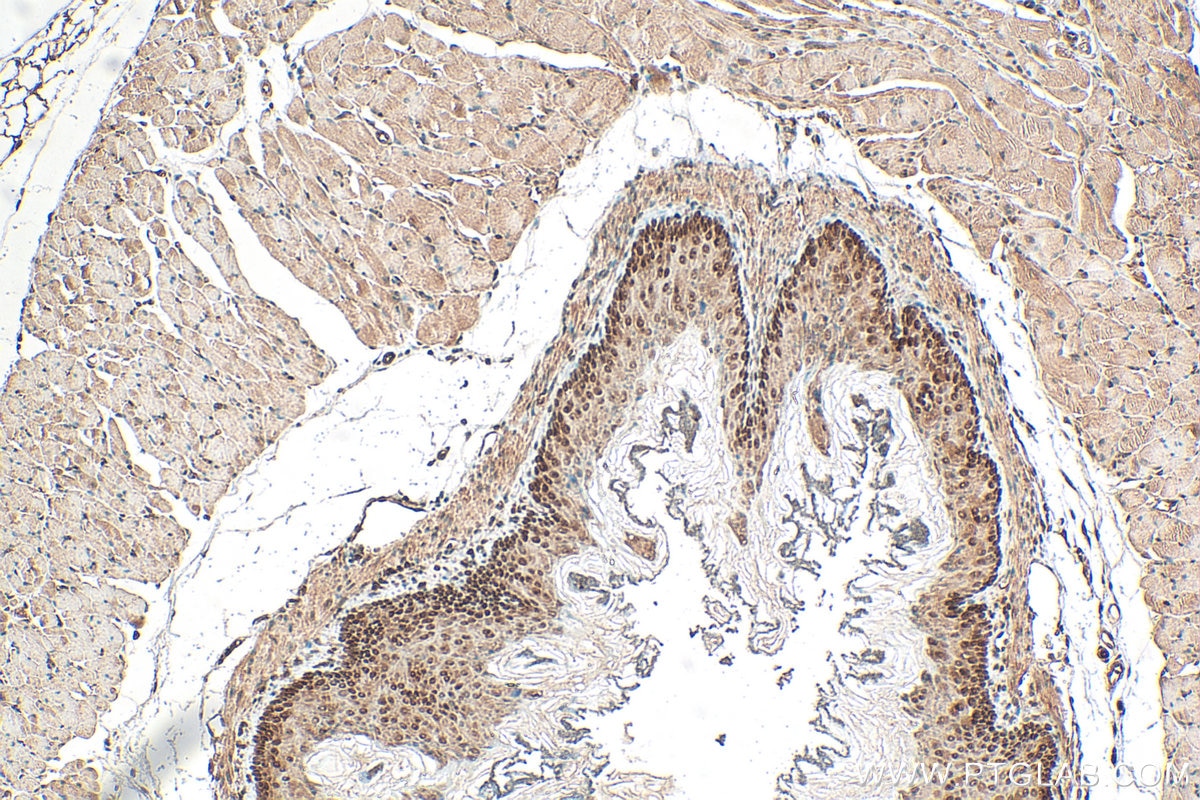
| Positive IHC detected in | human intrahepatic cholangiocarcinoma tissue, mouse stomach tissue, rat stomach tissue Note: suggested antigen retrieval with TE buffer pH 9.0; (*) Alternatively, antigen retrieval may be performed with citrate buffer pH 6.0 |
Recommended dilution
| Application | Dilution |
|---|---|
| Western Blot (WB) | WB : 1:500-1:2000 |
| Immunohistochemistry (IHC) | IHC : 1:200-1:800 |
| It is recommended that this reagent should be titrated in each testing system to obtain optimal results. | |
| Sample-dependent, Check data in validation data gallery. | |
Product Information
10126-2-AP targets CPNE1 in WB, IHC, ELISA applications and shows reactivity with human, mouse, rat samples.
| Tested Reactivity | human, mouse, rat |
| Cited Reactivity | human, mouse |
| Host / Isotype | Rabbit / IgG |
| Class | Polyclonal |
| Type | Antibody |
| Immunogen |
CatNo: Ag0139 Product name: Recombinant human CPNE1 protein Source: e coli.-derived, PGEX-4T Tag: GST Domain: 25-289 aa of BC001142 Sequence: KSDPLCVLLQDVGGGSWAELGRTERVRNCSSPEFSKTLQLEYRFETVQKLRFGIYDIDNKTPELRDDDFLGGAECSLGQIVSSQVLTLPLMLKPGKPAGRGTITVSAQELKDNRVVTMEVEARNLDKKDFLGKSDPFLEFFRQGDGKWHLVYRSEVIKNNLNPTWKRFSVPVQHFCGGNPSTPIQVQCSDYDSDGSHDLIGTFHTSLAQLQAVPAEFECIHPEKQQKKKSYKNSGTIRVKICRVETEYSFLDYVMGGCQINFTVG Predict reactive species |
| Full Name | copine I |
| Calculated Molecular Weight | 59 kDa |
| Observed Molecular Weight | 59 kDa |
| GenBank Accession Number | BC001142 |
| Gene Symbol | CPNE1 |
| Gene ID (NCBI) | 8904 |
| RRID | AB_2084202 |
| Conjugate | Unconjugated |
| Form | Liquid |
| Purification Method | Antigen affinity purification |
| UNIPROT ID | Q99829 |
| Storage Buffer | PBS with 0.02% sodium azide and 50% glycerol, pH 7.3. |
| Storage Conditions | Store at -20°C. Stable for one year after shipment. Aliquoting is unnecessary for -20oC storage. 20ul sizes contain 0.1% BSA. |
Background Information
Copines are a family of evolutionarily conserved calcium-dependent phospholipid-binding proteins (PMID: 9430674). They contain two Ca(2+)- and phospholipid-binding domains known as C2 domains. Copines are potentially involved in regulating membrane trafficking and in protein-protein interactions.
Protocols
| Product Specific Protocols | |
|---|---|
| IHC protocol for CPNE1 antibody 10126-2-AP | Download protocol |
| WB protocol for CPNE1 antibody 10126-2-AP | Download protocol |
| Standard Protocols | |
|---|---|
| Click here to view our Standard Protocols |
Publications
What published studies show
The CPNE1 Polyclonal antibody (Cat# 10126-2-AP) has 6 total citations. These appear in Cell Metabolism, MedComm, Cell Death Discovery, Oncogene, Frontiers in Bioscience (Landmark Edition), and Carcinogenesis. The associated research fields include stress-induced anxiety and astrocyte senescence, lung adenocarcinoma migration, bladder cancer glycolysis, tumor cell migration, pancreatic cancer development, and ovarian cancer macrophage activation. Most studies used Western blot, with one also employing IHC.
| Species | Application | Title |
|---|---|---|
Cell Metab Amygdala astrocyte senescence drives stress-induced anxiety and hyperglycemia. | ||
MedComm (2020) Hsa-miR-335 enhances cell migration and invasion in lung adenocarcinoma through targeting Copine-1. | ||
Cell Death Discov Circ_0000235 targets MCT4 to promote glycolysis and progression of bladder cancer by sponging miR-330-5p | ||
Front Biosci (Landmark Ed) Silencing of CPNE1-TRAF2 Axis Restrains the Development of Pancreatic Cancer
| ||
Carcinogenesis Copine 1 predicts poor clinical outcomes by promoting M2 macrophage activation in ovarian cancer |






