

Tested Applications
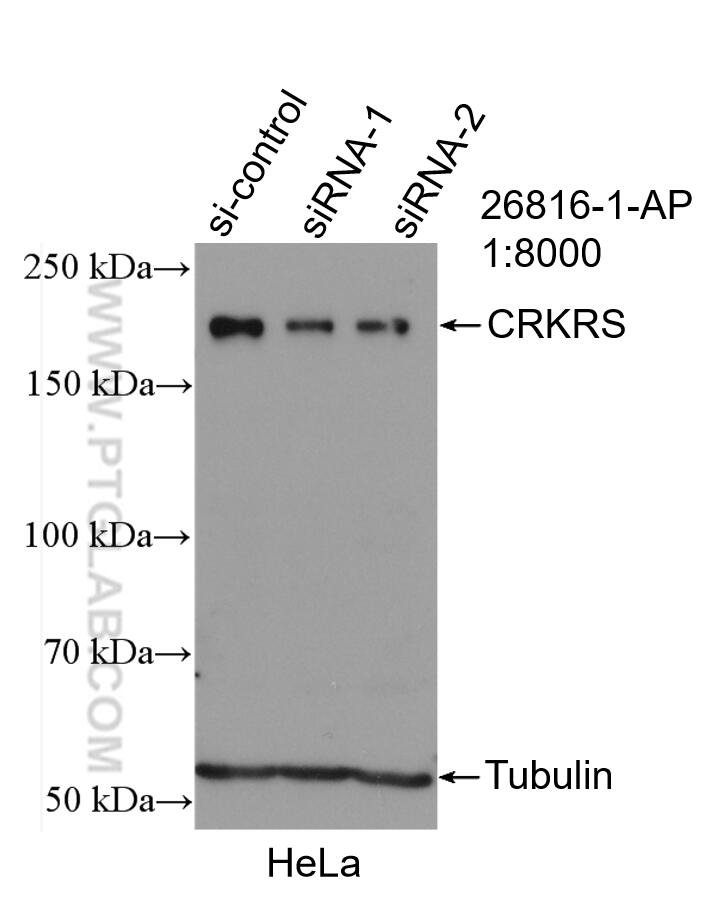
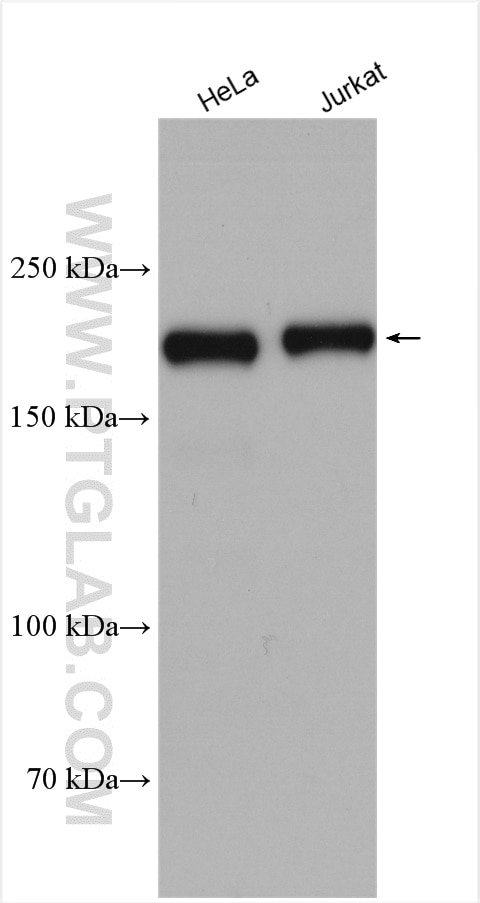
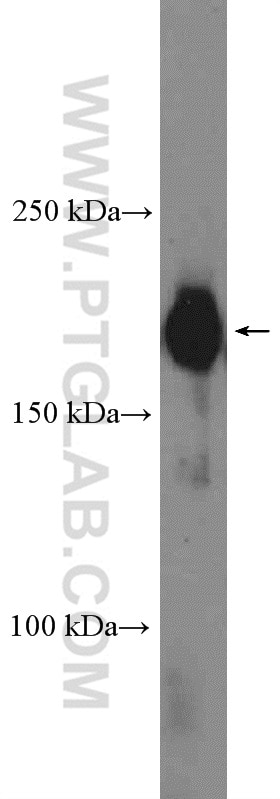
| Positive WB detected in | HeLa cells, K-562 cells, Jurkat cells |
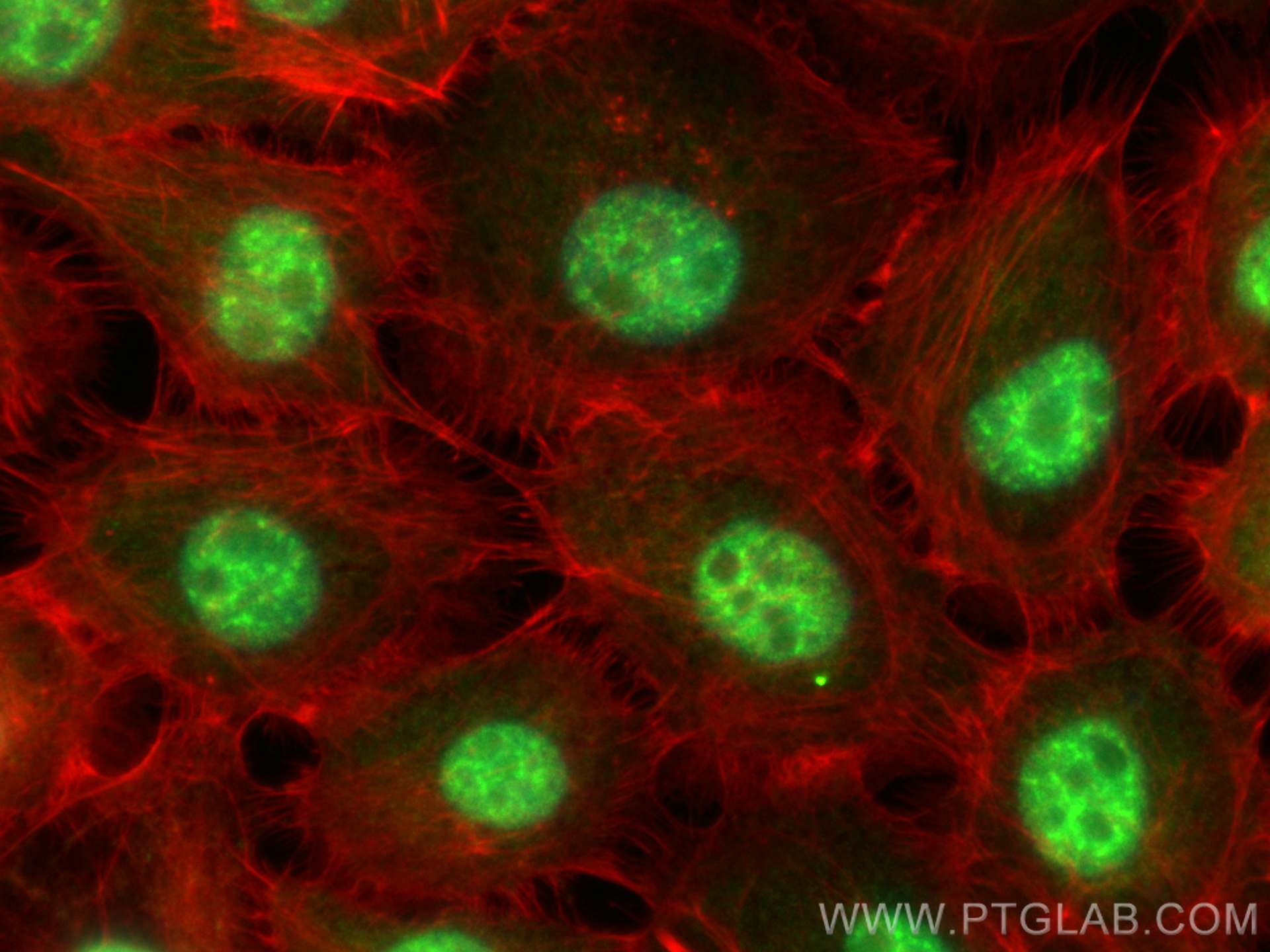
| Positive IF/ICC detected in | A431 cells |
Recommended dilution
| Application | Dilution |
|---|---|
| Western Blot (WB) | WB : 1:2000-1:16000 |
| Immunofluorescence (IF)/ICC | IF/ICC : 1:300-1:1200 |
| It is recommended that this reagent should be titrated in each testing system to obtain optimal results. | |
| Sample-dependent, Check data in validation data gallery. | |
Product Information
26816-1-AP targets CDK12/CRKRS in WB, IF/ICC, IP, ELISA applications and shows reactivity with human samples.
| Tested Reactivity | human |
| Cited Reactivity | human, mouse |
| Host / Isotype | Rabbit / IgG |
| Class | Polyclonal |
| Type | Antibody |
| Immunogen |
CatNo: Ag25323 Product name: Recombinant human CRKRS protein Source: e coli.-derived, PET30a Tag: 6*His Domain: 1300-1481 aa of BC150265 Sequence: EAEPPGHLPHEHQALRPMEYSTRPRPNRTYGNTDGPETGFSAIDTDERNSGPALTESLVQTLVKNRTFSGSLSHLGESSSYQGTGSVQFPGDQDLRFARVPLALHPVVGQPFLKAEGSSNSVVHAETKLQNYGELGPGTTGASSSGAGLHWGGPTQSSAYGKLYRGPTRVPPRGGRGRGVPY Predict reactive species |
| Full Name | Cdc2-related kinase, arginine/serine-rich |
| Calculated Molecular Weight | 1490 aa, 164 kDa |
| Observed Molecular Weight | 180-200 kDa |
| GenBank Accession Number | BC150265 |
| Gene Symbol | CDK12 |
| Gene ID (NCBI) | 51755 |
| RRID | AB_2880645 |
| Conjugate | Unconjugated |
| Form | Liquid |
| Purification Method | Antigen affinity purification |
| UNIPROT ID | Q9NYV4 |
| Storage Buffer | PBS with 0.02% sodium azide and 50% glycerol, pH 7.3. |
| Storage Conditions | Store at -20°C. Stable for one year after shipment. Aliquoting is unnecessary for -20oC storage. 20ul sizes contain 0.1% BSA. |
Background Information
CRKRS (Cdc2-related kinase, Arg/Ser), also named as cyclin-dependent kinase 12 (CKD12), belongs to CDC2/CDKX subfamily. CDK12 can form a heterodimeric complex with its activating partner, cyclin K, to regulate important cellular physiological processes that include transcriptional regulation, regulation of DNA damage repair genes such as BRCA1 and ATM, suppression of intronic polyadenylation, and susceptibility to PARP inhibitors (PMID: 30487607, 24240700, 31694772). CDK12 has 3 isoforms with the calculated molecular mass of 164/163/141 kDa, and the apparent molecular mass of 180-200 kDa due to some modifications (PMID 11683387, 22988298).
Protocols
| Product Specific Protocols | |
|---|---|
| IF protocol for CDK12/CRKRS antibody 26816-1-AP | Download protocol |
| WB protocol for CDK12/CRKRS antibody 26816-1-AP | Download protocol |
| Standard Protocols | |
|---|---|
| Click here to view our Standard Protocols |
Publications
What published studies show
The anti-CDK12 antibody (Cat# 26816-1-AP) has 19 citations published in journals including Nucleic Acids Research, JCI, Cell Reports Medicine, Science Advances, PNAS, Cell Death Discovery, European Journal of Cancer, British Journal of Cancer, Journal of Medicinal Chemistry, iScience, and others. Research fields span oncology (breast, prostate, ovarian, gastric, liver, lung, and colorectal cancers), transcription regulation, RNA processing, molecular degrader development, and DNA methylation.
| Species | Application | Title |
|---|---|---|
Nucleic Acids Res Identifying human pre-mRNA cleavage and polyadenylation factors by genome-wide CRISPR screens using a dual fluorescence readthrough reporter | ||
J Clin Invest CDK12/13 inactivation triggers STING-mediated antitumor immunity in preclinical models.
| ||
Cell Rep Med Development of an orally bioavailable CDK12/13 degrader and induction of synthetic lethality with AKT pathway inhibition | ||
Cell Rep Med CDK12 loss drives prostate cancer progression, transcription-replication conflicts, and synthetic lethality with paralog CDK13 | ||
Sci Adv Cyclin K condensates bridge CDK12 to phosphorylate and drive oncogenic YAP activation in hepatocellular carcinoma. | ||
Cell Death Discov JWA suppresses proliferation in trastuzumab-resistant breast cancer by downregulating CDK12.
|
Reviews
What customers say
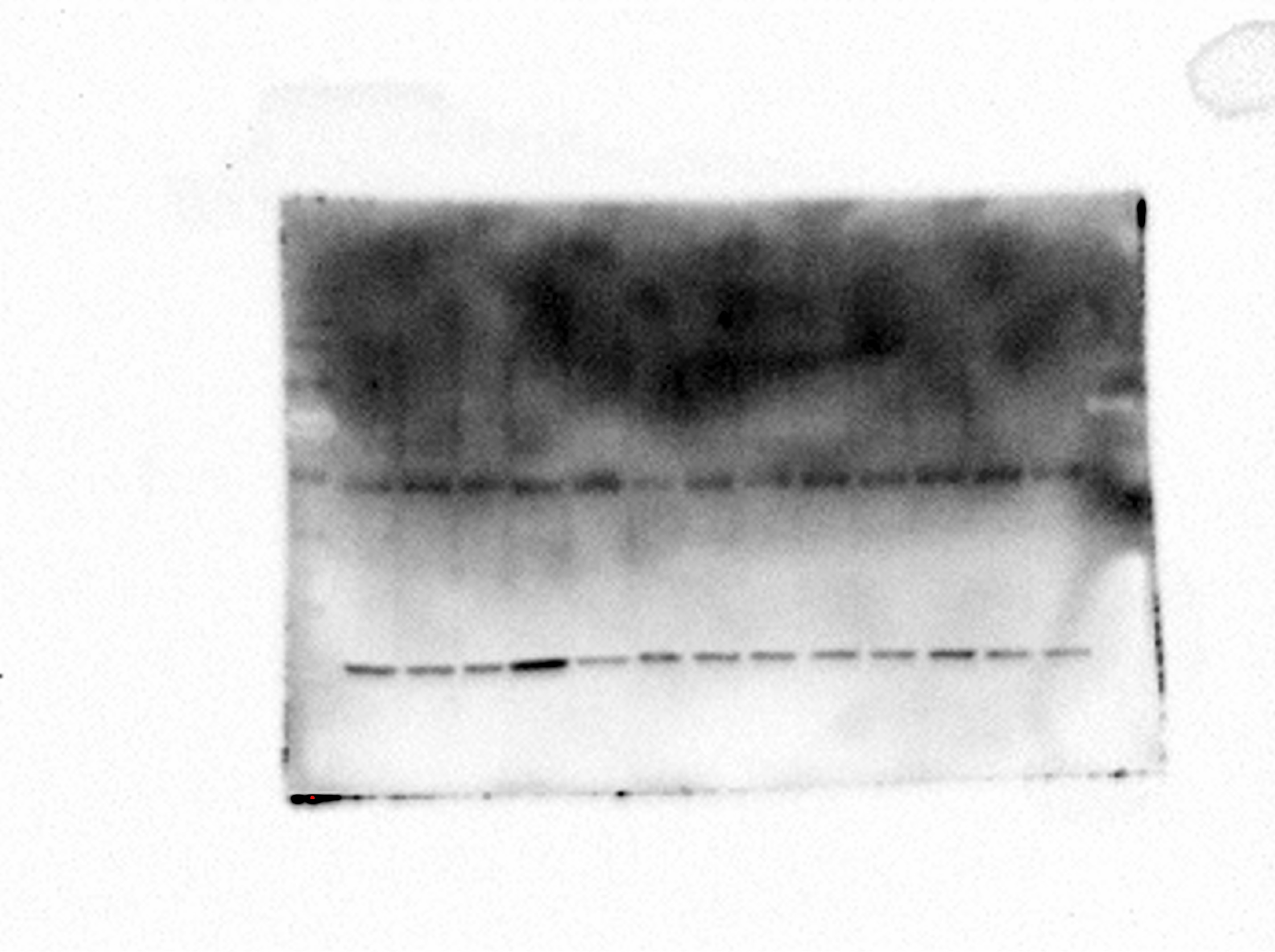
The single review for this product is negative (rated 1/5). The user performed a Western Blot on human liver lysate at a 1:1000 dilution and reported no signal at the expected molecular weight. Instead, they observed a couple of non-specific bands at lower molecular weights. Overall, the reviewer was unsatisfied with the antibody's performance under their experimental conditions.
The reviews below have been submitted by verified Proteintech customers who received an incentive for providing their feedback.
M (Verified Customer) (06-29-2021) | No Signal at all at the right size. A couple of non specific bands showed up at lower molecular weights.
 |





