

Tested Applications
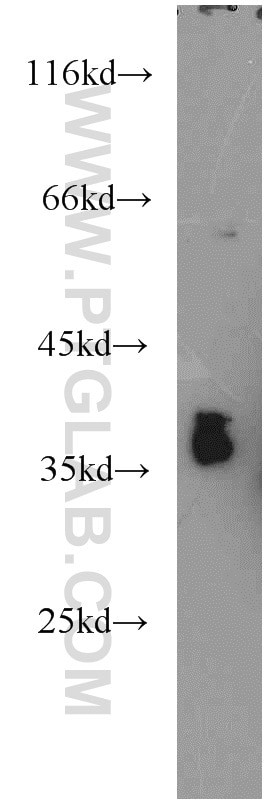
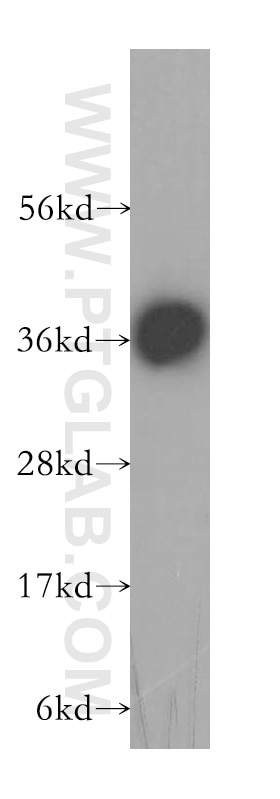
| Positive WB detected in | Y79 cells |
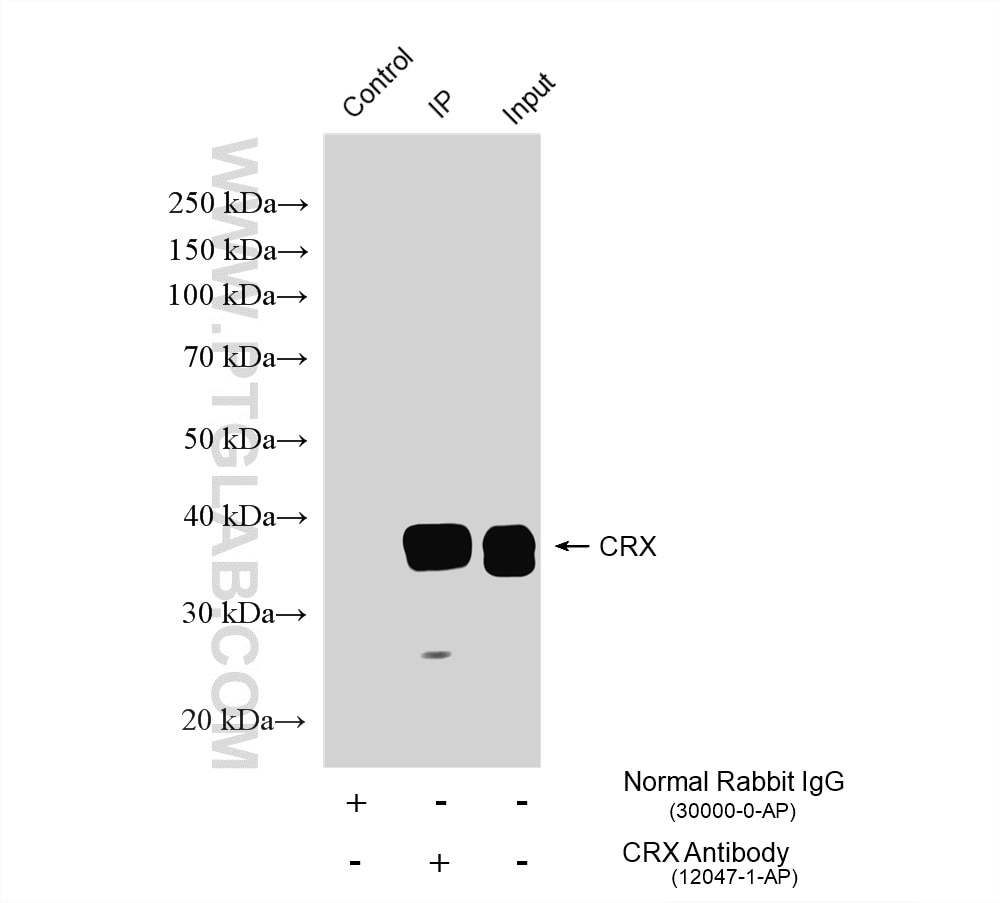
| Positive IP detected in | Y79 cells |
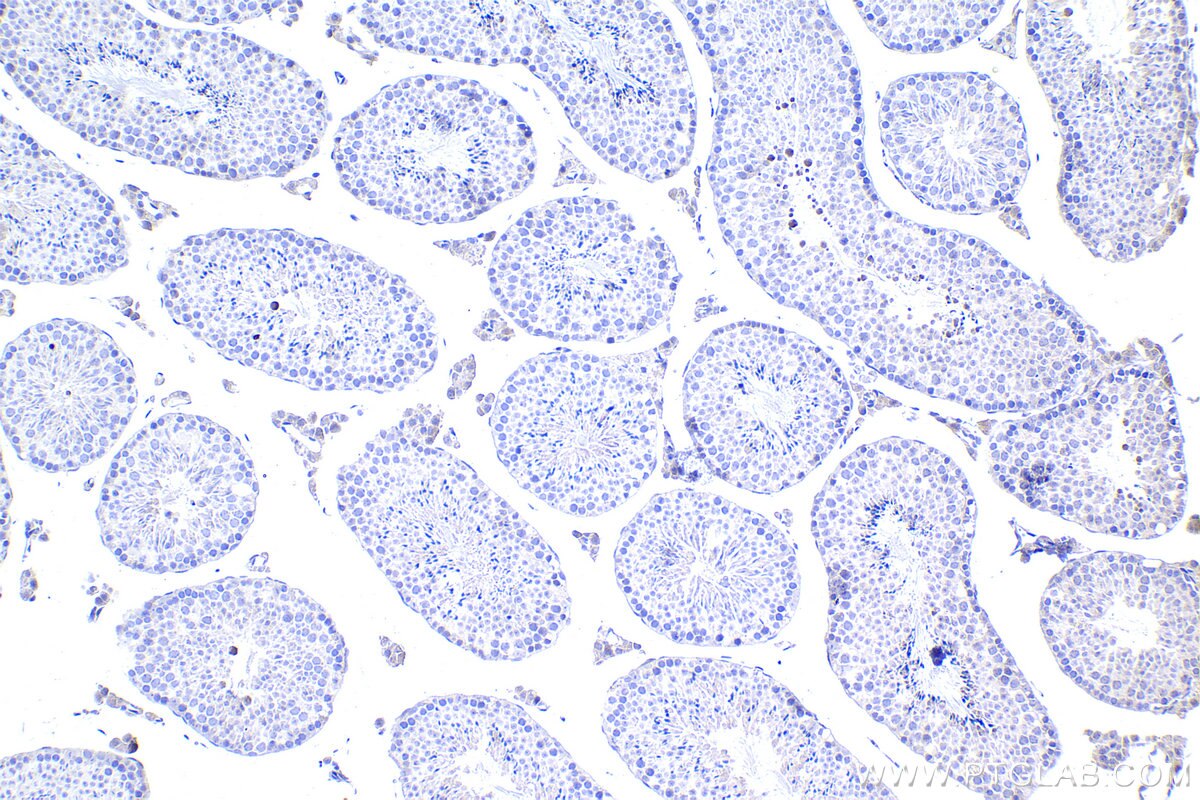
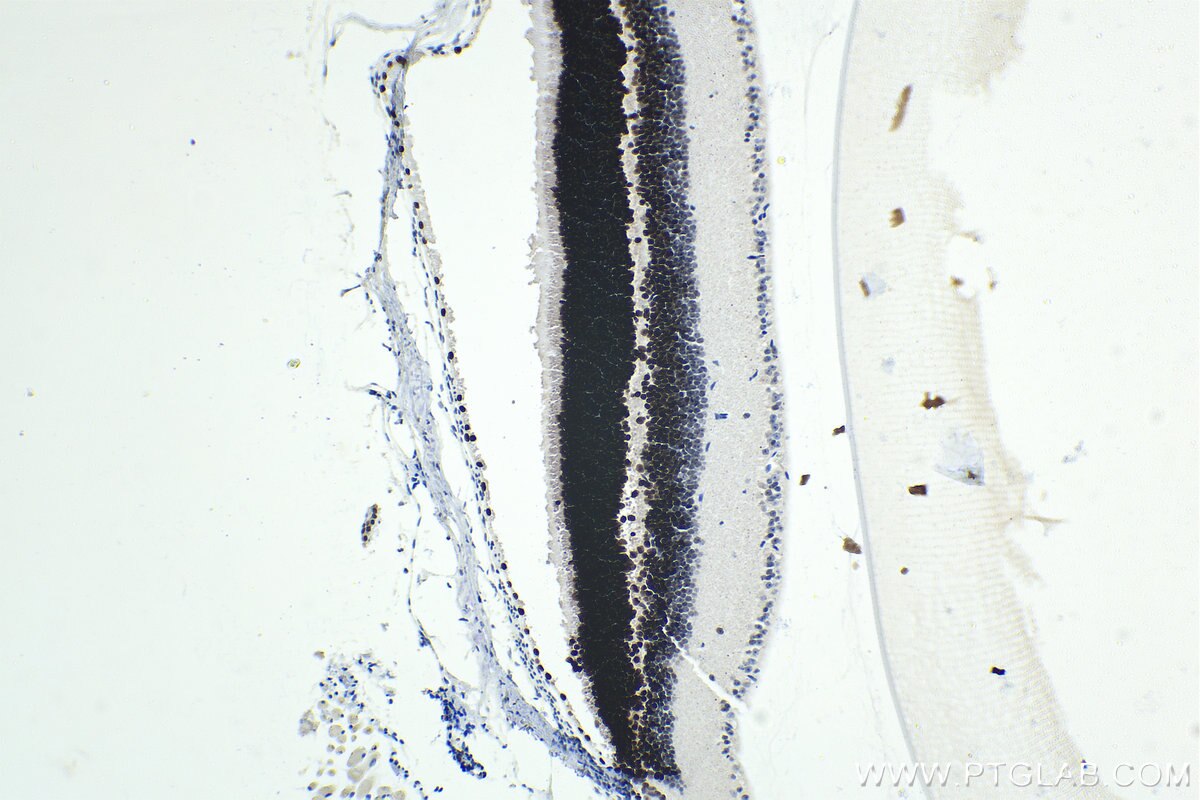
| Positive IHC detected in | mouse eye tissue, mouse testis tissue Note: suggested antigen retrieval with TE buffer pH 9.0; (*) Alternatively, antigen retrieval may be performed with citrate buffer pH 6.0 |
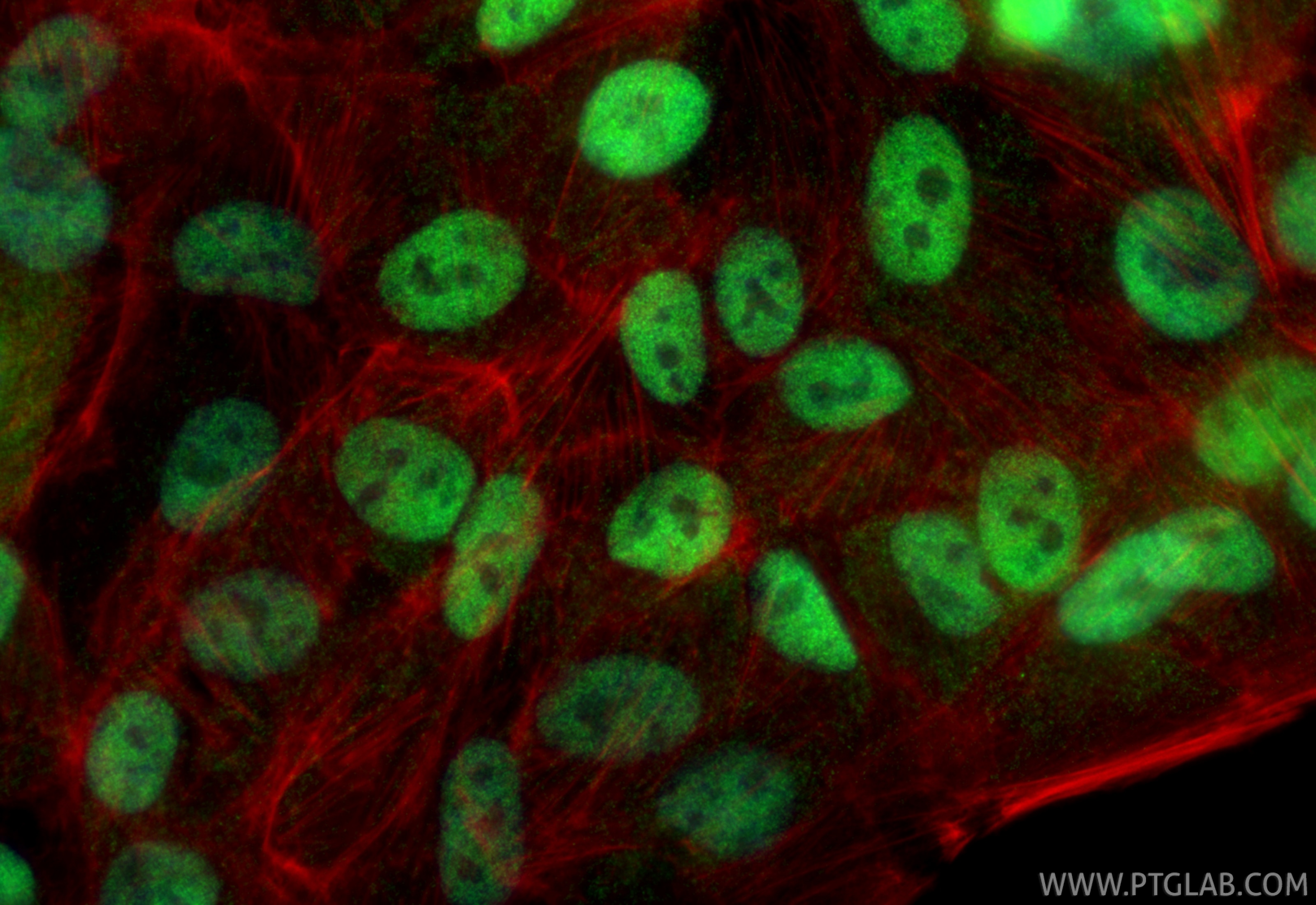
| Positive IF/ICC detected in | hTERT-RPE1 cells |
Recommended dilution
| Application | Dilution |
|---|---|
| Western Blot (WB) | WB : 1:500-1:1000 |
| Immunoprecipitation (IP) | IP : 0.5-4.0 ug for 1.0-3.0 mg of total protein lysate |
| Immunohistochemistry (IHC) | IHC : 1:2000-1:8000 |
| Immunofluorescence (IF)/ICC | IF/ICC : 1:50-1:500 |
| It is recommended that this reagent should be titrated in each testing system to obtain optimal results. | |
| Sample-dependent, Check data in validation data gallery. | |
Product Information
12047-1-AP targets CRX in WB, IHC, IF/ICC, IP, CoIP, ELISA applications and shows reactivity with human, mouse, rat samples.
| Tested Reactivity | human, mouse, rat |
| Cited Reactivity | human, mouse, rat |
| Host / Isotype | Rabbit / IgG |
| Class | Polyclonal |
| Type | Antibody |
| Immunogen |
CatNo: Ag2677 Product name: Recombinant human CRX protein Source: e coli.-derived, PGEX-4T Tag: GST Domain: 1-299 aa of BC016664 Sequence: MMAYMNPGPHYSVNALALSGPSVDLMHQAVPYPSAPRKQRRERTTFTRSQLEELEALFAKTQYPDVYAREEVALKINLPESRVQVWFKNRRAKCRQQRQQQKQQQQPPGGQAKARPAKRKAGTSPRPSTDVCPDPLGISDSYSPPLPGPSGSPTTAVATVSIWSPASESPLPEAQRAGLVASGPSLTSAPYAMTYAPASAFCSSPSAYGSPSSYFSGLDPYLSPMVPQLGGPALSPLSGPSVGPSLAQSPTSLSGQSYGAYSPVDSLEFKDPTGTWKFTYNPMDPLDYKDQSAWKFQIL Predict reactive species |
| Full Name | cone-rod homeobox |
| Calculated Molecular Weight | 299 aa, 32 kDa |
| Observed Molecular Weight | 37 kDa |
| GenBank Accession Number | BC016664 |
| Gene Symbol | CRX |
| Gene ID (NCBI) | 1406 |
| RRID | AB_2292128 |
| Conjugate | Unconjugated |
| Form | Liquid |
| Purification Method | Antigen affinity purification |
| UNIPROT ID | O43186 |
| Storage Buffer | PBS with 0.02% sodium azide and 50% glycerol, pH 7.3. |
| Storage Conditions | Store at -20°C. Stable for one year after shipment. Aliquoting is unnecessary for -20oC storage. 20ul sizes contain 0.1% BSA. |
Background Information
Cone-rod homeobox (Crx) is a homeodomain transcription factor and member of the Otx family, which has been thought to play a critical role in determining and maintaining the phenotype of both pinealocytes and retinal photoreceptors [PMID:17467693]. In the mammalian retina, Crx plays an essential role in the normal development and maintenance of cones and rods and regulates expression of the network of genes that characterize the retina [PMID:17653270]. Elimination of Crx by disruption of the homeobox domain results in loss of the image-forming visual system but not the non-image-forming visual system controlling circadian rhythms [PMID:20438719].
Protocols
| Product Specific Protocols | |
|---|---|
| IF protocol for CRX antibody 12047-1-AP | Download protocol |
| IHC protocol for CRX antibody 12047-1-AP | Download protocol |
| IP protocol for CRX antibody 12047-1-AP | Download protocol |
| WB protocol for CRX antibody 12047-1-AP | Download protocol |
| Standard Protocols | |
|---|---|
| Click here to view our Standard Protocols |
Publications
What published studies show
The CRX Polyclonal antibody (Cat# 12047-1-AP) has 5 citations published in Cell Death Dis, Neural Regen Res, iScience, J Neurosci, and Dev Dyn. The associated research fields center on retinal biology and ophthalmology, covering topics such as epithelial–mesenchymal transition in retinal pigment epithelial cells, Müller cell activation under simulated weightlessness, photoreceptor gene regulation, retinal lamination defects, and anti-EMT strategies to delay retinal degeneration. Applications cited include WB, IF, CoIP, and IHC across human, mouse, and rat species.
| Species | Application | Title |
|---|---|---|
Cell Death Dis CRX is an intrinsic suppressor of epithelial‒mesenchymal transition in retinal pigment epithelial cells: a promising therapeutic avenue for subretinal fibrosis. | ||
Neural Regen Res Müller cells are activated in response to retinal outer nuclear layer degeneration in rats subjected to simulated weightlessness conditions | ||
iScience Induced retinal pigment epithelial cells with anti-epithelial-to-mesenchymal transition ability delay retinal degeneration | ||
J Neurosci The transcription factor GTF2IRD1 regulates the topology and function of photoreceptors by modulating photoreceptor gene expression across the retina. | ||
Dev Dyn Reduced mTORC1-signaling in progenitor cells leads to retinal lamination deficits |
Reviews
What customers say
This product has received one review (5 stars) from a user who tested it by immunofluorescence at a 1:200 dilution on paraffin-embedded adult mouse retina tissue. The reviewer confirmed that the antibody works well on this application and tissue type, providing a positive endorsement of its performance in IF experiments.
The reviews below have been submitted by verified Proteintech customers who received an incentive for providing their feedback.
Christoffer (Verified Customer) (03-03-2025) | Works with paraffin embedded adult mouse retina.
|







