
Recombinant Canine CXCL8/IL-8 protein (rFc Tag)(HPLC verified)
Species
Canine
Purity
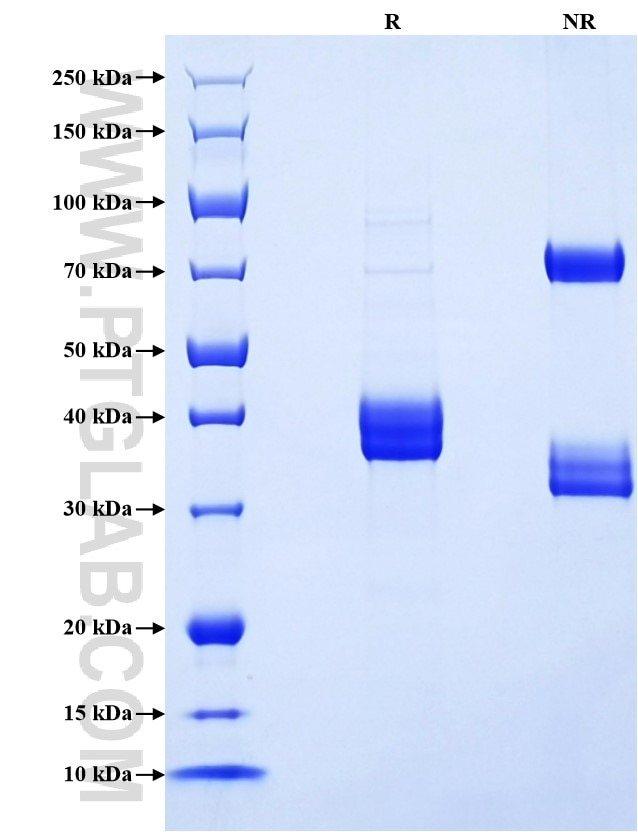
>90 %, SDS-PAGE
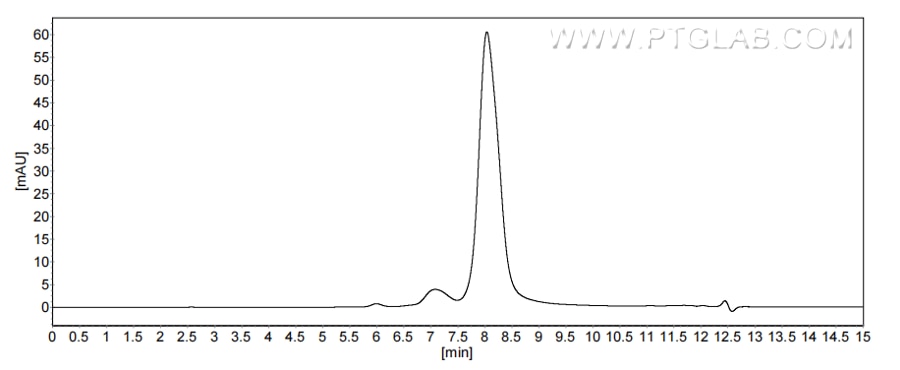
>90%, SEC-HPLC
Tag
rFc Tag
Activity
not tested
Cat no : Eg4552
Validation Data Gallery
Product Information
| Purity | >90 %, SDS-PAGE >90%, SEC-HPLC |
| Endotoxin | <0.1 EU/μg protein, LAL method |
| Activity |
Not tested |
| Expression | HEK293-derived Canine CXCL8 protein Ala23-Pro101 (Accession# P41324) with a rabbit IgG Fc tag at the C-terminus. |
| GeneID | 403850 |
| Accession | P41324 |
| PredictedSize | 35.4 kDa |
| SDS-PAGE | 36-42 kDa, reducing (R) conditions |
| Formulation | Lyophilized from 0.22 μm filtered solution in PBS, pH 7.4. Normally 5% trehalose and 5% mannitol are added as protectants before lyophilization. |
| Reconstitution | Briefly centrifuge the tube before opening. Reconstitute at 0.1-0.5 mg/mL in sterile water. |
| Storage Conditions |
It is recommended that the protein be aliquoted for optimal storage. Avoid repeated freeze-thaw cycles.
|
| Shipping | The product is shipped at ambient temperature. Upon receipt, store it immediately at the recommended temperature. |
Background
Interleukin-8 (IL-8), also known as CXCL8, is a member of the CXC chemokine family. This chemokine is secreted by a variety of cell types including monocytes/macrophages, T cells, neutrophils, fibroblasts, endothelial cells and various tumour cell lines in response to inflammatory stimuli. IL-8 has two main functions. It induces chemotaxis in target cells, primarily neutrophils but also other granulocytes, causing them to migrate to the site of infection. IL-8 also induces phagocytosis once they have arrived. This gene is thought to play a role in the pathogenesis of bronchiolitis, a common respiratory disease caused by viral infection. IL-8 is also known to be a potent promoter of angiogenesis. IL-8 has been implicated in tumour angiogenesis, metastasis and poor prognosis in breast cancer. IL-8 may represent a novel therapeutic target for estrogen-driven breast carcinogenesis and tumour progression.
References:
1.Ha H. et al. (2017) Theranostics. 7(6):1543-1588.
2.Matsushima K. et al. (2022) Cytokine. 153:155828.
3.Todorović-Raković N. et al. (2013) J Interferon Cytokine Res. 33(10):563-70.
4.Tatsuno R. et al. (2024) Cell Death Dis. 15(7):471.