

Tested Applications
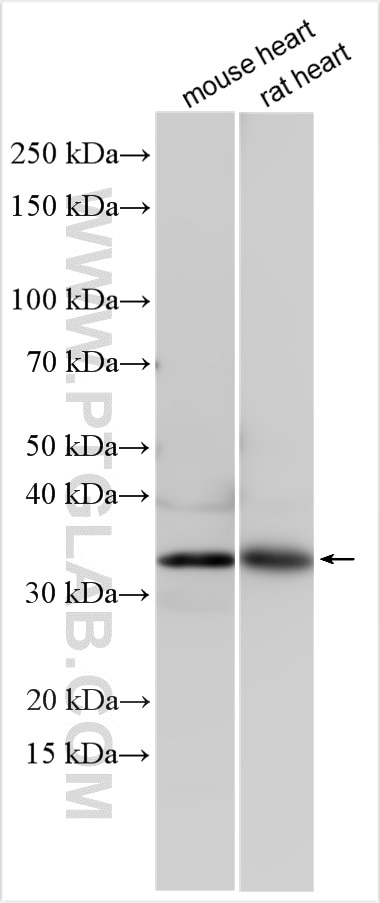
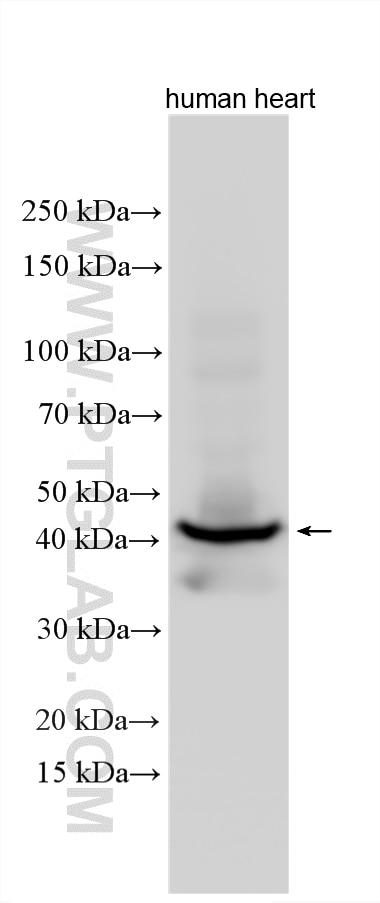
| Positive WB detected in | mouse heart tissue, human heart tissue, rat heart tissue |
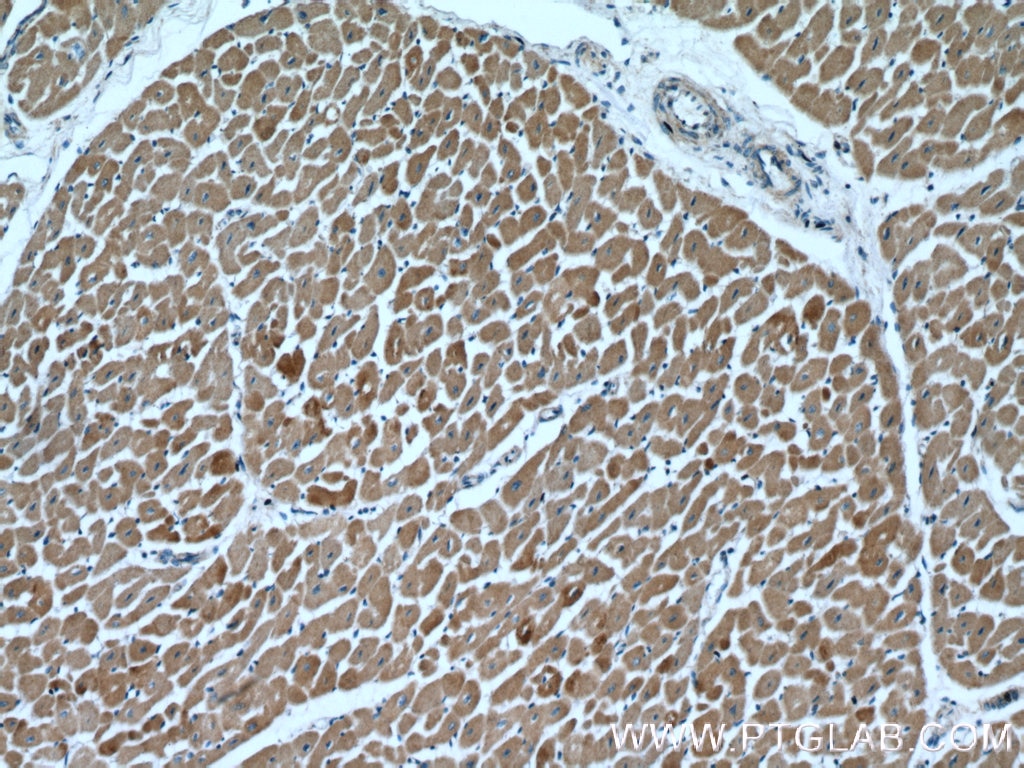
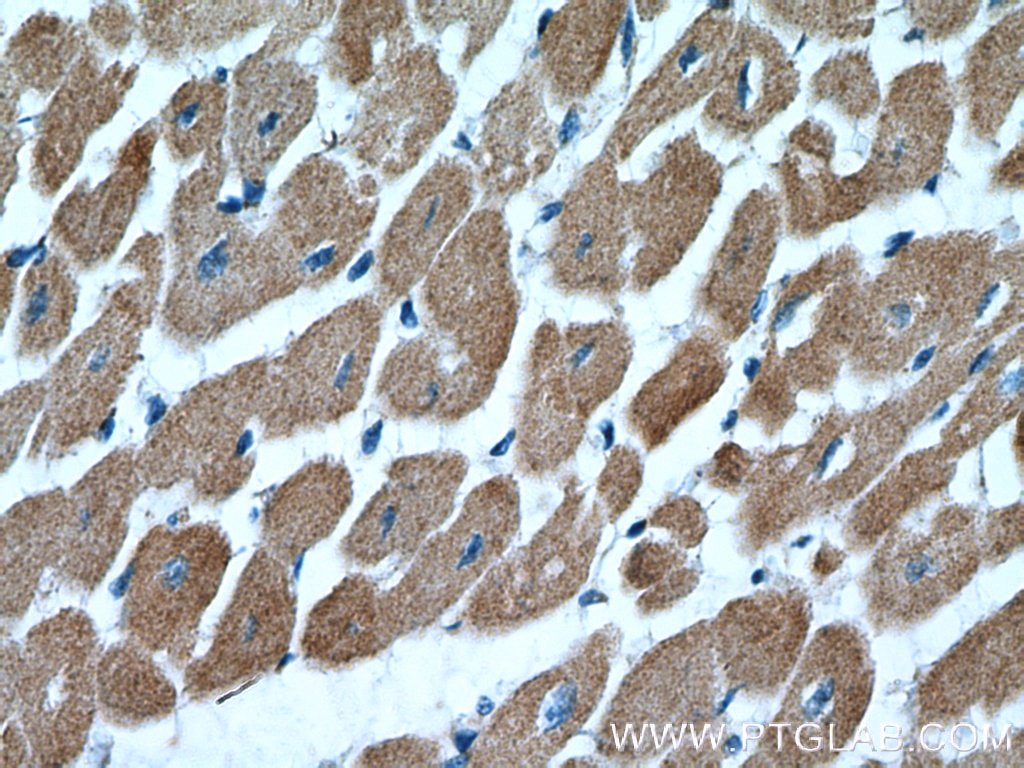
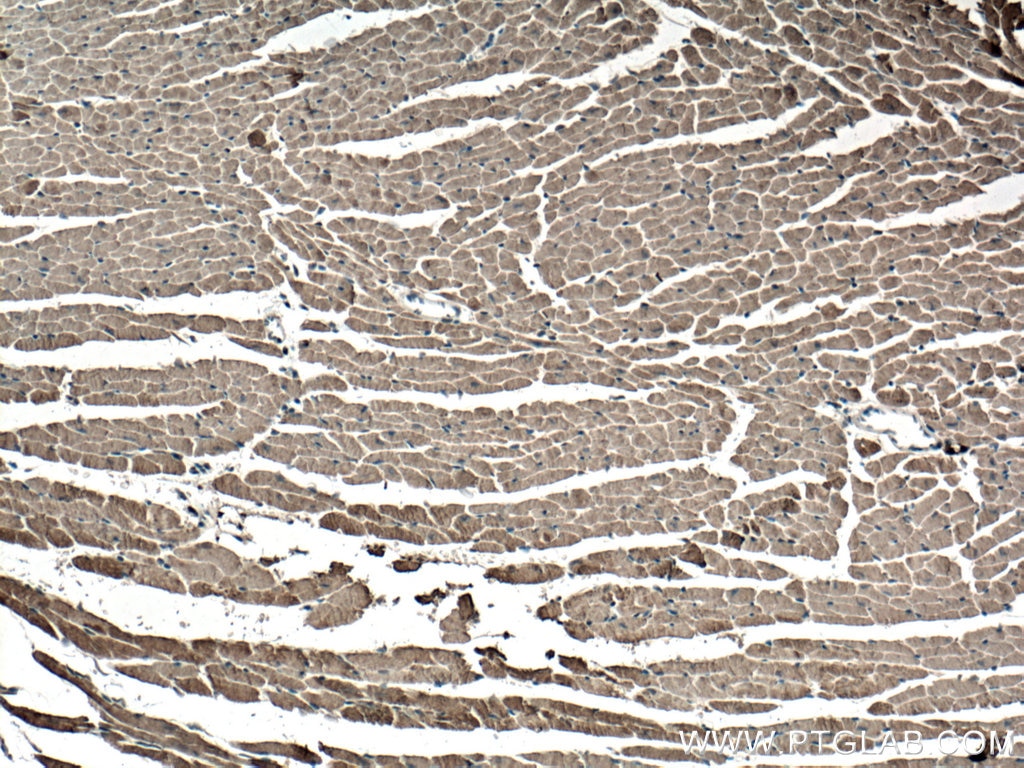
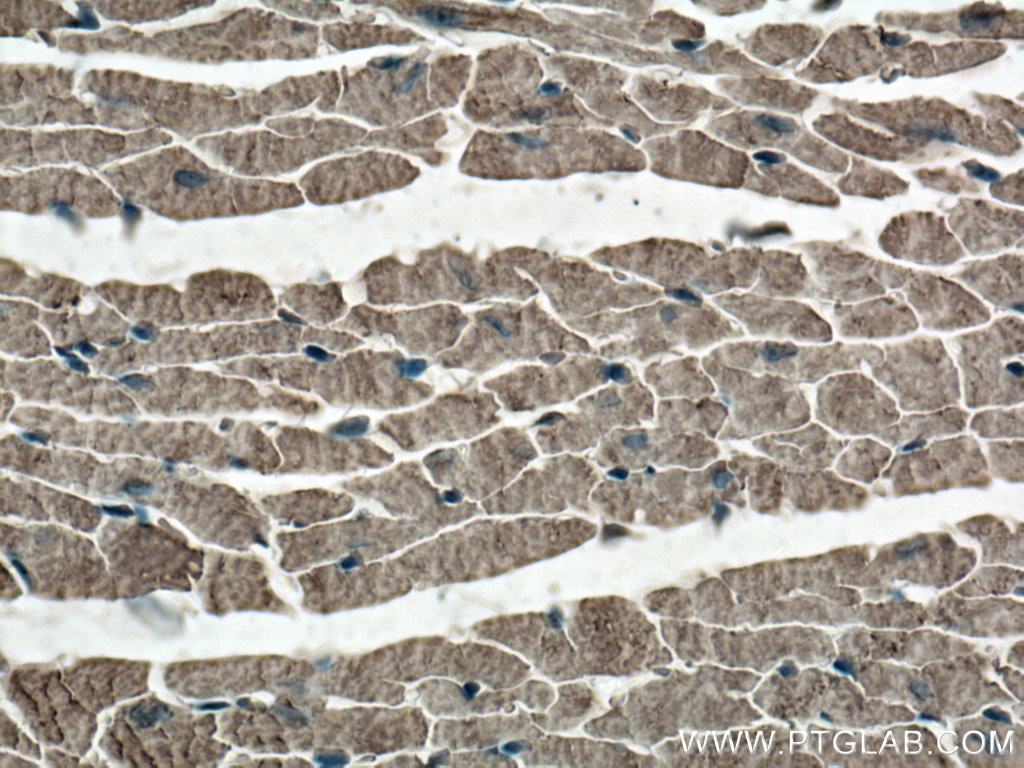
| Positive IHC detected in | human heart tissue, mouse heart tissue Note: suggested antigen retrieval with TE buffer pH 9.0; (*) Alternatively, antigen retrieval may be performed with citrate buffer pH 6.0 |
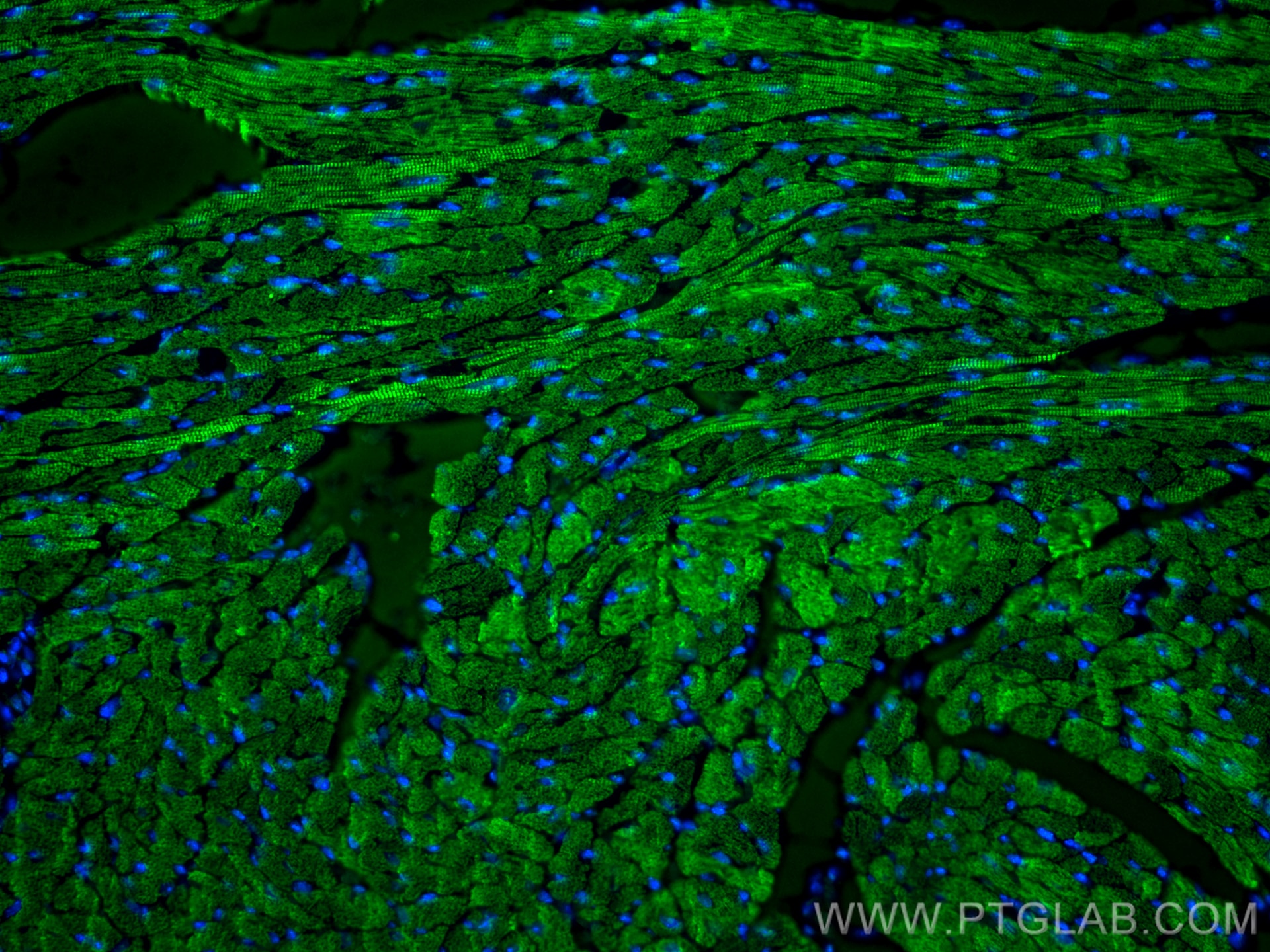
| Positive IF-P detected in | mouse heart tissue |
Recommended dilution
| Application | Dilution |
|---|---|
| Western Blot (WB) | WB : 1:2000-1:12000 |
| Immunohistochemistry (IHC) | IHC : 1:50-1:500 |
| Immunofluorescence (IF)-P | IF-P : 1:50-1:500 |
| It is recommended that this reagent should be titrated in each testing system to obtain optimal results. | |
| Sample-dependent, Check data in validation data gallery. | |
Product Information
26592-1-AP targets Cardiac Troponin T in WB, IHC, IF-P, ELISA applications and shows reactivity with human, mouse, rat samples.
| Tested Reactivity | human, mouse, rat |
| Cited Reactivity | human, mouse, rat |
| Host / Isotype | Rabbit / IgG |
| Class | Polyclonal |
| Type | Antibody |
| Immunogen |
CatNo: Ag24911 Product name: Recombinant human cTnT protein Source: e coli.-derived, PGEX-4T Tag: GST Domain: 1-76 aa of BC002653 Sequence: MSDIEEVVEEYEEEEQEEAAVEEQEEAAEEDAEAEAETEETRAEEDEEEEEAKEAEDGPMEESKPKPRSFMPNLVP Predict reactive species |
| Full Name | troponin T type 2 (cardiac) |
| Calculated Molecular Weight | 36 kDa |
| Observed Molecular Weight | 34-40 kDa |
| GenBank Accession Number | BC002653 |
| Gene Symbol | Cardiac Troponin T |
| Gene ID (NCBI) | 7139 |
| RRID | AB_2880566 |
| Conjugate | Unconjugated |
| Form | Liquid |
| Purification Method | Antigen affinity purification |
| UNIPROT ID | P45379 |
| Storage Buffer | PBS with 0.02% sodium azide and 50% glycerol, pH 7.3. |
| Storage Conditions | Store at -20°C. Stable for one year after shipment. Aliquoting is unnecessary for -20oC storage. 20ul sizes contain 0.1% BSA. |
Background Information
Cardiac Troponin T, also named as cTnT, TNNT2. This gene encodes the cardiac isoform of troponin T. The encoded protein is the tropomyosin-binding subunit of the troponin complex, which is located on the thin filament of striated muscles and regulates muscle contraction in response to alterations in intracellular calcium ion concentration. cTnT is commonly used as a marker of cardiomyogenic differentiation; in H9C2 rat cardiomyoblasts, its expression typically increases upon differentiation induction. Similar to H9C2, immortalized cardiomyocyte cell lines such as AC16 and HL-1 also show changes in the expression of cardiac markers (e.g., cTnT/TNNT2) upon differentiation induction-cardiac markers increase significantly in differentiated AC16 and H9C2 cells, whereas HL-1 already possesses a certain degree of sarcomeric structure-yet none of the three can fully recapitulate the transcriptomic and functional phenotypes of mature cardiomyocytes. Mutations in this gene have been associated with familial hypertrophic cardiomyopathy as well as with dilated cardiomyopathy. Cardiac Troponin T can be detected as about 34-40 kDa.
Protocols
| Product Specific Protocols | |
|---|---|
| IF protocol for Cardiac Troponin T antibody 26592-1-AP | Download protocol |
| IHC protocol for Cardiac Troponin T antibody 26592-1-AP | Download protocol |
| WB protocol for Cardiac Troponin T antibody 26592-1-AP | Download protocol |
| Standard Protocols | |
|---|---|
| Click here to view our Standard Protocols |
Publications
What published studies show
The Cardiac Troponin T Polyclonal antibody (Cat# 26592-1-AP) has 15 citations across journals including Signal Transduction and Targeted Therapy, Cell Metabolism, Nature Communications, Advanced Science, Biomaterials, Free Radical Biology and Medicine, European Journal of Pharmacology, Nutrients, Frontiers in Physiology, Acta Diabetologica, British Journal of Pharmacology, and Biomedicines. Research fields span cardiac fibrosis, cardiomyopathy, cardiotoxicity, cardiac repair, diabetic cardiomyopathy, sepsis-induced cardiac damage, radiation-induced heart disease, myocardial hypertrophy, and cardiac electrophysiology.
| Species | Application | Title |
|---|---|---|
Signal Transduct Target Ther Thiamine-modified metabolic reprogramming of human pluripotent stem cell-derived cardiomyocyte under space microgravity | ||
Cell Metab O-GlcNAcylation-mediated endothelial metabolic memory contributes to cardiac damage via small extracellular vesicles | ||
Nat Commun Fibroblast-specific PRMT5 deficiency suppresses cardiac fibrosis and left ventricular dysfunction in male mice | ||
Adv Sci (Weinh) Aloe Emodin Alleviates Radiation-Induced Heart Disease via Blocking P4HB Lactylation and Mitigating Kynurenine Metabolic Disruption | ||
Biomaterials Targeted immunomodulation therapy for cardiac repair by platelet membrane engineering extracellular vesicles via hitching peripheral monocytes. | ||
Free Radic Biol Med SIRT3 promotes metabolic maturation of human iPSC-derived cardiomyocytes via OPA1-controlled mitochondrial dynamics |








