

Tested Applications
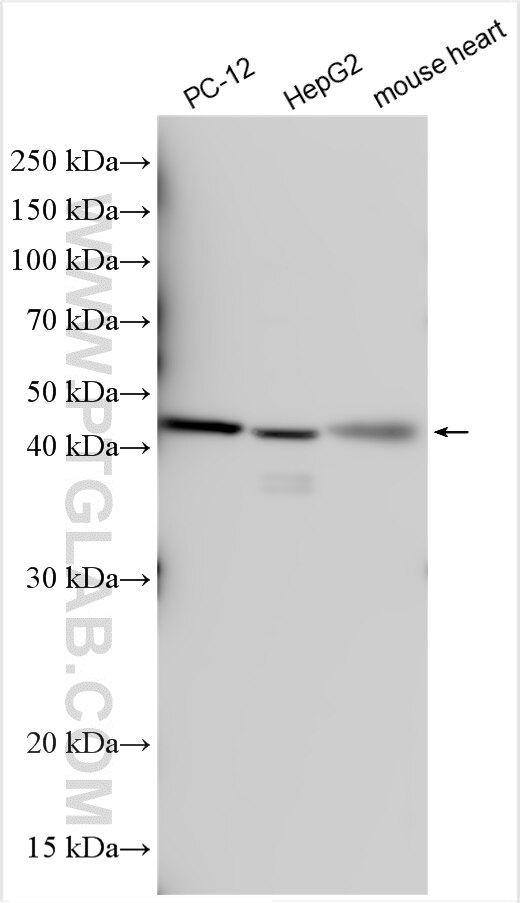
| Positive WB detected in | HepG2 cells, PC-12 cells, mouse heart tissue |
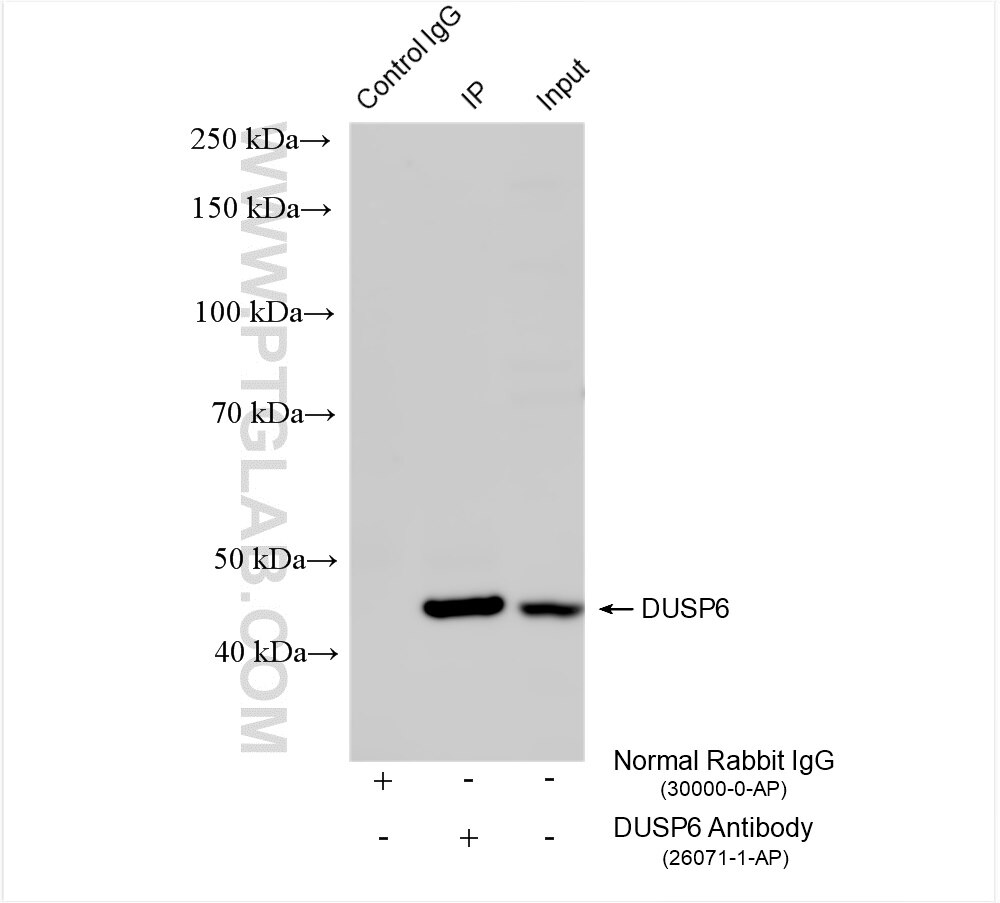
| Positive IP detected in | PC-12 cells |
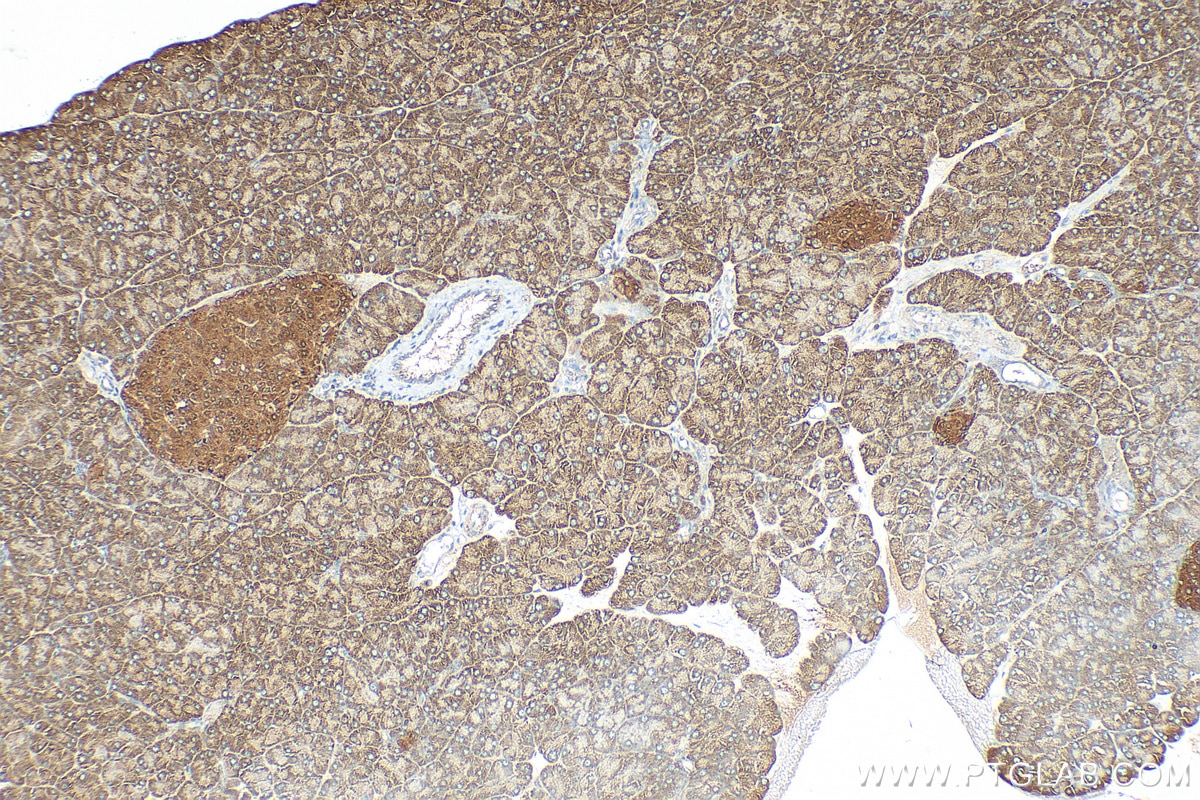
| Positive IHC detected in | mouse pancreas tissue Note: suggested antigen retrieval with TE buffer pH 9.0; (*) Alternatively, antigen retrieval may be performed with citrate buffer pH 6.0 |
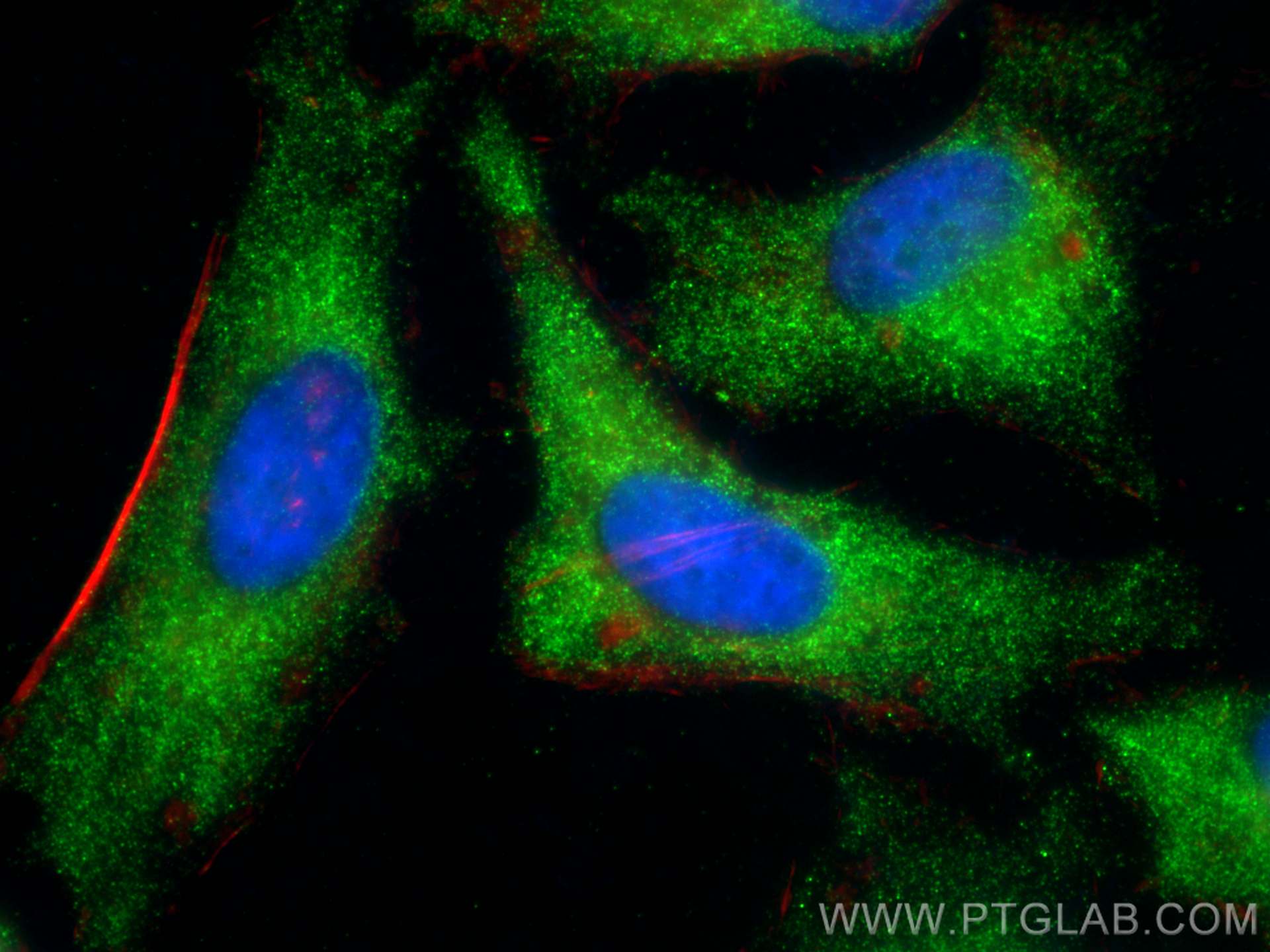
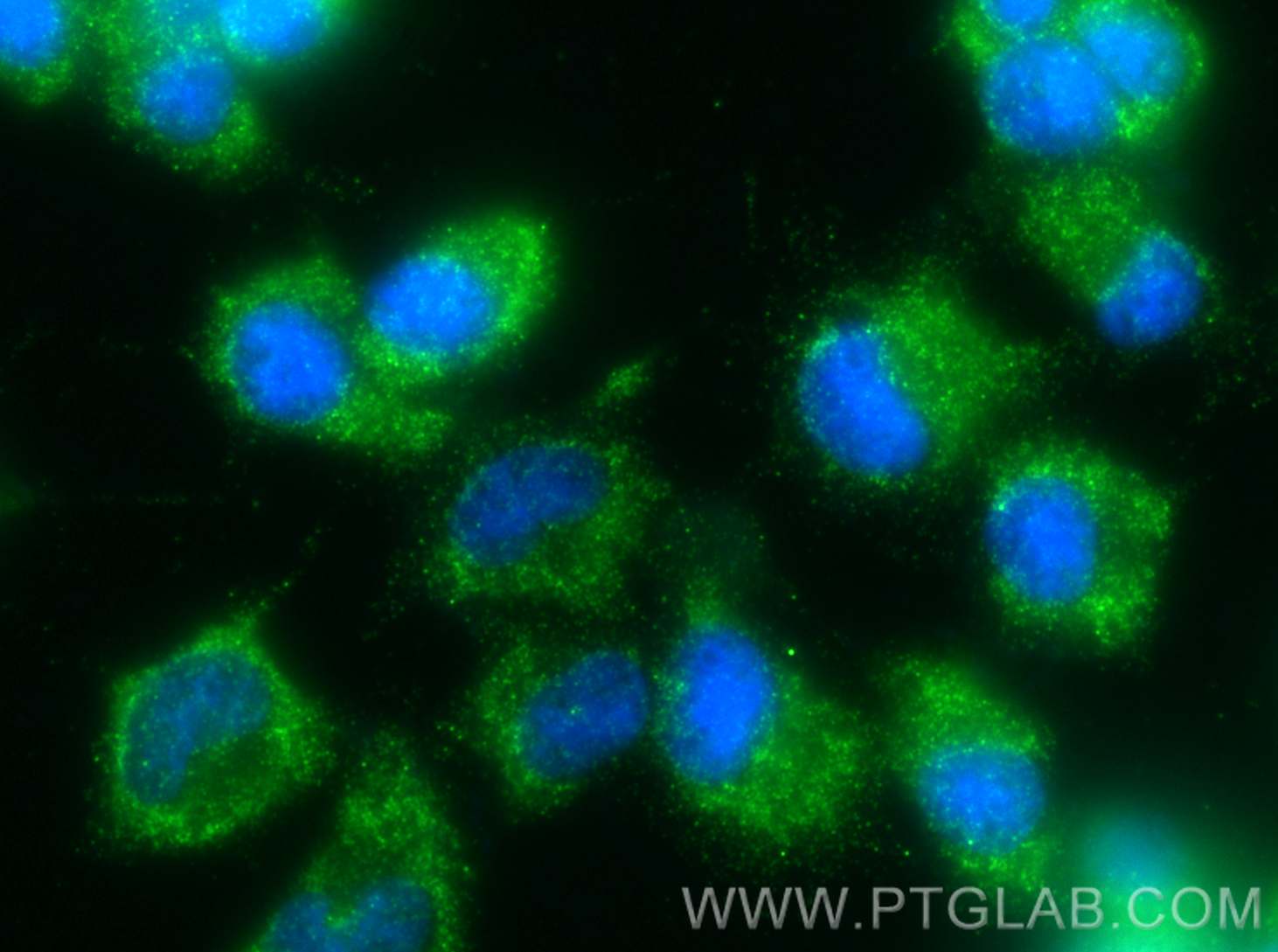
| Positive IF/ICC detected in | HeLa cells, PC-12 cells |
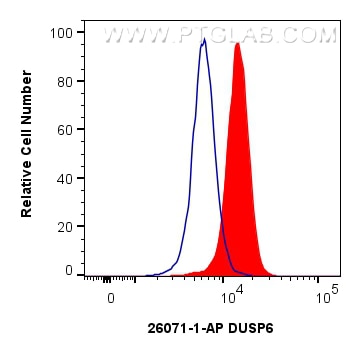
| Positive FC (Intra) detected in | HeLa cells |
Recommended dilution
| Application | Dilution |
|---|---|
| Western Blot (WB) | WB : 1:500-1:1000 |
| Immunoprecipitation (IP) | IP : 0.5-4.0 ug for 1.0-3.0 mg of total protein lysate |
| Immunohistochemistry (IHC) | IHC : 1:50-1:500 |
| Immunofluorescence (IF)/ICC | IF/ICC : 1:200-1:800 |
| Flow Cytometry (FC) (INTRA) | FC (INTRA) : 0.25 ug per 10^6 cells in a 100 µl suspension |
| It is recommended that this reagent should be titrated in each testing system to obtain optimal results. | |
| Sample-dependent, Check data in validation data gallery. | |
Product Information
26071-1-AP targets DUSP6 in WB, IHC, IF/ICC, FC (Intra), IP, ELISA applications and shows reactivity with human, mouse, rat samples.
| Tested Reactivity | human, mouse, rat |
| Cited Reactivity | human |
| Host / Isotype | Rabbit / IgG |
| Class | Polyclonal |
| Type | Antibody |
| Immunogen |
CatNo: Ag23474 Product name: Recombinant human DUSP6 protein Source: e coli.-derived, PGEX-4T Tag: GST Domain: 353-381 aa of BC003562 Sequence: CDNRVPAQQLYFTTPSNQNVYQVDSLQST Predict reactive species |
| Full Name | dual specificity phosphatase 6 |
| Calculated Molecular Weight | 42 kDa |
| Observed Molecular Weight | 42 kDa |
| GenBank Accession Number | BC003562 |
| Gene Symbol | DUSP6 |
| Gene ID (NCBI) | 1848 |
| RRID | AB_3669521 |
| Conjugate | Unconjugated |
| Form | Liquid |
| Purification Method | Antigen affinity purification |
| UNIPROT ID | Q16828 |
| Storage Buffer | PBS with 0.02% sodium azide and 50% glycerol, pH 7.3. |
| Storage Conditions | Store at -20°C. Stable for one year after shipment. Aliquoting is unnecessary for -20oC storage. 20ul sizes contain 0.1% BSA. |
Background Information
Dual specificity phosphatase 6 (DUSP6) is a member of the family of mitogen-activated protein kinase (MAPK) phosphatases, which dephosphorylate and inactivate MAPK (PMID: 9858808). The MAPK pathway is an important signal transduction system that serves cellular processes, such as proliferation, differentiation, migration, and apoptosis. DUSP6 resides at chromosome location 12q22-23, which is one of the candidate loci for susceptibility to bipolar disorder and which encodes a phosphatase selective for extracellular signal-regulated kinase (ERK) (PMID: 9205128). DUSP6 inactivates extracellular signal-regulated kinase (ERK), and can act in tumor suppressive pathways, whose expression is reduced in several different types of cancer. (PMID: 21680106).
Protocols
| Product Specific Protocols | |
|---|---|
| FC protocol for DUSP6 antibody 26071-1-AP | Download protocol |
| IF protocol for DUSP6 antibody 26071-1-AP | Download protocol |
| IHC protocol for DUSP6 antibody 26071-1-AP | Download protocol |
| IP protocol for DUSP6 antibody 26071-1-AP | Download protocol |
| WB protocol for DUSP6 antibody 26071-1-AP | Download protocol |
| Standard Protocols | |
|---|---|
| Click here to view our Standard Protocols |
Publications
What published studies show
The DUSP6 Polyclonal antibody (Cat# 26071-1-AP) has 2 total citations. One appears in Cancer Cell (IF 56.1), studying cell type-resolved transcriptomic profiles and patient survival in pancreatic cancer. The other is in Cell Stress Chaperones (IF 4.1), investigating JNK signaling dominance in hyperthermia using WB on human samples. The associated research fields are oncology (pancreatic cancer) and stress signaling pathways.
| Species | Application | Title |
|---|---|---|
Cancer Cell Mapping cell type-resolved transcriptomic profiles to patient survival in pancreatic cancer. | ||







