

Product Information
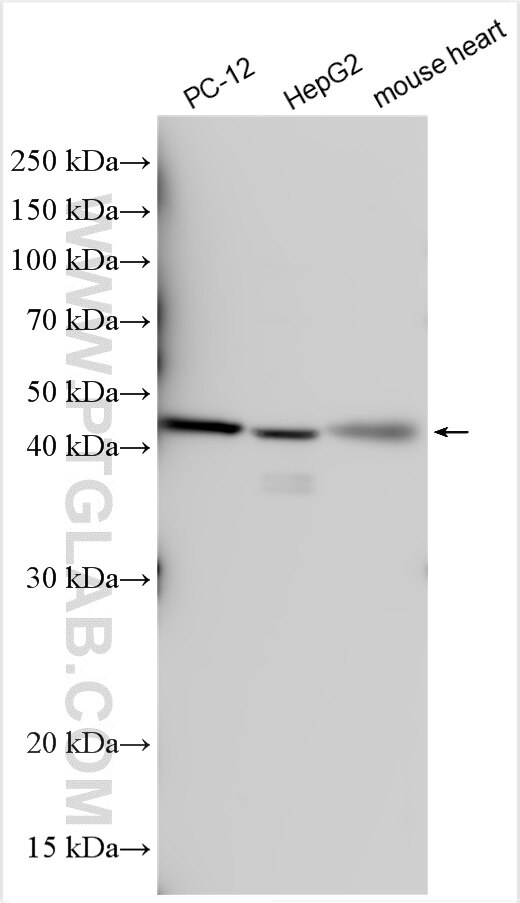
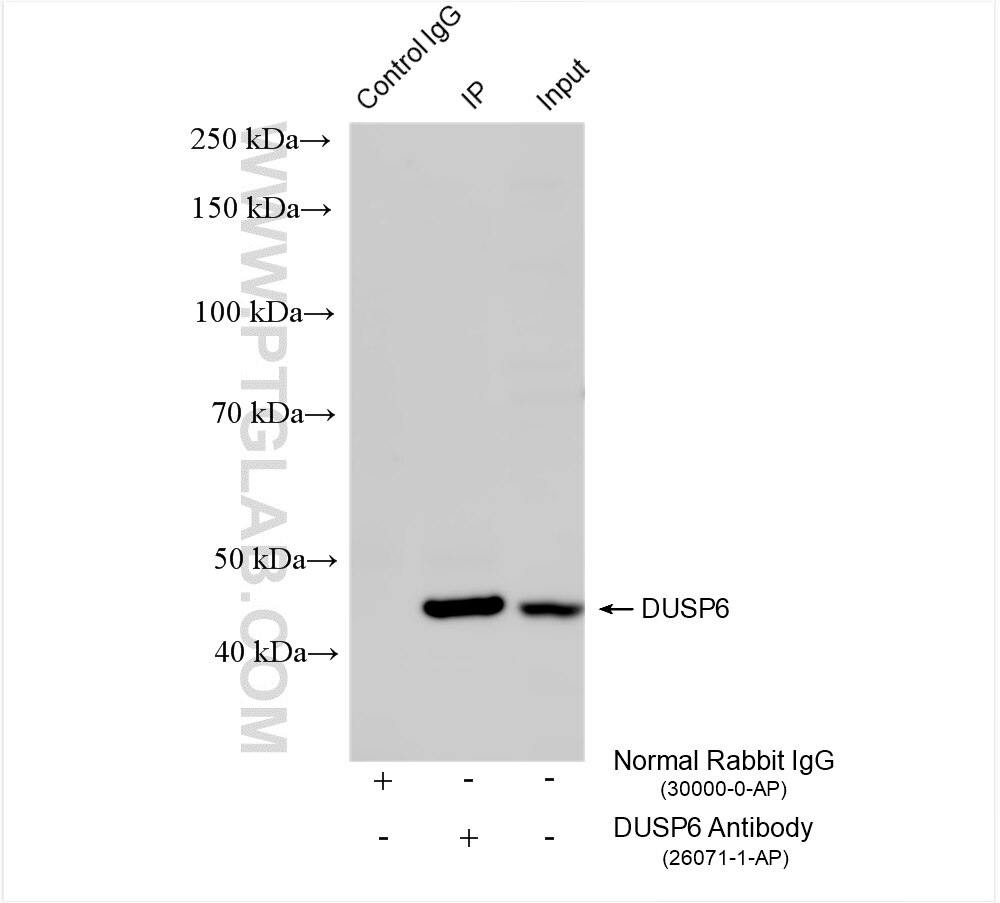
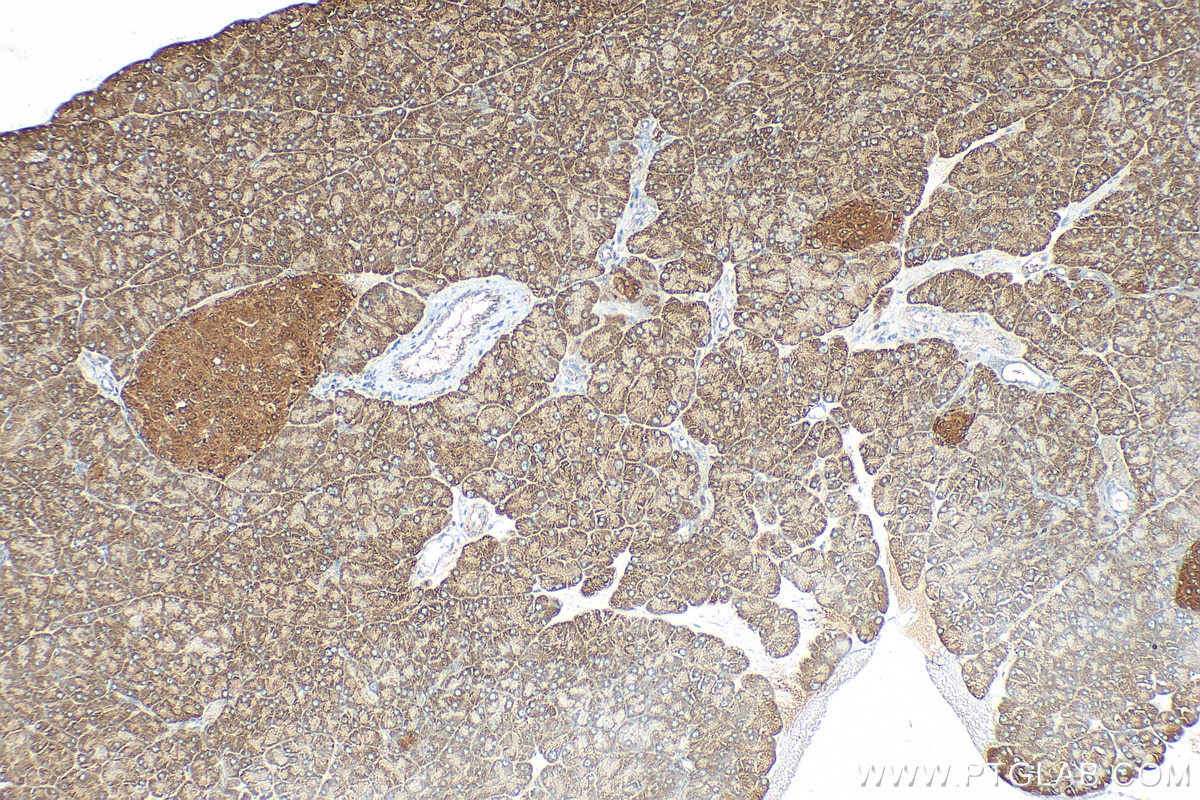
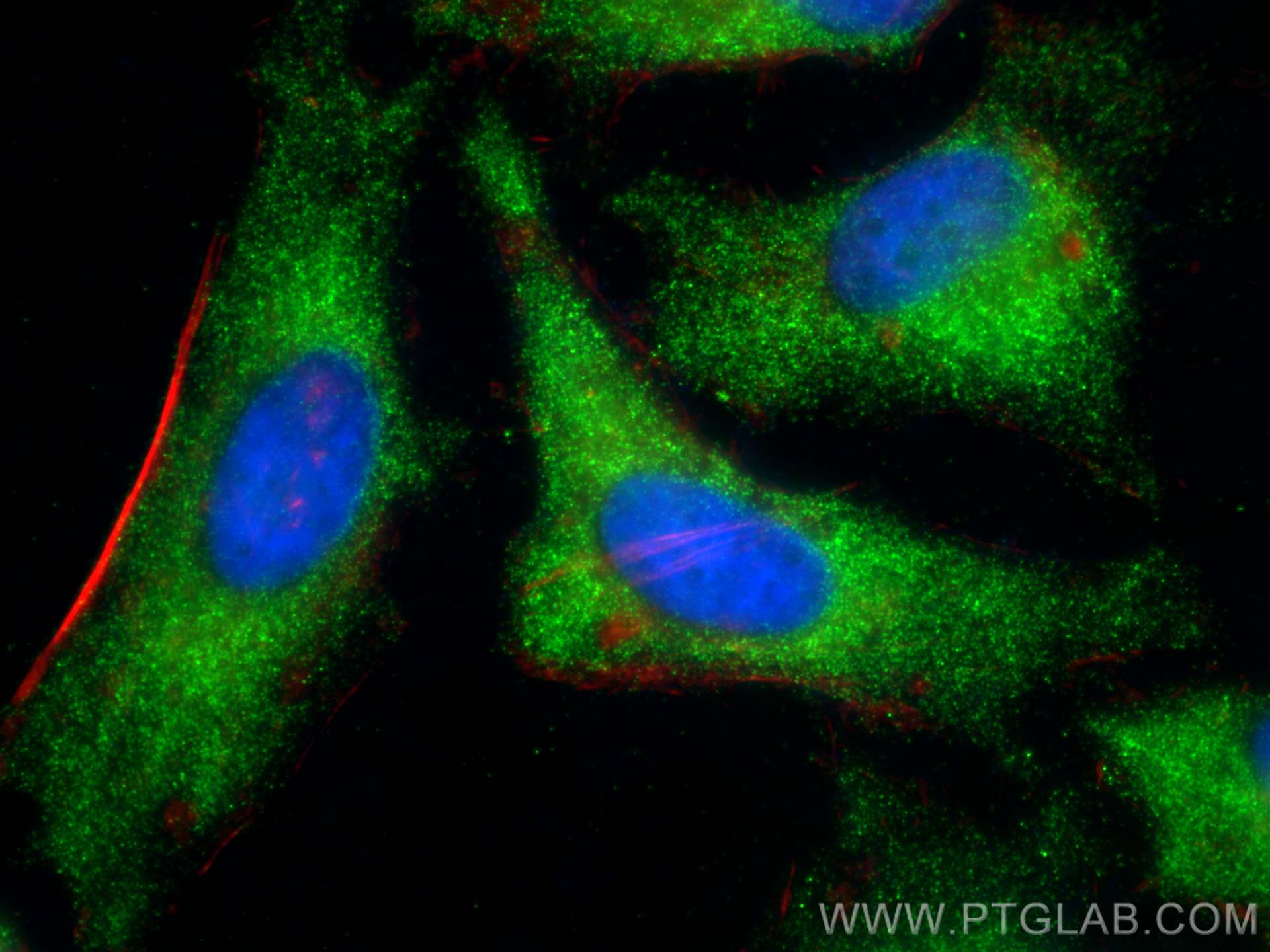
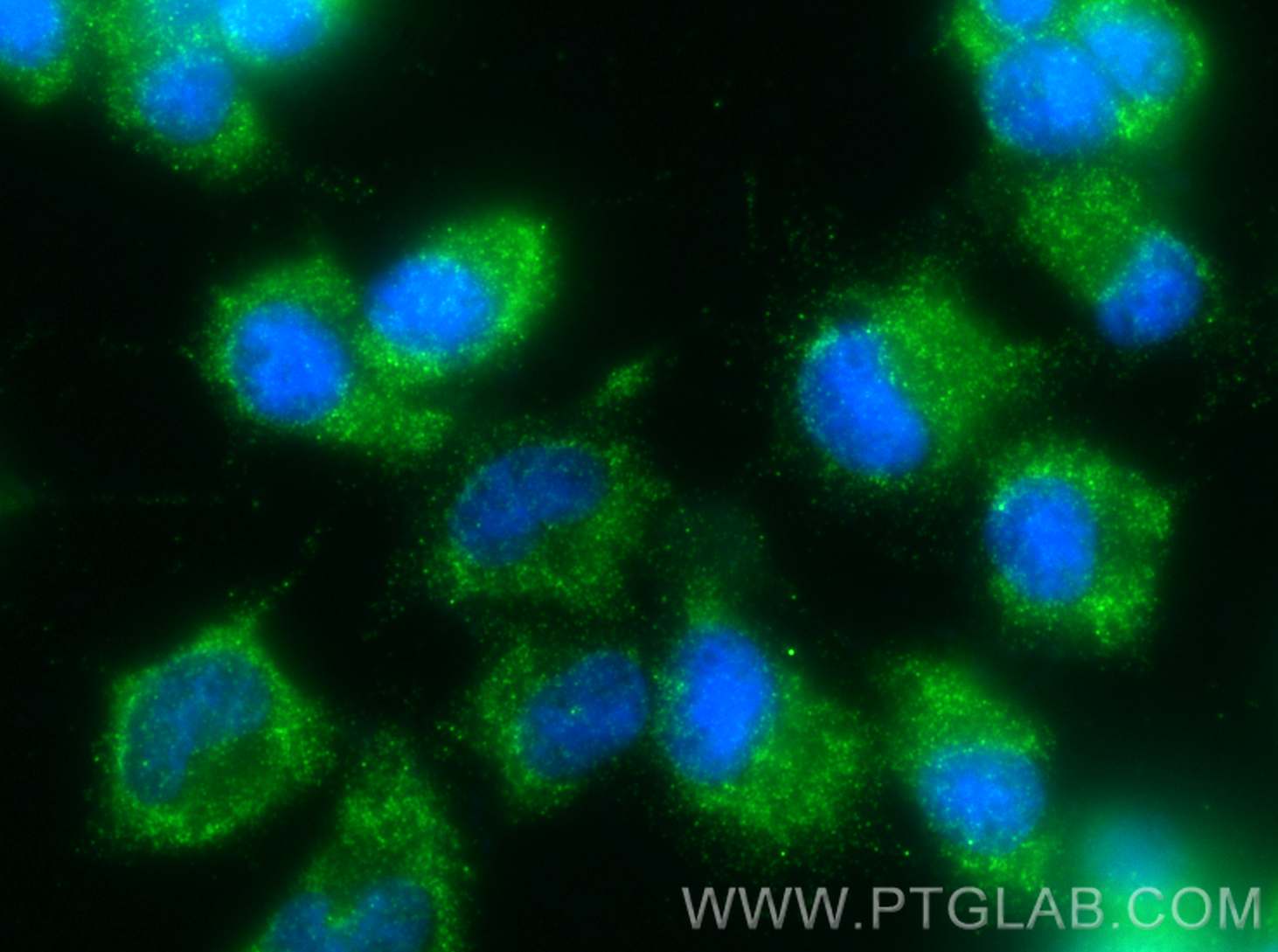
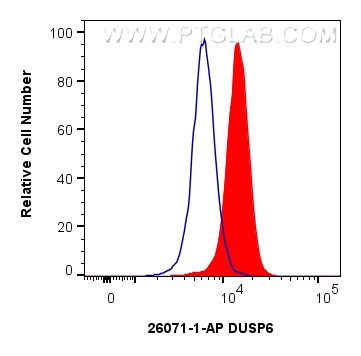
26071-1-PBS targets DUSP6 in WB, IHC, IF/ICC, FC (Intra), IP, Indirect ELISA applications and shows reactivity with human, mouse, rat samples.
| Tested Reactivity | human, mouse, rat |
| Host / Isotype | Rabbit / IgG |
| Class | Polyclonal |
| Type | Antibody |
| Immunogen |
CatNo: Ag23474 Product name: Recombinant human DUSP6 protein Source: e coli.-derived, PGEX-4T Tag: GST Domain: 353-381 aa of BC003562 Sequence: CDNRVPAQQLYFTTPSNQNVYQVDSLQST Predict reactive species |
| Full Name | dual specificity phosphatase 6 |
| Calculated Molecular Weight | 42 kDa |
| Observed Molecular Weight | 42 kDa |
| GenBank Accession Number | BC003562 |
| Gene Symbol | DUSP6 |
| Gene ID (NCBI) | 1848 |
| RRID | AB_3669521 |
| Conjugate | Unconjugated |
| Form | Liquid |
| Purification Method | Antigen affinity purification |
| UNIPROT ID | Q16828 |
| Storage Buffer | PBS only, pH 7.3. |
| Storage Conditions | Store at -80°C. |
Background Information
Dual specificity phosphatase 6 (DUSP6) is a member of the family of mitogen-activated protein kinase (MAPK) phosphatases, which dephosphorylate and inactivate MAPK (PMID: 9858808). The MAPK pathway is an important signal transduction system that serves cellular processes, such as proliferation, differentiation, migration, and apoptosis. DUSP6 resides at chromosome location 12q22-23, which is one of the candidate loci for susceptibility to bipolar disorder and which encodes a phosphatase selective for extracellular signal-regulated kinase (ERK) (PMID: 9205128). DUSP6 inactivates extracellular signal-regulated kinase (ERK), and can act in tumor suppressive pathways, whose expression is reduced in several different types of cancer. (PMID: 21680106).







