
Product Information
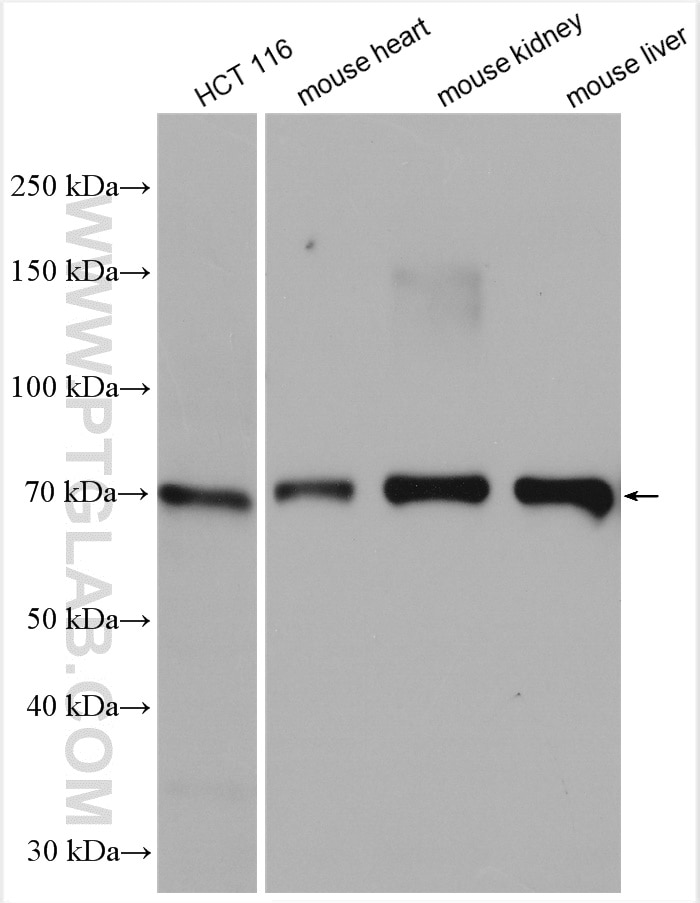
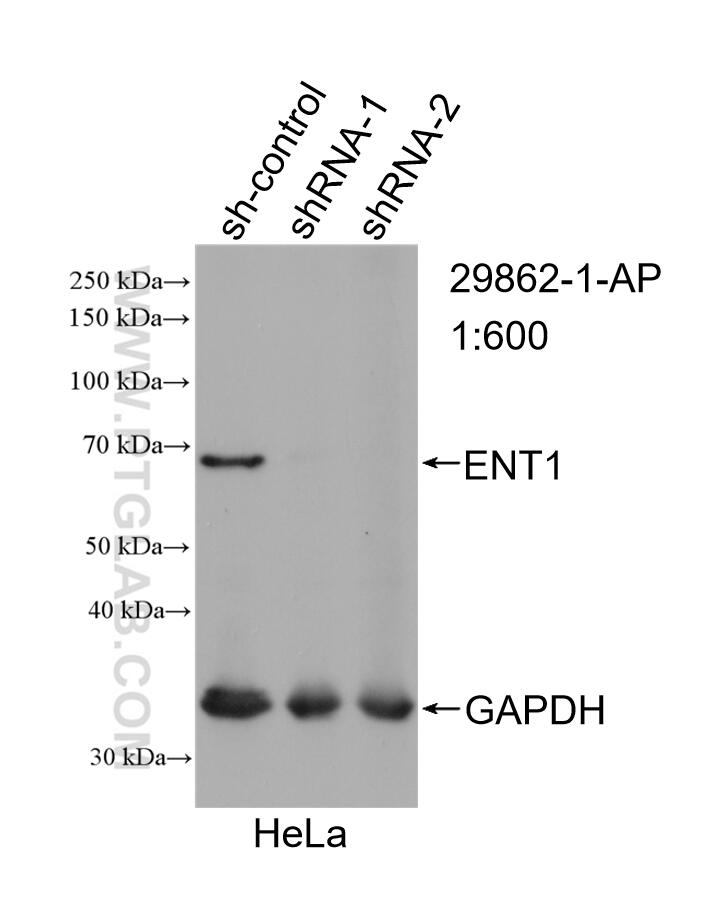
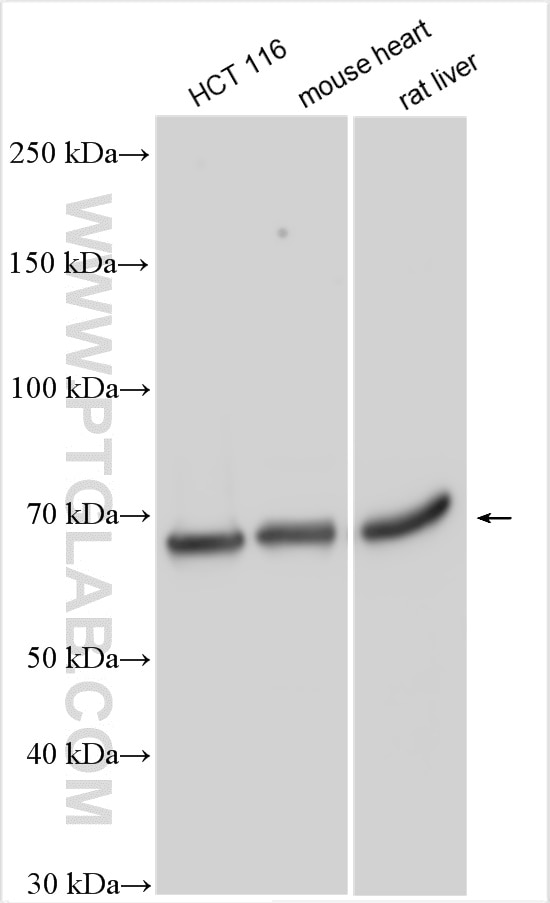
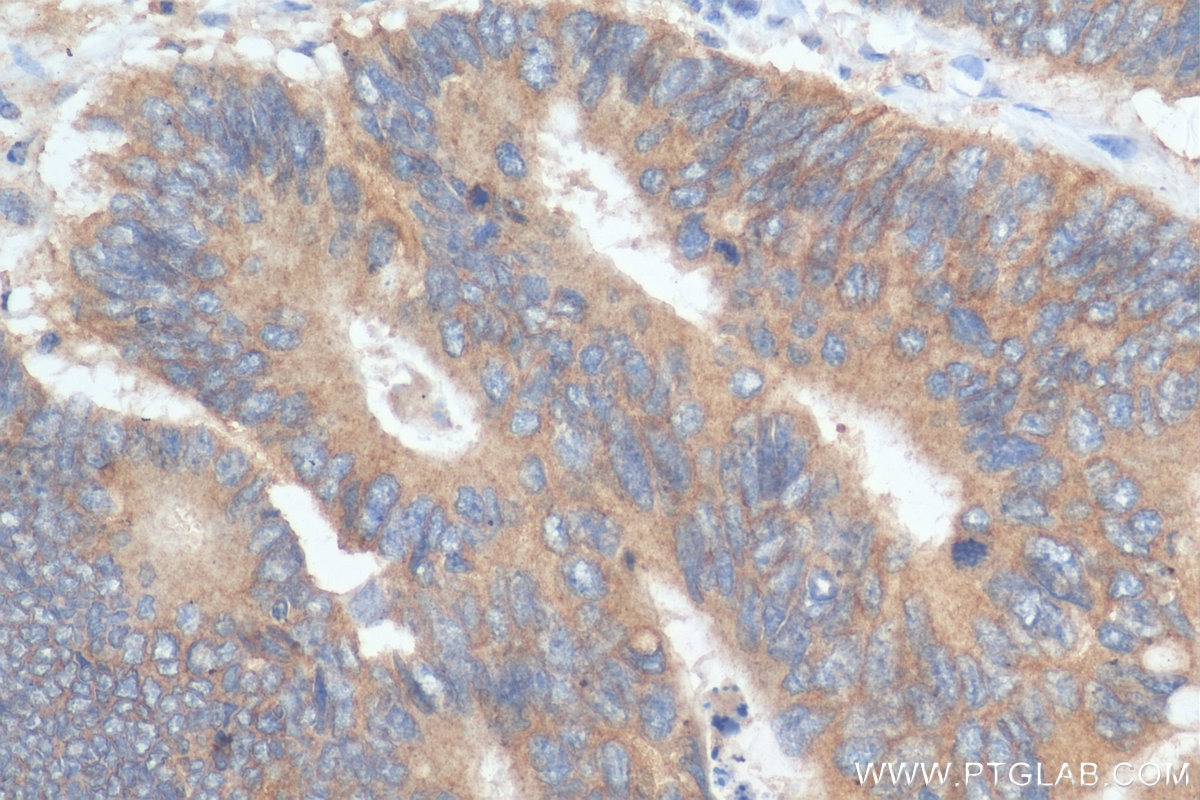
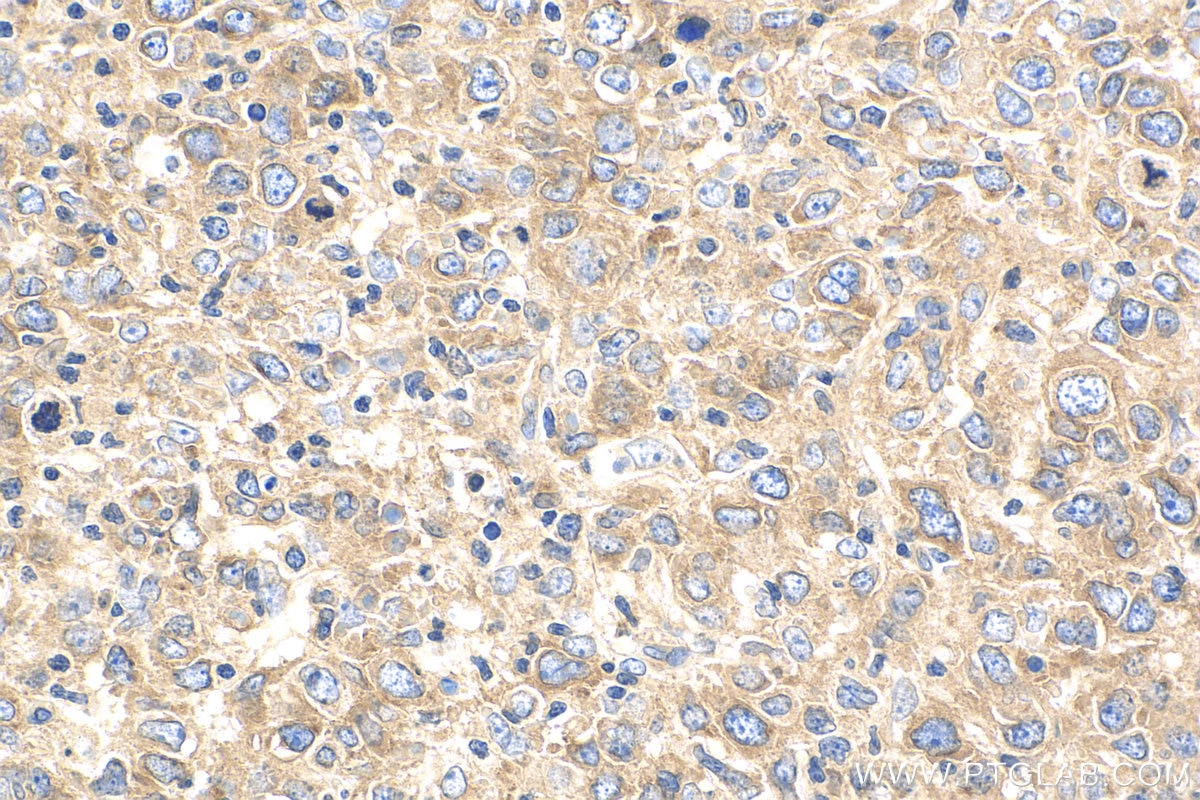
29862-1-PBS targets ENT1 in WB, IHC, Indirect ELISA applications and shows reactivity with human, mouse, rat samples.
| Tested Reactivity | human, mouse, rat |
| Host / Isotype | Rabbit / IgG |
| Class | Polyclonal |
| Type | Antibody |
| Immunogen |
CatNo: Ag32003 Product name: Recombinant human ENT1 protein Source: e coli.-derived, PGEX-4T Tag: GST Domain: 30-82 aa of NM_001372327.1 Sequence: NFFMTATQYFTNRLDMSQNVSLVTAELSKDAQASAAPAAPLPERNSLSAIFNN Predict reactive species |
| Full Name | solute carrier family 29 (nucleoside transporters), member 1 |
| Calculated Molecular Weight | 50KD |
| Observed Molecular Weight | 70 kDa |
| GenBank Accession Number | NM_001372327.1 |
| Gene Symbol | ENT1 |
| Gene ID (NCBI) | 2030 |
| RRID | AB_2935484 |
| Conjugate | Unconjugated |
| Form | Liquid |
| Purification Method | Antigen affinity purification |
| UNIPROT ID | Q99808 |
| Storage Buffer | PBS only, pH 7.3. |
| Storage Conditions | Store at -80°C. |
Background Information
ENT1 (equilibrative nucleoside transporter 1; also known as SLC29A1) is a ubiquitous protein located at the cell membrane and is a major transporter responsible for the cellular uptake and release of endogenous nucleosides such as adenosine, and nucleoside analogs used in chemotherapy. The predicted molecular weight of ENT1 is 50 kDa, while heavier 54-68 kDa band may be observed due to the glycosylation (PMID: 16448802, 11850433, 16111480). A smaller novel splice variant of the mouse ENT1 has also been identified, which generates a protein of 35-40 kDa (PMID: 18413666).






